
Cookware choices shape more than just your meals—they influence health, kitchen efficiency, and long-term expenses. In recent years, ceramic-coated pans have surged in popularity as a \"healthier\" alternative to traditional nonstick. Advertisements tout their toxin-free composition and sleek designs, but real-world use often reveals chipped coatings, inconsistent performance, and price tags that raise eyebrows. So, are ceramic cookware sets truly safer than conventional nonstick options, or are they simply fragile and overpriced?
The answer isn’t black and white. It depends on how you cook, what you prioritize—safety, longevity, or convenience—and how well you maintain your tools. This article breaks down the science, compares materials, and evaluates real user experiences to help you make an informed decision.
Understanding Ceramic vs. Traditional Nonstick Coatings
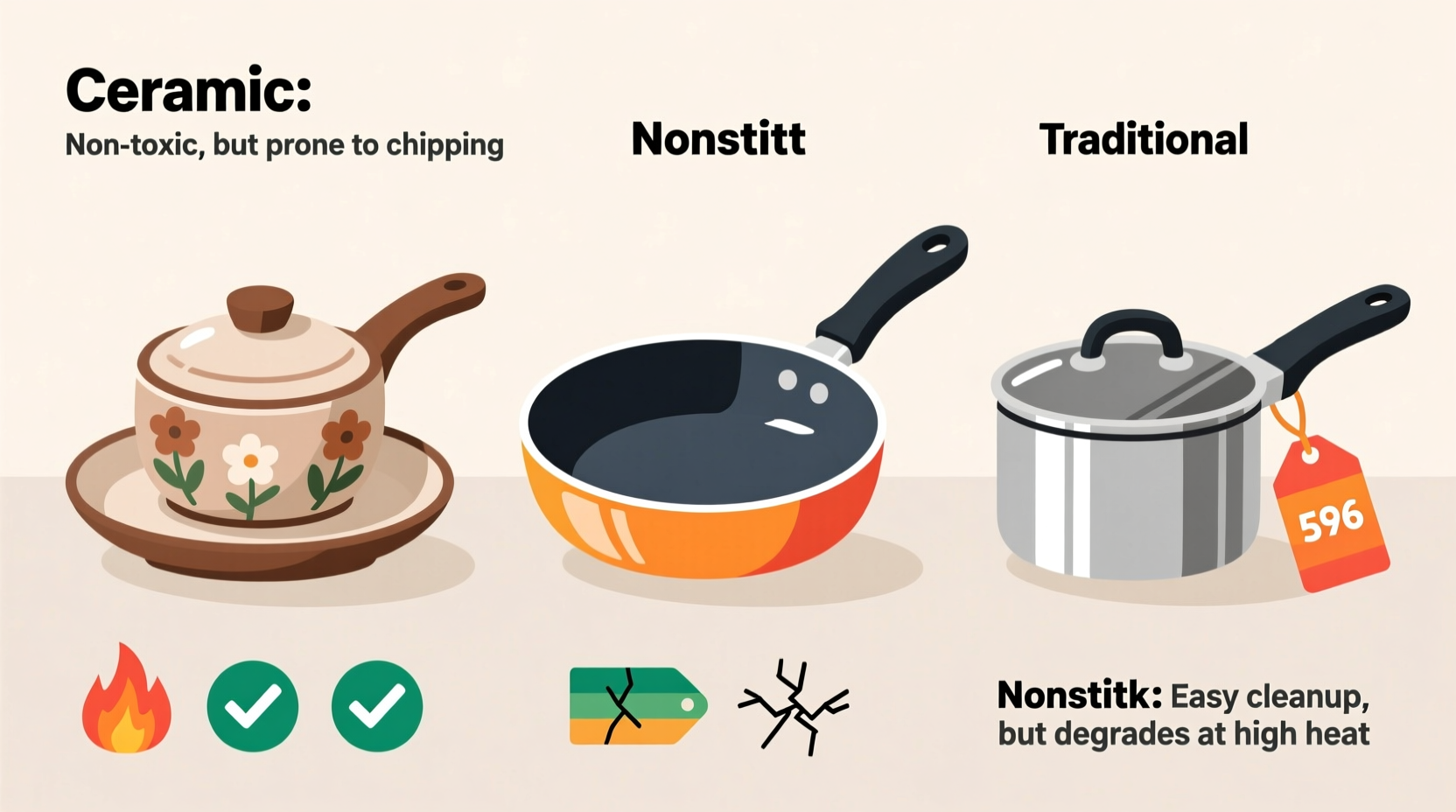
At first glance, ceramic and nonstick (typically PTFE-based, like Teflon) appear similar: both offer slick surfaces that prevent food from sticking. However, their chemical makeup and manufacturing processes differ significantly.
Ceramic cookware features a metal base—usually aluminum—coated with a sol-gel derived silica (glass-like) layer. This coating is free of PFOA, PFAS, lead, and cadmium, which were historically used in older nonstick formulations. Because of this, many brands market ceramic pans as “nontoxic” or “eco-friendly.”
In contrast, traditional nonstick cookware uses polytetrafluoroethylene (PTFE), a synthetic polymer known for its exceptional release properties. While modern PTFE pans no longer contain PFOA (banned in the U.S. since 2014), concerns persist about fumes released at high temperatures—above 500°F (260°C)—which can be harmful to birds and potentially irritating to humans.
Safety: What Science Says About Ceramic and Nonstick
Safety is the primary reason consumers switch to ceramic cookware. But does it hold up under scrutiny?
The U.S. Food and Drug Administration (FDA) considers both modern PTFE and ceramic coatings safe when used correctly. The key phrase here is “when used correctly.”
- Ceramic coatings are inert and do not emit toxic fumes, even at high temperatures (up to 800°F/427°C). This makes them safer in terms of thermal stability.
- PTFE coatings, while stable below 500°F, begin to degrade above that threshold. At 680°F, they can release fumes linked to polymer fume fever—a temporary flu-like condition in humans and fatal in birds.
“Ceramic coatings eliminate concerns about PFAS exposure, which is a legitimate public health priority. But durability remains a challenge.” — Dr. Lena Torres, Environmental Health Scientist, Johns Hopkins School of Public Health
It’s important to note that most home stovetops rarely exceed 400–450°F during normal cooking, meaning PTFE degradation is unlikely unless the pan is left unattended or used on high heat for searing. Still, for households with pet birds or those prioritizing chemical avoidance, ceramic offers peace of mind.
Durability: Are Ceramic Pans Too Fragile?
If safety leans toward ceramic, durability tips the scale back. Most users report that ceramic cookware loses its nonstick performance within 1–2 years, sometimes sooner.
Why? The sol-gel coating is thinner and softer than PTFE. Metal utensils, abrasive scrubbers, dishwashers, and rapid temperature changes all accelerate wear. Once the surface micro-cracks, food begins to stick, and cleaning becomes harder.
A 2022 consumer survey by *Kitchen Gear Lab* found that 68% of ceramic pan owners replaced their set within three years due to diminished performance. In comparison, high-quality PTFE-coated pans lasted 4–5 years with moderate use.
Real Example: A Home Cook’s Experience
Sarah Kim, a meal-prep blogger from Portland, switched to a premium ceramic set two years ago hoping to eliminate plastic-based coatings from her kitchen. “I loved how easy it was to clean at first,” she said. “But after six months, I noticed scratches from my wooden spatula. By month ten, eggs started sticking. Now I only use it for low-heat tasks like reheating soup.” She recently returned to a mid-range PTFE-lined pan for everyday cooking.
Her experience reflects a broader trend: ceramic excels in gentle applications but struggles under frequent, high-heat, or abrasive use.
Price vs. Value: Is Ceramic Overpriced?
Ceramic cookware sets typically cost $100–$300, comparable to mid-to-high-end nonstick lines. But given their shorter lifespan, the cost per year of use is often higher.
Consider this breakdown:
| Feature | Ceramic Cookware | Traditional Nonstick (PTFE) |
|---|---|---|
| Average Price (Set) | $150 | $120 |
| Average Lifespan | 1.5–2 years | 4–5 years |
| Cost Per Year | $75–$100 | $24–$30 |
| Heat Resistance | Up to 800°F | Up to 500°F |
| Toxic Fume Risk | None | Possible above 500°F |
| Dishwasher Safe | Rarely recommended | Many models are |
While ceramic wins on heat tolerance and chemical safety, its poor longevity inflates long-term costs. For budget-conscious cooks, this raises serious questions about value.
How to Maximize the Life of Ceramic Cookware
If you choose ceramic, extending its life requires discipline. Unlike cast iron or stainless steel, ceramic demands careful handling. Follow these steps to get the most out of your investment:
- Use only silicone, wood, or nylon utensils. Even “ceramic-safe” metal tools can cause micro-abrasions over time.
- Cook on low to medium heat. High heat accelerates coating breakdown, even if the material tolerates it.
- Preheat gently. Always add a small amount of oil or water before heating to prevent thermal shock.
- Avoid sudden temperature changes. Don’t plunge a hot pan into cold water; let it cool first.
- Hand-wash only. Dishwasher detergents are alkaline and can erode the coating over time.
- Store carefully. Use pan protectors or paper towels between stacked pieces to prevent scratching.
Adhering to these practices won’t make ceramic last forever, but they can stretch its useful life closer to the 3-year mark—especially with newer, reinforced hybrid coatings entering the market.
Alternatives Worth Considering
If ceramic feels too fragile and traditional nonstick raises safety concerns, several alternatives balance performance, safety, and durability:
- Hard-anodized aluminum with PTFE: More scratch-resistant than standard nonstick, often with a lifetime warranty. Still contains PTFE, but the coating is bonded more securely.
- Enameled cast iron: Naturally nonstick when seasoned, extremely durable, and free of synthetic chemicals. Heavy and expensive, but lasts decades.
- Carbon steel: Develops a natural nonstick patina over time. Requires seasoning but handles high heat and metal utensils.
- Stainless steel with advanced texturing: Some brands use laser-etched surfaces to reduce sticking without coatings.
No option is perfect, but each offers trade-offs that may better suit specific cooking styles than ceramic.
FAQ: Common Questions About Ceramic Cookware
Can scratched ceramic cookware make you sick?
No, ingesting small particles of ceramic coating is not toxic. The silica-based material passes through the body without absorption. However, once scratched, the pan loses its nonstick function and becomes harder to clean, increasing the risk of bacterial buildup.
Is ceramic cookware really nonstick?
Initially, yes—many ceramic pans perform exceptionally well when new. However, unlike PTFE, the slickness diminishes faster with use. Over time, especially with improper care, food will stick more frequently.
Are all “ceramic” pans the same?
No. Some brands use a thin single-layer coating, while others apply multiple layers or reinforce with titanium or diamond particles. Look for pans labeled “reinforced ceramic” or “ceramic-titanium hybrid” for improved durability.
Final Verdict: Safer, Yes—But Not Necessarily Better
Ceramic cookware sets are indeed safer than traditional nonstick in terms of chemical composition and thermal stability. They don’t emit toxic fumes, contain no PFAS, and are generally more eco-conscious in production. For health-focused households, especially those with pets or children, this advantage is significant.
However, their fragility and relatively short service life undermine their value proposition. If you’re looking for cookware that lasts, performs consistently, and justifies its price over time, ceramic may disappoint. It’s less a replacement for nonstick and more a niche option for low-heat, gentle cooking routines.
The idea that ceramic is universally “better” is oversimplified. It’s different—not inherently superior. The best choice depends on your priorities: absolute safety and high-heat flexibility, or durability and long-term cost efficiency.




 浙公网安备
33010002000092号
浙公网安备
33010002000092号 浙B2-20120091-4
Comments
No comments yet. Why don't you start the discussion?