
Clay masks have long been a staple in skincare routines, praised for their ability to draw out impurities, minimize pores, and control excess oil. Yet, many users report tightness, flakiness, or irritation after use—raising an important question: are clay masks actually detoxifying your skin, or are they doing more harm than good by stripping essential moisture?
The truth lies not in the mask itself, but in how it’s formulated, how often it’s used, and whether it aligns with your skin type. When used correctly, clay masks can be powerful allies in achieving clearer, healthier skin. But misuse can lead to compromised barrier function, dehydration, and increased breakouts.
This article explores the science behind clay masks, evaluates their real detoxifying potential, and reveals how to use them without compromising your skin’s hydration balance.
The Science Behind Clay Masks
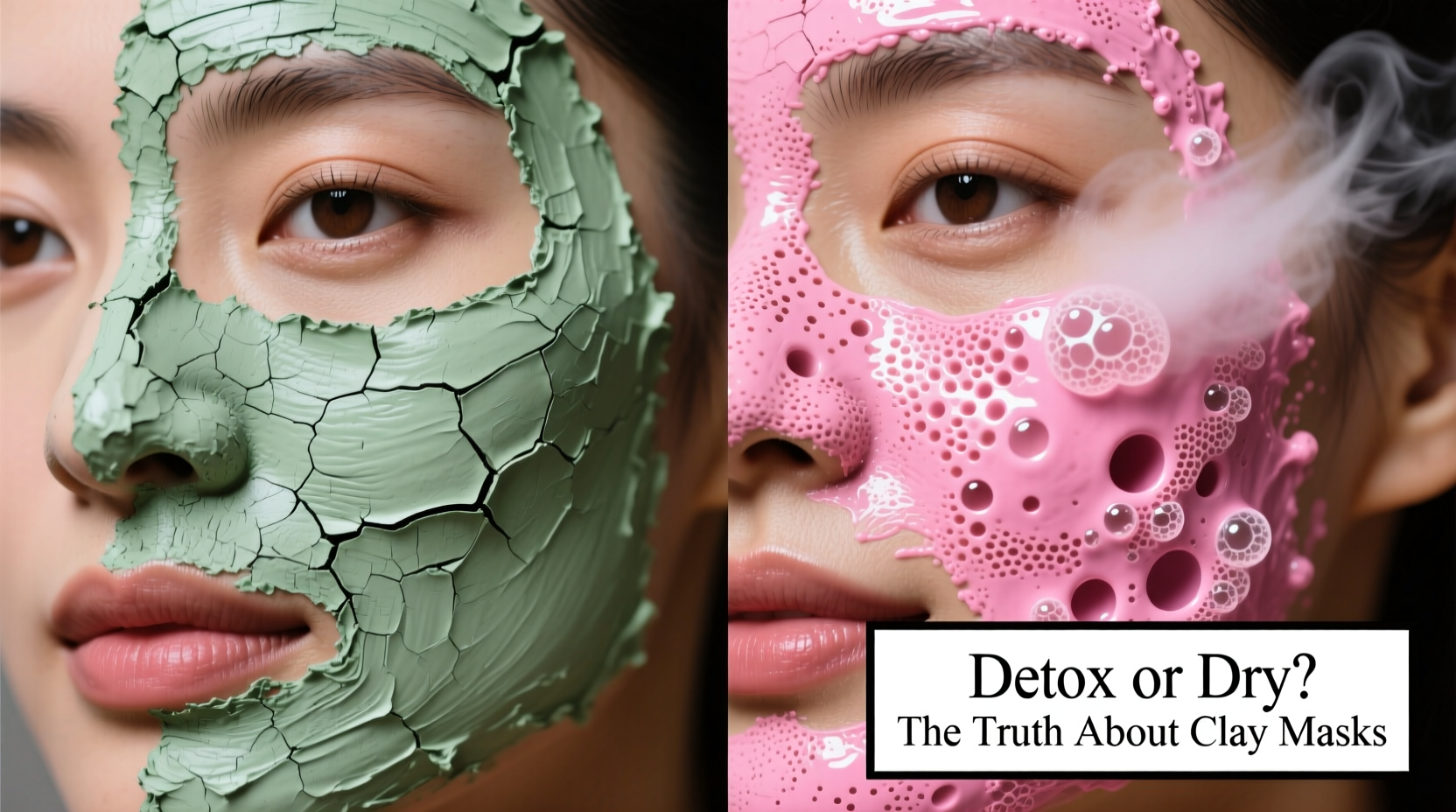
Clay has been used in skincare for centuries, from ancient Egyptian beauty rituals to modern dermatology. Its effectiveness comes from its mineral-rich composition and natural absorbent properties. Most clays contain silica, magnesium, calcium, and trace minerals that support skin health.
When applied to the skin, clay acts like a magnet for oil, dirt, and environmental pollutants. This occurs through a process called adsorption (not absorption)—meaning particles bind to the surface of the clay rather than being soaked up into it. As the mask dries, it pulls sebum and debris from pores, leaving skin feeling clean and refreshed.
However, this same mechanism is why overuse can backfire. The drying effect isn’t inherently bad—it’s beneficial for oily or acne-prone skin—but when applied too frequently or on dry or sensitive skin, it disrupts the lipid barrier, leading to transepidermal water loss (TEWL) and inflammation.
Different Clays, Different Effects
Not all clays are created equal. Some are gentler and more hydrating, while others are highly absorbent and better suited for specific skin concerns. Choosing the right clay is crucial to avoiding dryness while still benefiting from detoxification.
| Clay Type | Key Properties | Best For | Risk of Dryness |
|---|---|---|---|
| Kaolin Clay | Mild, gentle, slightly absorbent | Dry, sensitive, or mature skin | Low |
| Bentonite Clay | Highly absorbent, swells with water | Oily, acne-prone skin | High |
| French Green Clay | Rich in iron oxide and minerals, moderately absorbent | Combination or congested skin | Moderate |
| Rhassoul Clay | Soft texture, improves elasticity, mild cleansing | All skin types, especially dry or sensitive | Low to Moderate |
| Fuller’s Earth | Very absorbent, cooling effect | Oily skin, sunburn relief | High |
For example, kaolin clay is ideal for those who want light cleansing without aggressive drying. It’s commonly found in formulations for sensitive skin. In contrast, bentonite clay—popular in DIY masks mixed with apple cider vinegar—is extremely effective at unclogging pores but can be harsh if left on too long or used more than once a week.
“Clay masks aren’t one-size-fits-all. The key is matching the clay’s strength to your skin’s resilience.” — Dr. Lena Patel, Board-Certified Dermatologist
Detoxifying vs. Over-Drying: What’s Really Happening?
The term “detox” is widely used in marketing, but in skincare, it typically refers to removing surface-level impurities such as excess sebum, dead skin cells, and pollution residue. Clay masks do this effectively, especially when combined with ingredients like charcoal or salicylic acid.
However, true “detoxification” doesn’t happen at a systemic level through topical application. Claims that clay pulls heavy metals or toxins from deep within the body are scientifically unfounded. The liver and kidneys handle internal detox; skincare works externally.
So what feels like “purging” or “deep cleansing” is often just the physical removal of debris from the upper layers of the epidermis. This can improve clarity and reduce blackheads, but it doesn’t equate to internal cleansing.
The confusion arises when people mistake post-mask tightness for efficacy. That taut feeling isn’t a sign of deep detox—it’s a warning sign of dehydration. Over time, repeated overuse can weaken the skin’s protective barrier, making it more vulnerable to irritants, bacteria, and moisture loss.
Signs Your Clay Mask Is Drying You Out
- Skin feels tight or squeaky after rinsing
- Redness or stinging during or after use
- Increased flakiness or peeling
- Breakouts worsen instead of improving
- Makeup applies unevenly afterward
If you experience any of these, your mask may be too strong, used too often, or not followed by proper hydration.
How to Use Clay Masks Without Compromising Hydration
You don’t need to give up clay masks to protect your moisture barrier. With smart usage and supporting ingredients, you can enjoy their benefits safely—even if you have dry or combination skin.
Step-by-Step Guide: Safe Clay Mask Application
- Cleanse gently first – Use a mild, non-stripping cleanser to remove surface grime without disturbing the lipid layer.
- Apply to damp skin – Slightly moist skin slows down the drying process, reducing the risk of over-tightening.
- Limit application time – Never leave a clay mask on until it fully cracks. 8–10 minutes is sufficient for most formulas.
- Rinse with lukewarm water – Avoid hot water, which can further dehydrate and irritate.
- Follow immediately with hydrators – Apply a hyaluronic acid serum while skin is still damp, then seal with a nourishing moisturizer.
Incorporating humectants and emollients into your routine post-mask helps counteract clay’s drying effects. Look for ingredients like glycerin, ceramides, squalane, or panthenol in your follow-up products.
Real User Scenario: Balancing Oily Skin and Barrier Health
Sophia, a 28-year-old with combination skin, started using a bentonite and apple cider vinegar mask twice a week to combat persistent T-zone shine and clogged pores. Initially, her skin looked smoother and less oily. But after three weeks, she noticed increased redness around her nose and unexpected dry patches, even though her forehead remained greasy.
She consulted a licensed esthetician, who explained that while the mask was controlling oil, it was also disrupting her skin’s pH and moisture balance. The vinegar lowered the pH aggressively, and the prolonged use weakened her barrier, causing reactive sebum production—a cycle where dryness signals the skin to produce more oil.
The solution? Reduce frequency to once a week, switch to mixing the clay with aloe vera gel, and always follow with a niacinamide serum and lightweight ceramide cream. Within two weeks, Sophia’s skin stabilized—less oil, no dryness, and fewer breakouts.
This case illustrates a common pitfall: mistaking short-term results for long-term success. Effective skincare is sustainable, not punishing.
Expert-Backed Best Practices
To maximize detoxification while minimizing dryness, consider these guidelines supported by dermatologists and formulators:
- Match clay strength to skin type – Sensitive or dry skin should opt for kaolin or rhassoul; oily skin can tolerate bentonite or French green clay.
- Limit use to 1–2 times per week – More frequent use rarely offers added benefits and increases dryness risk.
- Avoid combining with other actives – Don’t use clay masks on nights when you’re applying retinoids, AHAs, or vitamin C to prevent over-exfoliation.
- Choose formulated masks over DIY – Commercial masks often include balancing ingredients like honey, oat extract, or hyaluronic acid to offset dryness.
- Listen to your skin – If your skin feels tight, avoid skipping the mask altogether—adjust frequency or formula instead.
“Over-drying the skin triggers rebound oiliness and inflammation. A well-balanced regimen respects the skin’s natural ecosystem.” — Dr. Anika Mehta, Cosmetic Dermatologist
Frequently Asked Questions
Can I use a clay mask if I have dry skin?
Yes, but choose a gentle clay like kaolin or rhassoul and limit use to once a week. Apply it only to oily zones (like the T-zone) rather than all over, and always follow with a rich moisturizer.
Do clay masks help with acne?
They can help manage mild acne by clearing pores and absorbing excess oil. However, they are not a substitute for medical treatments for moderate to severe acne. Avoid overuse, as dehydration can worsen breakouts.
Should I exfoliate before using a clay mask?
It’s not necessary and can be risky. Physical scrubs before a clay mask increase the chance of irritation. If you exfoliate chemically (e.g., with AHAs), do so on alternate days, not the same night.
Checklist: Using Clay Masks Safely and Effectively
- ✅ Identify your skin type and choose a compatible clay
- ✅ Patch test new masks before full application
- ✅ Apply to damp skin, not dry
- ✅ Set a timer—do not exceed 10 minutes
- ✅ Rinse thoroughly with lukewarm water
- ✅ Apply hydrating serum immediately after
- ✅ Moisturize generously to lock in hydration
- ✅ Limit use to 1–2 times weekly
- ✅ Skip if skin is irritated, sunburned, or peeling
- ✅ Store powdered clays in airtight containers away from humidity
Conclusion: Finding the Balance Between Detox and Damage
Clay masks are neither miracle workers nor skin saboteurs—they are tools. Their impact depends entirely on how you use them. When selected wisely and applied mindfully, they can effectively clear pores, regulate oil, and enhance skin texture without sacrificing hydration.
The goal of skincare isn’t to strip the skin clean but to maintain a healthy, resilient barrier. By respecting your skin’s limits and pairing clay masks with intelligent aftercare, you can enjoy their detoxifying benefits without falling into the trap of over-drying.




 浙公网安备
33010002000092号
浙公网安备
33010002000092号 浙B2-20120091-4
Comments
No comments yet. Why don't you start the discussion?