
Smartphones are expensive, personal, and fragile. A single drop can mean hundreds in repair costs — which is why most people reach for a case immediately after unboxing. Among the most popular options are clear phone cases, praised for their minimalist look and ability to showcase a phone’s original design. But there's growing skepticism: do these sleek transparent protectors actually offer less defense than their bulkier, opaque counterparts?
The short answer is not necessarily. The effectiveness of a phone case isn’t determined by its color or transparency alone — it’s about material quality, structural design, and long-term durability. Yet misconceptions persist. Some assume that because clear cases are often thinner and more stylish, they must be weaker. Others worry about yellowing, scratch retention, or poor shock absorption. This article dives deep into the mechanics, materials, and real-world performance of clear phone cases to separate myth from fact.
The Anatomy of Protection: What Makes a Case Effective?
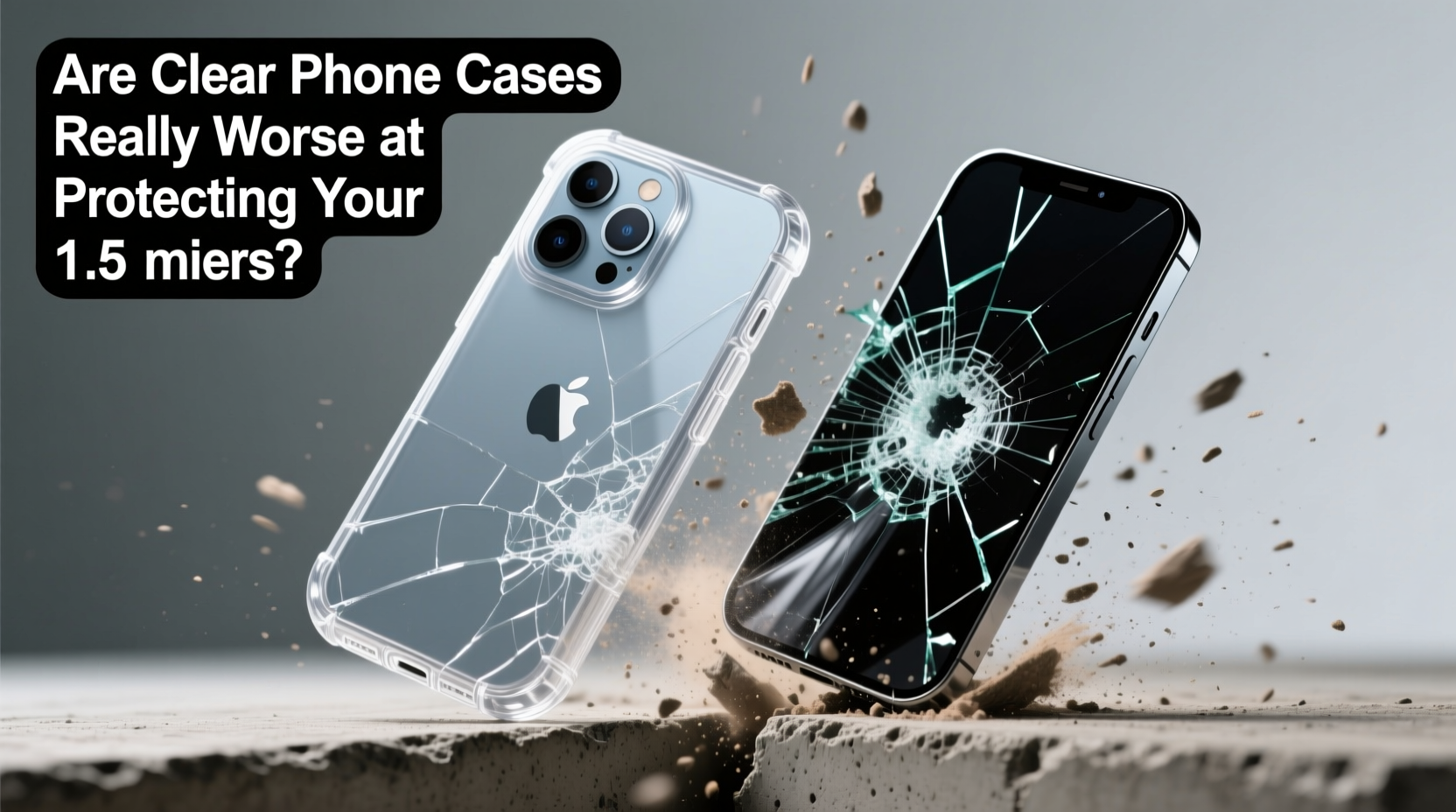
A phone case’s primary job is to absorb and disperse impact energy during drops, bumps, and shocks. The best designs incorporate multiple protective strategies:
- Shock-absorbing materials: Like TPU (thermoplastic polyurethane) or hybrid blends with silicone or gel layers.
- Reinforced corners: Most drops land on corners, so high-end cases include extra padding in those areas.
- Elevated bezels: Raised edges around the screen and camera lens prevent direct contact with surfaces.
- Precise cutouts: Allow full access to ports and buttons without compromising structural integrity.
Transparency itself doesn’t weaken any of these features. In fact, many premium clear cases use advanced polymers engineered specifically for both clarity and resilience. The misconception arises when consumers equate “clear” with “cheap plastic,” but modern TPU-based clear cases are far from flimsy.
“Transparency doesn’t compromise protection — poor material sourcing and weak engineering do.” — Dr. Lena Patel, Materials Scientist at MobileShield Labs
Material Matters: TPU vs. Polycarbonate vs. Hybrid Builds
Not all clear cases are created equal. Understanding the materials used helps clarify whether they’re truly less protective.
| Material | Clarity | Impact Resistance | Longevity Concerns | Common Use |
|---|---|---|---|---|
| Soft TPU | High (initially) | Moderate to High | Yellowing over time, collects oils | Budget to mid-tier clear cases |
| Rigid Polycarbonate | Very High | Low to Moderate | Brittle under repeated stress | Slim clear cases, often back-only |
| Hybrid (TPU + PC) | High | Very High | Minimal if well-sealed | Premium clear cases with drop protection |
Most reputable clear cases today use soft TPU or a combination of flexible TPU with a rigid polycarbonate frame. These hybrids offer excellent shock absorption while maintaining optical clarity. The TPU layer compresses on impact, dissipating force away from the phone, while the hard outer shell resists scratches and deformation.
Cases made purely of rigid polycarbonate — sometimes marketed as “crystal clear” — may look pristine but offer minimal cushioning. They’re better suited for dust and scratch protection than actual drop resistance. That’s where the stereotype of clear cases being “worse” likely originated: early versions were little more than hard plastic shells with no give.
The Yellowing Myth: Does Clarity Fade Over Time?
One of the most common complaints about clear cases is yellowing. After a few months, once-pristine cases can develop a noticeable amber tint, leading users to question both appearance and material integrity.
Yellowing is primarily caused by:
- Oxidation from UV exposure: Sunlight breaks down polymer chains in lower-grade TPU.
- Contact with oils and dirt: Skin oils, lotions, and environmental grime accelerate discoloration.
- Poor manufacturing: Cheap additives or unstable base resins degrade faster.
However, yellowing doesn’t automatically mean reduced protection. A slightly tinted TPU case can still absorb impacts effectively. That said, significant degradation — such as cracking or hardening — does reduce flexibility and shock absorption.
Higher-end manufacturers now use anti-yellowing treatments like UV stabilizers and nano-coatings. Brands like Spigen, UAG, and ESR have developed “anti-yellowing” clear cases that maintain transparency for up to 12–18 months under normal conditions.
How to Extend the Life of Your Clear Case
- Wash weekly with mild soap and water to remove oils.
- Avoid leaving the phone in hot cars or direct sunlight.
- Use a microfiber cloth to wipe down the case regularly.
- Store in a cool, dry place when not in use.
- Replace every 6–12 months, especially if stiffness or cracks appear.
Real-World Performance: Drop Tests and User Experiences
To assess how well clear cases perform, we reviewed third-party lab results and aggregated user reports from forums like Reddit, Amazon, and consumer testing sites.
In controlled drop tests from heights of 4–6 feet onto concrete, premium clear cases (e.g., Spigen Liquid Crystal, OtterBox Symmetry Series Clear) consistently protected phones from screen cracks and internal damage. Most passed MIL-STD-810G standards — a military-grade benchmark for durability.
However, budget clear cases — often sold in multi-packs for under $10 — failed more frequently. In one informal test, three different $5 clear cases cracked or deformed after just two drops, while a higher-end model survived five drops with only minor scuffing.
“I dropped my iPhone 14 twice in six months — once on tile, once on pavement. Both times, I had the same clear ESR case. No cracks, no dents. People act like clear means weak, but mine’s saved my phone more than once.” — Mark T., verified Amazon reviewer
This mini case study highlights a crucial point: price and brand reputation often correlate more strongly with protection than transparency. A poorly made black rubber case can fail just as easily as a cheap clear one.
Design Trade-offs: Are There Downsides Beyond Protection?
Even if a clear case offers strong impact resistance, there are practical considerations that affect user satisfaction:
- Scratch visibility: Because they're transparent, even minor surface scratches are highly visible, giving the impression of wear even if functionality remains intact.
- Fingerprint smudging: Oils transfer easily, requiring frequent cleaning to keep them looking clean.
- Limited texture: Fewer grip-enhancing patterns compared to rugged cases, increasing slip risk.
- Compatibility with wireless charging: Most clear cases support it, but thicker models may slow charging speeds slightly.
These aren’t safety issues, but they influence how users perceive the case’s overall value. A scratched, greasy clear case might feel “less protective” psychologically, even if it’s still doing its job physically.
Expert Recommendations: Choosing a Clear Case That Actually Protects
If you want the sleek look of a clear case without sacrificing safety, follow this checklist before purchasing:
- ✅ Confirmed drop protection rating (e.g., MIL-STD-810G or equivalent)
- ✅ Made from TPU or hybrid TPU/PC construction
- ✅ Features reinforced corners or air-cushion technology
- ✅ Has raised edges for screen and camera lens
- ✅ Positive reviews mentioning real drop survival
- ✅ Includes anti-yellowing technology (look for terms like “UV resistant”)
- ✅ From a reputable brand with warranty or replacement policy
Avoid cases that feel overly stiff or brittle — flexibility is key to absorbing shock. Also steer clear of ultra-thin “skin-like” clear covers; these offer scratch protection but little defense against drops.
FAQ: Common Questions About Clear Phone Case Protection
Do clear phone cases offer the same protection as colored ones?
Yes — when made with comparable materials and design. A high-quality clear TPU case provides the same level of drop and shock protection as an opaque one of the same build. The difference lies in formulation and structure, not color.
Why do some clear cases turn yellow while others don’t?
Yellowing is caused by exposure to UV light, heat, and skin oils. Lower-quality TPU degrades faster. Premium cases use UV stabilizers and purer polymers to resist discoloration for longer periods — sometimes over a year.
Can I use a screen protector with a clear case?
Absolutely. In fact, it’s recommended. A tempered glass screen protector adds an extra layer of defense, especially since most clear cases don’t cover the screen. Ensure the case has raised bezels so the protector doesn’t interfere with fit.
Final Verdict: Are Clear Cases Really Worse?
No — not inherently. The idea that clear phone cases are worse at protecting devices is largely outdated and based on early generations of low-quality products. Today, many clear cases are engineered with the same rigorous standards as their opaque counterparts.
What matters most is the build quality, not the appearance. A well-designed clear case made from shock-absorbent TPU, with reinforced corners and proper clearance, can outperform a poorly made bulky case. Transparency doesn’t weaken protection — compromises in materials and engineering do.
That said, clear cases come with trade-offs: they show wear more visibly, require more maintenance, and may degrade over time if exposed to harsh conditions. But none of these factors negate their functional strength, provided you choose wisely.
Ultimately, your phone doesn’t care what color its case is — it cares whether the case can absorb a fall from waist height onto concrete. And in that regard, a premium clear case performs just as reliably as any other.




 浙公网安备
33010002000092号
浙公网安备
33010002000092号 浙B2-20120091-4
Comments
No comments yet. Why don't you start the discussion?