
For many newcomers to road cycling, the idea of clipping into their bike’s pedals feels like a rite of passage. It’s often assumed that if you're serious about riding, you need clipless pedals. But is that actually true—especially when you're just starting out? The short answer: no, clipless pedals are not strictly necessary for beginner road cyclists. While they offer performance benefits, they also come with a learning curve, safety concerns, and added complexity that may not suit everyone in the early stages of their cycling journey.
Understanding whether clipless pedals are right for you involves more than just mimicking what experienced riders do. It requires evaluating your goals, comfort level, riding environment, and how quickly you want to progress. This article explores the mechanics of clipless systems, compares them with flat pedals, and provides practical guidance so beginners can make informed decisions without pressure or misinformation.
What Are Clipless Pedals (And Why the Name Is Confusing)
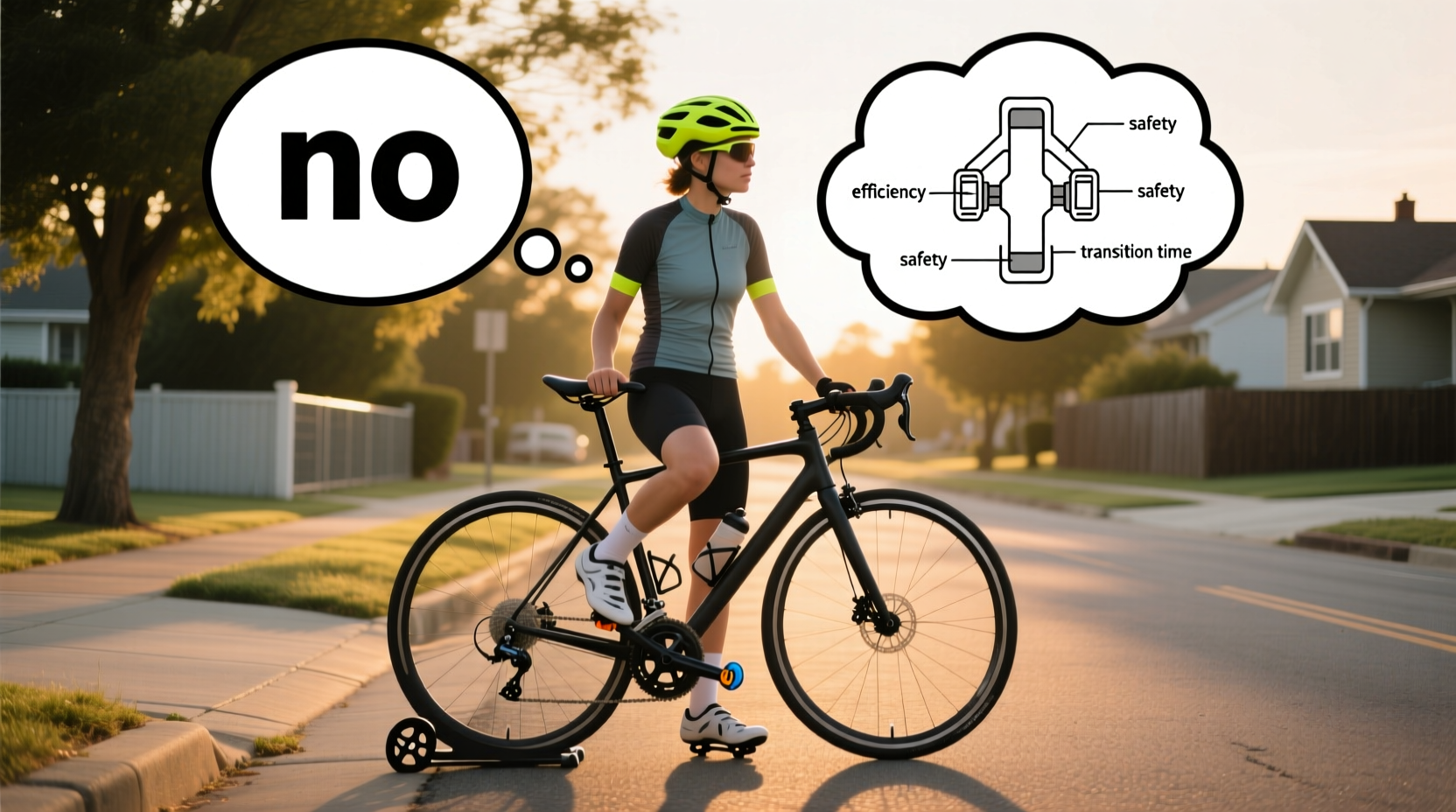
The term “clipless” is counterintuitive. These pedals actually involve clipping your shoes into the pedal mechanism using a cleat on the sole. The name comes from the fact that they replaced older “toe-clip” systems—metal cages with straps that held the foot in place. Clipless pedals eliminated the need for those external clips, hence “clipless.”
Modern clipless systems use a spring-loaded mechanism in the pedal that locks onto a cleat attached to the bottom of compatible cycling shoes. To release, the rider twists their heel outward. Common systems include Shimano SPD, Look Keo, and Time ATAC, each with different engagement mechanisms and intended uses.
Despite the name, clipless pedals provide a secure connection between rider and bike, allowing for more efficient power transfer throughout the entire pedal stroke—not just during the downward push, but also on the upstroke and lateral movements. This efficiency is one reason they’re favored by competitive and long-distance cyclists.
Advantages of Clipless Pedals for Beginners
While not essential, clipless pedals do offer tangible benefits even for new riders who plan to ride regularly or increase their distance over time.
- Improved Power Transfer: Because your foot is secured, energy isn’t lost through foot slippage or inefficient positioning. This means less fatigue over longer rides.
- Better Bike Control: With feet firmly attached, handling becomes more intuitive, especially during sprints, climbs, or technical sections.
- Enhanced Pedaling Technique: Clipless systems encourage a smoother, circular pedal stroke, helping beginners develop better form early on.
- Compatibility with Road Bikes: Most entry-level road bikes come equipped with clipless pedals, making it convenient to adopt them from day one.
However, these advantages assume a certain level of comfort and experience. For someone still learning balance, braking, shifting, and basic traffic awareness, adding another variable—how to clip in and out—can be overwhelming.
“Clipless pedals aren't inherently superior for all riders. They’re tools designed for specific purposes. For a beginner focused on safety and confidence, flat pedals can be the smarter choice.” — Dr. Lena Patel, Sports Biomechanist and Cycling Coach
Why Flat Pedals Are a Viable (and Often Better) Option for New Riders
Flat pedals—the standard platform pedals found on most hybrid and mountain bikes—are frequently dismissed by enthusiasts as “beginner-only” or “inefficient.” But they offer distinct advantages for those just getting into road cycling.
With flat pedals, riders wear regular athletic shoes and enjoy complete freedom of movement. There’s no fear of being stuck mid-ride at a stoplight, no awkward wobbling while trying to unclip, and no panic when dismounting quickly. This peace of mind significantly reduces stress during the critical early phase of skill development.
Moreover, flat pedals promote natural foot positioning and ankle mobility. Riders can shift their weight, adjust stance, and focus on body awareness without worrying about cleat alignment. This can lead to better overall bike handling and fewer injuries caused by improper fit or forced posture.
Many professional coaches now recommend that new cyclists spend several weeks—or even months—on flat pedals before transitioning to clipless systems. The goal is mastery of core skills first: cornering, descending, group riding etiquette, and emergency stops.
Real Example: Sarah’s First Month on the Road
Sarah, a 34-year-old office worker, bought her first road bike with the intention of commuting and joining weekend group rides. Her local bike shop offered two setup options: stock clipless pedals or a flat pedal upgrade. She chose flats, despite feeling uncertain about going against the “norm.”
Over four weeks, she rode three times a week, practicing starts, stops, and navigating intersections. Without the distraction of clipping in and out, she focused on smooth gear changes and maintaining balance at low speeds. By week five, she felt confident enough to test clipless pedals on a stationary trainer. After two sessions, she transitioned to outdoor use—this time with far less anxiety.
Her experience reflects a growing trend: delaying clipless adoption leads to stronger foundational skills and fewer embarrassing (or dangerous) falls.
Clipless vs. Flat: A Practical Comparison
| Feature | Clipless Pedals | Flat Pedals |
|---|---|---|
| Power Efficiency | High – full pedal stroke engagement | Moderate – primarily downward force |
| Learning Curve | Steep – requires practice to clip/unclip smoothly | Low – intuitive and immediate |
| Safety at Stops | Risk of falling if unable to unclip quickly | No risk – foot disengages instantly |
| Foot Position Flexibility | Fixed – limited adjustment once clipped in | High – move foot freely as needed |
| Shoe Requirement | Specialized cycling shoes required | Any stiff-soled shoe works |
| Cost | Higher – pedals + shoes + cleats | Lower – no additional gear needed |
| Best For | Frequent riders, racers, long-distance tours | Beginners, commuters, casual riders |
A Step-by-Step Guide to Deciding What’s Right for You
Choosing between clipless and flat pedals shouldn’t be based on trends or peer pressure. Follow this logical progression to determine the best path for your situation.
- Assess Your Riding Goals
Are you commuting daily? Training for a century ride? Just exploring local trails? High-frequency or performance-oriented riding favors clipless; occasional or urban riding may benefit more from simplicity. - Evaluate Your Comfort Level
If the thought of being attached to your bike makes you nervous, trust that instinct. Confidence matters more than equipment specs. - Test Ride Both Systems
Visit a bike shop that allows demo setups. Try starting, stopping, and low-speed maneuvers with both pedal types. Pay attention to how easily you can put a foot down. - Start with Flats, Then Transition (Recommended)
Ride consistently for 3–6 weeks on flat pedals. Once you feel stable and relaxed, consider adding clipless pedals as an upgrade—not a requirement. - Invest Gradually
If you switch to clipless, buy one pair of shoes and use them part-time. Alternate between clipped and unclipped rides until the motion becomes second nature. - Practice in a Safe Environment
Use an empty parking lot or quiet street to rehearse clipping in and out. Fall safely on grass if needed. Mastery takes repetition, not talent.
Common Misconceptions About Clipless Pedals
Several myths persist around clipless systems, particularly among beginners influenced by online forums or seasoned cyclists.
- Myth: You’ll look unprofessional without clipless pedals.
Reality: Skill and respect for the road define a cyclist, not their pedal choice. - Myth: Clipless pedals prevent your feet from slipping off.
Reality: In wet conditions or with worn cleats, disengagement can happen unexpectedly. They’re secure—but not foolproof. - Myth: You must use clipless pedals to get faster.
Reality: Fitness, aerodynamics, and technique have far greater impact on speed than pedal type. - Myth: All road cyclists use clipless pedals.
Reality: Many commuters, tourers, and recreational riders prefer flats for convenience and safety.
FAQ: Your Top Questions Answered
Can I use regular shoes with clipless pedals?
No—not safely. Regular shoes lack the rigid sole and proper cleat interface. Attempting to clip in with sneakers risks injury, poor performance, and damage to the cleat or pedal. Use only cycling-specific shoes designed for your system.
How long does it take to get used to clipless pedals?
Most beginners adapt within 10–20 hours of riding. Key milestones include consistent clipping in, smooth unclipping at stops, and muscle memory for heel-out release. Practice off the bike first by standing beside it and engaging/disengaging repeatedly.
Are there hybrid options that give me the best of both worlds?
Yes. Dual-sided pedals feature a clipless mechanism on one side and a flat platform on the other. Brands like Shimano PD-M520 or Ritchey Comp RTD offer this setup. They allow you to start with flats and gradually introduce clipping in on one side while keeping the option to ride with normal shoes.
Checklist: Is It Time to Try Clipless Pedals?
Before making the switch, ask yourself the following. Check all that apply:
- ✅ I can confidently stop, balance, and start without wobbling.
- ✅ I ride at least twice a week and plan to continue long-term.
- ✅ I’ve practiced emergency dismounts and low-speed handling.
- ✅ I understand how my chosen cleat system engages and releases.
- ✅ I’m willing to fall (safely) while learning—preferably on grass or carpet.
- ✅ My riding environment has few sudden stops or tight maneuvering demands.
If most boxes are unchecked, consider waiting. There’s no penalty for taking extra time.
Conclusion: Prioritize Confidence Over Conformity
Clipless pedals are a valuable tool in a cyclist’s arsenal—but not a prerequisite for enjoying or improving at road cycling. For beginners, the priority should be building competence, comfort, and consistency. Flat pedals support that goal by removing unnecessary stress and allowing riders to focus on what truly matters: control, rhythm, and enjoyment.
There’s no shame in choosing safety and simplicity. Some of the most skilled cyclists started on flats and made the transition only when they were ready. Equipment should serve the rider, not dictate their experience.




 浙公网安备
33010002000092号
浙公网安备
33010002000092号 浙B2-20120091-4
Comments
No comments yet. Why don't you start the discussion?