
Collagen has become one of the most talked-about ingredients in wellness and beauty circles. Marketed as a fountain of youth for skin, joints, and hair, collagen supplements promise smoother skin, stronger nails, and reduced joint discomfort. But with so much hype, a critical question remains: are collagen supplements actually worth taking—and do real, visible changes appear within just eight weeks?
The answer isn’t a simple yes or no. It depends on your goals, lifestyle, and biological makeup. However, an increasing body of clinical research and anecdotal evidence suggests that for many people, noticeable improvements can emerge by the two-month mark—especially when using high-quality supplements consistently.
This article examines the science behind collagen supplementation, explores what changes you can realistically expect after eight weeks, and provides actionable guidance to help you determine whether it’s worth adding to your routine.
Understanding Collagen: The Body’s Structural Protein
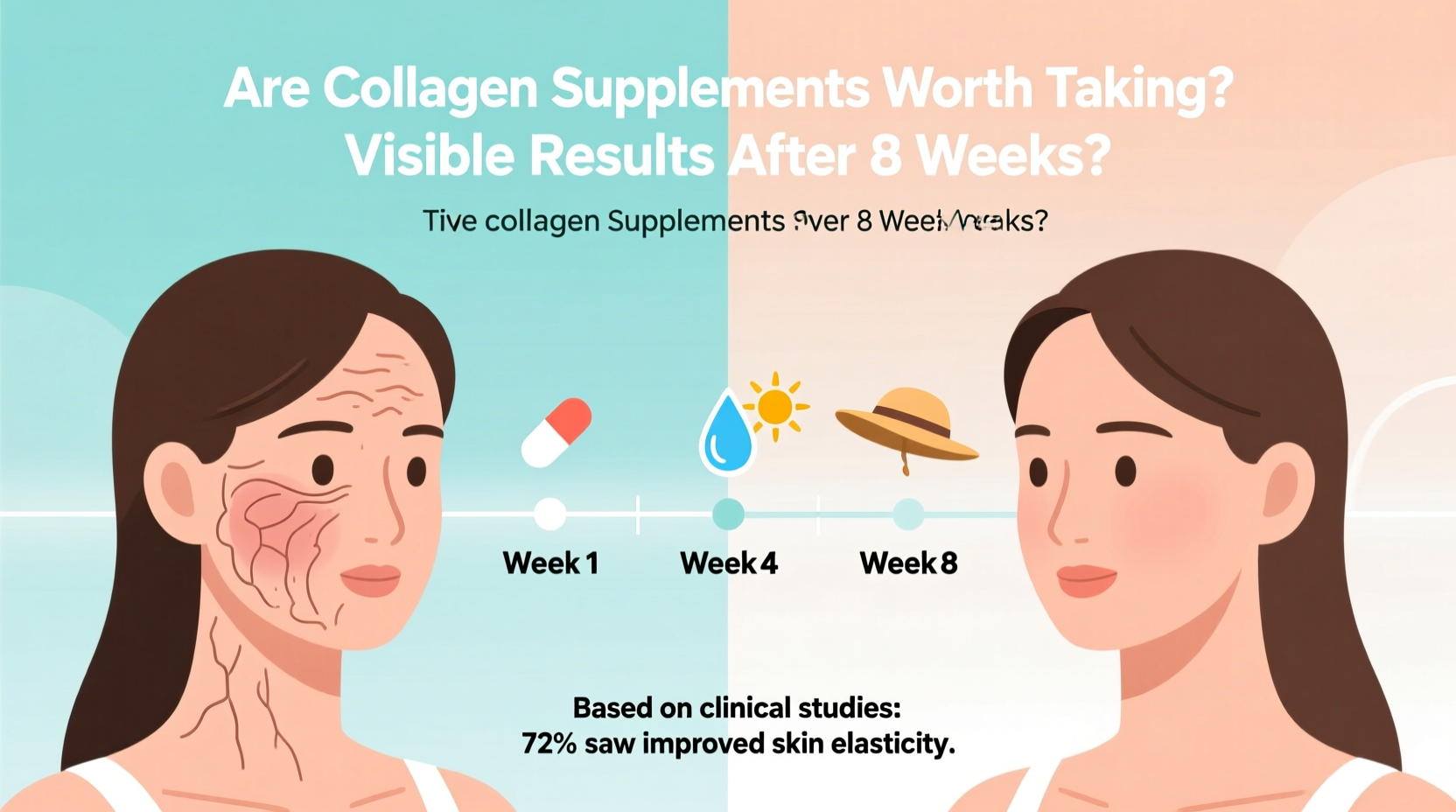
Collagen is the most abundant protein in the human body, making up about 30% of total protein content. It acts as the scaffolding for skin, bones, tendons, ligaments, and cartilage. There are at least 28 types of collagen, but Types I, II, and III account for the vast majority in our bodies.
- Type I: Found in skin, bones, tendons, and organs—responsible for skin elasticity and wound healing.
- Type II: Primarily in cartilage; supports joint health.
- Type III: Often found alongside Type I, especially in muscles, blood vessels, and organs.
Natural collagen production begins to decline around age 25, decreasing by about 1% per year. This gradual loss contributes to wrinkles, thinner skin, brittle nails, and stiffer joints. Environmental factors like UV exposure, smoking, and poor diet accelerate this decline.
Dietary collagen—usually derived from bovine, marine, or chicken sources—is hydrolyzed (broken down into peptides) to enhance absorption. These collagen peptides are absorbed in the gut and distributed to tissues where they may stimulate fibroblasts (skin cells) and chondrocytes (cartilage cells) to produce more collagen and other structural proteins.
“Oral collagen peptides have demonstrated bioavailability and tissue accumulation in multiple studies. They don’t just pass through—they signal repair and regeneration.” — Dr. Laura Mitchell, Nutritional Biochemist
What Science Says About Results Within 8 Weeks
Clinical trials provide some of the clearest insights into how quickly collagen supplements can deliver measurable benefits. While individual results vary, several well-designed studies report statistically significant improvements starting at the 8-week mark.
Skin Health: Smoother, More Hydrated Skin
A 2019 randomized, placebo-controlled study published in Clinics in Dermatology found that women aged 35–55 who took 2.5g of hydrolyzed collagen daily for 8 weeks showed a 20% increase in skin hydration and a noticeable reduction in wrinkle depth compared to the placebo group.
Participants reported softer skin texture and improved elasticity, particularly around the eyes and cheeks. These effects are attributed to increased production of procollagen I and elastin, both essential for firm, resilient skin.
Nails and Hair: Strength and Growth
A 2017 pilot study in the Journal of Cosmetic Dermatology followed 25 participants with brittle nails. After 24 weeks of daily collagen supplementation, 64% reported faster nail growth and a 42% reduction in broken nails. While full results took months, some noticed stronger nails as early as week 6–8.
Though less studied, hair benefits are often reported anecdotally. Collagen contains amino acids like glycine and proline, which support keratin production. Users commonly note reduced shedding and shinier hair within two months—though rigorous data is still emerging.
Joints and Mobility: Reduced Discomfort
For active individuals or those with mild joint wear, collagen may offer functional improvements. A 2018 study in Amino Acids showed athletes taking 5g of collagen peptides daily for 12 weeks experienced reduced joint pain during activity. Some noted relief as early as week 6, with clearer benefits by week 8.
The mechanism appears to involve stimulating cartilage matrix production and reducing inflammatory markers. This makes collagen a potential ally not just for aging joints, but for anyone under physical stress—from weekend runners to desk workers with stiff shoulders.
Realistic Timeline: What to Expect Week by Week
While results aren't overnight, a structured timeline helps set expectations. Below is a realistic progression based on clinical data and user reports:
- Week 1–2: No visible changes. Digestive system adapts. Some report increased energy or better sleep—possibly due to glycine’s calming effect.
- Week 3–4: Early internal shifts. Skin may feel slightly plumper. Joint stiffness might ease during morning movement.
- Week 5–6: Subtle external signs. Nails may resist chipping. Fine lines look softer under good lighting.
- Week 7–8: Measurable differences. Independent observers may notice brighter skin. Joint comfort improves during exercise. Hair feels thicker when washed.
It's important to emphasize that these changes are often subtle—not dramatic transformations. You’re unlikely to look 10 years younger, but you may look more rested, hydrated, and resilient.
Who Benefits Most? Identifying Ideal Candidates
Not everyone experiences the same results. Effectiveness depends on baseline collagen levels, diet, age, and lifestyle. Here’s who typically sees the clearest benefits:
| Group | Likely Benefit | Why It Works |
|---|---|---|
| Women over 35 | Improved skin elasticity, reduced wrinkles | Natural collagen decline accelerates after 30; supplementation offsets loss. |
| Active individuals | Reduced joint discomfort, faster recovery | Collagen supports tendon and cartilage repair under mechanical stress. |
| People with brittle nails | Stronger, longer nails | Direct impact on nail plate structure and growth rate. |
| Poor dietary protein intake | General tissue support | Collagen fills amino acid gaps, especially glycine and proline. |
| Smokers / high UV exposure | Slowed skin aging | Environmental damage depletes collagen; supplementation aids repair. |
If you fall into one or more of these categories, collagen supplementation is more likely to be “worth it” in terms of visible and functional returns.
Maximizing Results: A Practical Checklist
To get the most out of your collagen regimen, follow these evidence-based steps:
- Choose hydrolyzed collagen peptides (Type I & III for skin, Type II for joints)
- Take 2.5g–10g daily—consistency matters more than mega-dosing
- Consume with vitamin C to boost synthesis
- Take on an empty stomach or with light meals for better absorption
- Stay hydrated—collagen needs water to function in tissues
- Avoid high-heat cooking with collagen powder (can denature peptides)
- Combine with a balanced diet rich in antioxidants and protein
- Protect skin from UV rays to preserve new collagen
Mini Case Study: Sarah’s 8-Week Journey
Sarah, a 42-year-old marketing executive, began taking 5g of marine collagen daily after noticing her skin looked dull and her nails kept breaking. She had a busy schedule, spent long hours indoors under fluorescent lights, and rarely ate bone broth or gelatin-rich foods.
She committed to 8 weeks of consistent use: mixing the unflavored powder into her morning coffee with a squeeze of lemon (for vitamin C). She also started drinking more water and applied SPF daily.
By week 6, her daughter commented, “Mom, your skin looks glowy.” By week 8, her dermatologist noted improved skin turgor during a check-up. Her nails grew longer without splitting, and she no longer needed gloves for dishwashing.
Sarah didn’t undergo a dramatic transformation, but the cumulative effect made her feel more confident. “It’s not magic,” she said. “But it’s like my body finally got the building blocks it was missing.”
Frequently Asked Questions
Can vegetarians take collagen supplements?
No, collagen is derived from animal connective tissues—bovine, marine, or poultry. There are no true vegetarian or vegan collagen sources. However, plant-based supplements containing nutrients like vitamin C, lysine, and anthocyanins may support the body’s natural collagen production.
Do topical collagen creams work the same way?
Topical products cannot deliver collagen deep into the dermis because the molecules are too large. While they may moisturize the surface, they don’t stimulate collagen synthesis like oral supplements. For structural change, ingestion is far more effective.
Are there side effects to long-term use?
Collagen supplements are generally safe for most people. Mild digestive symptoms like bloating can occur initially. Because collagen is high in protein, those with kidney disease should consult a doctor before regular use. No serious adverse effects have been reported in clinical trials lasting up to 6 months.
Conclusion: Is It Worth Taking Collagen for 8 Weeks?
The short answer: yes—for many people, collagen supplements are worth taking, and visible results can emerge within 8 weeks. While not a miracle cure, they offer a scientifically supported way to support skin vitality, joint comfort, and nail strength.
The key lies in realistic expectations and consistency. You won’t wake up with flawless skin after one week, but by prioritizing daily intake, supporting it with vitamin C and hydration, and protecting your body from collagen-depleting habits, you create the conditions for meaningful change.
Think of collagen supplementation not as a quick fix, but as foundational nutrition—like taking omega-3s for heart health or calcium for bones. Over time, it contributes to how well your body holds up under the demands of aging, stress, and environment.
“If you’re investing in skincare, fitness, or overall wellness, collagen is a logical addition. It works from within, complementing external efforts.” — Dr. Naomi Reed, Integrative Dermatologist
If you’ve been curious but hesitant, an 8-week trial is a reasonable commitment. Track changes in skin texture, nail strength, and joint mobility. Take photos weekly. Keep a simple journal. By the end, you’ll have your own data to decide: was it worth it?




 浙公网安备
33010002000092号
浙公网安备
33010002000092号 浙B2-20120091-4
Comments
No comments yet. Why don't you start the discussion?