
The cross is one of the most universally recognized symbols in human history. When worn as a ring, it carries immediate visual weight—often assumed to represent Christian faith. Yet, for many wearers, a cross ring is more than a declaration of religion. It can signify personal resilience, cultural heritage, artistic expression, or even rebellion. As fashion trends continue to blur the lines between symbolism and style, it’s worth asking: are cross rings merely religious emblems, or do they carry broader, evolving meanings?
Historical Roots of the Cross Symbol
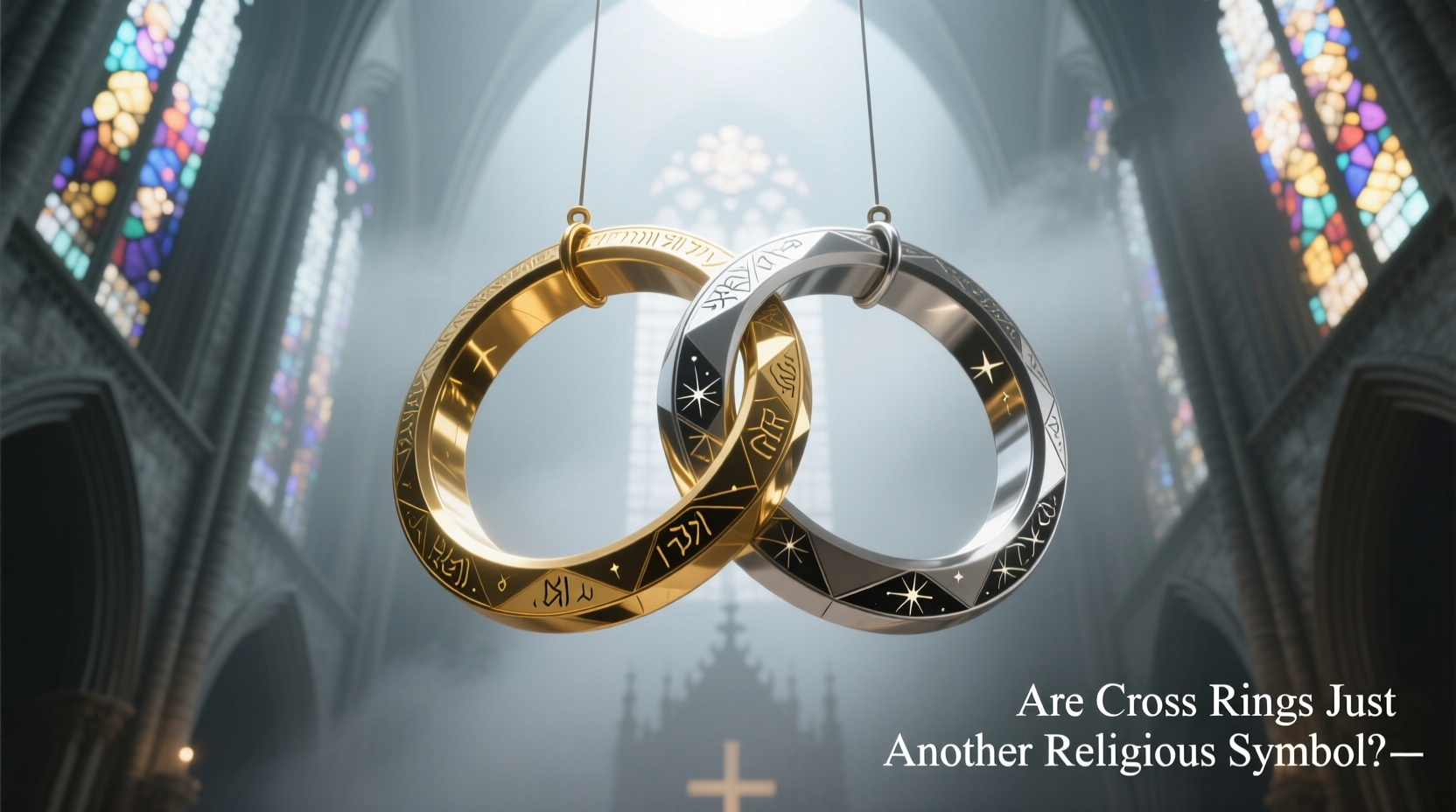
The cross predates Christianity by centuries. Ancient civilizations across Egypt, Mesopotamia, and pre-Columbian America used cross-like shapes in spiritual and cosmological contexts. The Egyptian ankh, often described as a “cross with a loop,” symbolized life and immortality. In Mesoamerican cultures, the cross represented the four cardinal directions and the center of the world.
When early Christians adopted the cross following the crucifixion of Jesus, they transformed a symbol of execution into one of redemption and eternal life. Over time, the Latin cross became central to Christian iconography. Rings bearing crosses began appearing in the Roman Empire as early as the 4th century, especially after Emperor Constantine legalized Christianity. These early cross rings were not only devotional but also served as seals and markers of identity.
“The cross has always been more than a religious sign—it's a vessel of meaning shaped by context, culture, and personal conviction.” — Dr. Miriam Hale, Cultural Anthropologist, University of Edinburgh
Religious Significance in Modern Times
For millions of Christians today, wearing a cross ring remains a quiet but powerful affirmation of faith. It may be received during rites of passage like baptism, confirmation, or marriage. Some believers view it as a protective talisman or a daily reminder of spiritual commitment.
In denominations such as Catholicism, Anglicanism, and Eastern Orthodoxy, cross jewelry—including rings—is often blessed and treated with reverence. Clergy members may wear ornate cross rings as part of ecclesiastical regalia, symbolizing their office and devotion.
However, even within religious communities, the meaning isn’t uniform. A simple silver cross might reflect humility and personal prayer for one person, while an elaborate gold version could signal status or tradition for another.
Beyond Religion: Cultural and Personal Meanings
In contemporary society, cross rings have transcended doctrinal boundaries. Many who wear them identify as spiritual but not religious, using the symbol to express values like sacrifice, love, or inner strength. Others adopt it as part of ethnic or familial identity—especially among communities with deep Christian roots, such as Irish, Italian, or Filipino families.
Fashion has played a major role in secularizing the cross. Designers from Dolce & Gabbana to Alexander McQueen have incorporated cross motifs into high-end jewelry, often divorcing them from explicit religious connotations. Worn on runways or red carpets, these pieces speak more to aesthetic boldness than piety.
Moreover, subcultures have reinterpreted the cross in striking ways. In punk and goth movements, inverted or spiked cross rings challenge mainstream norms, symbolizing nonconformity or critique of institutional religion. For some, this isn’t sacrilege—it’s reclaiming autonomy over sacred imagery.
Symbolism Across Materials and Designs
The design of a cross ring significantly influences its perceived meaning. Below is a comparison of common styles and their typical associations:
| Design | Common Material | Typical Meaning | Cultural Context |
|---|---|---|---|
| Simple Latin Cross | Silver or Gold | Christian faith, devotion | Mainstream religious use |
| Celtic Cross | Sterling Silver | Heritage, eternity, connection to nature | Irish, Scottish ancestry |
| Inverted Cross | Blackened metal, onyx | Rebellion, anti-establishment, artistic provocation | Punk, goth, rock culture |
| Filigree or Ornate Cross | Gold, gemstone accents | Luxury, tradition, family heirloom | Formal or ceremonial use |
| Minimalist Line Cross | Titanium, ceramic | Modern spirituality, subtle symbolism | Secular mindfulness communities |
This diversity shows that cross rings are not monolithic in meaning. Their significance shifts based on craftsmanship, styling, and the individual’s narrative.
A Real-Life Example: Maria’s Story
Maria, a 28-year-old graphic designer from Brooklyn, wears a small, hammered silver cross ring every day. She was raised Catholic but no longer attends church regularly. For her, the ring isn’t about doctrine—it belonged to her grandmother, who wore it through war, migration, and widowhood. “It reminds me of resilience,” Maria says. “Not necessarily divine protection, but human endurance. My grandma survived so much. This ring is my anchor when I feel lost.”
Her story illustrates how a cross ring can evolve from a religious token into a deeply personal emblem of memory, strength, and continuity.
How to Choose a Cross Ring with Intention
If you're considering wearing or gifting a cross ring, intentionality matters. Here’s a step-by-step guide to help you align the piece with your values:
- Reflect on your purpose. Are you expressing faith, honoring heritage, making a fashion statement, or commemorating someone?
- Research the design. Learn about variations like the Coptic cross, Russian Orthodox cross, or St. Thomas cross—each has unique cultural roots.
- Consider the material. Precious metals suggest permanence; alternative materials may reflect modernity or rebellion.
- Think about visibility. A subtle band may serve as a private reminder, while a bold piece invites conversation.
- Respect context. In interfaith settings or diverse workplaces, be mindful of how symbols may be interpreted.
Checklist: What Your Cross Ring Might Say About You
- ✅ I identify with Christian teachings—or am exploring them
- ✅ I value family traditions and ancestral connections
- ✅ I appreciate symbolic art and meaningful accessories
- ✅ I want to express individuality through provocative or edgy design
- ✅ I seek a daily reminder of strength, hope, or transformation
Frequently Asked Questions
Is it disrespectful to wear a cross ring if I’m not religious?
Not inherently. While some may view it as appropriation, many see it as a valid form of personal or cultural expression. The key is awareness and respect. If you’re drawn to the symbol for its aesthetic or philosophical resonance, that can be legitimate—as long as you’re sensitive to its origins and avoid mocking or trivializing sacred meanings.
Does an inverted cross always mean Satanism?
No. Despite popular misconceptions, the inverted cross has multiple interpretations. Historically, it’s associated with Saint Peter, who was crucified upside down and requested not to die in the same manner as Jesus. To some Christians, it represents humility. In modern fashion and music, it’s often used for dramatic effect rather than theological statements. Context determines meaning.
Can a cross ring be a romantic gift?
Absolutely. Many couples exchange cross rings as tokens of shared values, enduring love, or spiritual partnership. In engagements or weddings within Christian traditions, a cross ring can complement or replace traditional bands. Even outside religious frameworks, it can symbolize a bond that “crosses” boundaries—emotional, cultural, or social.
Conclusion: More Than Meets the Eye
A cross ring is never just a piece of jewelry. Whether rooted in faith, forged in fashion, or passed down through generations, it carries layers of meaning that shift with time and perspective. Reducing it to a single interpretation—religious or otherwise—overlooks its complexity and emotional power.
Understanding the cross ring requires looking beyond the surface: at history, identity, design, and personal journey. In a world where symbols are constantly redefined, the cross endures not because it has one fixed meaning, but because it can hold many.




 浙公网安备
33010002000092号
浙公网安备
33010002000092号 浙B2-20120091-4
Comments
No comments yet. Why don't you start the discussion?