
On a bright summer day, slipping on a pair of sunglasses isn’t just about style—it’s about protecting your eyes from harmful UV rays, reducing glare, and enhancing visual clarity. As you browse options, a question inevitably arises: Are designer sunglasses truly superior to their more affordable, polarized counterparts? With prices ranging from $20 at a drugstore to over $400 for luxury brands, the answer isn’t as straightforward as “you get what you pay for.” The real differences lie in materials, lens technology, fit, longevity, and branding. This article dissects every factor that matters so you can make an informed decision without overspending—or underprotecting your vision.
Understanding Polarization and UV Protection
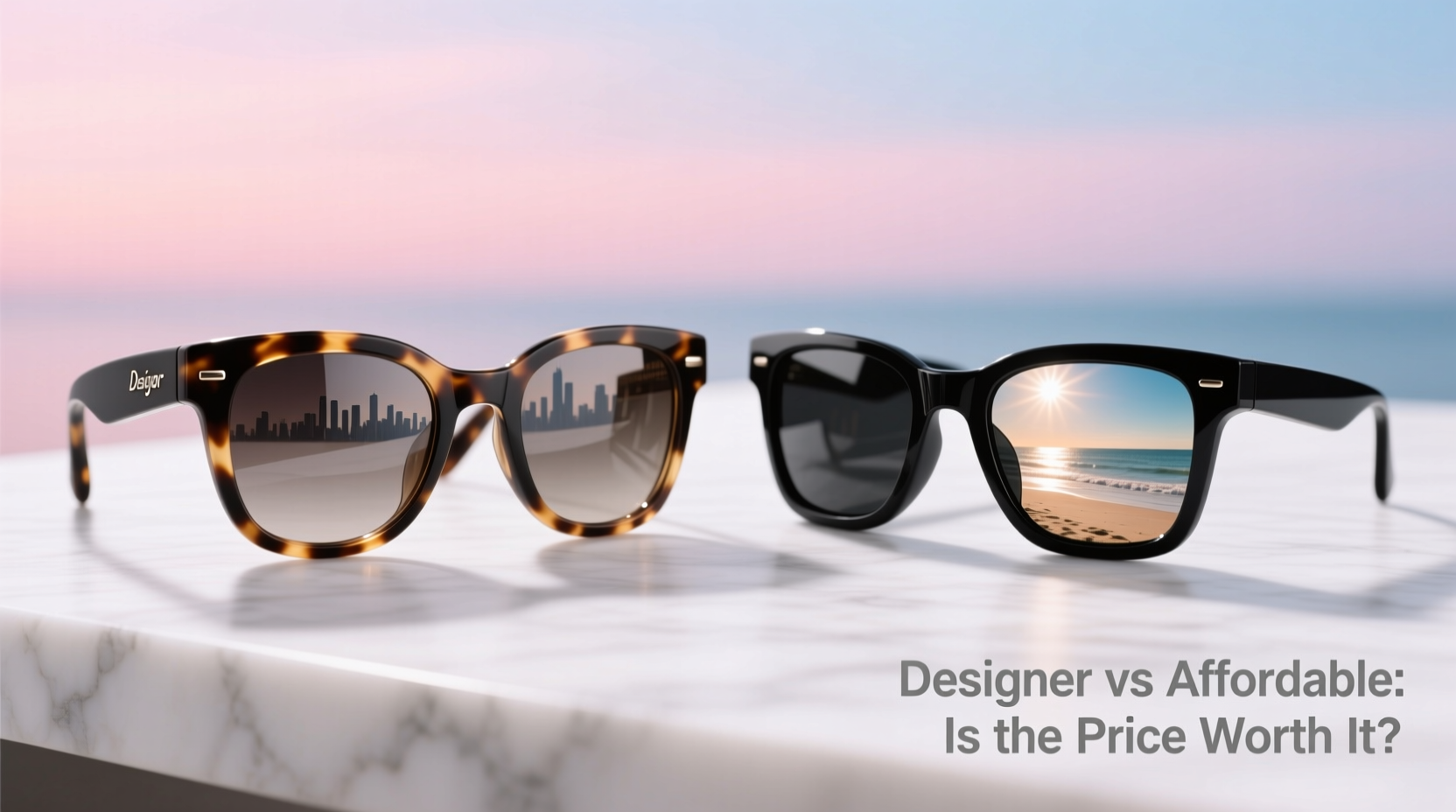
Polarization is one of the most misunderstood features in sunglasses. It refers to a special filter embedded in the lens that blocks intense reflected light—particularly horizontal glare from surfaces like water, snow, or asphalt. This results in sharper vision, reduced eye strain, and improved contrast. However, polarization does not automatically mean UV protection.
UV protection is non-negotiable. Prolonged exposure to UVA and UVB rays increases the risk of cataracts, macular degeneration, and photokeratitis (sunburn of the cornea). The good news? Most reputable sunglasses—regardless of price—offer 100% UVA/UVB protection if labeled as such. The American Academy of Ophthalmology recommends choosing lenses that block 99–100% of UV rays.
Affordable polarized sunglasses from trusted optical brands often meet these standards. Designer models do too, but they may not offer significantly better UV blocking. In fact, many high-end labels outsource lens production to the same manufacturers used by mid-tier brands. The key difference often lies in lens clarity, color fidelity, and anti-reflective coatings—not necessarily UV defense.
Optical Quality: Clarity, Distortion, and Color Accuracy
This is where premium sunglasses begin to pull ahead. While budget polarized lenses reduce glare effectively, they sometimes suffer from optical distortions—especially around the edges. Cheaper plastic lenses may warp slightly during manufacturing, leading to a “fishbowl” effect when scanning wide areas. They might also alter color perception, making greens appear overly saturated or skies unnaturally dark.
Designer sunglasses typically use higher-grade materials like polycarbonate, Trivex, or even glass. These materials are more resistant to warping and provide truer optical clarity. Many luxury brands invest in proprietary lens technologies—for example, Ray-Ban’s G-15 or Bollé’s ChromaPop—that enhance contrast and depth perception while maintaining natural color balance.
“Lens quality affects not just comfort, but safety—especially while driving. Distorted vision can delay reaction time.” — Dr. Lena Torres, Optometrist and Vision Researcher
Independent lab tests have shown that high-end lenses often score better in metrics like light transmission consistency and edge distortion. But the gap is narrowing. Brands like Tifosi, Oakley, and even Amazon’s Solano line now offer polarized lenses with minimal distortion at a fraction of designer prices.
Frame Materials and Durability Comparison
The frame plays a crucial role in both comfort and longevity. Designer sunglasses frequently use premium materials such as acetate, titanium, or lightweight alloys. Acetate, derived from plant-based cellulose, is favored for its rich color depth, flexibility, and resistance to aging. Titanium frames are corrosion-resistant and extremely durable, ideal for active lifestyles.
In contrast, budget sunglasses often rely on lower-grade plastics or flimsy metal alloys. These materials may crack under pressure, lose spring in the hinges, or fade in sunlight over time. Thin metal arms can bend easily, and nose pads made from cheap silicone may degrade or leave marks on the skin.
| Feature | Designer Sunglasses | Affordable Polarized Sunglasses |
|---|---|---|
| Lens Material | Polycarbonate, Trivex, Glass | Basic Polycarbonate or Plastic |
| Frame Material | Acetate, Titanium, Stainless Steel | Mixed Plastics, Low-Grade Metal |
| Hinge Quality | Springs, Reinforced Joints | Basic Hinges, Prone to Loosening |
| UV Protection | Standard (100%) | Varies (Check Label) |
| Price Range | $150–$400+ | $15–$80 |
| Average Lifespan | 3–7 years (with care) | 1–3 years |
Durability isn’t just about surviving drops. It’s about long-term wear: how well the finish holds up, whether screws stay tight, and if the fit remains consistent after months of daily use. Designer frames often come with replaceable parts—like nose pads or temples—which extends their usable life. Budget models are usually disposable by design.
Real-World Performance: A Mini Case Study
Consider Sarah, a landscape photographer who spends long days shooting near lakes and coastal cliffs. She initially bought a $25 pair of polarized sunglasses from a travel store. They reduced glare and looked decent, but after three weeks of frequent use, the left temple snapped at the hinge. More importantly, she noticed that colors in her preview screen seemed off—greens were oversaturated, which affected her post-processing decisions.
She upgraded to a $220 pair of Maui Jim sunglasses, known for their color-enhancing polarization technology. Immediately, she reported clearer vision, especially in mixed lighting conditions. Over six months of rugged fieldwork, the frames showed no signs of wear. The lenses resisted scratches, and the rubberized grip kept them stable during windy shoots.
Was the upgrade worth it? For Sarah, yes—because her work depends on accurate visual input and gear reliability. But for someone driving to work or walking the dog, the $25 pair may be perfectly adequate, provided it offers true UV400 protection.
Brand Value vs. Functional Value
Let’s address the elephant in the room: branding. A significant portion of the cost of designer sunglasses goes toward marketing, celebrity endorsements, retail markup, and logo licensing. Gucci, Prada, and Dior sunglasses often feature the same lens technology as mid-tier brands but carry a prestige premium.
For some consumers, wearing designer frames is part of personal expression or professional image. There’s nothing wrong with valuing aesthetics and status—just recognize that you’re paying for more than performance. In blind tests, many people cannot distinguish between high-end and mid-range lenses based on clarity alone.
That said, established eyewear brands like Ray-Ban, Oakley, and Persol have invested decades in research and development. Their designs are refined through real-world feedback, resulting in better ergonomics, weight distribution, and facial fit across different head shapes. These subtle advantages add up over time.
How to Choose the Right Sunglasses: A Practical Checklist
Whether you’re shopping for $30 or $300, use this checklist to ensure you’re getting quality protection and value:
- Confirm UV400 protection – Never compromise on this, regardless of price.
- Test for polarization – Look at a digital screen (like your phone) and tilt your head sideways. If the screen darkens, the lenses are polarized.
- Check for optical clarity – Look through the lens at a straight line (e.g., a door frame). Move the glasses side to side. If the line wavers or distorts, the lenses are subpar.
- Evaluate frame fit – They should rest comfortably on your ears and nose without pinching or sliding.
- Inspect hinge strength – Open and close the arms multiple times. They should snap shut firmly without looseness.
- Assess lens coverage – Larger lenses offer more peripheral protection, important for side-angle UV exposure.
- Consider your lifestyle – Active users need impact-resistant lenses (look for ANSI Z87.1 rating); drivers benefit from neutral gray or brown tints.
Frequently Asked Questions
Do all polarized sunglasses block UV rays?
No. Polarization and UV protection are separate features. Always verify that the sunglasses explicitly state they block 100% of UVA and UVB rays or meet UV400 standards.
Can affordable sunglasses last as long as designer ones?
Possibly, but it depends on build quality and usage. Well-made mid-range brands (e.g., Tifosi, Sunski, or Rudy Project) can last several years with careful handling. However, they generally lack the repairability and material resilience of high-end models.
Are prescription sunglasses worth the designer price?
If you require corrective lenses, investing in quality frames makes more sense. Premium brands offer better integration of prescription lenses with polarization and anti-reflective coatings. Plus, durable frames justify the higher upfront cost over time.
Conclusion: Balancing Cost, Quality, and Purpose
So, are designer sunglasses really better than affordable polarized ones? The answer depends on your needs. For basic UV protection and glare reduction, many affordable options perform admirably. You don’t need to spend hundreds to safeguard your eyes.
However, if you demand superior optical clarity, long-term durability, ergonomic fit, and advanced lens technologies, designer or premium-performance brands deliver tangible benefits. The investment pays off in comfort, visual accuracy, and fewer replacements over time.
The smart approach is to prioritize function first: confirm UV protection, test lens quality, and assess fit. Then decide how much you value brand, aesthetics, and longevity. Whether you choose a $20 pair for occasional use or a $300 heirloom-quality model, the best sunglasses are the ones that protect your eyes consistently and suit your lifestyle.




 浙公网安备
33010002000092号
浙公网安备
33010002000092号 浙B2-20120091-4
Comments
No comments yet. Why don't you start the discussion?