
For decades, dental professionals have emphasized the importance of gentle yet effective brushing to maintain healthy gums. Yet many people unknowingly apply too much force when brushing, especially with manual or even standard electric toothbrushes. This over-brushing can lead to gum recession, enamel wear, and increased sensitivity. In recent years, electric toothbrushes equipped with pressure sensors have gained popularity—marketed as smarter, safer tools for oral care. But do they truly make a difference for gum health? The answer lies in understanding how these sensors work, who benefits most, and what clinical evidence supports their use.
How Pressure Sensors Work in Electric Toothbrushes
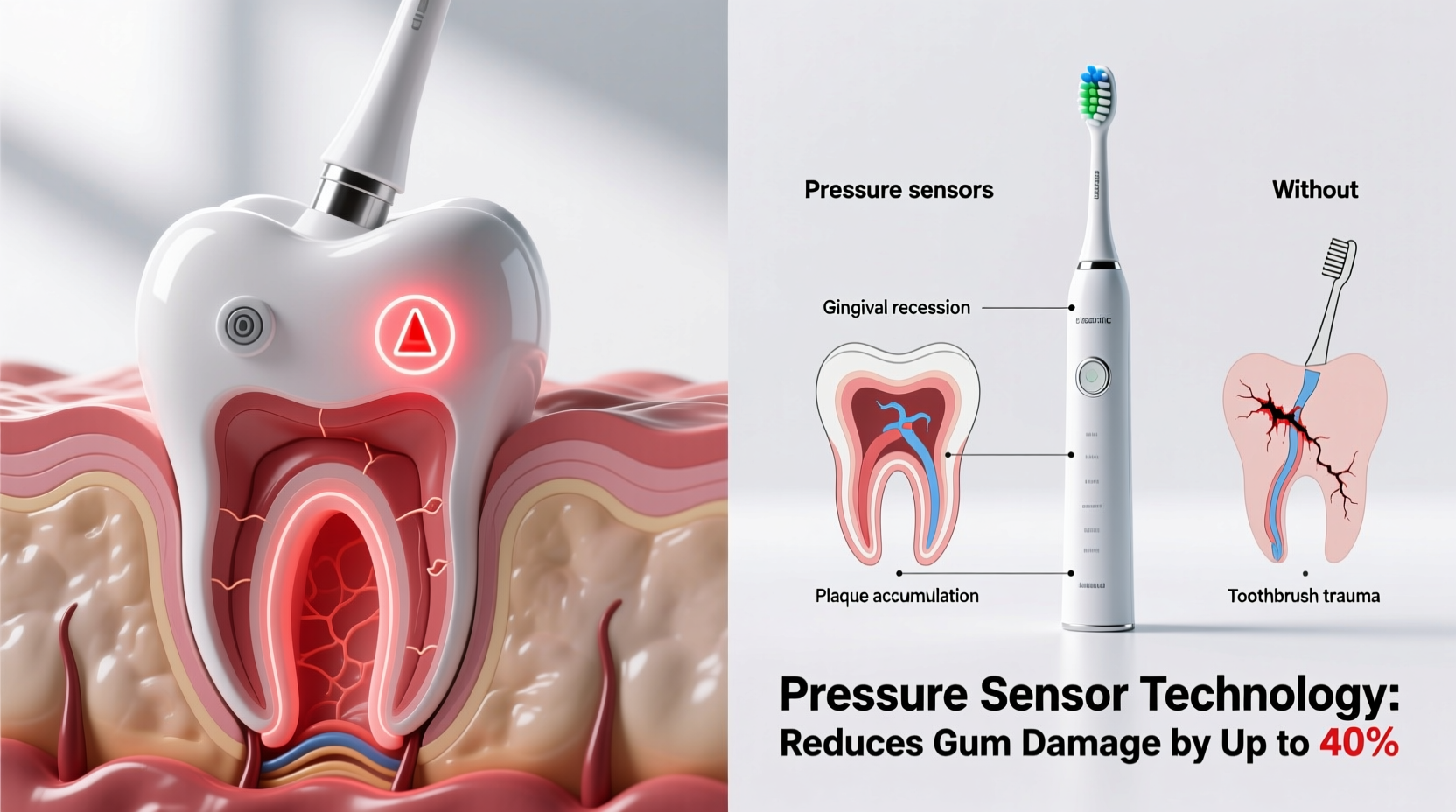
Pressure sensors in electric toothbrushes are designed to detect excessive force applied during brushing. When users press too hard against their teeth and gums, the sensor triggers a response—typically a pause in brushing motion, a change in vibration pattern, or an illuminated warning light. Some models even connect via Bluetooth to companion apps that provide real-time feedback and track brushing habits over time.
The technology relies on small internal mechanisms—often piezoelectric sensors or strain gauges—that measure resistance or deformation caused by applied pressure. Once a preset threshold is exceeded (usually between 150–300 grams of force), the toothbrush intervenes to prevent damage.
This isn’t just a gimmick. Research from the *Journal of Clinical Periodontology* shows that brushing forces above 300 grams significantly increase the risk of gingival recession and cervical abrasion. By alerting users before reaching this threshold, pressure sensors serve as both preventive tools and educational aids.
Why Excessive Brushing Force Harms Gums
Gum tissue is delicate. While plaque removal requires some friction, aggressive brushing does more harm than good. Over time, excessive lateral force—especially with medium or hard bristles—can cause:
- Gingival recession (gums pulling away from teeth)
- Root exposure leading to sensitivity
- Notching at the gumline (abrasion lesions)
- Increased risk of periodontal issues due to compromised tissue integrity
A study published in *The Journal of the American Dental Association* found that nearly 30% of adults exhibit signs of non-carious cervical lesions, many of which are attributed to abrasive brushing techniques. These problems are not limited to manual brushes; high-speed oscillating electric models can exacerbate damage if used improperly.
People with naturally thin gum biotypes, those undergoing orthodontic treatment, or individuals with gum disease are particularly vulnerable. For them, a pressure-sensitive toothbrush isn’t merely an upgrade—it’s a protective measure.
“Many patients come in with clean teeth but receding gums. They’re doing everything right—except controlling the pressure. A smart brush can correct that silently and consistently.” — Dr. Lena Torres, Periodontist and Clinical Instructor at NYU College of Dentistry
Comparing Standard vs. Pressure-Sensing Electric Toothbrushes
To assess whether pressure sensors offer tangible advantages, it helps to compare features and outcomes across different types of electric toothbrushes.
| Feature | Standard Electric Toothbrush | Electric Toothbrush with Pressure Sensor |
|---|---|---|
| Force Feedback | None | Visual, haptic, or app-based alerts |
| Brushing Technique Correction | Relies on user awareness | Real-time correction |
| Impact on Gum Recession Risk | Moderate to high (if misused) | Lower, with consistent use |
| User Learning Curve | Longer; depends on self-monitoring | Shorter; guided by feedback system |
| Price Range (USD) | $30–$80 | $80–$250 |
| App Integration | Rare | Common in premium models |
While both types effectively remove plaque when used correctly, the key differentiator is consistency in safe technique. Without feedback, users may unknowingly revert to aggressive brushing, especially when rushed or distracted. Pressure-sensing models help close this behavioral gap.
Who Benefits Most from Pressure Sensors?
Not every user needs a pressure-sensitive toothbrush, but certain groups see measurable improvements in gum health:
- Individuals with gum disease or history of recession: These users must avoid further trauma. Sensors act as safeguards during daily hygiene routines.
- New electric toothbrush adopters: Transitioning from manual to electric can lead to overcompensation. A sensor helps recalibrate force application.
- Orthodontic patients: Braces trap plaque, prompting more vigorous cleaning attempts. Sensors prevent adjacent gum damage.
- Children and teens: Younger users often lack fine motor control and may benefit from immediate feedback.
- Aggressive brushers: Self-reported \"scrubbers\" or those advised by dentists to lighten their touch gain the most from corrective technology.
A mini case study illustrates this well: Sarah, a 34-year-old graphic designer, visited her hygienist complaining of increasing tooth sensitivity. Upon examination, she showed early-stage gum recession on her upper front teeth. She brushed twice daily with a rotating electric toothbrush but admitted to “scrubbing hard” because she wanted her teeth to feel “super clean.” Her dentist recommended switching to a model with a pressure sensor. After six weeks, her brushing data (via app tracking) showed a 60% reduction in high-pressure episodes. At her next checkup, gum inflammation had decreased, and sensitivity improved significantly.
Step-by-Step Guide to Using a Pressure-Sensitive Toothbrush Effectively
Simply owning a smart toothbrush doesn’t guarantee better results. Proper usage ensures maximum benefit for your gums. Follow this sequence:
- Read the manual: Understand how your model signals overpressure—flashing light, pulsing stop, sound cue, or app notification.
- Start without toothpaste: For the first two brushings, dry-test the brush to learn the pressure threshold. Notice when the alert activates.
- Use proper angle: Hold the brush at a 45-degree angle to the gumline, letting bristles do the work. No scrubbing needed.
- Divide your mouth into quadrants: Spend 30 seconds per section (total 2 minutes). Move slowly—don’t rush to cover area.
- Let the brush respond: If the pressure indicator activates, ease up immediately. Reapply gently.
- Review app data weekly (if available): Track trends in brushing force and duration. Look for improvement over time.
- Schedule a dental check-in: Ask your hygienist to evaluate gum condition after 8–12 weeks of consistent use.
Do Pressure Sensors Improve Plaque Removal?
A common concern is whether reducing brushing force compromises cleaning efficacy. Fortunately, research indicates otherwise. A randomized controlled trial conducted by the University of Bern found that participants using pressure-sensor toothbrushes removed just as much plaque as those using standard electric models—but with significantly less gingival abrasion.
The reason? Modern sonic and oscillating brushes generate thousands of micro-movements per minute, disrupting biofilm mechanically rather than relying on user-applied pressure. In fact, pressing harder can flatten bristles, reducing their ability to reach between teeth and along the gumline. Light, consistent contact allows optimal bristle flex and penetration.
In essence, pressure sensors don’t hinder cleaning—they enhance it by promoting ideal brushing dynamics.
Frequently Asked Questions
Can I damage my gums even with a soft-bristled electric toothbrush?
Yes. Even soft bristles can cause harm if excessive lateral force is applied over time. The combination of high pressure and repetitive motion is the primary culprit behind gum recession, regardless of bristle type.
Are all pressure sensors equally effective?
No. Sensitivity and response mechanisms vary by brand. Philips Sonicare and Oral-B iO series are among the most responsive, with precise detection and intuitive feedback. Cheaper models may have delayed or inconsistent alerts.
Do I still need to visit the dentist regularly if I use a smart toothbrush?
Absolutely. No home device replaces professional cleaning and evaluation. Sensors support daily care, but only a dentist can diagnose early gum disease, perform scaling, and assess overall oral health.
Checklist: Choosing the Right Pressure-Sensing Toothbrush
Before purchasing, consider these criteria to ensure you select a model that genuinely supports gum health:
- ✅ Confirmed pressure sensor with clear feedback (light, pulse, or sound)
- ✅ ADA Seal of Acceptance or equivalent certification
- ✅ Adjustable intensity settings for sensitive users
- ✅ Timer with quadrant pacing (every 30 seconds)
- ✅ Replaceable brush heads with soft bristles
- ✅ App connectivity (optional but helpful for tracking)
- ✅ Comfortable grip and balanced weight
Conclusion: Smarter Brushing for Healthier Gums
Electric toothbrushes with pressure sensors aren’t just technological novelties—they represent a meaningful advancement in preventive oral care. By addressing one of the most common yet overlooked causes of gum damage, they empower users to brush effectively without compromising tissue health. Clinical evidence, expert opinion, and real-world outcomes consistently support their value, particularly for individuals prone to overbrushing or gum sensitivity.
The investment may be higher upfront, but the long-term benefits—reduced recession, less sensitivity, and stronger gum attachment—make these devices a wise choice for anyone serious about preserving their smile. Technology works best when it guides behavior, not just automates tasks. In that spirit, a pressure-sensing toothbrush does more than clean teeth; it teaches healthier habits, one gentle sweep at a time.




 浙公网安备
33010002000092号
浙公网安备
33010002000092号 浙B2-20120091-4
Comments
No comments yet. Why don't you start the discussion?