
Facial rollers have surged in popularity over the past decade, gracing Instagram feeds, celebrity skincare routines, and luxury beauty counters. From cool jade to rose quartz and stainless steel variants, these tools promise glowing skin, reduced puffiness, and even long-term anti-aging benefits. But behind the glossy marketing lies a critical question: Are facial rollers actually delivering measurable, lasting results—or are they simply offering a fleeting sense of refreshment with no real dermatological impact?
The answer isn’t binary. While facial rollers aren’t miracle devices capable of replacing medical-grade treatments, they do offer tangible short-term benefits and may support long-term skin health when used correctly as part of a comprehensive routine. Understanding what’s scientifically supported versus what’s anecdotal is key to making informed decisions about incorporating them into your regimen.
The Science Behind Facial Rolling: Lymphatic Drainage and Circulation
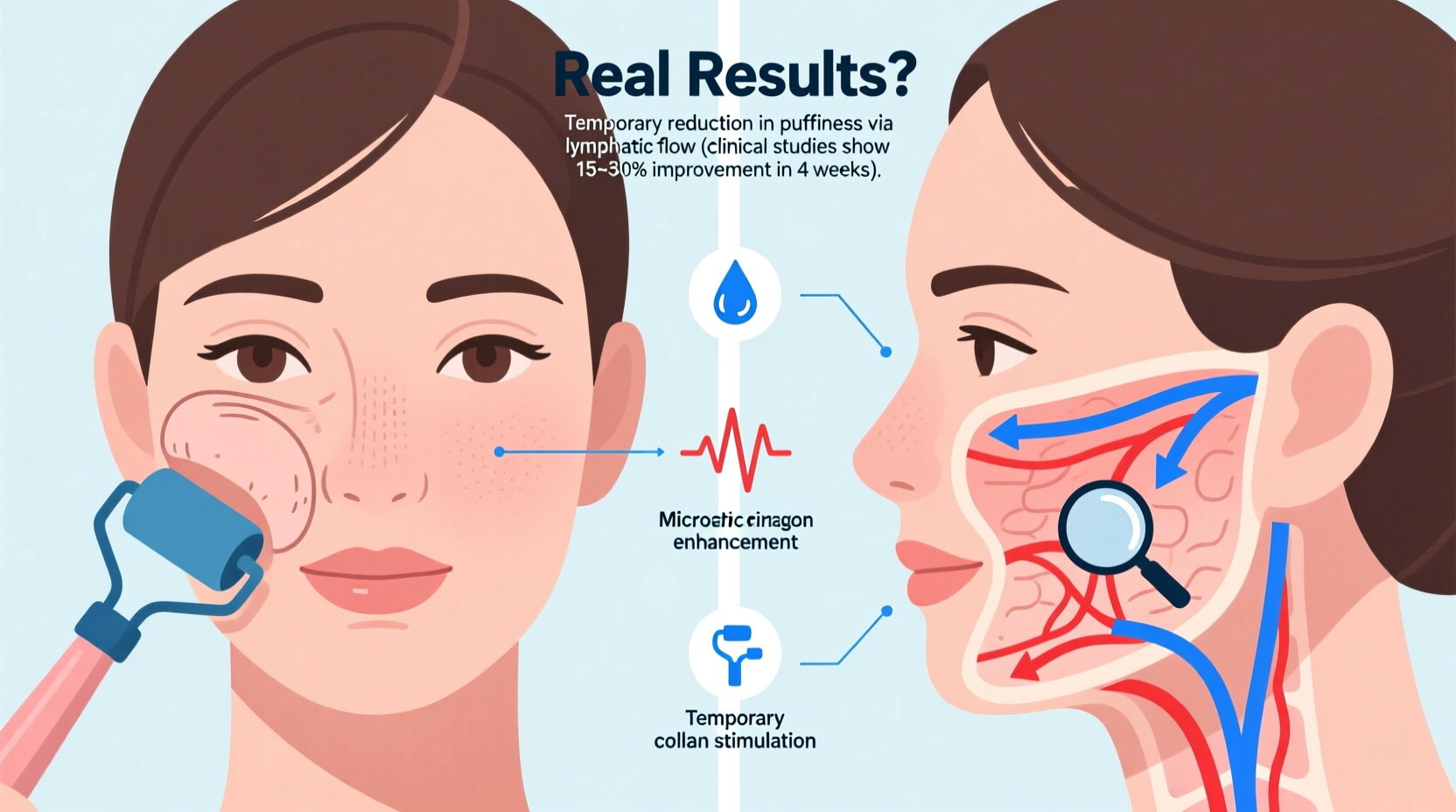
One of the primary claims associated with facial rollers is their ability to stimulate lymphatic drainage. The lymphatic system plays a crucial role in removing waste, excess fluid, and toxins from tissues. When this system becomes sluggish—often due to poor sleep, high sodium intake, or stress—it can contribute to facial puffiness, particularly around the eyes and jawline.
Facial rolling applies gentle pressure along specific pathways (typically under the eyes, along the jaw, and up toward the lymph nodes near the ears and neck), encouraging fluid movement. A 2020 study published in *Clinical, Cosmetic and Investigational Dermatology* observed that manual lymphatic drainage techniques led to visible reductions in periorbital puffiness within 10–15 minutes. While the study didn’t focus on rollers specifically, it supports the principle that directed massage can influence fluid dynamics in facial tissue.
In addition to lymphatic stimulation, rolling increases localized blood circulation. Enhanced blood flow delivers more oxygen and nutrients to the skin, which can result in a temporary “glow” or improved radiance. This effect is similar to what occurs after a brisk facial massage or steaming, though the roller’s cooling surface amplifies the sensation.
What Facial Rollers Can (and Cannot) Do
It's important to separate realistic outcomes from exaggerated claims. Many brands market facial rollers as tools that can \"lift\" sagging skin, erase fine lines, or replace professional treatments like microneedling or radiofrequency therapy. These assertions lack clinical backing.
Here’s a clear breakdown of what facial rollers can and cannot achieve:
| Claim | Supported? | Explanation |
|---|---|---|
| Reduces morning puffiness | ✅ Yes | Short-term fluid redistribution via lymphatic stimulation. |
| Improves product absorption | 🟡 Partially | Rolling may help press serums deeper into the epidermis, but evidence is limited. |
| Reduces wrinkles over time | ❌ No | No studies show rollers reverse collagen loss or dermal aging. |
| Tones facial muscles | ❌ No | Facial rollers don't provide resistance or neuromuscular stimulation needed for toning. |
| Enhances skin radiance | ✅ Yes | Increased microcirculation gives a temporary healthy glow. |
| Minimizes pore appearance | 🟡 Temporary | Reduced swelling can tighten skin slightly, but pores remain unchanged structurally. |
The most consistent benefit users report—and one supported by both anecdote and physiology—is immediate visual improvement in puffiness and dullness. However, these effects typically last only a few hours unless the practice is repeated daily.
Step-by-Step Guide to Effective Facial Rolling
To maximize benefits and avoid irritation, technique matters. Improper pressure or incorrect motion can stretch delicate skin or spread bacteria. Follow this dermatologist-approved sequence:
- Cleanse and prep: Start with a clean face. Apply a facial oil, serum, or moisturizer to reduce friction.
- Begin at the center: Use the smaller end of the roller under the eyes, starting at the inner corner and moving outward toward the temples.
- Move along the jawline: Place the roller at the chin and glide downward and backward along the jaw to the lymph nodes below the ears.
- Work upward on cheeks: Starting from the nose, roll outward and upward along the cheekbones to the hairline.
- Forehead strokes: Begin at the center of the forehead and roll outward and upward toward the hairline.
- Neck and décolletage: Don’t skip this area. Roll downward from the jaw to the collarbone to encourage full drainage.
- Duration: Spend 3–5 minutes total. Over-rolling can cause inflammation.
Use gentle, upward, and outward motions. Never tug or drag aggressively. Think of it as guiding fluid—not scrubbing skin.
“While facial rollers won’t replace retinoids or sunscreen, they can be a valuable adjunct for patients dealing with chronic puffiness or those seeking a non-invasive way to enhance product penetration.” — Dr. Lena Park, Board-Certified Dermatologist
Real-World Example: A Week of Consistent Rolling
Sophie, a 34-year-old graphic designer, struggled with persistent under-eye puffiness due to irregular sleep and high screen time. Skeptical but curious, she incorporated a 5-minute morning rolling routine using a chilled jade roller and a hyaluronic acid serum for seven consecutive days.
By day three, she noticed her concealer applied more smoothly and lasted longer. On day five, her partner commented that she looked “less tired.” By the end of the week, Sophie reported a subjective 40% reduction in morning puffiness and an increased sense of ritual in her skincare routine. She did not observe changes in wrinkles or firmness, but valued the psychological boost and subtle aesthetic improvement.
This case illustrates a common outcome: modest but meaningful short-term enhancement without transformative results. The ritual itself—mindful touch, cool sensation, dedicated self-care time—contributed significantly to Sophie’s satisfaction.
Expert Insights and Common Misconceptions
Despite growing popularity, misconceptions persist. Some influencers claim that facial rollers “detox” the skin or “align energy meridians,” borrowing loosely from traditional Chinese medicine (TCM). While gua sha tools have roots in TCM, modern facial rollers are primarily cosmetic devices, not medical instruments.
Dr. Alicia Chen, a dermatologist specializing in integrative skincare, clarifies: “The idea of ‘energy flow’ isn’t something we can measure clinically. What we can measure is circulation, inflammation markers, and edema. Rolling affects those—modestly—but it’s not altering your biology in a profound way.”
Another myth is that certain stones—like jade or amethyst—emit healing vibrations. There’s no scientific evidence supporting energetic properties of crystals in skincare. Any benefit from stone type comes down to thermal conductivity and smoothness. Jade stays cool longer than plastic, which enhances comfort and vasoconstriction, but its mineral composition doesn’t interact with skin biochemistry.
Checklist: How to Use a Facial Roller Effectively
- ✅ Clean your roller before and after each use with mild soap and water
- ✅ Store it in the fridge for added de-puffing power
- ✅ Use with a slip-friendly product (oil, serum, gel)
- ✅ Roll upward and outward—never downward against gravity
- ✅ Limit sessions to 3–5 minutes to prevent overstimulation
- ✅ Replace cracked or pitted rollers to avoid bacterial buildup
- ✅ Pair with other proven treatments (sunscreen, antioxidants, retinoids)
Frequently Asked Questions
Can facial rollers really reduce acne or breakouts?
No, facial rollers do not treat acne. In fact, if not cleaned properly, they can harbor bacteria and potentially worsen breakouts. They should be avoided entirely during active inflammatory acne flare-ups, as pressure may aggravate lesions.
How often should I use a facial roller?
Daily use is safe for most people, especially in the morning to combat puffiness. Some prefer evening use to unwind. If you have sensitive or reactive skin, limit use to 2–3 times per week to avoid overstimulation.
Are expensive rollers worth the price?
Not necessarily. While natural stone rollers feel luxurious and retain cold well, high-quality synthetic or medical-grade stainless steel options can deliver similar physical effects at a lower cost. The tool’s design and hygiene matter more than material rarity.
Conclusion: Realistic Expectations for Real Results
Facial rollers are not magic wands, but they are far from meaningless. They offer measurable, albeit temporary, improvements in puffiness, circulation, and skin texture when used correctly. Their true value may lie as much in ritual as in physiology—a moment of intentional self-care that anchors a broader skincare practice.
They work best when integrated into a routine that includes proven elements: sun protection, hydration, antioxidants, and dermatologist-recommended treatments. Used mindfully, facial rollers can enhance both the experience and outcome of skincare—without requiring belief in mystical energies or overnight transformations.
If you’ve dismissed them as mere wellness fads, consider giving them a fair trial with clear expectations. If you’ve been expecting dramatic lifts or wrinkle reversal, recalibrate toward subtler, sustainable benefits. In the world of skincare, sometimes the smallest tools deliver quiet, cumulative rewards.




 浙公网安备
33010002000092号
浙公网安备
33010002000092号 浙B2-20120091-4
Comments
No comments yet. Why don't you start the discussion?