
Shopping for an engagement ring or a special piece of jewelry often leads to one question: Can you save money by buying directly from the manufacturer instead of through a traditional retailer? Factory direct rings are marketed as a smarter, more affordable alternative—cutting out the middleman and passing savings to the consumer. But is it really that simple? While the price tags may look appealing, there’s more beneath the surface. Understanding the real cost, quality implications, and long-term value requires looking beyond the initial discount.
The Appeal of Factory Direct Pricing
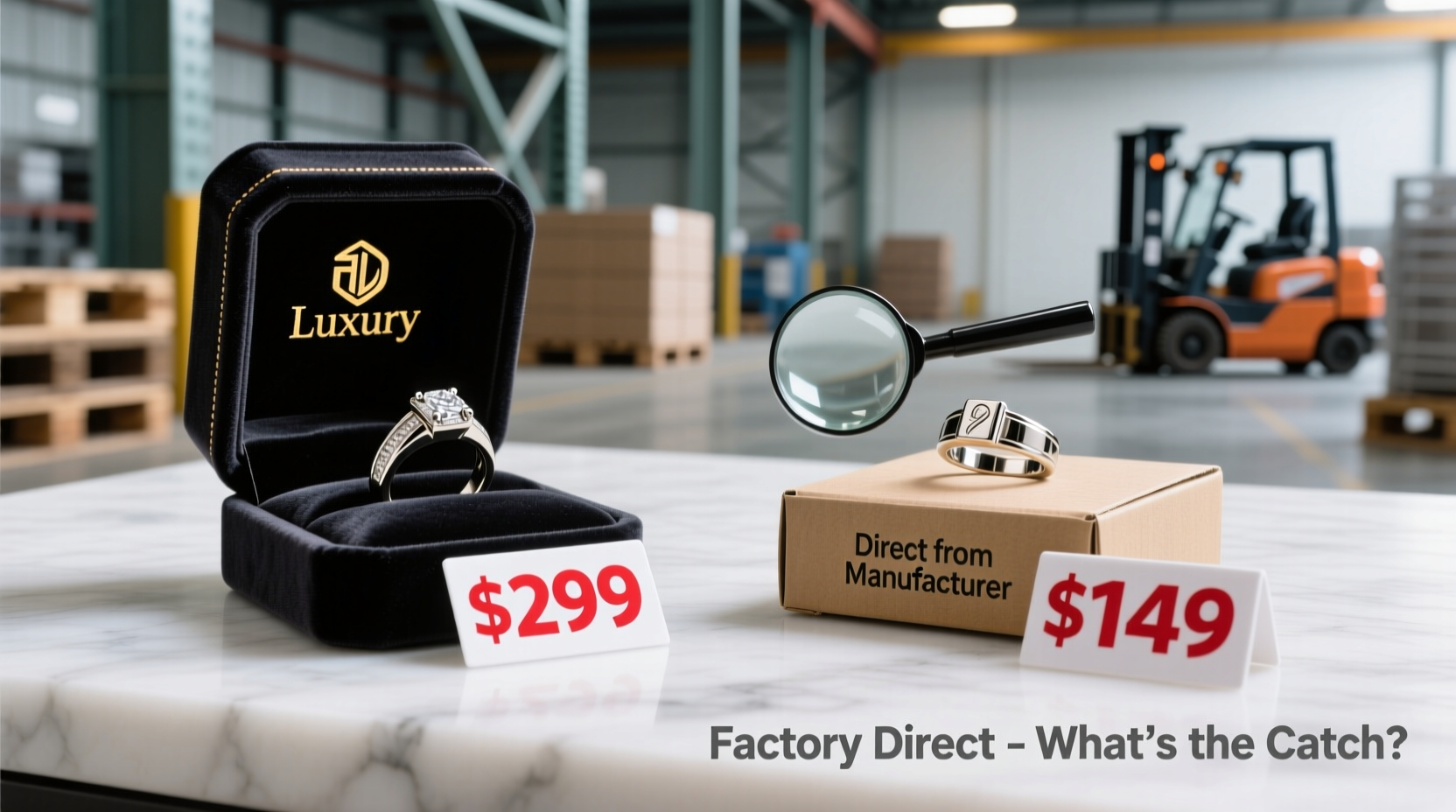
At first glance, factory direct models seem like a win-win. Brands bypass physical stores, sales staff, and high overhead, allowing them to offer lower prices. Some companies even manufacture in-house, sourcing their own diamonds or gemstones and designing every aspect of production. This vertical integration can reduce costs significantly compared to traditional jewelers who buy from wholesalers and mark up pieces by 100% or more.
For example, a 1-carat round diamond solitaire might retail for $8,000 at a local jewelry store. The same design from a factory direct brand could be priced at $5,500—a 31% difference. That kind of saving naturally draws attention, especially for budget-conscious buyers.
Hidden Costs and Trade-Offs
The \"catch\" with factory direct rings isn’t always about deception—it’s about trade-offs that aren’t immediately obvious. Here are the most common compromises:
- Less personalized service: No in-person consultations, ring try-ons, or immediate adjustments. You’re relying on photos, charts, and customer service emails.
- Limited return policies: Custom-made or made-to-order rings may not be returnable, especially if they use specific diamond settings or metals.
- Shipping and insurance risks: High-value items shipped long distances carry risk. Not all brands cover full replacement during transit.
- Resizing and repairs: Unlike local jewelers who adjust your ring on-site, factory direct brands require shipping the piece back—adding time, cost, and inconvenience.
Moreover, some factory direct sellers use slightly lower-grade materials to maintain margins. A ring advertised as “18k gold” might meet the minimum legal standard but contain less pure alloy than premium retailers use. Similarly, diamonds may be graded internally rather than by independent labs like GIA or AGS, leading to inflated quality claims.
“Transparency is the biggest challenge in factory direct jewelry. Without third-party verification, consumers are trusting the brand’s word alone.” — Daniel Reyes, Gemologist & Industry Consultant
Quality vs. Cost: What You Might Be Sacrificing
It’s possible to get excellent quality from a factory direct source—but only if you know what to look for. Many reputable online brands operate on a direct-to-consumer model while maintaining high standards. However, others exploit the lack of oversight to cut corners.
Consider these factors when evaluating quality:
| Factor | Retail Store Advantage | Factory Direct Risk |
|---|---|---|
| Diamond Certification | Usually GIA or AGS certified | May use in-house grading or less rigorous labs |
| Metal Purity | Consistently refined alloys | May meet minimum karat standard but lack luster/durability |
| Craftsmanship | Hand-inspected, detailed finishing | Mass-produced; minor flaws may go unnoticed |
| After-Sales Service | Local repair, cleaning, resizing | Mail-in service with weeks of downtime |
The bottom line? Lower price doesn’t automatically mean lower quality—but it does shift responsibility to the buyer to verify every detail.
Real Example: Sarah’s Engagement Ring Decision
Sarah was engaged last year and had a $7,000 budget. She found two nearly identical 1.2-carat cushion-cut diamond rings: one at a local jeweler for $6,800, another online from a factory direct brand for $5,200. The latter promised “GIA-equivalent” certification and free lifetime resizing.
She chose the online option, excited about the $1,600 savings. But after receiving the ring, she noticed the diamond lacked the fire she saw in store samples. She sent it to an independent appraiser, who determined it was actually a J color, SI2 clarity—lower than advertised. The mounting also showed uneven prongs and minor casting marks.
When she requested a refund, the company offered a partial credit toward a higher-tier ring. Frustrated, Sarah ended up spending $6,100 total and six weeks later had a ring she felt confident about. In hindsight, she realized the initial “savings” cost her time, stress, and almost $1,000 in indirect expenses.
How to Buy Smartly from Factory Direct Sellers
If you’re considering a factory direct ring, follow this step-by-step approach to avoid pitfalls:
- Verify diamond certification: Only accept stones graded by GIA or AGS. Avoid terms like “internally graded” or “our certification.”
- Request high-resolution images and videos: Ask for macro shots of the diamond under different lighting and video of the setting from multiple angles.
- Check return policy details: Confirm whether custom rings are returnable and if shipping is covered.
- Read third-party reviews: Look beyond the brand’s website. Check Trustpilot, Reddit, and the Better Business Bureau.
- Compare total cost: Include taxes, shipping, insurance, and potential resizing fees before declaring it a deal.
Checklist: Before Buying a Factory Direct Ring
- ✅ Diamond comes with GIA or AGS certificate (not just a report number—verify it matches)
- ✅ Metal stamped with correct karat (e.g., “18K” or “750” for gold)
- ✅ High-resolution photos and 360° video provided
- ✅ Clear return window (minimum 30 days) with prepaid return shipping
- ✅ Customer service responds promptly to inquiries
- ✅ Brand has verifiable physical address and contact information
- ✅ Independent reviews confirm positive post-purchase experience
Frequently Asked Questions
Do factory direct rings come with warranties?
Many do, but the scope varies. Some cover manufacturing defects for a year, while others offer lifetime polish and tightening. Always read the fine print—warranties rarely cover loss, damage, or normal wear.
Can I negotiate prices with factory direct brands?
Generally, no. These companies rely on fixed pricing models. However, you might find discounts during seasonal sales or by bundling with wedding bands.
Are lab-grown diamonds cheaper when bought factory direct?
Yes, but the gap is smaller. Lab diamonds already have lower base costs, so both retail and direct sellers offer competitive pricing. Still, factory direct options often provide better customization and transparency in sourcing.
Conclusion: Value Over Price
Factory direct rings can be cheaper—but whether they’re a better value depends on what you prioritize. If you’re knowledgeable, patient, and comfortable shopping online, you can secure a beautiful ring at a fair price. But if you value hands-on experience, immediate service, and peace of mind, a trusted local retailer might justify the extra cost.
The real catch isn’t in the price tag—it’s in the expectation that cheaper always means smarter. Jewelry is personal, emotional, and often irreplaceable. Taking the time to research, verify credentials, and understand the full ownership experience ensures your ring remains a symbol of joy, not regret.




 浙公网安备
33010002000092号
浙公网安备
33010002000092号 浙B2-20120091-4
Comments
No comments yet. Why don't you start the discussion?