
Smartphones are among the most frequently used—and dropped—devices in daily life. With prices soaring past $1,000 for flagship models, protecting your investment makes sense. But how much should you spend on that protection? The market is flooded with options: sleek designer cases, rugged military-grade shells, glittery pop-socket combos, and minimalist transparent covers. While flashy cases catch the eye, they often come with a premium price tag. So, is upgrading to a fancy phone case actually worth it—or can a simple, no-frills model do the same job?
Understanding What \"Fancy\" Really Means
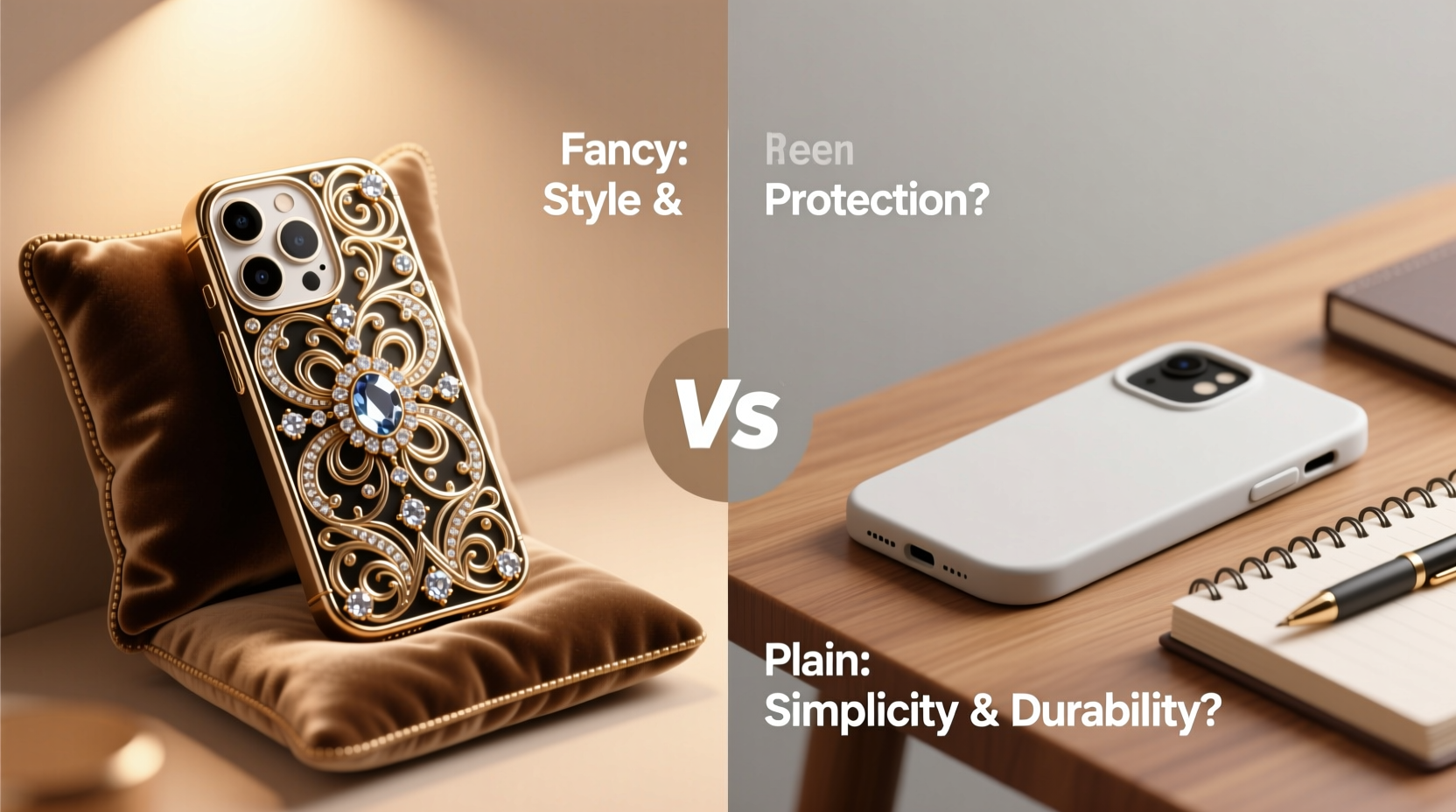
The term “fancy” covers a broad spectrum. It might mean a case made from exotic materials like carbon fiber or hand-stitched leather. It could be a brand-name accessory with embedded MagSafe compatibility, custom artwork, or built-in stands and cardholders. Some cases boast LED battery indicators or augmented reality integration. Others simply have bold colors, rhinestones, or 3D designs.
What ties them together is cost and aesthetic appeal. A basic TPU (thermoplastic polyurethane) case may cost $5–$10, while a designer version from a luxury brand can run $60–$120. That’s more than some mid-range phones.
But higher price doesn’t always mean better protection. In fact, some elaborate designs compromise functionality—adding bulk, interfering with wireless charging, or making ports harder to access.
Protection: Does Fancy Equal Function?
The primary purpose of any phone case is to absorb impact and prevent damage. Independent testing labs like Military Standard 810G (MIL-STD) evaluate cases based on drop resistance, shock absorption, and environmental resilience. Many high-end cases don’t undergo third-party certification—especially fashion-focused brands.
In contrast, many budget-friendly brands like UAG, Spigen, and OtterBox publish lab results showing their cases survive multiple 10-foot drops onto concrete. These models often use dual-layer construction: a soft inner silicone layer and a rigid outer shell.
Fancy cases, particularly those prioritizing slimness or aesthetics, may lack this structural engineering. A $70 crystal-encrusted case might look stunning but offer less shock absorption than a $12 rubberized one.
“Design shouldn’t come at the expense of durability. If a case adds significant risk during a fall, it fails its core purpose.” — David Lin, Product Engineer at Mobile Armor Labs
Material Matters: Breaking Down the Options
Not all materials perform equally. Here’s a comparison of common case types based on protection, longevity, and usability:
| Material | Pros | Cons | Avg. Price Range |
|---|---|---|---|
| TPU (Rubber-like) | Flexible, shock-absorbent, affordable | Yellows over time, attracts dust | $5–$15 |
| Polycarbonate (Hard Plastic) | Scratch-resistant, slim profile | Poor impact absorption, rigid | $10–$25 |
| Leather (Genuine or Synthetic) | Elegant, ages well, premium feel | Minimal drop protection, expensive | $30–$90 |
| Hybrid (TPU + PC) | Balances shock absorption and rigidity | Slightly bulkier | $15–$40 |
| Designer/Fashion Cases | Unique style, brand prestige | Often untested, poor value per function | $40–$120+ |
As the table shows, the most functional materials aren’t always the most glamorous. A hybrid case often delivers optimal balance between protection and form—without the markup associated with branding or embellishments.
Real-World Example: Two Years, Two Different Cases
Consider Sarah, a freelance photographer who uses her phone daily for client communication, scheduling, and quick edits. She bought a new iPhone and invested in a $75 designer case covered in metallic floral patterns and a matching wallet attachment. It looked great in photos and matched her portfolio aesthetic.
Three months in, she dropped it on tile flooring. The screen cracked, despite the case. Frustrated, she switched to a $18 Spigen ToughArmor model—bulky, black, and utilitarian. Over the next 18 months, she dropped it over a dozen times, including once down a flight of stairs. No damage. The case showed scratches, but the phone remained intact.
She realized: the plain case didn’t impress clients, but it saved her $329 in screen replacement costs. For her, reliability outweighed appearance.
When a Fancy Case Might Be Worth It
That said, there are scenarios where spending more makes sense:
- Brand Loyalty or Identity: For influencers or professionals whose image matters, a stylish case reinforces personal branding.
- Limited Editions: Collectible cases from artists or collaborations (like Supreme or Disney) hold sentimental or resale value.
- Added Features: Some premium cases include kickstands, stylus storage, or enhanced audio chambers—features that justify cost if used regularly.
- Material Longevity: High-quality leather or metal cases age gracefully and last longer than cheap plastics, reducing long-term waste.
Still, even in these cases, assess whether the benefits align with your actual usage. Do you need a stand if you never watch videos on your phone? Is the collectible design worth $80 if you change phones every year?
Step-by-Step: Choosing the Right Case for Your Needs
- Assess Your Lifestyle: Are you active, travel often, or work in unpredictable environments? High-risk users benefit from rugged cases.
- Determine Key Features: List what you need—wireless charging compatibility, card slot, camera protection, slim profile.
- Check Drop Test Data: Look for MIL-STD-810G or independent review videos simulating real drops.
- Read User Reviews: Focus on long-term feedback about yellowing, button wear, and fit accuracy.
- Compare Price vs. Performance: Use the “cost per drop survived” mental model. A $10 case lasting two years outperforms an $80 one replaced annually.
Checklist: Before You Buy Any Phone Case
- ✅ Confirmed compatibility with your exact phone model
- ✅ Allows full access to ports, buttons, and cameras
- ✅ Supports wireless charging without removal
- ✅ Has verified drop protection (not just marketing claims)
- ✅ Fits comfortably in hand and pocket
- ✅ Resists yellowing and buildup of grime
- ✅ Matches your daily habits—not just your ideal self
FAQ: Common Questions About Phone Case Value
Do clear cases yellow over time?
Yes, especially cheaper TPU models. UV exposure, skin oils, and heat accelerate discoloration. Higher-end clear cases use anti-yellowing coatings, but none last forever. Replacing them every 6–12 months is typical.
Can a fancy case hurt my phone’s performance?
Potentially. Thick or metallic cases can interfere with signal strength, GPS accuracy, and wireless charging efficiency. Always verify compatibility with carrier and manufacturer specs.
Is it better to go caseless for a premium phone?
Only if you accept the risk. Modern phones have stronger glass (like Gorilla Glass Victus), but screens still crack under impact. Without a case, even a short drop onto hardwood can result in costly repairs. Most repair technicians recommend using at least a minimal bumper or edge protector.
Final Verdict: Function Over Fashion—Most of the Time
For the average user, a well-designed plain case offers equal or better protection than most fancy alternatives—at a fraction of the cost. Advances in materials science mean even budget cases now provide excellent shock absorption, precise cutouts, and reliable longevity.
Fancy cases serve a niche: personal expression, collectibility, or specialized functionality. But unless those factors directly enhance your experience, they’re often overpriced accessories masquerading as essentials.
The best phone case isn’t the one that turns heads—it’s the one that lets you keep using your phone after a clumsy moment. Protection, fit, and durability should anchor your decision. Style can follow, but it shouldn’t lead.




 浙公网安备
33010002000092号
浙公网安备
33010002000092号 浙B2-20120091-4
Comments
No comments yet. Why don't you start the discussion?