
The soft glow of candles beneath a Christmas tree creates a magical atmosphere—warm, nostalgic, and festive. But for cat owners, that same glow can carry hidden dangers. Cats are naturally inquisitive, drawn to flickering lights, dangling ornaments, and the scent of pine. When real candles enter the equation, curiosity can quickly turn into catastrophe. A swish of a tail, a leap toward an ornament, or a paw reaching out of instinct could knock over a lit candle, igniting nearby decorations or causing burns. Flameless candles—battery-operated LED alternatives—have gained popularity as a safer option, especially in homes with pets. But how much safer are they really? And what other factors should you consider when balancing holiday cheer with feline safety?
The Real Risks of Real Candles Around Cats
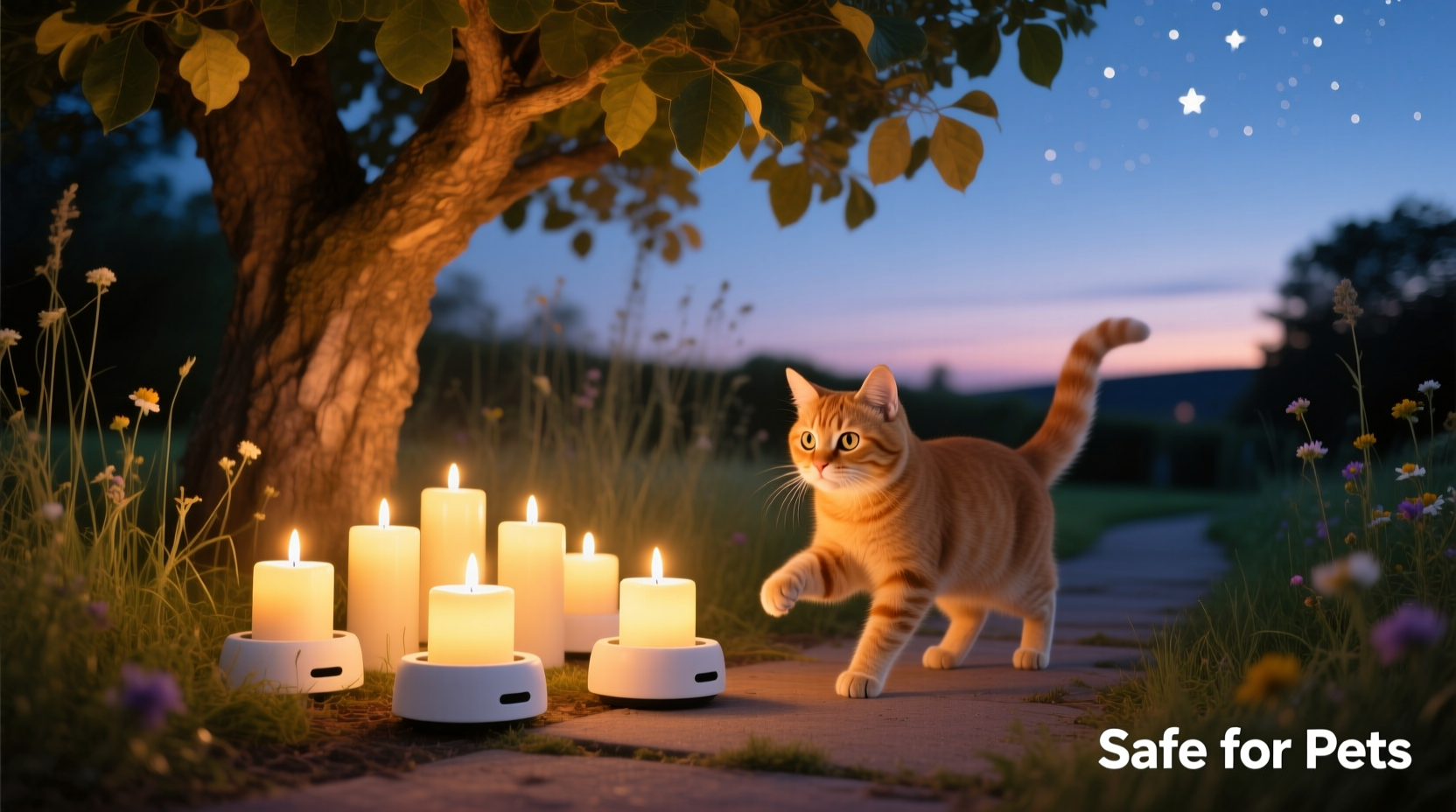
Cats are predators by nature. Their instincts drive them to stalk movement, pounce on small objects, and investigate anything unusual in their environment. A flickering flame mimics the motion of prey, making it irresistible to many cats. Even the most well-behaved or typically calm cat may be tempted by the dance of firelight.
Open flames pose multiple hazards:
- Fire risk: A knocked-over candle can ignite dry tree needles, wrapping paper, curtains, or carpeting within seconds.
- Burns: A curious nose or paw too close to a flame can result in painful injuries requiring veterinary care.
- Toxic fumes: Some scented candles release volatile organic compounds (VOCs) or essential oils like cinnamon, citrus, or pine, which are harmful when inhaled by cats.
- Ingestion danger: Melted wax or dropped matches could be chewed or swallowed, leading to gastrointestinal blockages.
A 2022 report from the National Fire Protection Association (NFPA) found that decorations were involved in 11% of home structure fires during the winter holidays, with candles being a leading ignition source. While not all incidents involve pets, animal-related disturbances—including knocking over candles—are frequently cited in anecdotal reports from fire departments and veterinarians.
“Candle fires involving pets are more common than people realize. One swipe of a tail is all it takes.” — Dr. Laura Bennett, DVM, Veterinary Emergency Specialist
Flameless Candles: Safety Benefits and Limitations
Flameless candles eliminate the open flame, removing the primary fire hazard. Most use LED bulbs to simulate a realistic flicker, powered by batteries or USB connections. They don’t produce heat, smoke, or VOCs, making them inherently safer around pets and children.
However, “safer” doesn’t mean “risk-free.” Consider these factors:
- Chewing hazards: Battery compartments on some models can be opened by determined cats. Ingesting button batteries can lead to severe internal burns or poisoning.
- Plastic components: Cheaply made flameless candles may contain small parts that break off easily, posing choking risks.
- Overheating: While LEDs generate minimal heat, poor-quality electronics or malfunctioning units can overheat, especially if covered by fabric or placed near flammable materials.
- Attractiveness: Ironically, the realistic flicker that makes flameless candles appealing to humans may still attract cats, leading to batting, pawing, or knocking them over.
Despite these concerns, the consensus among pet safety experts is clear: flameless candles are significantly safer than real ones in homes with cats. The absence of fire and toxic emissions outweighs the minor risks associated with low-voltage electronics—provided the products are used correctly.
Do’s and Don’ts of Using Flameless Candles with Cats
| Action | Recommendation |
|---|---|
| Place candles high or inside enclosed holders | Do: Use candle lanterns or place units behind barriers cats can’t access. |
| Leave flameless candles on overnight | Do: Unlike real candles, LED versions can safely remain on for extended periods. |
| Use scented flameless candles | Don’t: Avoid those with built-in diffusers using essential oils, which may still emit cat-toxic vapors. |
| Buy inexpensive, no-name brands | Don’t: Opt for reputable brands with sealed battery compartments and safety certifications. |
| Mix real and flameless candles | Don’t: Combining both increases confusion and temptation for cats. |
Real-Life Scenario: A Close Call During the Holidays
Sarah Thompson, a cat owner from Portland, Oregon, learned the hard way about candle safety. During her family’s Christmas Eve gathering, she lit several traditional taper candles around the base of the tree for ambiance. Her 3-year-old tabby, Oliver, had always been calm around decorations—but that night, the flickering light caught his attention. As guests laughed and music played, Oliver leapt onto the tree skirt, batted at a candle, and sent it rolling across the floor. It landed against a pile of wrapped gifts, igniting the paper within seconds.
Luckily, Sarah’s brother noticed the flames immediately and smothered the fire with a wool blanket before it spread. No one was injured, but the incident left the family shaken. “I thought Oliver was too smart to do something like that,” Sarah said. “But he wasn’t being naughty—he was just being a cat.”
Since then, Sarah has switched entirely to flameless candles. She now uses remote-controlled LED sets with timers, placing them inside decorative metal cages. “The glow is just as warm, and I can finally relax during the holidays,” she shared. “It’s not worth the risk for a little bit of real flame.”
Step-by-Step Guide to a Cat-Safe Candle Setup
If you want the cozy ambiance of candles without endangering your cat, follow this practical sequence:
- Assess your cat’s behavior: Observe how your cat interacts with lights and movement. Does she chase flashlight beams or bat at ceiling fans? If so, she’s more likely to target candles.
- Choose high-quality flameless candles: Select models with steady bases, sealed battery cases, and realistic flicker settings. Look for UL certification or similar safety standards.
- Install them securely: Place candles on elevated surfaces, inside glass enclosures, or behind baby gates if necessary. Avoid placing them directly on the tree skirt where paws can reach.
- Use timers or remotes: Automate lighting schedules so candles turn on only when you’re present. This reduces prolonged exposure and conserves battery life.
- Monitor and adjust: Watch your cat’s reaction during the first few uses. If she shows intense interest, consider relocating the candles or switching to string lights instead.
- Inspect regularly: Check for loose parts, frayed wires, or damaged casings every few days. Replace any unit showing signs of wear.
Expert Insight: What Veterinarians and Fire Safety Officials Recommend
Dr. Alicia Monroe, a board-certified veterinarian and pet safety advocate, emphasizes prevention through environmental design. “We can’t train cats to ignore flames,” she says. “Instead, we need to design spaces that remove the temptation altogether.”
She recommends treating flameless candles like any other electronic pet hazard: secure, supervise, and simplify. “Even non-toxic items can become dangerous if swallowed. Always assume your cat will investigate—and plan accordingly.”
Similarly, fire safety officials stress the importance of eliminating ignition sources near combustible materials. According to the NFPA, Christmas trees alone account for hundreds of home fires each year, many sparked by candles, lights, or electrical malfunctions. “When you add a curious pet into the mix, the margin for error shrinks dramatically,” says Mark Delaney, a public education officer with the Boston Fire Department. “Flameless options give families peace of mind without sacrificing tradition.”
Frequently Asked Questions
Can cats get sick from flameless candles?
Most high-quality flameless candles are safe, but low-end models with strong artificial scents or plastic off-gassing may irritate sensitive cats. Avoid any product that emits fragrance unless explicitly labeled pet-safe. Also, ensure your cat cannot chew on or ingest parts of the candle, especially batteries.
Are LED string lights safer than flameless candles?
Yes, in many cases. String lights provide ambient glow without the candle-like shape that might invite batting or pouncing. However, ensure cords are secured and out of reach, as chewing on wiring can cause electrocution. Use cord covers or tuck wires behind furniture.
What if I really want the smell of real candles?
Instead of lighting candles near the tree, consider using a pet-safe diffuser in another room, away from your cat’s main living areas. Alternatively, simmer natural ingredients like orange peels, cloves, and cinnamon sticks on the stove—under supervision—for a safe, aromatic alternative.
Final Checklist for a Pet-Friendly Holiday Display
- ✅ Replace all real candles with flameless LED versions
- ✅ Secure battery compartments with tape or tools if needed
- ✅ Position candles out of paw’s reach or behind barriers
- ✅ Avoid scented candles or diffusers with toxic essential oils
- ✅ Inspect all decorations daily for damage or displacement
- ✅ Keep emergency numbers (vet, poison control, fire department) visible
Conclusion: Prioritizing Peace of Mind Over Tradition
The holidays are meant to be joyful, not stressful. While real candles offer timeless charm, their risks in homes with cats are simply too great to ignore. Flameless candles provide a compelling alternative—offering the same warm ambiance without the fire hazard, toxic emissions, or fear of injury. With thoughtful placement, quality products, and vigilant monitoring, you can enjoy a festive, glowing tree while keeping your curious feline safe.
Modern technology allows us to preserve traditions without compromising safety. By choosing flameless options, you’re not giving up the spirit of the season—you’re enhancing it with care, responsibility, and love for your pet. This year, let your celebration be defined not by risk, but by reassurance.




 浙公网安备
33010002000092号
浙公网安备
33010002000092号 浙B2-20120091-4
Comments
No comments yet. Why don't you start the discussion?