
Foldable phones have evolved from futuristic prototypes to mainstream contenders in the smartphone market. Brands like Samsung, Google, and Motorola now offer models that promise the convenience of a tablet with the portability of a phone. But despite their innovation, a persistent question lingers: are these devices tough enough for everyday life, or are they delicate gadgets best kept in protective bubbles?
The answer isn’t binary. While early foldables were rightly criticized for fragility, today’s generation has made significant strides in durability. Yet, how they hold up under real-world conditions depends on design, materials, usage habits, and expectations. This article examines the engineering behind foldables, evaluates their performance in daily scenarios, and provides practical guidance for users considering one as their primary device.
The Evolution of Foldable Durability
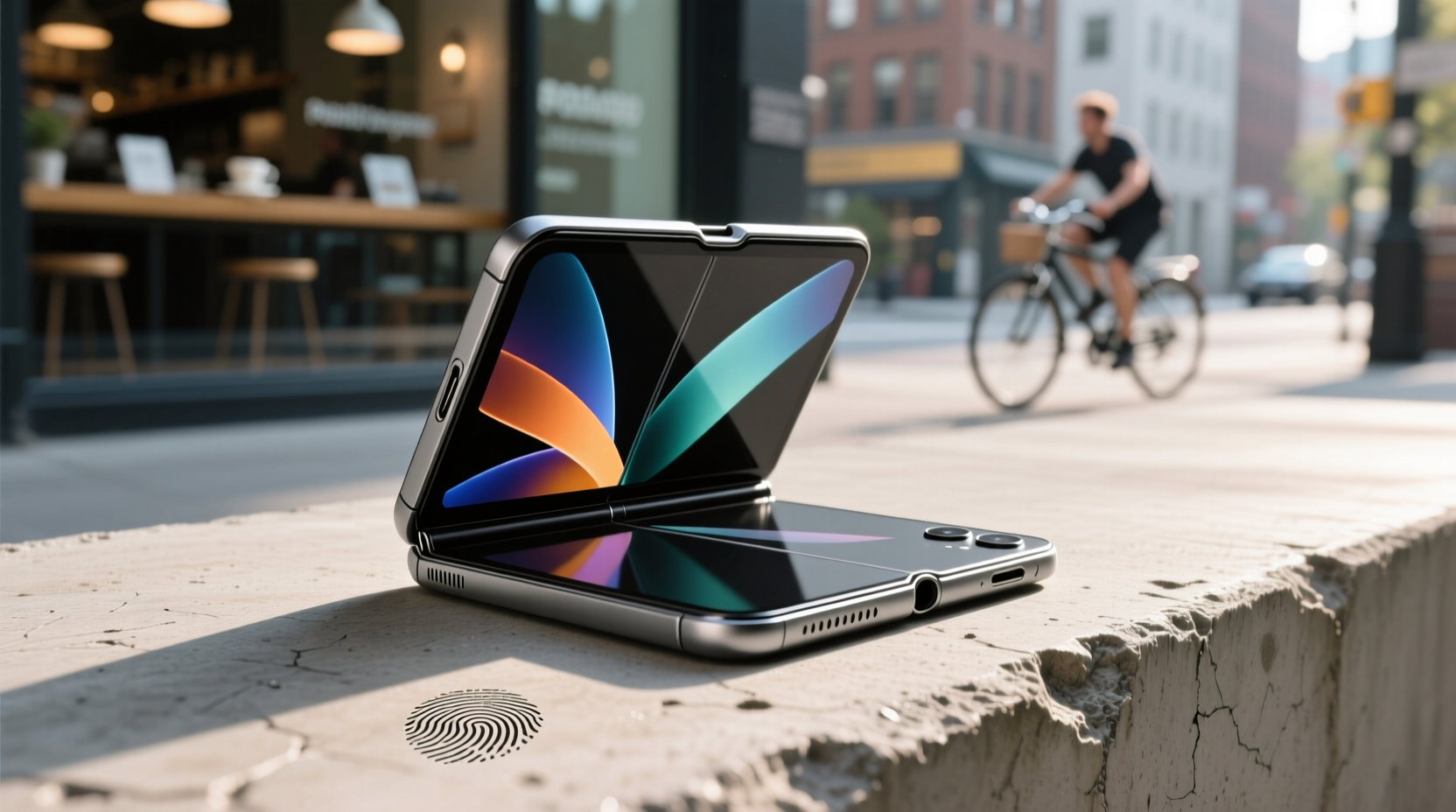
When Samsung launched the Galaxy Fold in 2019, it faced widespread backlash due to screen failures during review periods. Many units failed within days, revealing vulnerabilities in both the folding mechanism and the ultra-thin polymer display. Critics dismissed the device as a novelty — impressive in concept but impractical in execution.
Fast forward to 2024, and the landscape has changed dramatically. Manufacturers have invested heavily in hinge reinforcement, scratch-resistant layers, dust protection, and more resilient internal structures. The latest models, such as the Samsung Galaxy Z Fold 5 and Z Flip 5, feature Armor Aluminum frames, IPX8 water resistance (on select models), and improved crease management in the display.
According to Jan Dawson, Chief Analyst at Jackdaw Research, “The durability gap between foldables and traditional smartphones has narrowed significantly. Today’s high-end foldables can withstand typical daily wear if used responsibly.”
“Today’s high-end foldables can withstand typical daily wear if used responsibly.” — Jan Dawson, Chief Analyst at Jackdaw Research
Still, “typical daily wear” doesn’t mean tossing your phone into a pocket with keys or dropping it on concrete repeatedly. Foldables remain more sensitive than slab-style phones — not inherently flawed, but requiring a shift in user behavior.
Anatomy of a Foldable: Where Strength Meets Vulnerability
To assess durability, it helps to understand where stress points exist in a foldable phone:
- Hinge Mechanism: The pivot point enabling folding. Poorly designed hinges can loosen over time or collect debris.
- Folding Display: Made of flexible OLED panels layered over ultra-thin glass or plastic. Susceptible to scratches and pressure damage.
- Casing and Frame: Metal alloys used to protect internal components while minimizing weight.
- Dust and Debris Protection: Gaps around the hinge can trap lint and sand, potentially damaging the screen when closed.
Samsung’s \"Flex Hinge\" and Motorola’s \"Quick Fix\" hinge designs now allow for half-fold positioning and better particle resistance. Google’s Pixel Fold introduced a redesigned micro-hinge with tighter tolerances to reduce dust ingress.
Screen Technology: Plastic vs. Glass
Early foldables used entirely plastic displays, which scratched easily and developed noticeable creases. Modern devices now use a hybrid solution: ultra-thin glass (UTG) coated with a protective polymer layer. Samsung calls this \"Infinity Flex Display,\" while others use similar laminated approaches.
While UTG improves scratch resistance, it’s still less robust than the Gorilla Glass found on standard smartphones. Independent lab tests by DisplayMate show that foldable screens begin to show micro-scratches at lower pressure thresholds than conventional glass. However, normal handling — without sharp objects — rarely causes visible damage.
Real-World Stress Testing: How Do They Hold Up?
A number of independent testers and YouTubers have conducted long-term durability assessments, subjecting foldables to repeated drops, pocket lint exposure, and thousands of open-close cycles.
In a widely cited test by ZDNet, a Galaxy Z Flip 5 was opened and closed 200 times per day — simulating five years of use. After 365,000 folds, the screen showed only minor pixel degradation and no structural failure. Similarly, JerryRigEverything’s scratch test revealed that while the screen resists light abrasion, sharp tools can still penetrate the surface.
Mini Case Study: Sarah, Marketing Executive
Sarah, 34, switched to a Galaxy Z Fold 4 as her daily driver after two years of using an iPhone. She commutes via subway, uses public Wi-Fi hotspots, and often places her phone face-down on café tables.
Within three months, she noticed fine scratches along the inner screen’s crease line. Upon inspection, she realized she’d been storing the phone unfolded in her bag alongside pens and business cards. After switching to a protective case and closing the phone before storage, no further damage occurred.
“I expected it to be more fragile,” she said. “But once I adjusted my habits, it’s held up better than my old iPhone XR did.”
Comparative Durability: Foldables vs. Traditional Smartphones
| Feature | Foldable Phones (2023–2024) | Traditional Smartphones |
|---|---|---|
| Drop Resistance | Moderate (reinforced edges, but exposed hinge) | High (solid unibody construction) |
| Scratch Resistance | Lower (flexible screen more prone to micro-scratches) | Higher (Gorilla Glass Victus or equivalent) |
| Water Resistance | Limited (IPX8 on some models, but gaps exist) | Better (full IP68 on most flagships) |
| Lifespan (open/close cycles) | 300,000+ (manufacturer rated) | N/A |
| Repair Cost | High ($300–$600 for screen replacement) | Moderate ($150–$300) |
The data suggests that while modern foldables are engineered for longevity, they trade some ruggedness for flexibility. Their weakest points aren’t always the screen or hinge — it’s often user behavior that accelerates wear.
Best Practices for Maximizing Foldable Phone Longevity
You don’t need to treat a foldable like museum exhibit, but adopting smart habits can extend its life significantly. Here’s a checklist to keep your device in peak condition:
✅ Foldable Phone Care Checklist
- Always close the phone before placing it in a bag or pocket.
- Use a manufacturer-approved case that covers the edges and offers screen protection.
- Avoid placing pressure on the folded screen (e.g., sitting on your pants pocket).
- Never insert foreign objects into the hinge area.
- Clean the screen with a soft, dry microfiber cloth — no liquids directly applied.
- Keep software updated; manufacturers often release hinge calibration improvements.
- Allow the phone to fully unfold before interacting with the screen.
Step-by-Step Guide: Cleaning Your Foldable Screen Safely
- Power off the device or close it gently to protect the screen.
- Wipe the exterior with a dry, lint-free cloth to remove dust.
- If needed, lightly dampen a corner of the cloth with distilled water (never spray directly).
- Gently wipe the screen in straight motions — avoid circular rubbing near the crease.
- Inspect the hinge area for visible debris; use a soft brush (like a clean makeup brush) to dislodge lint.
- Wait 30 seconds for any moisture to evaporate before closing or using the device.
Common Misconceptions About Foldable Durability
Several myths persist about foldable phones, often stemming from early-generation flaws or exaggerated media reports.
- Myth: “The screen will crack if you press too hard.”
Reality: Modern screens tolerate moderate pressure, but concentrated force (e.g., pen tip) can damage pixels. - Myth: “They can’t survive a drop.”
Reality: Drop survival depends on angle and surface. Edge drops are riskier due to hinge exposure, but many survive short falls onto carpet or grass. - Myth: “You need to replace it every year.”
Reality: With proper care, most users report 3+ years of reliable use. Samsung offers a 5-year durability promise for hinge mechanisms on recent models.
FAQ: Addressing Top Concerns
Can I use a screen protector on my foldable phone?
Most manufacturers do not recommend third-party screen protectors, as they can interfere with folding mechanics and touch sensitivity. Some models, like the Galaxy Z Flip series, come with a factory-applied protective layer that should never be removed. Custom electrostatic protectors from trusted brands (like ESR) exist, but proceed with caution and research compatibility.
How do I know if my hinge is wearing out?
Signs include wobbling when open, difficulty staying in place at partial angles, or increased resistance when folding. If you notice these issues, stop forcing the motion and visit an authorized service center. Regular cleaning can prevent premature wear.
Are foldables worth it for people with active lifestyles?
Yes — but with caveats. If you're frequently outdoors, hiking, or working in rugged environments, a ruggedized traditional phone (like a Cat S series or iPhone with OtterBox) may still be safer. However, for urban professionals, students, or multitaskers who value screen real estate, foldables offer compelling utility without excessive fragility.
Conclusion: Beyond the Novelty, Into Practicality
Foldable phones are no longer fragile novelties. They’ve matured into capable, thoughtfully engineered devices that balance innovation with increasing durability. While they demand more mindful handling than traditional smartphones, they’re far from delicate.
The key lies in understanding their design philosophy: flexibility comes with trade-offs. By respecting the mechanics, avoiding unnecessary risks, and following simple maintenance routines, users can confidently carry a foldable every day without fear of immediate failure.
As material science advances and manufacturing precision improves, the next wave of foldables may eliminate today’s compromises altogether. For now, the technology stands at a tipping point — not quite as tough as bricks, but durable enough to earn a place in your pocket.




 浙公网安备
33010002000092号
浙公网安备
33010002000092号 浙B2-20120091-4
Comments
No comments yet. Why don't you start the discussion?