
Foldable phones have evolved from futuristic curiosities into legitimate contenders in the smartphone market. With Samsung, Google, and Motorola all offering refined models, it's no longer a question of whether they exist—but whether they can survive the rigors of everyday life. The sleek promise of a device that unfolds into a mini tablet is compelling, but durability remains a critical concern. Are these devices robust enough to handle pockets, drops, and daily wear, or are they still too delicate for real-world use?
The answer isn't binary. Foldables have made remarkable progress since their early, widely mocked iterations. Yet, their durability hinges on design choices, user habits, and technological trade-offs. Understanding what makes them strong—and where they remain vulnerable—is essential for anyone considering a foldable as a primary phone.
The Evolution of Foldable Durability
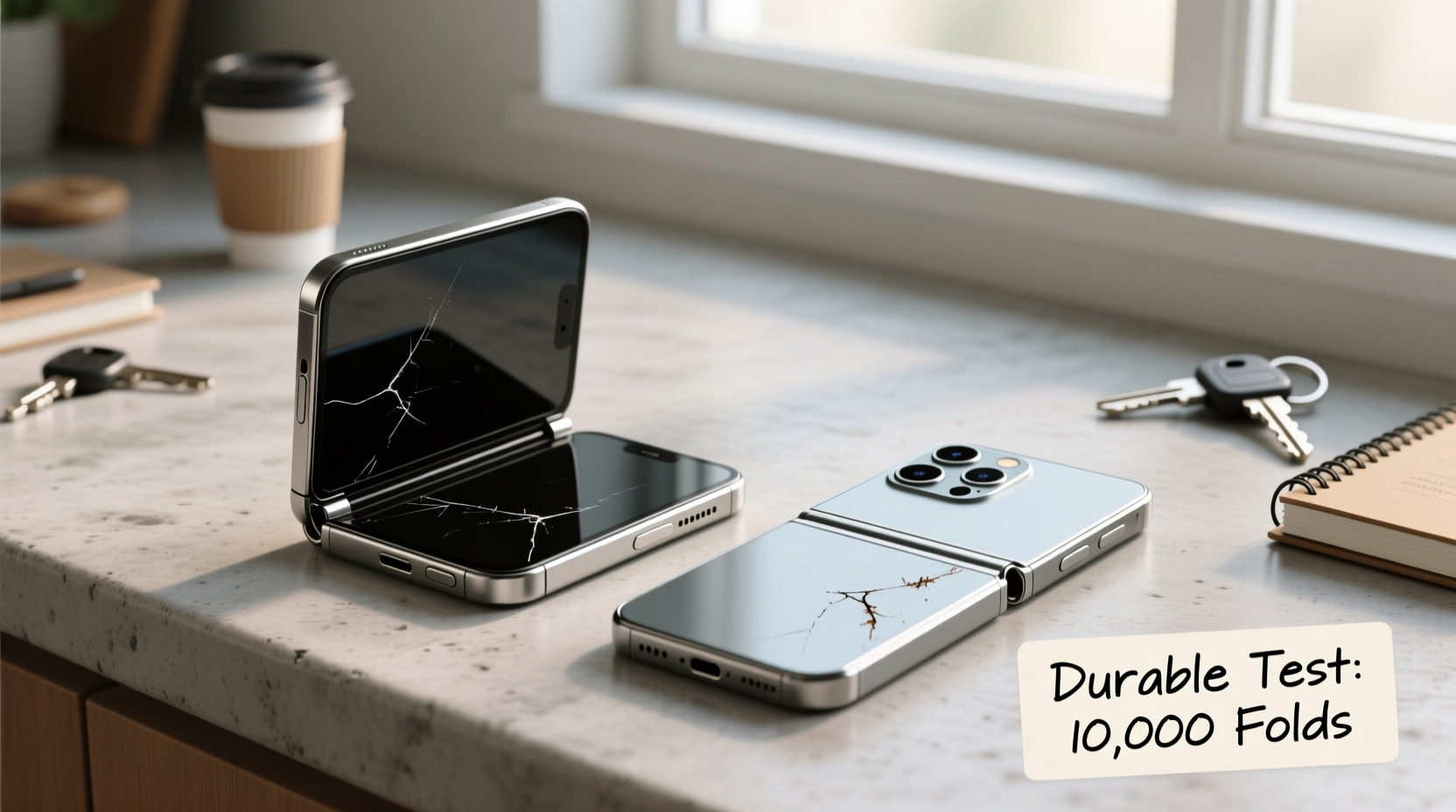
When Samsung launched the Galaxy Fold in 2019, it became infamous for failing within days due to dust ingress and screen crease damage. Many units broke before reviewers could finish testing them. That first generation exposed the fragility of the concept: a folding screen with no reliable protection against debris or mechanical stress.
Fast forward to 2024, and the landscape has transformed. Manufacturers now use ultra-thin glass (UTG) instead of plastic overlays, reinforced hinge mechanisms, and improved sealing against dust and moisture. The latest models, like the Samsung Galaxy Z Fold 5 and Google Pixel Fold, are engineered with longevity in mind. They undergo tens of thousands of open-and-close cycles in lab tests—often exceeding 200,000 folds—suggesting structural resilience under repetitive motion.
However, lab conditions don’t replicate real-life chaos. Dropping a phone on concrete, placing it in a dusty bag, or accidentally sitting on it are common scenarios that test true durability. While modern foldables are better built, they still carry inherent risks due to their complex mechanics and dual-screen architecture.
Materials Matter: Glass, Hinges, and Seals
The most significant leap in foldable durability has been the shift from plastic to ultra-thin glass. Early foldables used polymer layers that scratched easily and developed permanent creases. Today’s UTG is chemically strengthened and flexible enough to bend without cracking. Samsung calls its version “Samsung Ultra Thin Glass,” while others license technology from companies like Schott.
But even with glass, the crease remains a weak point. All foldables develop a visible line down the center of the inner display. While newer models have minimized its depth, it’s still susceptible to pressure damage if poked or pressed with sharp objects. Additionally, the gap around the hinge, necessary for movement, allows lint and dust to accumulate over time—a known issue that can interfere with screen contact and cause flickering.
Hinge design has also matured. The “waterdrop” hinge, used by Samsung and others, reduces the tension on the screen during folding by creating a wider radius at the bend. This distributes stress more evenly, decreasing the risk of microfractures. Some models now include dual rails and shock-absorbing components to improve drop resistance.
Real-World Testing vs. Manufacturer Claims
Manufacturers often tout IP ratings and folding endurance tests, but these don’t always reflect practical durability. For example, the Galaxy Z Fold 5 carries an IPX8 rating for water resistance—but only when closed. Open it underwater, and the internal mechanism is exposed. Similarly, dust resistance (IP6X on some models) helps, but it’s not foolproof. Independent teardowns have shown minimal internal sealing around the spine.
Drop tests conducted by tech reviewers reveal mixed results. On flat surfaces, many foldables survive moderate falls thanks to reinforced corners and aluminum frames. But edge drops—especially onto the folded side—can crack the outer display or misalign the hinge. Unlike traditional smartphones, which fail mostly by screen shattering, foldables risk internal damage that affects functionality across both screens.
“Foldables are no longer prototypes, but they’re still precision instruments. Treat them more like a camera than a disposable gadget.” — David Liu, Senior Hardware Analyst at TechInsight Weekly
User Habits That Make or Break Durability
No matter how well-engineered a foldable phone is, user behavior plays a decisive role in its lifespan. A device subjected to constant pocket friction, frequent drops, or improper cleaning will degrade faster than one handled with care.
Common mistakes include:
- Using abrasive cloths to clean the screen
- Applying excessive pressure on the crease
- Exposing the device to sand or grit (e.g., beach or construction sites)
- Forcing the device open or closed past its natural resistance
Conversely, users who adopt protective habits—like using cases, avoiding extreme temperatures, and keeping the device in a dedicated pouch—report fewer issues over time. Realistically, foldables demand a higher level of mindfulness than conventional phones.
Durability Comparison: Foldables vs. Traditional Smartphones
| Factor | Foldable Phones | Traditional Smartphones |
|---|---|---|
| Screen Durability | Moderate (crease vulnerability, sensitive inner display) | High (tempered glass, scratch-resistant coatings) |
| Drop Resistance | Variable (depends on hinge integrity) | Generally high (unibody designs, reinforced edges) |
| Dust & Water Protection | Limited (gaps in hinge mechanism) | Better sealed (full IP67/IP68 coverage) |
| Lifespan (Typical) | 2–3 years with careful use | 3–5 years with standard use |
| Repair Cost | Very high (screen + hinge replacement ~$400–$600) | Moderate (screen ~$150–$300) |
This comparison underscores a key reality: foldables sacrifice some ruggedness for innovation. They offer unique benefits—larger screens in compact forms, multitasking flexibility, and novel UX features—but require more cautious handling.
Case Study: One Year with a Foldable as a Daily Driver
Consider Mark, a digital marketer in Austin, who switched to a Galaxy Z Flip 4 as his primary phone in early 2023. He commuted daily, carried his phone in his front pocket, and used it heavily for social media and video editing. After six months, he noticed fine scratches along the inner screen near the crease. By month ten, lint had accumulated in the hinge, causing occasional touch unresponsiveness.
He visited a Samsung service center, where technicians cleaned the hinge and applied a temporary fix. However, after a fall onto pavement at month 11, the outer display cracked, and the folding mechanism became slightly misaligned. Though the phone remained functional, the experience led him to revert to a standard flagship.
Mark’s case isn’t unusual. Many long-term users report similar patterns: gradual degradation of the screen surface, hinge stiffness, and sensitivity issues. While the phone didn’t fail catastrophically, its condition deteriorated faster than his previous non-foldable device.
How to Maximize Your Foldable’s Lifespan
Durability isn’t fixed—it’s influenced by how you treat the device. Follow these steps to extend its usable life:
- Use a protective case designed specifically for your model. Avoid third-party cases that don’t account for hinge clearance.
- Clean the screen gently with a microfiber cloth. Never use window cleaners or alcohol-based wipes.
- Keep the device closed when storing in bags or pockets to protect the inner screen.
- Avoid exposing it to extreme heat, such as leaving it in a car on a sunny day. High temperatures can warp the adhesive holding the display layers.
- Don’t force the fold. Let the hinge guide the motion; resisting or rushing it stresses internal components.
Expert Recommendations and Industry Outlook
Industry analysts agree that foldables are on a clear trajectory toward greater durability. According to IDC, global foldable shipments grew by 48% in 2023, driven largely by improved reliability and consumer confidence.
“We’re seeing a shift from ‘novelty’ to ‘necessity’ in foldable design. The next frontier is making them as tough as slab phones without adding bulk.” — Lena Park, Mobile Innovation Lead at IDC
Future advancements may include self-healing polymers, seamless hingeless designs, and hybrid materials that combine flexibility with impact resistance. Companies are also exploring rollable displays, which eliminate the permanent crease altogether by extending the screen outward rather than folding it.
Until those technologies mature, current foldables occupy a middle ground: significantly more durable than their predecessors, yet still requiring extra care compared to traditional phones.
Frequently Asked Questions
Can I drop my foldable phone and expect it to survive?
It depends on the fall. Minor drops on carpet or grass may cause no damage, especially if the phone lands on its frame. However, hard surface impacts, particularly on edges or corners, can crack screens or damage the hinge mechanism. Unlike standard phones, internal alignment issues are harder to repair and may affect long-term usability.
Do foldable phones last as long as regular smartphones?
Typically, no. Most manufacturers design foldables for about 200,000 folding cycles—roughly five years of average use. However, environmental factors, physical abuse, and component wear often shorten actual lifespan to 2–3 years. Traditional phones, with fewer moving parts, generally last longer under comparable conditions.
Is it safe to put a screen protector on a foldable phone?
Only use manufacturer-approved screen protectors. Third-party films can interfere with touch sensitivity, create air bubbles, or add uneven pressure on the folding surface. Samsung and Google sell official protectors designed to flex with the display. Never attempt to apply a rigid glass protector—it will crack upon folding.
Conclusion: Balancing Innovation and Practicality
Foldable phones are no longer fragile novelties. They’ve matured into capable, thoughtfully engineered devices that can withstand daily use—if treated with reasonable care. Their durability has improved dramatically, but they still carry inherent vulnerabilities that traditional smartphones don’t face.
If you value portability, multitasking, and cutting-edge design, a foldable can be a worthwhile investment. But if you routinely drop your phone, work in dusty environments, or prefer worry-free usage, a conventional flagship may still be the smarter choice.
The future of foldables is bright, but we’re in a transitional phase where innovation outpaces invincibility. As materials science advances and manufacturing refines, the gap between \"flex appeal\" and \"daily durability\" will continue to narrow. For now, the most durable foldable is the one used wisely.




 浙公网安备
33010002000092号
浙公网安备
33010002000092号 浙B2-20120091-4
Comments
No comments yet. Why don't you start the discussion?