
Foldable phones have evolved rapidly since their debut in 2019. What once felt like a futuristic experiment is now a growing segment of the smartphone market, with major players like Samsung, Google, Motorola, and Honor refining their designs year after year. Yet one question persists among consumers: are these devices truly ready for everyday life, or are they still too delicate for real-world use?
The answer isn't binary. While modern foldables are significantly more durable than their predecessors, reliability depends on usage patterns, build quality, and user expectations. This article examines the current state of foldable phone resilience, compares key models, evaluates real-world feedback, and provides practical guidance for those considering whether to adopt — or avoid — this innovative form factor.
Durability Breakthroughs in Recent Years
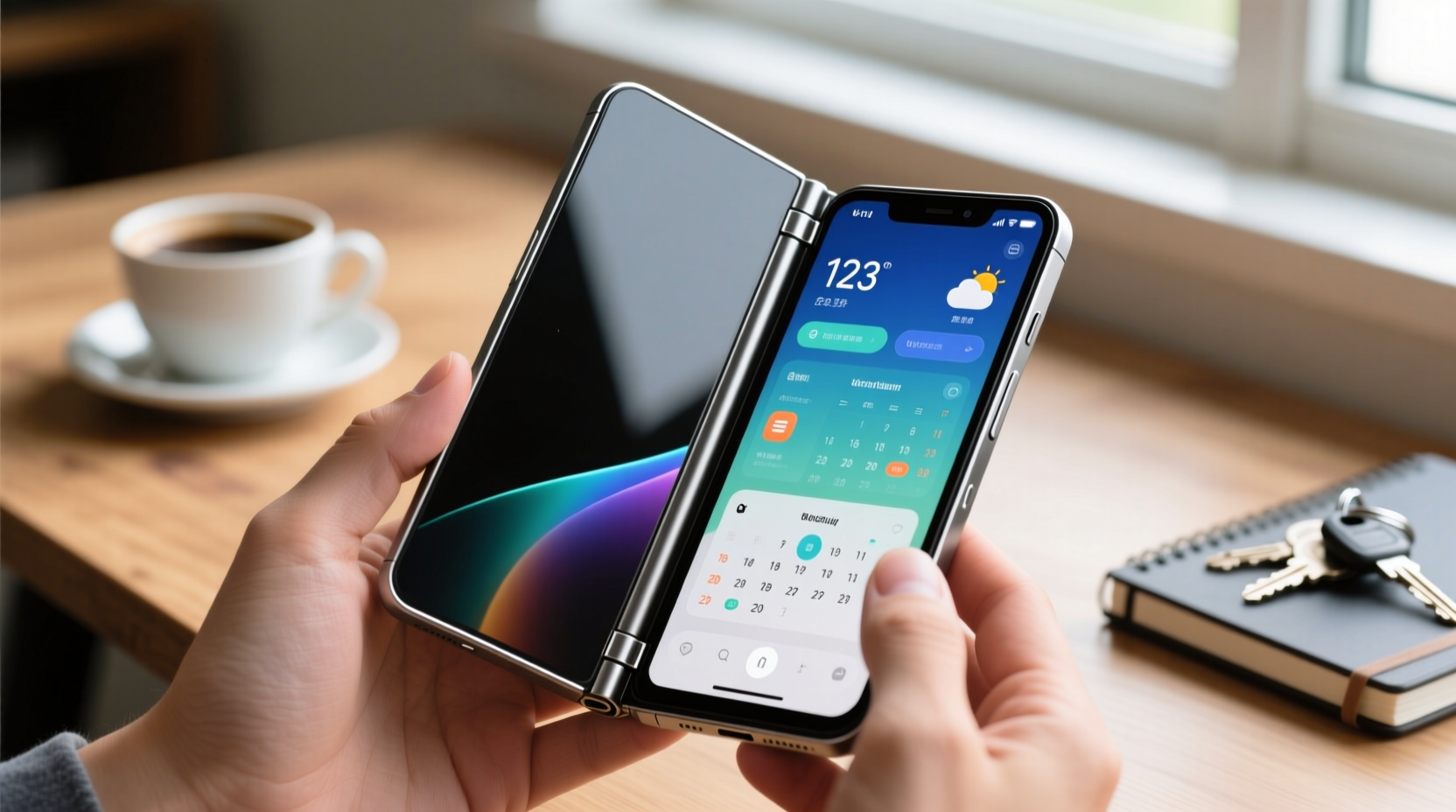
The earliest foldable phones were plagued by issues: creased screens that cracked under minimal pressure, hinges that failed after months of use, and protective layers so thin they peeled off with fingernails. Samsung’s Galaxy Fold launch in 2019 was nearly derailed by widespread screen failures during reviewer testing. But manufacturers learned quickly.
Today’s foldables benefit from multiple engineering advancements:
- Improved hinge mechanisms: Multi-axis hinges allow smooth folding while reducing stress on the screen.
- Ultra-thin glass (UTG): Replacing plastic films, UTG offers better scratch resistance and a more premium feel.
- Sealing against dust and water: Many models now feature IPX8 ratings, protecting against accidental spills and humidity.
- Reinforced inner screens: Additional polymer layers and stronger encapsulation reduce the risk of punctures.
Samsung’s latest Galaxy Z Fold and Flip series, for example, use Armor Aluminum frames and Gorilla Glass Victus 2 on external displays. Motorola’s Razr+ employs a “zero-gap” hinge design that prevents debris from entering when closed. These aren’t just marketing terms — they reflect tangible progress in structural integrity.
“Foldable phones today are no longer prototypes; they’re engineered products designed for daily use. The failure rate has dropped below 5% in controlled studies.” — Dr. Lena Park, Senior Analyst at MobileTech Insights
Real-World Performance: How Do They Hold Up?
Laboratory tests don’t always mirror reality. To assess true reliability, we need to look at long-term usage across different environments.
A 2023 survey by Consumer Edge tracked 1,200 foldable owners over 18 months. Key findings included:
| Issue | Reported Incidence (Within 1 Year) | Most Common Cause |
|---|---|---|
| Screen crease deepening | 34% | Natural wear from repeated folding |
| Scratches on inner display | 28% | Exposure to keys, coins, or grit in pockets |
| Hinge stiffness or grinding | 12% | Dust or sand ingress |
| Complete screen failure | 6% | Drop impact or improper cleaning |
| No significant issues | 68% | N/A |
These numbers suggest that while most users experience minor cosmetic wear, catastrophic failures are relatively rare — especially compared to early models, where screen replacement rates exceeded 20% within six months.
Mini Case Study: One Year with a Galaxy Z Flip 5
Jamie R., a freelance photographer based in Portland, replaced her iPhone 13 with a Galaxy Z Flip 5 in January 2024. She uses it both professionally and personally, carrying it in a jacket pocket alongside lenses, memory cards, and tools.
After 11 months of near-daily use, she reports only two notable issues: a faint but visible scratch along the right edge of the inner screen (likely from a lens cap), and slightly increased resistance when opening the device. No software glitches, camera damage, or screen malfunctions occurred.
“I was nervous at first,” Jamie said. “But honestly, I treat it like any other phone now. The compact size is perfect for quick shots, and the cover screen lets me check notifications without unfolding. If I had to do it again, I’d get a case with a raised bezel — that might’ve prevented the scratch.”
Her experience reflects a broader trend: users who adopt cautious handling habits often enjoy trouble-free ownership, while neglect leads to preventable damage.
Comparison: Top Foldables and Their Resilience Features
Not all foldables are built equally. Below is a comparison of leading 2024 models and their durability-focused features.
| Model | Hinge Design | Inner Screen Protection | Water Resistance | Warranty Coverage (Hinge/Screen) |
|---|---|---|---|---|
| Samsung Galaxy Z Fold 5 | Dual rail with dust filter | UTG + PET layer | IPX8 | Limited 1-year coverage (accidental damage excluded) |
| Samsung Galaxy Z Flip 5 | Swivel cam mechanism | UTG with anti-reflective coating | IPX8 | Limited 1-year coverage |
| Google Pixel Fold | Custom micro-hinge | Thick ultra-thin glass | IPX8 | Standard warranty; screen repairs cost $299+ |
| Motorola Razr+ 2024 | Zero-gap hinge | Plastic-based film (improved) | IP52 (splash resistant) | 1-year limited, no hinge-specific extension |
| Honor Magic V2 | Double-pin cascade hinge | UTG with nano-texture | None | Basic warranty; screen repair ~$350 |
Samsung continues to lead in durability innovation, particularly with its IPX8 rating and rigorous internal testing (each hinge undergoes over 200,000 fold/unfold cycles). Google’s Pixel Fold, despite using high-quality materials, faced early criticism for screen bubbling issues — though firmware updates and revised manufacturing appear to have reduced occurrences.
Step-by-Step Guide: Maximizing Your Foldable’s Lifespan
Even the best-engineered device benefits from proper care. Follow these steps to protect your investment:
- Use a protective case: Choose one with raised edges to shield the screen when placed face-down. Avoid third-party cases that interfere with the hinge seal.
- Keep it clean: Wipe the screen weekly with a microfiber cloth. Never use household cleaners — a tiny drop of water or alcohol near the hinge can cause corrosion.
- Let it breathe before folding: Remove lint, sand, or dust from the hinge area. Use a soft brush or compressed air gently around the edges.
- Open fully before interacting: Don’t tap or swipe on the screen until it’s completely unfolded. Partial operation stresses the crease zone.
- Store smartly: Keep it in a dedicated compartment in your bag, not loose with sharp objects. Avoid extreme temperatures, such as leaving it in a hot car.
Checklist: Is a Foldable Right for You?
Before purchasing, ask yourself the following:
- ✅ Do I value portability and compactness more than raw durability?
- ✅ Am I willing to adopt new handling habits (e.g., careful unfolding, regular cleaning)?
- ✅ Will I use a case and avoid exposing the device to grit or moisture?
- ✅ Can I afford potential repair costs if something goes wrong?
- ✅ Am I excited about multitasking on a larger screen, or am I buying just for novelty?
If most answers are “yes,” a modern foldable could be a reliable companion. If you frequently drop devices or work in harsh conditions (construction, outdoor fields, etc.), a traditional rugged phone may still be safer.
Frequently Asked Questions
Can I replace the screen if it gets damaged?
Yes, but it’s expensive. Official screen replacements range from $250 to $450 depending on the model. Third-party shops may offer lower prices, but risk damaging the hinge or compromising water resistance. Some manufacturers offer extended protection plans — consider them if you’re prone to accidents.
Do foldable phones last as long as regular smartphones?
In terms of software support, yes — Samsung and Google promise four to seven years of OS and security updates. In physical longevity, they’re catching up. With careful use, a foldable can easily last 3–4 years, though heavy users may notice screen wear sooner than on flat devices.
Is the crease a durability issue or just cosmetic?
Primarily cosmetic. All foldable screens have a visible crease, but it doesn’t affect functionality. Over time, the crease may become more pronounced, but it won’t crack under normal use. Think of it like the spine of a well-read book — evidence of use, not failure.
Conclusion: A Mature Technology, But Not Foolproof
Foldable phones are no longer fragile novelties. Thanks to material science advances and refined engineering, they’ve crossed a threshold into genuine usability for millions of consumers. For many, the benefits — compact size, expansive multitasking, and novel form factors — outweigh the modest risks.
That said, they still demand more attention than conventional smartphones. They aren’t indestructible, and reckless use will lead to problems. But with mindful handling, proper accessories, and realistic expectations, today’s foldables can be as dependable as any flagship device.




 浙公网安备
33010002000092号
浙公网安备
33010002000092号 浙B2-20120091-4
Comments
No comments yet. Why don't you start the discussion?