
Gaming has evolved from a niche hobby into a global cultural phenomenon, with titles offering complex narratives, intricate puzzles, and immersive worlds. As games grow more sophisticated, so do the challenges they present. When progress stalls at a cryptic puzzle or an unbeatable boss, many players turn to walkthroughs—step-by-step guides that reveal solutions, strategies, and hidden paths. But this convenience raises a pressing question: are game walkthroughs enhancing the experience or quietly eroding the joy of discovery?
The answer isn’t binary. For some, walkthroughs are lifelines that prevent burnout and keep engagement alive. For others, they represent a surrender—a shortcut that undermines the core satisfaction of overcoming obstacles through skill and persistence. The truth lies in how, when, and why we use them.
The Role of Walkthroughs in Modern Gaming
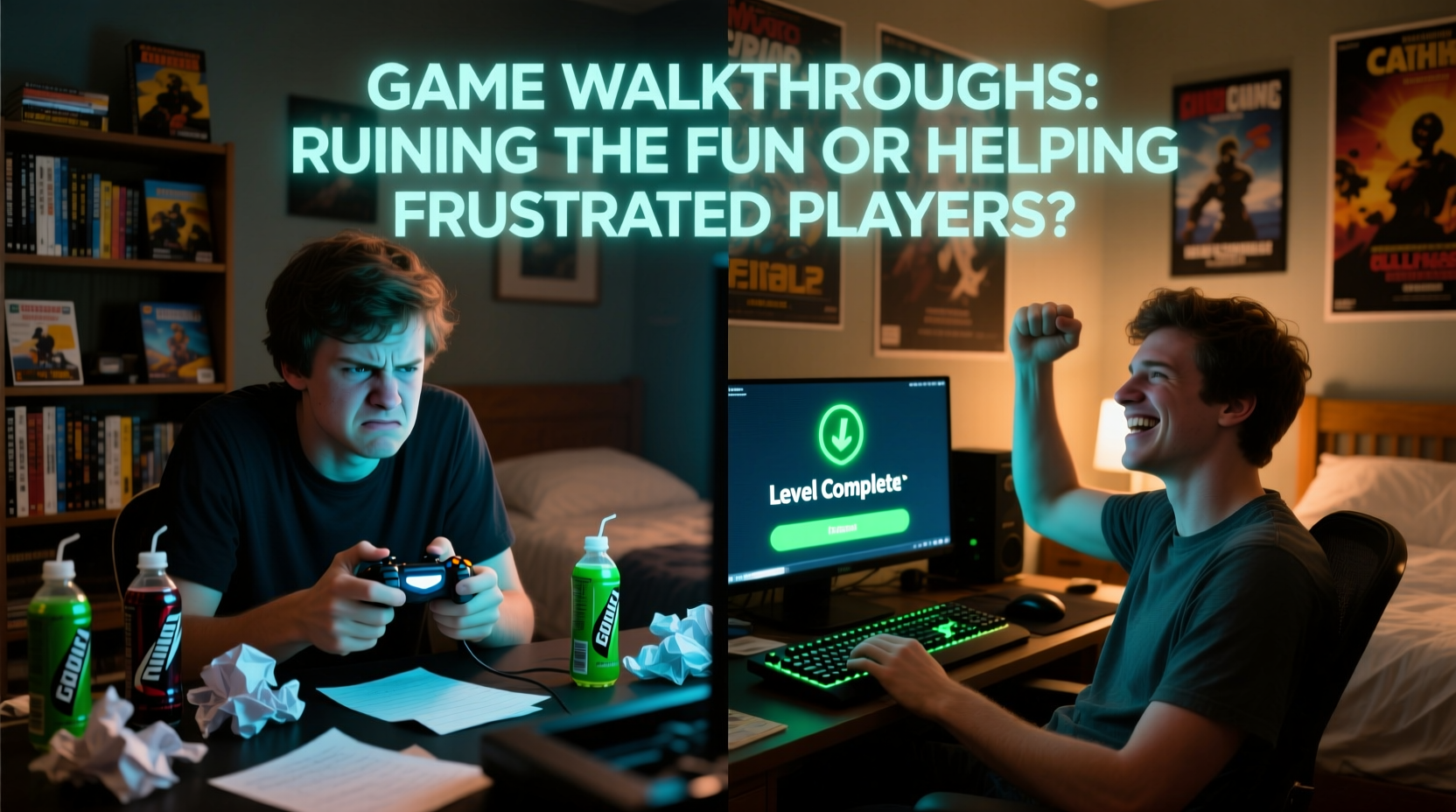
Walkthroughs have existed as long as challenging games have. From the early days of printed strategy guides for titles like *The Legend of Zelda* to today’s YouTube tutorials and wiki databases, players have always sought help when stuck. What’s changed is accessibility. A solution is now just a search query away, available in video, text, or interactive form.
This immediacy transforms the player’s relationship with difficulty. Where once frustration might have led to abandoning a game, today’s players can pause, consult a guide, and return stronger. This shift has made gaming more inclusive, allowing people with limited time or varying skill levels to experience complete narratives without being blocked by a single tough section.
Yet, this ease comes with trade-offs. The very act of looking up a solution bypasses the cognitive effort required to solve a problem independently. In doing so, it risks diminishing the emotional payoff of triumph.
When Walkthroughs Help: Supporting Player Engagement
Frustration is a natural part of gaming, but it becomes counterproductive when it leads to disengagement. A 2022 survey by the Entertainment Software Association found that nearly 45% of players abandon games before completion—often due to difficulty spikes or unclear objectives. Walkthroughs can reverse this trend.
Consider puzzle-heavy adventure games like *The Witness* or narrative-driven experiences such as *Disco Elysium*. These titles demand patience and lateral thinking. A player stuck on a single environmental puzzle for hours may lose interest entirely. A subtle hint from a walkthrough can reignite curiosity without spoiling the broader experience.
Moreover, walkthroughs serve educational purposes. New players can learn mechanics, uncover optimal builds, or understand lore they might otherwise miss. For games with branching paths or multiple endings, guides help players explore content they’d never see in a single playthrough.
When Walkthroughs Hurt: The Cost of Instant Solutions
The danger arises when walkthroughs become default tools rather than last resorts. Relying on them too early strips games of their intended pacing and emotional arcs. Consider a horror game like *Resident Evil 7*, where tension builds through exploration and resource scarcity. Watching a speedrun route beforehand removes suspense, turning dread into rote navigation.
Likewise, open-world games like *Elden Ring* are designed around organic discovery. Stumbling upon a hidden cave or unlocking a secret boss after hours of exploration delivers a unique thrill—one that evaporates if you simply follow a map pin from a guide.
Psychologically, overcoming adversity in games reinforces perseverance and self-efficacy. Research published in the *Journal of Media Psychology* suggests that players who solve problems unaided report higher satisfaction and emotional investment. By circumventing struggle, walkthroughs may deprive players of these intrinsic rewards.
“Games are not just about winning—they’re about learning through failure. Every death, every wrong turn, shapes the player.” — Dr. Lena Patel, Cognitive Game Designer
A Balanced Approach: Using Walkthroughs Wisely
The key isn’t to reject walkthroughs entirely, but to use them mindfully. Like training wheels on a bike, they can provide temporary support until confidence is built. The goal should be to preserve agency while reducing unnecessary friction.
One effective method is the “hint ladder” approach: start with vague clues before escalating to full solutions. Many fan communities structure their guides this way, offering tiered assistance. For example:
- General encouragement (“Look for environmental cues”)
- Mild hints (“Check the bookshelf in the study”)
- Spoiler-free guidance (“Rotate the symbols in order of appearance”)
- Full solution (with spoiler warnings)
This structure respects player autonomy while still offering relief when needed.
Checklist: Responsible Walkthrough Usage
- Attempt the challenge at least three times before seeking help
- Search for hints, not full solutions
- Use spoiler-free sections of guides when possible
- Avoid walkthroughs during first playthroughs of story-driven games
- Take breaks instead of immediately resorting to guides
- Reflect on why you’re stuck—mechanical issue or fatigue?
Case Study: Overcoming the Malenia Roadblock in Elden Ring
Malenia, Blade of Miquella, is widely regarded as one of the most difficult bosses in modern gaming. Her multi-phase fight demands precision, timing, and deep system knowledge. When *Elden Ring* launched in 2022, countless players hit a wall at her arena.
James, a casual gamer with a full-time job, spent over 20 hours trying to defeat her. Despite studying attack patterns and upgrading gear, he kept failing. Frustrated, he considered quitting the game entirely. Instead, he watched a concise 5-minute tutorial highlighting her phase transition tells and safe parry windows.
Equipped with this knowledge, James adapted his strategy. He didn’t copy a build or exploit glitches—he refined his own approach. After three more attempts, he won. His sense of victory was intact because the guide didn’t play the game for him; it illuminated what he’d missed.
This scenario illustrates how targeted walkthrough use can sustain motivation without undermining personal achievement.
Do’s and Don’ts of Walkthrough Usage
| Do | Don’t |
|---|---|
| Use walkthroughs after genuine effort | Consult guides before attempting a challenge |
| Seek hints instead of full solutions | Follow step-by-step routes blindly |
| Use guides to access missed content | Rely on them for every minor obstacle |
| Watch videos with spoiler warnings | Read ending spoilers prematurely |
| Support creators with ad views or donations | Pirated premium guide content |
The Rise of Interactive and Ethical Guides
In response to concerns about spoilers and over-reliance, a new generation of walkthroughs is emerging. Platforms like Steam Guides and HowLongToBeat now allow creators to tag content with spoiler levels. Some developers even integrate optional hint systems directly into games.
For example, *Tunic*—a 2022 action-adventure title—includes in-game manual pages written in a fictional language. Players must piece together logic from visual clues. However, the community quickly created translation guides. Rather than resisting this, the developers embraced it, calling the collaborative solving process part of the intended experience.
This reflects a broader shift: walkthroughs aren’t inherently harmful. They become problematic only when they disrupt the player’s intended journey. When aligned with player intent, they can enrich rather than diminish.
FAQ: Common Questions About Game Walkthroughs
Is using a walkthrough considered cheating?
Not necessarily. Unlike competitive multiplayer games, single-player experiences lack formal rules. Using a guide is a personal choice. If it helps you enjoy the game more, it’s not cheating—it’s adapting the experience to your needs.
How can I avoid spoilers while using a walkthrough?
Stick to reputable sources that label spoilers clearly. Use incognito mode to avoid algorithm-driven recommendations, and search with specific terms like “non-spoiler hint” or “minimal spoiler guide.” Skim only the section relevant to your current block.
Are developers against walkthroughs?
Most are indifferent or supportive. While some designers hope players discover secrets organically, few oppose guides outright. Many studios even hire community managers to help fans troubleshoot. As game designer Hidetaka Miyazaki stated, “If a player finds joy in completing our game—even with help—that’s a success.”
Conclusion: Walkthroughs as Tools, Not Crutches
Game walkthroughs are neither villains nor saviors. They are tools—powerful ones—that reflect how we engage with interactive art. Used recklessly, they can strip away surprise and accomplishment. Used thoughtfully, they preserve access, deepen understanding, and keep players invested in rich, demanding experiences.
The healthiest approach is intentional use. Ask yourself: Am I stuck because the game is unfair, or because I need more practice? Is this moment worth preserving for discovery, or is frustration outweighing enjoyment? There’s no universal rule, only personal reflection.
Gaming is ultimately about meaning—what we take from the experience. Whether you conquer a boss alone or with a guide, what matters is that the journey felt authentic to you.




 浙公网安备
33010002000092号
浙公网安备
33010002000092号 浙B2-20120091-4
Comments
No comments yet. Why don't you start the discussion?