
For drivers in colder climates, the luxury of a warm seat on a frosty morning is hard to overstate. While modern vehicles often come equipped with factory-installed heated seats, many owners of older cars are left wondering: can this comfort be retrofitted? More importantly, is it worth the investment and effort? The answer depends on several factors—your driving habits, climate, vehicle model, and technical confidence. This article explores the real value of adding heated seats to older vehicles, walks through installation considerations, and provides practical advice to help you decide if the upgrade makes sense.
Understanding the Value of Heated Seats
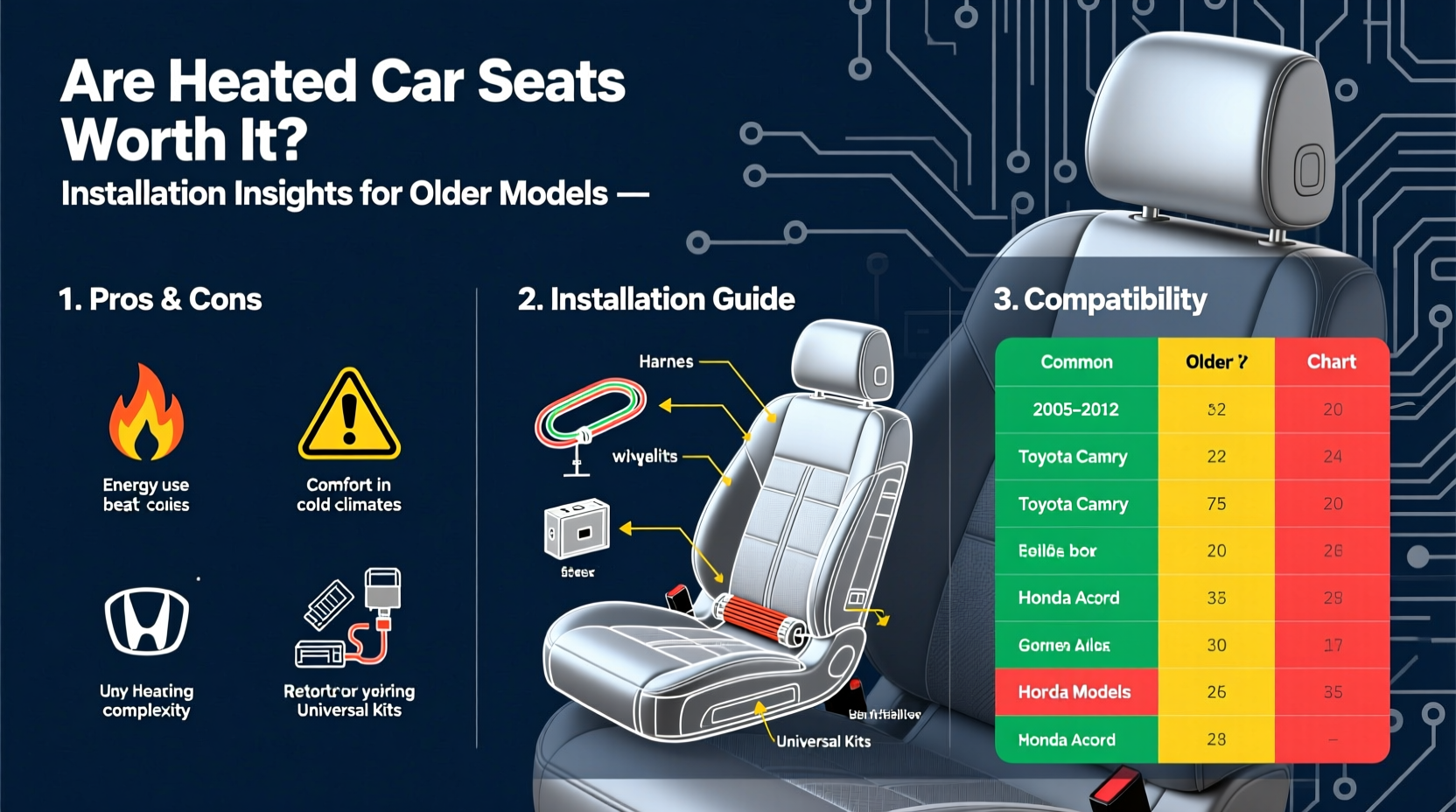
Heated seats are more than a comfort feature—they offer tangible health and safety benefits. By warming the lower back and thighs, they improve circulation, reduce muscle stiffness, and enhance driver alertness during long winter commutes. Unlike cabin heaters that take time to warm the entire interior, seat heaters deliver direct, localized warmth within minutes.
In older vehicles lacking modern climate amenities, adding heated seats can significantly elevate daily driving experience. However, the decision isn’t just about comfort—it’s also about cost-effectiveness and long-term vehicle use. If you plan to keep your car for several more years, especially in regions with harsh winters, the upgrade may pay for itself in improved comfort and resale appeal.
Options for Adding Heated Seats to Older Vehicles
You don’t need factory-integrated systems to enjoy heated seating. Aftermarket solutions fall into two main categories: retrofit kits and universal seat covers.
Retrofit Seat Heater Kits
These involve installing heating elements directly into the existing seat cushions. Kits typically include carbon fiber heating pads, wiring harnesses, switches, and thermostats. They're designed to be discreetly embedded beneath the upholstery, preserving the original look of the seats.
Professional installation is recommended due to the complexity of accessing seat foam and safely routing wires through moving parts. However, experienced DIYers can complete the job with care and patience.
Universal Heated Seat Covers
A simpler alternative, these plug into the 12V socket (cigarette lighter) and provide surface-level warmth. They’re removable, portable, and require no modifications. While convenient, they lack the seamless integration and consistent heat distribution of built-in systems.
They’re ideal for renters, short-term vehicle owners, or those unwilling to alter original upholstery.
| Solution Type | Installation Difficulty | Cost Range | Heat Quality | Best For |
|---|---|---|---|---|
| Retrofit Kit (Built-In) | High | $150–$400 per seat | Excellent, even warmth | Long-term owners, enthusiasts |
| Universal Heated Cover | Low | $50–$120 per set | Fair, surface-only | Renters, temporary use |
| Dealer Retrofit (OEM) | Very High | $800–$1,500+ | Best, factory-grade | Luxury models, warranty concerns |
Step-by-Step Guide to Installing a Retrofit Kit
If you're technically inclined, installing a retrofit kit yourself can save hundreds in labor costs. Here's a realistic breakdown of the process:
- Choose a compatible kit: Ensure the heating pad fits your seat size. Look for kits with overheat protection and low amperage draw (under 4A per seat).
- Remove the seat from the vehicle: Disconnect the battery, unplug seat connectors, and unbolt the seat. This provides better access and reduces risk of damaging airbag systems.
- Access the seat cushion: Carefully peel back the fabric on the bottom and side of the seat. Most seats have zippers or staples along the seam.
- Install the heating element: Position the carbon fiber pad flat against the foam, usually on the lower back and thigh areas. Avoid folding or creasing. Secure with included adhesive or straps.
- Route the wiring: Thread the wire through the seat frame to the base. Use conduit or loom to protect against abrasion.
- Connect to power: Tap into a switched 12V source—common choices include the cigarette lighter circuit or seat belt interlock. Never connect directly to the battery without a fuse and relay.
- Mount the switch: Install an illuminated toggle or rocker switch in a convenient dash location. Label clearly.
- Reinstall and test: Reattach the seat, reconnect all systems, and test operation. Monitor for hot spots or inconsistent heating.
Expert Insight: Safety and Longevity
Improper installation is the leading cause of failure and fire risk in aftermarket heated seat systems. Professional auto electricians emphasize adherence to electrical codes and manufacturer guidelines.
“Many DIY installations fail because people overload circuits or neglect thermal cutoffs. A well-designed kit with proper fusing and temperature sensors is safe—but cutting corners isn’t worth the risk.” — Daniel Reyes, ASE-Certified Auto Electrician
Modern kits include built-in thermostats that cycle the heat to prevent overheating. However, integrating them with memory seat systems or side airbags requires extra caution. If your vehicle has side impact sensors in the seat, consult a specialist before modifying upholstery.
Real-World Example: Upgrading a 2008 Honda Accord
Mark, a schoolteacher from Minnesota, drives his 2008 Honda Accord 15,000 miles annually, mostly during winter months. Cold mornings made commuting uncomfortable, and he considered buying a newer car. Instead, he invested $280 in a dual-seat retrofit kit and spent a weekend installing it with guidance from online forums.
After installation, he noticed immediate improvements in comfort and reduced lower back pain during long drives. He estimates the upgrade added at least two years to his ownership timeline, delaying a new car purchase. “It feels like I upgraded to a luxury trim,” he said. “For less than a month’s car payment, I got everyday comfort.”
This case illustrates how targeted upgrades can extend the life and enjoyment of older vehicles—especially when emotional attachment or budget constraints are factors.
Do’s and Don’ts of Heated Seat Installation
| Do | Don't |
|---|---|
| Use fused circuits and relays for safety | Tap into airbag or SRS wiring |
| Test heating elements before final assembly | Compress or fold heating pads |
| Secure wires with zip ties away from moving parts | Leave loose wires near seat tracks |
| Follow kit instructions precisely | Assume all seats are wired the same way |
| Consider professional help for complex interiors | Ignore local electrical regulations |
Cost-Benefit Analysis: Is It Worth It?
The financial logic behind adding heated seats hinges on three variables: upfront cost, usage frequency, and alternative options.
- Upfront Cost: A quality retrofit runs $150–$400 per seat. Professional labor adds $200–$400 more.
- Usage Frequency: In northern states, heated seats may be used 4–6 months per year. Daily users gain more value than occasional drivers.
- Alternative Options: A new car with heated seats starts around $25,000. Even a used model with the feature may cost $2,000–$4,000 more than an equivalent without.
When viewed as a cost-per-use metric, retrofitting becomes highly efficient. Over five years, spending $500 for daily winter comfort breaks down to less than $0.30 per use. Compare that to the depreciation hit of trading in a functional vehicle prematurely, and the upgrade often makes financial sense.
FAQ
Can I install heated seats myself without damaging my car?
Yes, if you follow detailed instructions and avoid critical systems like airbags. Use kits designed for DIY use, and disconnect the battery before starting. If your car has side airbags in the seats, consider professional help.
Do heated seats drain the car battery?
Not under normal conditions. Most systems draw 3–5 amps and only operate when the ignition is on. If wired correctly to a switched circuit, they won’t run when the engine is off, preventing battery drain.
Will adding heated seats void my warranty?
If your car is still under warranty, modifications to electrical systems could affect coverage—especially if damage occurs due to improper installation. Check with your dealer before proceeding. For older, out-of-warranty vehicles, this is not a concern.
Checklist: Before You Install Heated Seats
- ✅ Confirm your vehicle’s seat construction allows access to foam layer
- ✅ Choose between retrofit kit or heated cover based on permanence needs
- ✅ Verify power source availability (switched 12V circuit)
- ✅ Check for integrated airbags or sensors in the seat
- ✅ Purchase a kit with thermal protection and UL certification
- ✅ Set aside 6–8 hours for installation (or schedule a shop visit)
- ✅ Test system thoroughly before reassembling interior panels
Conclusion
Adding heated car seats to an older model isn’t just feasible—it can be one of the most rewarding comfort upgrades you make. Whether you choose a seamless retrofit or a plug-and-play cover, the improvement in daily driving experience, especially during cold months, is immediate and lasting. The key is matching the solution to your technical ability, budget, and long-term plans for the vehicle.
For many, the modest investment extends the joy of driving an older car, delaying the need for replacement and reducing overall transportation costs. With careful planning and attention to safety, heated seats can transform a basic commuter into a cozy, personalized space.




 浙公网安备
33010002000092号
浙公网安备
33010002000092号 浙B2-20120091-4
Comments
No comments yet. Why don't you start the discussion?