
In regions where winter means a drop to 50°F rather than snowstorms and subzero chills, the idea of heated car seats might seem like an unnecessary luxury. After all, if you’re not battling freezing mornings or icy seat surfaces, is the feature truly valuable? For many drivers in places like Southern California, Florida, or coastal Georgia, the answer isn’t immediately obvious. Yet, as automotive technology becomes more accessible—even standard—on new vehicles, heated seats are no longer exclusive to cold-weather trims. Understanding their real-world utility beyond temperature extremes reveals that their benefits extend far beyond just warmth.
Heated seats are often marketed as a winter comfort feature, but their advantages in milder environments are subtle yet meaningful. From improved circulation to enhanced driving comfort during damp mornings, they offer tangible perks even when the thermostat rarely dips below 60°F. This article explores whether upgrading to heated car seats makes sense in warm or temperate zones, weighing practicality, cost, long-term value, and user experience.
Understanding Heated Seats: How They Work and Why They Exist
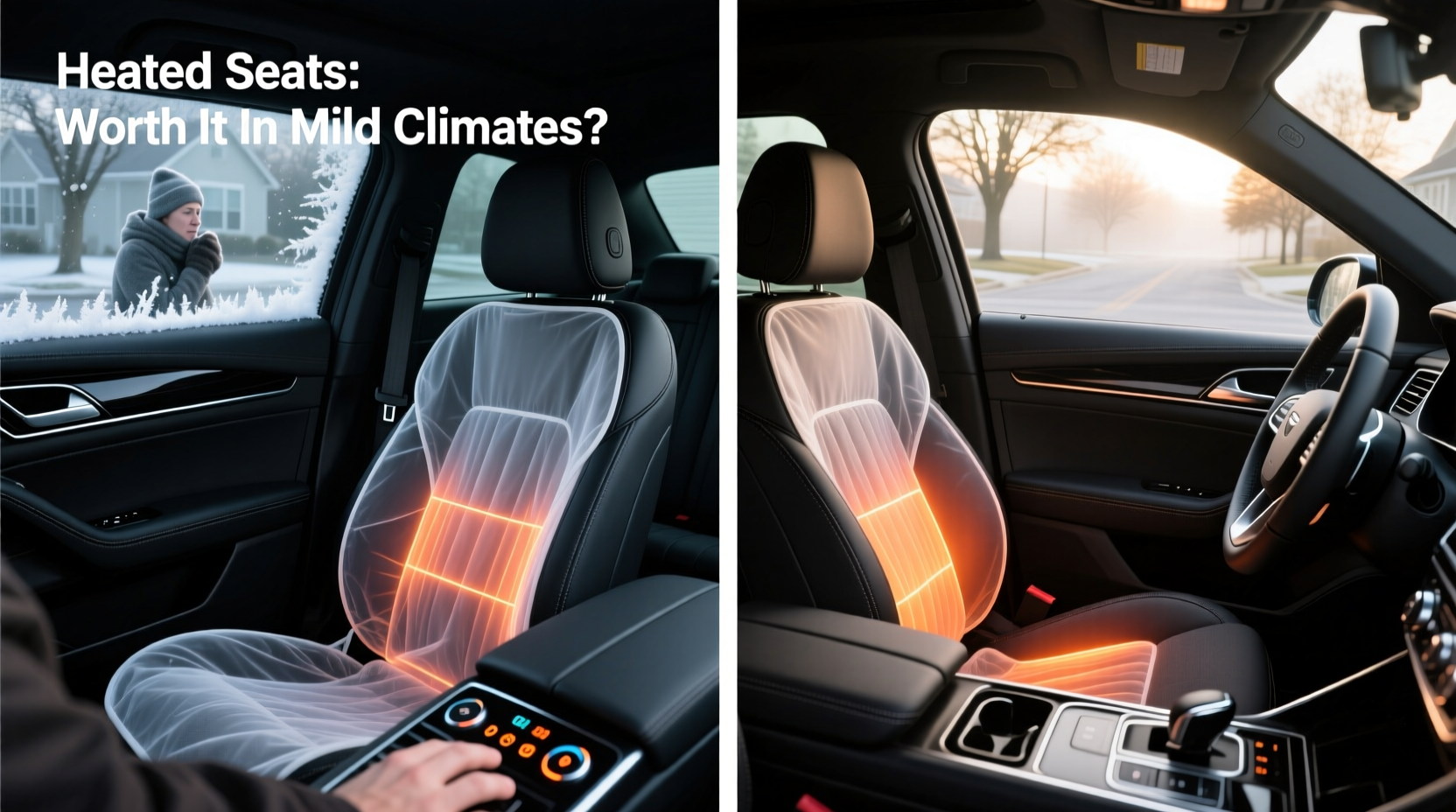
Heated car seats use embedded heating elements—typically carbon fiber or wire coils—within the seat cushion and backrest. When activated, these elements warm up gradually, usually within 30 to 90 seconds, delivering consistent, low-level heat directly to the body. Unlike cabin heaters that rely on the engine’s coolant system and take time to warm the air, seat heaters provide immediate, targeted comfort without increasing overall energy consumption significantly.
The original purpose was clear: combat extreme cold. In northern states and countries with harsh winters, sitting on a frigid leather or fabric seat can be uncomfortable—or even painful—for those with back pain or poor circulation. Automakers introduced heated seats in the 1960s, with Cadillac offering them as an option on its Eldorado model. Today, they’re available across nearly every vehicle class, from economy sedans to compact SUVs.
But functionality doesn’t vanish just because the climate is mild. Consider this: even in regions with average winter lows above 40°F, morning commutes can begin before sunrise, when ambient temperatures hover near dew point. A damp chill lingers in the air, especially after rain. In such conditions, the sensation of cold isn't about survival—it's about comfort. And comfort influences alertness, posture, and overall driving experience.
“Thermal comfort plays a critical role in driver focus. Even slight discomfort from cool seating surfaces can lead to muscle tension and distraction.” — Dr. Lena Torres, Human Factors Engineer at the Transportation Research Institute
Benefits Beyond Cold Weather: Why Mild Climates Still Gain Value
While the most obvious benefit of heated seats is warmth, their advantages in moderate climates are both physiological and psychological:
- Improved blood circulation: Gentle heat helps relax muscles and promote circulation, particularly beneficial for individuals with lower back issues or stiffness.
- Reduced morning stiffness: Even in 55°F weather, sitting on a cold seat can cause the body to tense up. Pre-warmed seats ease the transition from indoors to vehicle.
- Enhanced comfort during foggy or rainy mornings: Humidity amplifies the feeling of cold. A heated seat counteracts the clammy sensation common in coastal areas.
- Mental well-being: The small luxury of warmth contributes to a more pleasant start to the day, reducing stress and improving mood.
- Energy efficiency: Using seat heaters allows drivers to keep the cabin heater lower, saving fuel or extending electric vehicle range.
In fact, studies by the National Renewable Energy Laboratory (NREL) show that localized heating systems like seat warmers can reduce total vehicle heating load by up to 45%, leading to measurable improvements in fuel economy—especially relevant for EV owners concerned about battery drain in cooler months.
Cost vs. Value: Is the Upgrade Justified?
When purchasing a new or used vehicle, heated seats often come bundled into higher trim levels or optional packages. On average, adding a convenience package that includes heated seats (and sometimes steering wheel or mirrors) can increase the price by $1,000–$2,500, depending on the brand and model.
To assess whether this premium is worthwhile in a mild climate, consider the following factors:
| Factor | Impact in Mild Climate | Consideration |
|---|---|---|
| Frequency of Use | Moderate (3–5 months/year) | Used primarily during early mornings, rainy periods, or AC-heavy summer nights |
| Resale Value | Positive | Features like heated seats improve desirability even in warm regions |
| Health & Comfort ROI | High for chronic pain sufferers | Long-term relief may justify cost for certain users |
| Alternative Solutions | Limited effectiveness | Seat covers or blankets are less convenient and less safe |
| Integration with Other Features | Often paired with ventilated seats | Bundling increases overall value proposition |
For some buyers, heated seats aren’t a standalone feature—they’re part of a broader upgrade path. Many mid-tier trims include both heated and ventilated seats, offering year-round comfort. In that context, paying extra for heated seats also gains you cooling functionality in summer, effectively doubling the return on investment.
Real-World Example: Commuter in San Diego
Take Mark, a software developer in San Diego who commutes 45 minutes each way along the I-5. His area averages winter lows around 50°F, with frequent marine layer fog. Until last year, he drove a base-model sedan without heated seats. During winter months, he noticed he’d arrive at work with stiff shoulders and lower back tension, especially on days when he left before 7 AM.
After leasing a newer compact SUV with heated front seats (included in the Preferred Package), he began using them three to four times a week from November through February. “I didn’t expect much,” he said. “But within a week, I realized how much I was tensing up in the mornings. Now I turn them on low for 10 minutes, and I feel looser by the time I get downtown.”
What surprised him most was using them occasionally in summer—after running the AC full blast overnight, the car interior felt chilly at dawn. “It’s not about being cold,” he explained. “It’s about feeling balanced. The heat takes the edge off without making me sweat.”
This scenario illustrates a key insight: heated seats aren’t just for freezing conditions. They’re tools for thermal regulation, helping drivers maintain physical ease regardless of external temperature swings.
Step-by-Step Guide: Evaluating Whether to Upgrade
If you're deciding whether to pay extra for heated seats in a mild climate, follow this decision-making process:
- Assess your daily driving patterns: Do you drive early in the morning or late at night when temperatures are coolest?
- Consider personal health factors: Do you have back pain, arthritis, or circulation issues that could benefit from gentle heat?
- Review vehicle trim differences: Are heated seats bundled with other desirable features (e.g., sunroof, upgraded infotainment, safety suite)?
- Check resale market trends: Look up recent sales data for your target vehicle—do models with heated seats sell faster or at higher prices?
- Test-drive with the feature enabled: Sit in a car with heated seats during a cool morning test drive. Note how your body responds.
- Calculate long-term usage: Estimate how many days per year you’d realistically use them. Even 60–90 days annually may justify the cost over a five-year ownership period.
Frequently Asked Questions
Do heated seats consume a lot of energy?
No. Most heated seats draw between 100–150 watts per seat, comparable to a laptop charger. Because they provide direct warmth, they often allow drivers to lower the cabin heater, resulting in net energy savings—especially in hybrids and EVs.
Can I install aftermarket heated seats in a mild climate car?
Yes, but proceed with caution. Aftermarket kits are available, but improper installation can damage upholstery, wiring, or airbag systems. Factory-integrated systems are safer, more reliable, and better calibrated for temperature control.
Are heated seats useful in summer?
Surprisingly, yes—for some. Drivers who run the AC aggressively may find seats feel too cold upon entry. A brief cycle on low heat can balance the sensation. Additionally, people with muscle sensitivity or recovering from injury may use them year-round for therapeutic warmth.
Final Verdict: Who Should Upgrade?
For drivers in mild climates, heated seats aren’t essential—but they are increasingly practical. The decision ultimately hinges on lifestyle, sensitivity to temperature, and what else comes with the upgrade.
Worth the upgrade if:
- You drive early mornings or during rainy seasons.
- You suffer from back pain, stiffness, or poor circulation.
- The feature is part of a package that includes ventilated seats or advanced safety tech.
- You plan to keep the car for 4+ years, maximizing long-term comfort ROI.
May not be necessary if:
- You only drive during midday hours in consistently warm conditions.
- The cost adds $2,000+ without other meaningful upgrades.
- You prefer simpler interiors and minimal electronic features.
Importantly, consumer trends support the inclusion of heated seats even in southern markets. According to J.D. Power, over 68% of new vehicle buyers in the Sun Belt consider heated seats a desirable feature, ranking them just behind backup cameras and smartphone integration in popularity.
Conclusion: Small Comfort, Lasting Impact
Heated car seats may seem like a cold-weather indulgence, but their value in mild climates lies in consistency, comfort, and cumulative effect. Over hundreds of drives, the small relief of a warmed seat on a damp morning adds up—not just in physical ease, but in mental readiness for the day ahead.
They’re not a necessity, but neither are they frivolous. Like cup holders or power windows once were, heated seats are transitioning from luxury to expected convenience. If you’re already upgrading for safety features, better audio, or driver aids, including heated seats may be the smallest addition with one of the most frequent payoffs.




 浙公网安备
33010002000092号
浙公网安备
33010002000092号 浙B2-20120091-4
Comments
No comments yet. Why don't you start the discussion?