
Jade face rollers have become a staple in modern skincare routines, praised for their ability to depuff, enhance circulation, and promote lymphatic drainage. But as their popularity has surged, so too have concerns about hygiene. With daily use involving direct contact with skin, oils, and product residue, questions arise: Are these elegant tools truly clean, or do they silently harbor bacteria between uses? The answer isn’t straightforward—it depends largely on how they’re used and maintained.
While jade itself is non-porous and doesn’t absorb moisture like sponges or fabric, it’s not inherently self-sanitizing. Without proper care, a jade roller can become a breeding ground for bacteria, yeast, and mold—especially when stored in humid environments like bathrooms. This article explores the real risks, science-backed cleaning methods, and practical habits that determine whether your jade roller supports healthy skin or undermines it.
The Science of Bacteria and Skincare Tools
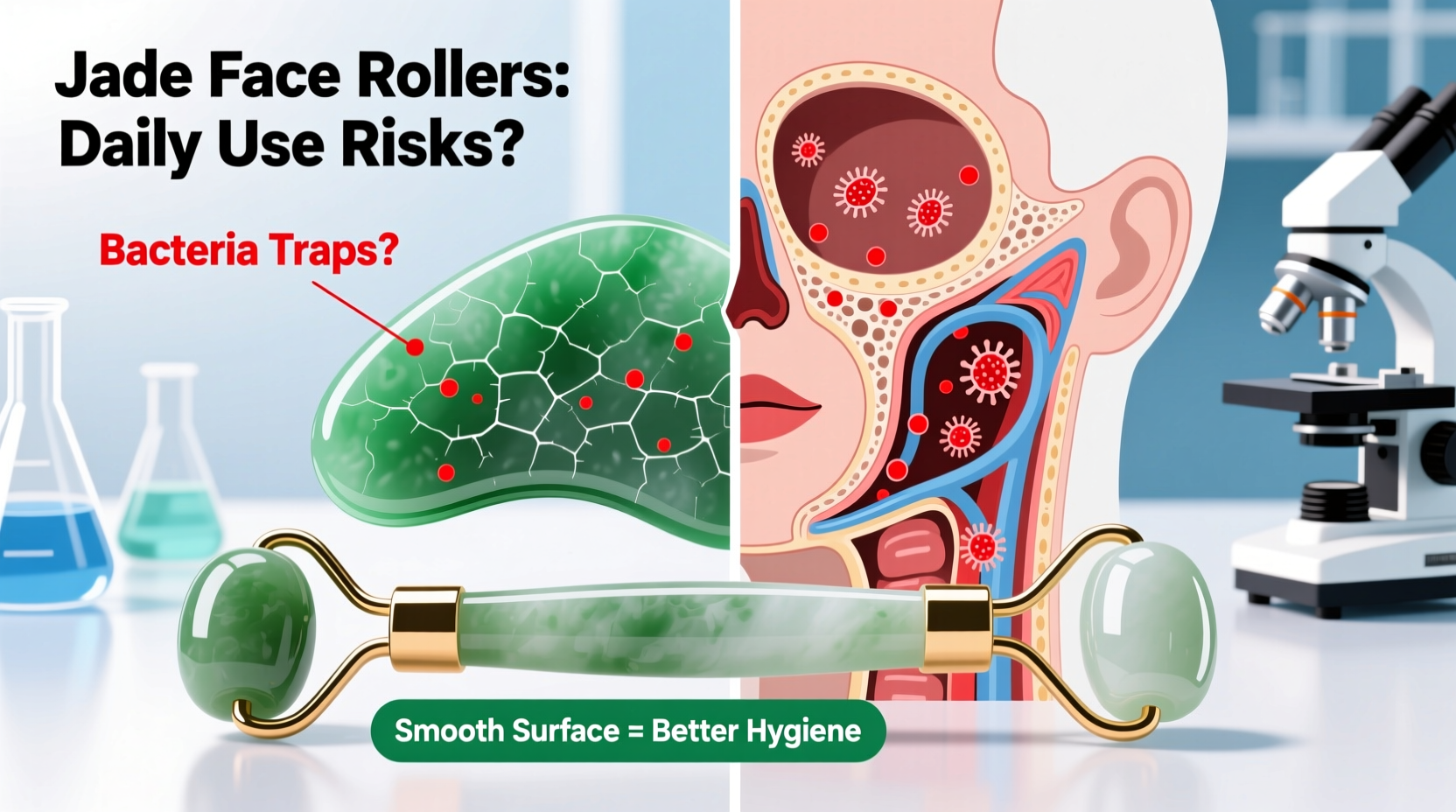
All skincare tools that touch the face are subject to microbial contamination. A 2015 study published in the Journal of Hospital Infection found that common beauty tools—including facial rollers, brushes, and spatulas—can accumulate significant levels of bacteria if not cleaned regularly. While jade is made from dense, non-porous stone (typically nephrite or jadeite), its surface can still trap oils, dead skin cells, and leftover serums, creating an environment where microbes thrive.
Bacteria such as Staphylococcus epidermidis, Propionibacterium acnes, and even E. coli have been identified on improperly cleaned facial tools. These organisms can contribute to breakouts, irritation, and in rare cases, infections—particularly for those with compromised skin barriers or acne-prone complexions.
“Any tool that repeatedly contacts the face should be treated as a potential vector for bacterial transfer. Non-porous doesn’t mean germ-free.” — Dr. Lena Torres, Dermatologist and Cosmetic Safety Researcher
The risk increases when users apply the roller over active acne, cuts, or irritated skin, which can introduce pathogens deeper into the dermal layers. Additionally, storing the roller in a damp bathroom cabinet or leaving it exposed on a countertop amplifies contamination risks due to humidity and airborne particles.
How Daily Use Impacts Hygiene
Daily use intensifies the need for consistent cleaning. Each session deposits sebum, sweat, and skincare products onto the roller’s surface. Over time, these residues build up in crevices around the axle and handle, especially in cheaper models with glued joints or textured finishes.
A survey conducted by a cosmetic safety watchdog group found that only 37% of regular jade roller users clean their tools weekly or more often. The majority wipe them occasionally with a tissue or rinse under water without drying properly. This inconsistent hygiene leads to biofilm formation—a slimy layer of microorganisms that adheres to surfaces and resists casual cleaning.
Frequent use without cleaning also dulls the tool’s effectiveness. Product buildup creates a barrier that reduces glide and may cause tugging on the skin, counteracting the very benefits users seek. For optimal performance and safety, hygiene must be integrated into the routine just like cleansing the face itself.
Step-by-Step Guide to Sanitizing Your Jade Roller
Maintaining a hygienic jade roller requires more than a quick rinse. Follow this detailed, dermatologist-approved process to ensure deep sanitation and longevity:
- Disassemble if possible: Some rollers allow removal of the stone heads. If yours does, separate them to access hidden areas around the metal rod.
- Rinse under lukewarm water: Use gentle stream to remove loose debris. Avoid hot water, which can weaken adhesive or cause thermal shock to the stone.
- Clean with mild soap: Use a drop of fragrance-free, antibacterial hand or face soap on a soft cloth or brush. Gently scrub all surfaces, focusing on the axle and handle junctions.
- Soak in disinfectant solution (weekly): Submerge the roller in a mix of 70% isopropyl alcohol and water for 5–10 minutes once per week. This kills bacteria, fungi, and viruses effectively.
- Rinse again: Remove all traces of alcohol or soap to prevent skin irritation during next use.
- Air-dry completely: Place on a clean towel in a well-ventilated area, away from direct sunlight. Ensure no moisture remains in joints before storage.
- Store properly: Keep in a dry, closed container or pouch—not on an open sink edge or near the shower.
This routine, performed weekly with a quick wipe-down after each use, drastically reduces microbial load and preserves the integrity of the tool.
Do’s and Don’ts of Jade Roller Maintenance
| Do’s | Don’ts |
|---|---|
| Wipe the roller with a clean, damp cloth after every use | Never soak for hours—prolonged exposure to water may degrade adhesives |
| Sanitize weekly with 70% isopropyl alcohol | Avoid harsh chemicals like bleach or acetone |
| Store in a dry, breathable fabric pouch | Don’t leave it in the bathroom where humidity encourages mold |
| Inspect monthly for cracks or loosening parts | Don’t use if the roller feels gritty or wobbles—replace it |
| Use a soft toothbrush to clean hard-to-reach areas | Never put in dishwasher or sterilizer meant for baby bottles |
Real Example: When Hygiene Was Ignored
Sophia, a 29-year-old marketing professional, began using a rose quartz roller daily to reduce morning puffiness. She loved the cooling sensation but wiped it only occasionally with a tissue. After six weeks, she noticed small pustules forming along her jawline—unusual for her typically clear skin.
She consulted a dermatologist, who asked about her skincare tools. Upon inspection, Sophia’s roller had a faint film and a slightly tacky texture near the handle. The doctor swabbed the surface and sent it for culturing. Results showed elevated levels of Corynebacterium and trace Malassezia yeast—both linked to folliculitis and fungal acne.
After discontinuing use and sanitizing her tools properly, Sophia’s breakouts resolved within two weeks. “I never thought a beauty tool could cause breakouts,” she said. “Now I clean mine every Sunday without fail.”
This case illustrates how seemingly minor neglect can compromise skin health—even with natural materials.
Expert-Recommended Cleaning Checklist
To help users stay consistent, here’s a concise checklist based on recommendations from skincare specialists and microbiologists:
- ✅ Wipe roller with a clean, damp microfiber cloth after each use
- ✅ Perform full soap-and-water wash weekly
- ✅ Soak in 70% isopropyl alcohol solution once a week
- ✅ Dry thoroughly before storing—never damp
- ✅ Store in a dry, enclosed space away from humidity
- ✅ Inspect monthly for damage or wear
- ✅ Replace every 12–18 months, or sooner if cracked or loose
- ✅ Use a dedicated soft brush for cleaning crevices
FAQ: Common Concerns About Jade Roller Hygiene
Can I clean my jade roller with hand sanitizer?
Yes, but only if it contains at least 60–70% alcohol and no added gels, fragrances, or moisturizers. Many hand sanitizers leave behind residues that can transfer to the skin. It’s better to use pure isopropyl alcohol diluted with water for reliable results.
Is it safe to put a jade roller in the fridge?
Yes, chilling enhances depuffing effects—but only if the roller is completely dry first. A damp roller placed in the fridge can grow mold due to condensation cycles. Always dry thoroughly before refrigeration, and store it in a sealed pouch to prevent contamination from food particles.
How often should I replace my jade roller?
Every 12 to 18 months with regular use. Over time, microscopic scratches accumulate, making the surface more prone to trapping bacteria. Cracks, cloudiness, or a loose roller head are signs it’s time for replacement.
Conclusion: Clean Tools, Healthier Skin
A jade face roller isn’t inherently unhygienic—but it’s not self-cleaning either. Its safety hinges on user behavior. Like a toothbrush or razor, it demands regular maintenance to remain a beneficial part of a skincare regimen. When cleaned properly, a jade roller remains a low-risk, effective tool that enhances skin health without introducing contaminants.
The convenience of rolling shouldn’t come at the cost of cleanliness. By integrating simple, science-backed hygiene steps into your routine, you protect your skin from avoidable irritation and infection. Treat your roller not just as a luxury item, but as an extension of your skincare practice—one that deserves the same attention as the products you apply.




 浙公网安备
33010002000092号
浙公网安备
33010002000092号 浙B2-20120091-4
Comments
No comments yet. Why don't you start the discussion?