
Facial lymphatic drainage has gained widespread popularity as a natural, non-invasive method to reduce puffiness, enhance circulation, and promote radiant skin. At the heart of this trend are two iconic tools: the jade roller and the gua sha. Both have roots in traditional Chinese medicine and are praised for their ability to support facial wellness. Yet, consumers often ask: Which one is more effective? Is the jade roller truly better than the gua sha for lymphatic drainage, or does it depend on individual needs and technique?
The answer isn’t straightforward. While both tools aim to stimulate lymph flow and decongest facial tissues, they differ significantly in design, application, and results. Understanding these differences can help you make an informed decision based on your skin type, concerns, and lifestyle.
Understanding Facial Lymphatic Drainage
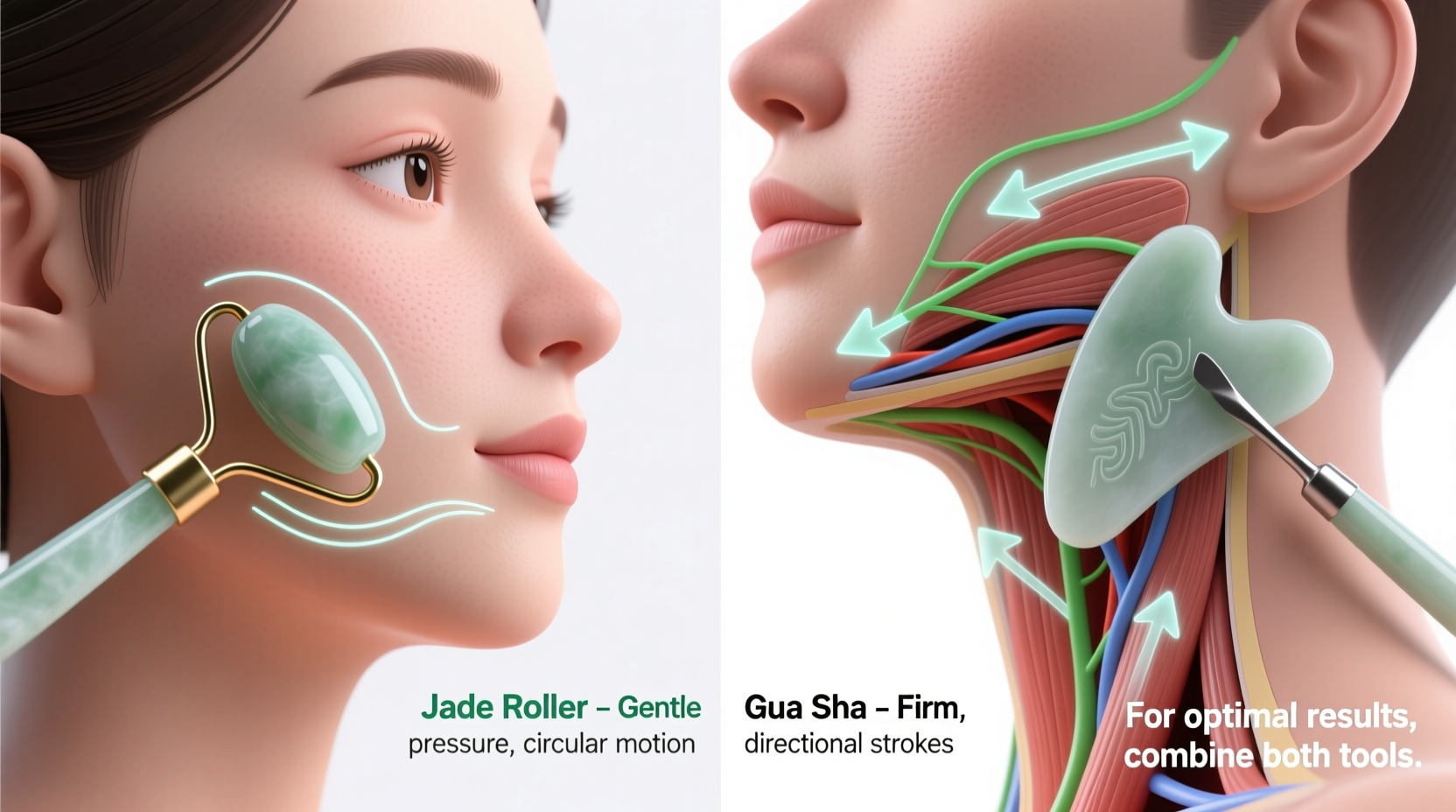
Lymphatic drainage refers to the process of manually stimulating the lymphatic system—a network responsible for removing toxins and excess fluid from tissues. Unlike blood, which circulates via the heart, lymph relies on muscle movement and external pressure to flow. On the face, stagnant lymph can lead to puffiness, dullness, and under-eye bags—especially after poor sleep, high salt intake, or stress.
Facial tools like jade rollers and gua sha stones apply gentle pressure along specific pathways to encourage lymph movement toward the lymph nodes located near the ears, jawline, and neck. When performed correctly, this stimulation can result in:
- Reduced morning puffiness
- Improved product absorption
- Enhanced skin tone and elasticity
- Temporary contouring effect through fluid release
However, effectiveness depends not only on the tool but also on consistency, technique, and complementary skincare practices.
Jade Rollers: Simplicity and Soothing Relief
The jade roller is a dual-ended handheld tool featuring a larger and smaller stone cylinder mounted on a metal rod. Traditionally made from natural jade (nephrite), modern versions may use rose quartz, amethyst, or synthetic materials. The cooling properties of the stone are a key selling point, especially when chilled before use.
Jade rollers are praised for their ease of use and gentle action. The rolling motion provides light compression across broad areas of the face, making them ideal for daily maintenance. Users often report immediate comfort, reduced eye puffiness, and a calming ritual—particularly helpful during evening routines or post-inflammatory flare-ups.
Because the roller glides over the skin with minimal resistance, it’s less likely to cause irritation, making it suitable for sensitive or acne-prone skin. However, its simplicity comes with limitations. The fixed shape restricts precision, and the rolling mechanism doesn’t allow for targeted pressure on stubborn areas like the jawline or submandibular glands where lymph tends to accumulate.
Gua Sha: Precision and Deeper Stimulation
Gua sha, meaning “to scrape” in Chinese, involves using a flat, contoured stone to gently lift and press along meridians and lymphatic pathways. Authentic gua sha tools are typically made from bian stone, jade, or nephrite, with ergonomic curves designed to fit facial contours. Unlike the roller, gua sha requires deliberate strokes and directional control.
When used properly, gua sha delivers deeper, more focused stimulation. It targets specific zones such as the temples, cheekbones, and neck, where lymph congestion commonly occurs. The scraping motion increases microcirculation and promotes myofascial release, potentially leading to longer-lasting toning effects and improved muscle definition over time.
Clinical observations suggest that consistent gua sha practice may support collagen production and reduce the appearance of fine lines by improving oxygen delivery to skin cells. A 2019 pilot study published in *Complementary Therapies in Clinical Practice* found that participants who performed facial massage with a gua sha tool five times per week reported noticeable improvements in skin firmness and radiance after four weeks.
“Gua sha engages both the lymphatic system and underlying musculature. It’s not just about moving fluid—it’s about retraining facial tension patterns.” — Dr. Ling Zhao, Integrative Dermatology Specialist
Comparing Effectiveness: Key Differences
To determine whether jade rollers are better than gua sha tools, consider how each performs across several critical factors:
| Feature | Jade Roller | Gua Sha |
|---|---|---|
| Lymphatic Efficacy | Moderate – best for light daily drainage | High – enables deep, targeted stimulation |
| Learning Curve | Low – intuitive and easy to use | Medium – requires proper stroke technique |
| Skin Sensitivity Suitability | Excellent – gentle, low friction | Good – depends on pressure applied |
| Time Required | 3–5 minutes | 8–12 minutes |
| Contouring Potential | Minimal – temporary de-puffing only | Significant – long-term toning possible |
| Versatility | Low – primarily for face | High – usable on neck, shoulders, décolletage |
This comparison shows that while jade rollers offer convenience and comfort, gua sha provides superior functional depth for those seeking measurable changes in facial structure and lymphatic efficiency.
Step-by-Step: Optimizing Your Lymphatic Routine
Regardless of your tool choice, technique matters more than the device itself. Follow this evidence-based sequence to maximize lymphatic flow:
- Prep the Skin: Cleanse thoroughly and apply a facial oil or serum to reduce friction. Avoid water-based products alone, as they increase drag.
- Begin at the Center: Start from the nasal bridge and move outward along the brow line to clear sinus congestion.
- Cheek and Jaw Pathway: From the nose, glide down along the nasolabial folds, then sweep backward along the jawline toward the lymph nodes below the ears.
- Under-Eye Focus: Use the small end of a roller or the curved edge of a gua sha to gently sweep from the inner corner of the eye toward the temple.
- Neck Clearance: Always finish by clearing the neck—stroke downward from beneath the jaw to the collarbone to prevent fluid backup.
- Repeat and Relax: Perform each stroke 3–5 times per side. Breathe deeply to enhance parasympathetic response and circulation.
Real Example: A Week of Side-by-Side Testing
Sophie, a 34-year-old esthetician from Portland, conducted a personal experiment comparing both tools over seven days. She used the jade roller every morning and the gua sha every evening, documenting changes in puffiness, skin texture, and jawline definition.
By day three, she noticed reduced under-eye swelling with the roller, especially when refrigerated. However, the most dramatic change came on day six: her clients commented on a \"lifted\" appearance along her jawline—something she attributed to nightly gua sha sessions focusing on the posterior mandible and submandibular region.
“The roller feels luxurious and calming,” she said. “But the gua sha actually changed my face shape. I didn’t believe it until I saw it in photos.”
Sophie now recommends combining both: the roller for quick refreshment and the gua sha for structural refinement.
Checklist: Choosing the Right Tool for You
Use this checklist to determine which tool aligns best with your goals:
- ✅ Do you want a quick, relaxing routine? → Jade roller
- ✅ Are you dealing with chronic facial puffiness or sinus congestion? → Gua sha
- ✅ Is your skin sensitive or prone to redness? → Jade roller (with light pressure)
- ✅ Do you desire visible contouring over time? → Gua sha
- ✅ Are you willing to learn proper stroke techniques? → Gua sha
- ✅ Do you prefer multitasking tools? → Gua sha (can be used on body too)
If you check mostly left-side items, the jade roller suits your needs. If right-side boxes dominate, gua sha is likely the better investment.
Frequently Asked Questions
Can I use both a jade roller and gua sha together?
Absolutely. Many dermatologists recommend combining them: use the gua sha first to stimulate deeper layers and release tension, followed by the jade roller to soothe and cool the skin. This dual approach maximizes both therapeutic and aesthetic benefits.
How often should I perform facial lymphatic drainage?
Daily practice yields the best results. Even 5 minutes a day can maintain lymph flow and prevent buildup. For optimal outcomes, aim for consistent use—preferably at the same time each day to support circadian rhythm alignment in skin repair cycles.
Does the material of the tool matter?
Yes. Natural stones like jade and bian stone retain temperature longer and are believed to carry subtle energetic properties in traditional practices. However, functionally, any smooth, non-porous stone will work. Avoid plastic imitations, as they lack thermal conductivity and may harbor bacteria.
Final Verdict: Function Over Form
So, are jade rollers better than gua sha tools for facial lymphatic drainage? Based on technique, anatomical targeting, and clinical feedback, the answer leans toward no—gua sha generally outperforms the jade roller in efficacy. Its ability to deliver precise, directional pressure makes it superior for decongesting dense lymph pockets and sculpting facial contours.
That said, the jade roller excels in accessibility and sensory experience. It’s ideal for beginners, those with limited time, or anyone seeking a calming ritual without a steep learning curve. It may not transform your face, but it will refresh it.
The truth is, neither tool replaces medical-grade treatments for severe edema or chronic inflammation. But as part of a holistic skincare regimen, both contribute meaningfully to skin health—when used correctly and consistently.
“The most powerful tool isn’t jade or stone—it’s regularity. Five minutes every day beats one hour once a month.” — Renée Fields, Holistic Esthetics Educator
Take Action Today
Your face carries the marks of your lifestyle—stress, diet, sleep, and self-care. By incorporating lymphatic drainage into your routine, you’re not just chasing beauty; you’re supporting your body’s natural detoxification rhythms. Whether you start with a simple jade roller or dive into the art of gua sha, the key is to begin.




 浙公网安备
33010002000092号
浙公网安备
33010002000092号 浙B2-20120091-4
Comments
No comments yet. Why don't you start the discussion?