
Indoor gardening has surged in popularity, especially in urban homes where natural sunlight is limited. As more people bring greenery indoors, a common question arises: do you really need LED grow lights, or are they an expensive solution in search of a problem? For beginners, the answer isn’t always straightforward. While some houseplants thrive near a sunny window, others struggle in low-light conditions. LED grow lights promise to bridge that gap—but at what cost, effort, and necessity?
The reality is that LED grow lights can be both a game-changer and an overengineered distraction, depending on your setup, plant types, and expectations. Understanding when they’re essential—and when they’re simply flashy accessories—can save time, money, and prevent beginner frustration.
When Natural Light Isn’t Enough
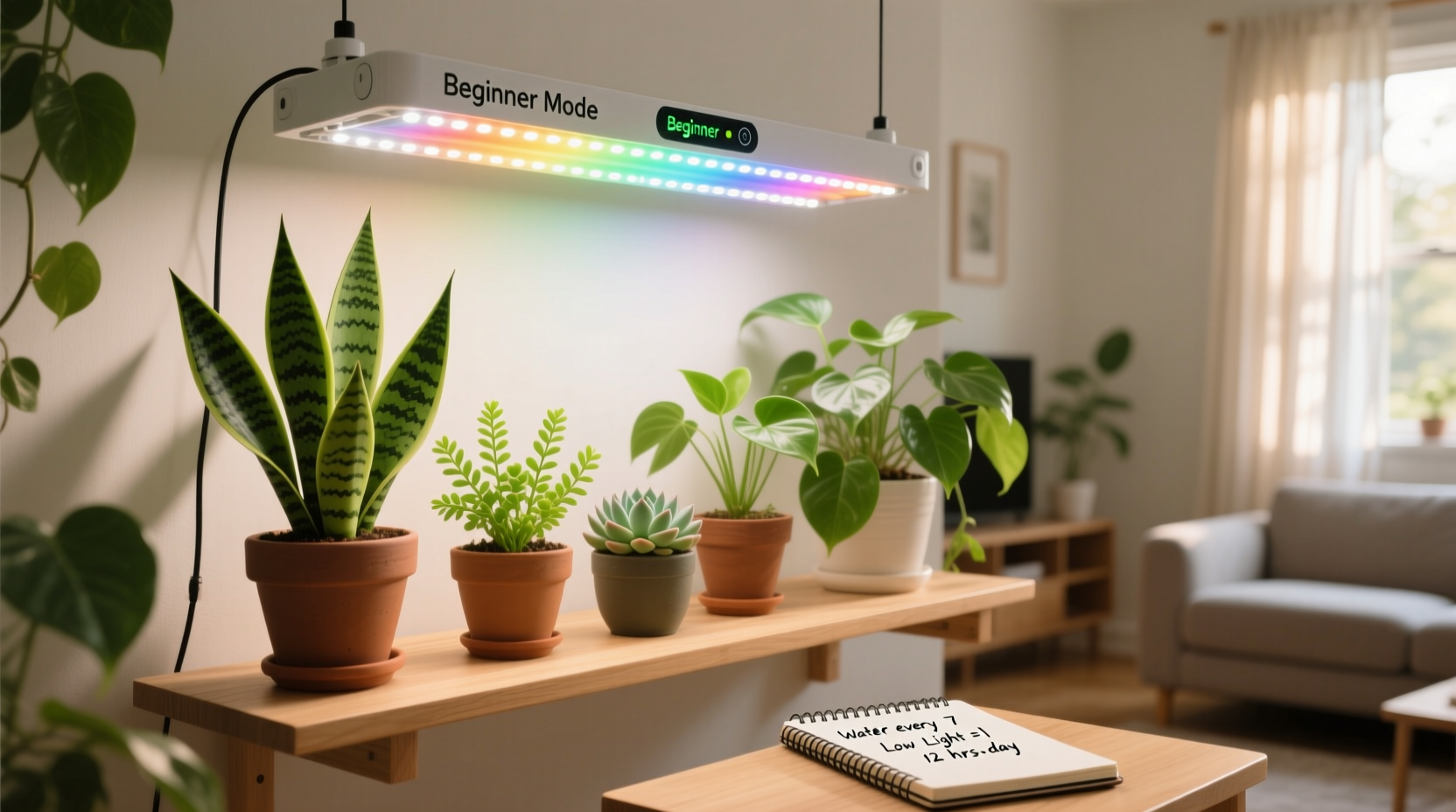
Most indoor plants evolved under filtered forest canopies or bright but indirect sunlight. In modern homes, especially those with north-facing windows or heavy shading from buildings, even “bright” areas may not provide enough usable light for photosynthesis. Plants like fiddle leaf figs, monsteras, or herbs such as basil and mint require high light intensity to grow robustly. Without it, they become leggy, pale, and prone to pests.
Windows filter out significant portions of the light spectrum, particularly blue and red wavelengths critical for vegetative growth and flowering. During winter months, daylight hours shorten dramatically in many regions, reducing total light exposure by 50% or more. This seasonal drop often leads to plant dormancy or decline—even with diligent watering and feeding.
How LED Grow Lights Work (And Why They’re Different)
Not all artificial lights are created equal. Standard room lighting—like incandescent bulbs or cool white LEDs—is designed for human visibility, not plant biology. These emit light primarily in the green-yellow spectrum, which plants reflect rather than absorb. In contrast, LED grow lights are engineered to deliver specific wavelengths that match chlorophyll absorption peaks: blue (400–500 nm) for foliage development and red (600–700 nm) for flowering and stem elongation.
Modern full-spectrum LED panels simulate daylight by combining multiple diodes. Some models even include far-red or UV channels to influence plant morphology and secondary metabolite production. Unlike older technologies like high-pressure sodium (HPS) or fluorescent tubes, LEDs run cooler, consume less energy, and last up to 50,000 hours. Their directional output allows focused illumination without wasting light on surrounding walls.
“Plants don’t grow based on brightness to our eyes—they respond to photon quantity and quality. LED grow lights give us precision control over both.” — Dr. Lena Torres, Horticultural Lighting Specialist, University of Vermont
Beginner-Friendly vs. Overkill: Finding the Balance
For someone just starting with houseplants, investing in a $150 adjustable grow light system might seem excessive—especially if they only have one or two pothos or snake plants. These species are famously adaptable and can survive in surprisingly low light. In such cases, a grow light would indeed be overkill.
However, if your goal is to grow edible herbs year-round, propagate cuttings, or maintain tropical specimens like orchids or African violets, supplemental lighting becomes much more practical. The key is matching the tool to the task. You don’t need a commercial-grade panel for a single basil plant on a kitchen counter. But a compact clip-on LED grow light with a timer can make a meaningful difference.
The misconception that “all plants need grow lights” stems from oversimplified marketing. Reality is nuanced: some plants benefit greatly, others marginally, and a few not at all. Knowing your plant’s light requirements—and measuring actual light levels in your space—is crucial before deciding.
Light Requirements of Common Indoor Plants
| Plant Type | Natural Light Need | Benefit from LED Grow Light |
|---|---|---|
| Snake Plant | Low to medium | Minimal – survives well without |
| Pothos | Medium | Moderate – improves variegation and growth speed |
| Fiddle Leaf Fig | High, bright indirect | Significant – prevents leaf drop in winter |
| Basil / Herbs | Very high | Essential for indoor cultivation beyond summer |
| African Violet | Medium-high, indirect | High – supports consistent blooming |
| Orchid (Phalaenopsis) | Medium-bright | Moderate – helps reblooming in low-light homes |
Real Example: From Struggling to Thriving
Sarah, a first-time plant owner in Minneapolis, bought a variegated monstera in spring. It looked vibrant in the nursery but began stalling by October. New leaves came in smaller, with reduced variegation, and the vine stopped climbing. She adjusted her watering and fertilized monthly, but saw no improvement.
After consulting a local garden center, she learned her east-facing window provided only about 1,500 lux during winter—well below the 5,000–10,000 lux ideal for monsteras. She purchased a mid-range LED grow light bar with a clamp mount and set it to run 12 hours daily. Within six weeks, new leaves emerged larger and more vividly split. By February, the plant produced its first aerial root, a sign of active growth.
This case illustrates that grow lights aren’t magic—they compensate for environmental deficits. Sarah didn’t need advanced controls or spectrum tuning; a simple, affordable unit filled the gap between her living space and her plant’s biological needs.
Choosing the Right LED Light Without Going Overboard
For beginners, simplicity should guide selection. Look for these features:
- Full-spectrum white LEDs: Mimic daylight and are easier on the eyes than purple-tinted lights.
- Adjustable arms or mounts: Allow positioning as plants grow.
- Timer function: Ensures consistent photoperiods without manual intervention.
- Dimmable settings: Useful for seedlings or shade-tolerant species.
Avoid models with excessive wattage or complex app connectivity unless you plan to scale up. A 20–40W panel is sufficient for most small to medium indoor setups. Placement matters: keep lights 6–12 inches above foliage to maximize intensity while preventing heat stress.
Step-by-Step: Setting Up Your First Grow Light
- Assess your plants’ current condition: Look for signs of light deficiency like etiolation (stretching), pale leaves, or slow growth.
- Measure ambient light: Use a smartphone light meter app to record readings at different times of day.
- Select an appropriate fixture: Choose a size and power level matching your plant group (e.g., clip light for one herb, panel for a shelf).
- Install and position: Mount the light so it covers the entire canopy, staying 6–12 inches above leaves.
- Set a daily schedule: Start with 12–14 hours on, 10–12 off. Adjust based on plant response.
- Monitor and adjust: Check weekly for improved growth or signs of stress (e.g., bleaching or curling).
Common Misconceptions About Grow Lights
Several myths deter beginners from using LED grow lights effectively:
- Myth: All grow lights are blindingly purple. Many modern units use white LEDs with balanced spectra, blending seamlessly into home decor.
- Myth: They’ll raise my electric bill significantly. A typical 30W LED runs about $3–$5 per month if used 12 hours daily.
- Myth: More wattage equals better growth. Efficiency matters more than raw power. Poorly designed high-wattage lights can waste energy and burn plants.
- Myth: You need lights for every plant. Only supplement plants with high or specific light needs.
FAQ: Your Top Questions Answered
Can I leave my LED grow light on 24 hours a day?
No. Plants require a dark period for respiration and metabolic regulation. Continuous light can cause stress, reduce growth, and inhibit flowering. Stick to 12–16 hours daily, followed by darkness.
Do I need special “grow” bulbs if I already have LED room lights?
Standard household LEDs lack sufficient intensity and optimal spectral balance. Even bright ceiling lights rarely exceed 500 µmol/m²/s at plant level—far below what most foliage plants need (200–600 µmol/m²/s). Dedicated grow lights are specifically tuned for horticultural performance.
Are cheap LED grow lights from online marketplaces effective?
Some budget models work well for low-light plants or short-term use. However, many underperform due to inaccurate labeling, poor heat dissipation, or weak spectral output. Look for brands with third-party testing data or customer reviews showing real plant results.
Checklist: Is a Grow Light Right for You?
- ☐ Do your plants receive less than 4 hours of direct sun or under 2,500 lux of indirect light?
- ☐ Are you growing herbs, fruiting plants, or high-light tropicals indoors?
- ☐ Have your plants stalled or declined despite proper watering and feeding?
- ☐ Are you propagating cuttings or starting seeds indoors?
- ☐ Do you want consistent growth year-round, especially in winter?
If you answered yes to two or more, a basic LED grow light is likely a worthwhile investment.
Final Thoughts: Tools, Not Trends
LED grow lights aren’t inherently overkill for beginners—but treating them like a universal fix is. Used thoughtfully, they remove guesswork and expand what’s possible in low-light homes. Yet, they shouldn’t replace foundational knowledge about plant needs, placement, and care routines.
The best approach is incremental: start with observation, measure your environment, and intervene only where necessary. A single, well-placed grow light can transform one struggling plant into a thriving specimen. That success builds confidence—and often sparks deeper interest in indoor horticulture.




 浙公网安备
33010002000092号
浙公网安备
33010002000092号 浙B2-20120091-4
Comments
No comments yet. Why don't you start the discussion?