
In an era where smartphones are central to daily life—navigating commutes, managing schedules, and handling digital payments—magnetic phone mounts have surged in popularity. Their sleek design, one-handed attachment, and compatibility with car dashboards and air vents make them a favorite among drivers. But as adoption grows, so do concerns: Are these mounts truly safe for your phone? And more critically, could they compromise the security of your wallet, especially contactless cards and key fobs?
The year 2025 brings sharper focus on this debate. With advancements in smartphone durability, stronger magnets in accessories, and increased reliance on RFID-based transactions, it's essential to separate fact from fear. This article examines the real risks and benefits of magnetic phone mounts, evaluates their impact on modern devices and personal belongings, and provides actionable guidance for safe usage.
How Magnetic Phone Mounts Work
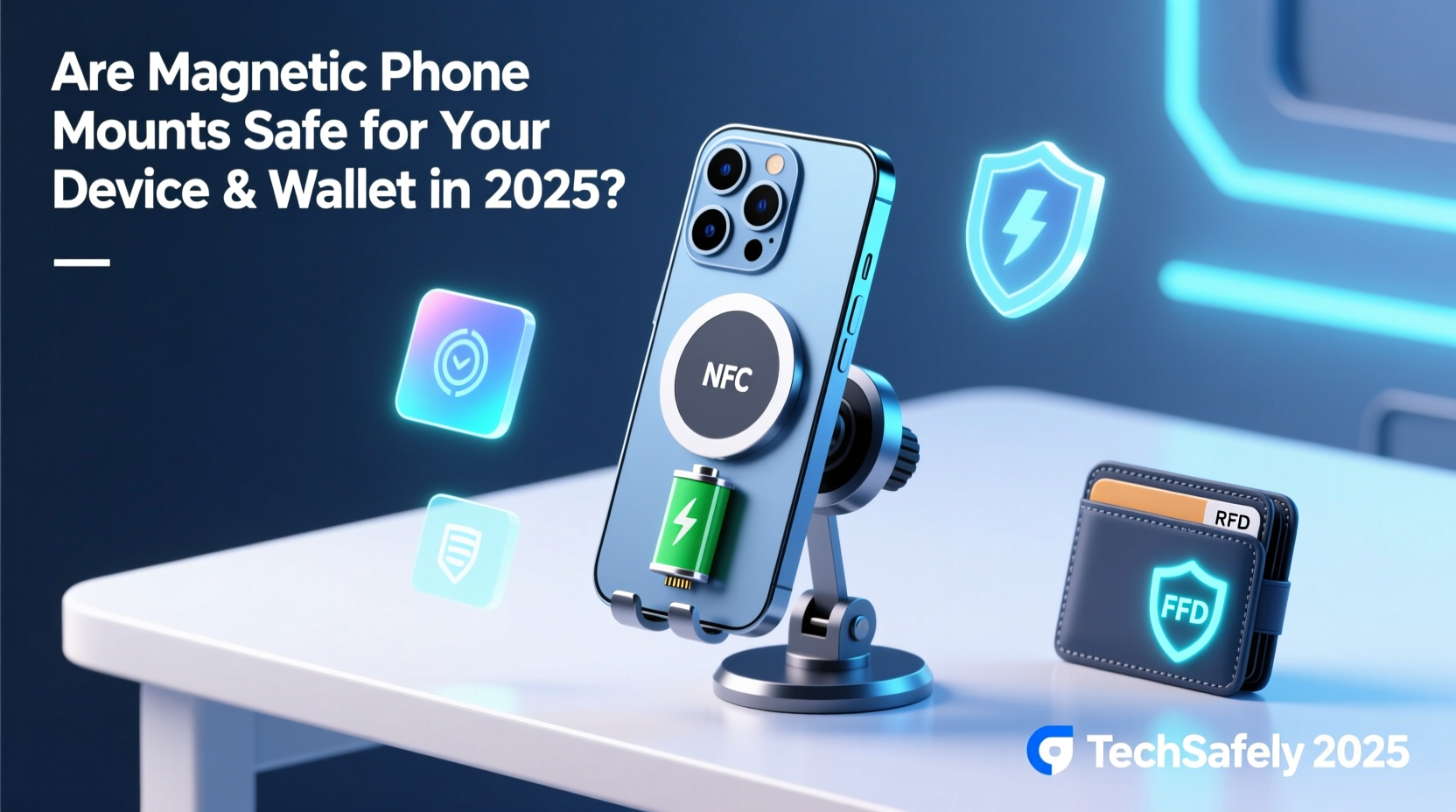
Magnetic phone mounts operate using a simple mechanism: a metal plate adheres to the back of your phone (or inside its case), and a strong magnet embedded in the mount attracts and holds it securely. Most modern versions use neodymium magnets—rare-earth magnets known for their powerful attraction despite small size.
These mounts fall into two primary categories:
- Passive mounts: Rely solely on magnetism, requiring no power or charging.
- Smart mounts: Integrate with Qi wireless charging, often combining magnetic alignment with charging coils (similar to Apple’s MagSafe ecosystem).
The appeal lies in convenience. Drivers can dock and undock phones instantly, reducing distraction while keeping navigation accessible. However, this ease raises questions about long-term exposure to magnetic fields and unintended consequences for nearby electronics.
Impact on Smartphones: Myth vs. Reality
A common concern is whether magnets can damage smartphones. The short answer: in most cases, no. Modern smartphones are designed with magnetic interference in mind. Components like cameras, batteries, and processors are shielded or inherently resistant to typical magnetic fields.
However, there are nuances:
- Compass & GPS accuracy: Strong magnets can temporarily interfere with the internal magnetometer—the sensor that powers your compass app. This may affect navigation apps relying on directional orientation until recalibrated.
- Wireless charging efficiency: If the metal plate isn’t aligned properly, it can disrupt inductive charging. Some users report slower charging speeds when using third-party magnetic inserts.
- Screen auto-rotate issues: Rarely, proximity to magnets may confuse sensors responsible for screen rotation, though this typically resolves once the phone is removed.
“Today’s smartphones are built to withstand moderate magnetic exposure. The risk from consumer-grade mounts is minimal, but placement matters.” — Dr. Lena Patel, Electronics Engineer at MIT Media Lab
Apple’s MagSafe system, introduced in 2020 and refined through 2025, validates the safety of controlled magnetic integration. iPhones now include built-in ring magnets specifically engineered for secure attachment and optimized charging. Third-party magnetic mounts mimicking this design are generally safe if they follow similar engineering principles.
Risks to Wallets and Contactless Cards
The greater concern lies not with the phone, but with what’s near it—particularly wallets containing credit cards, IDs, and key fobs. Many modern cards use RFID (Radio-Frequency Identification) or NFC (Near Field Communication) technology for tap-to-pay functionality. These rely on delicate electromagnetic fields to transmit data.
Could a magnetic mount erase or corrupt this data?
Generally, no. Magnets do not erase RFID chips or NFC tags. These systems store data electronically, not magnetically like old floppy disks or hotel key cards. However, strong magnetic fields can potentially interfere with the card reader during a transaction or, in rare cases, damage the antenna loop within the card if exposed for prolonged periods.
The real danger arises when people attach the metal plate to their phone case while also storing a wallet behind the phone—a popular “all-in-one” carry method. In this setup, the wallet sits directly against the magnet, increasing exposure.
What Happens When a Magnet Meets Your Wallet?
| Item | Effect of Magnetic Exposure | Recommendation |
|---|---|---|
| EMV Chip Cards | No effect – data stored in silicon chip | Safe |
| Contactless (NFC/RFID) Cards | Minimal risk; temporary signal disruption possible | Keep >1 inch away from strong magnets |
| Magnetic Stripe Cards | High risk – stripes can be erased by strong magnets | Avoid direct contact |
| Digital Key Fobs (Car/Home) | Potential circuit interference; rare but documented | Store separately |
| Hotel Key Cards | Highly susceptible – magnetic storage easily wiped | Never place near magnets |
Note: While most banks issue dual-interface cards (chip + contactless), some older debit or loyalty cards still rely on magnetic stripes. These remain vulnerable.
Real-World Scenario: A Commuter’s Mistake
Consider Mark, a software developer in Seattle who uses a magnetic mount daily. He attached a thin metal plate to his phone case and slid his wallet—containing his credit card, transit pass, and office key fob—between the phone and mount. After three weeks, he noticed his contactless payments failing intermittently. His office fob stopped working entirely. A technician later confirmed: while the RFID chip was intact, the antenna wire inside the fob had degraded due to constant magnetic stress.
This case illustrates a growing trend: convenience overriding caution. What seems harmless—stacking devices—can lead to cumulative wear invisible until failure occurs.
Best Practices for Safe Use in 2025
To enjoy the benefits of magnetic mounts without risking your devices or wallet, follow this step-by-step guide:
- Choose the right mount: Opt for models with adjustable magnetic strength or shielding. Premium brands like Spigen, Belkin, and ESR offer mounts tested for electronic compatibility.
- Position the metal plate correctly: Stick it to the center-bottom of your phone or case. Avoid overlapping sensitive zones like the camera bump or wireless charging coil.
- Use a dedicated wallet mount: Instead of tucking your wallet behind the phone, consider a separate magnetic wallet clip or dashboard holder.
- Limit direct card contact: Never allow credit cards, especially those with magnetic stripes, to touch the magnet surface.
- Test your setup monthly: Check that all cards work properly at point-of-sale terminals and that your phone’s compass recalibrates after removal.
Checklist: Is Your Magnetic Setup Safe?
- ✅ Metal plate is correctly positioned and not covering critical components
- ✅ No magnetic stripe cards are placed directly against the magnet
- ✅ Wallet is either separate or uses a shielded, MagSafe-certified design
- ✅ Phone compass functions normally after detachment
- ✅ Wireless charging works efficiently without overheating
- ✅ You’ve tested all contactless cards weekly for reliability
Future Trends and Innovations in 2025
As we move deeper into 2025, manufacturers are responding to safety concerns with smarter designs. Emerging trends include:
- Adaptive magnet arrays: Magnets that activate only when a compatible device is near, reducing passive exposure.
- RFID-shielded phone cases: Dual-purpose cases that block electromagnetic signals while supporting magnetic mounting.
- Integrated biometrics: Some high-end mounts now include fingerprint scanners to unlock your phone upon docking—adding security while maintaining convenience.
- AI-powered alerts: Apps that monitor sensor anomalies and notify users of potential interference from accessories.
Regulatory bodies like the FCC and consumer protection groups are also pushing for clearer labeling on magnetic accessories, urging companies to disclose magnetic field strength (measured in gauss). Experts recommend staying below 200 gauss for prolonged personal exposure.
“Transparency in accessory design will be key in 2025. Users deserve to know exactly what kind of magnetic field they’re carrying in their pocket.” — James Wu, Consumer Tech Analyst at GadgetInsight
Frequently Asked Questions
Can magnetic phone mounts erase my credit card?
It depends on the card type. EMV chip and contactless (NFC) cards are generally safe. However, traditional magnetic stripe cards—like some older gift cards or hotel keys—can be erased by strong magnets. Avoid placing such cards directly on or under magnetic mounts.
Do magnetic mounts affect iPhone battery life?
No direct evidence shows that magnets degrade lithium-ion batteries. However, poor-quality mounts that cause misalignment during wireless charging may lead to inefficient charging cycles, which over time can reduce battery longevity. Always use reputable mounts designed for your phone model.
Is it safe to leave my phone on a magnetic mount overnight?
Yes, from a hardware standpoint. The magnet itself won’t harm your phone. However, if the phone is actively charging, ensure proper ventilation to prevent overheating. Also, prolonged compass exposure may require occasional recalibration via figure-eight motion.
Final Thoughts: Balancing Convenience and Caution
Magnetic phone mounts are not inherently dangerous—but like any technology, they require mindful use. In 2025, with our lives increasingly digitized and interconnected, the line between convenience and risk has never been thinner. A misplaced metal plate or a careless stacking of wallet and phone can lead to frustrating failures at worst, costly replacements at best.
The solution isn’t to abandon magnetic mounts but to upgrade how we use them. Choose certified accessories, respect the limits of magnetic fields, and keep sensitive items at a safe distance. As smartphone integration evolves, so must our habits.




 浙公网安备
33010002000092号
浙公网安备
33010002000092号 浙B2-20120091-4
Comments
No comments yet. Why don't you start the discussion?