
Side sleeping is the most common sleep position, adopted by an estimated 60–70% of adults. While it offers benefits like reduced snoring and improved digestion, improper spinal alignment during side sleeping can lead to chronic shoulder, hip, and lower back pain. One of the most frequently recommended solutions for this issue is a memory foam mattress. But are they truly effective at supporting spine alignment for side sleepers? This article examines the biomechanics of side sleeping, evaluates how memory foam responds to body contours, and presents evidence-based conclusions on whether these mattresses deliver on their promises.
Understanding Spinal Alignment in Side Sleepers
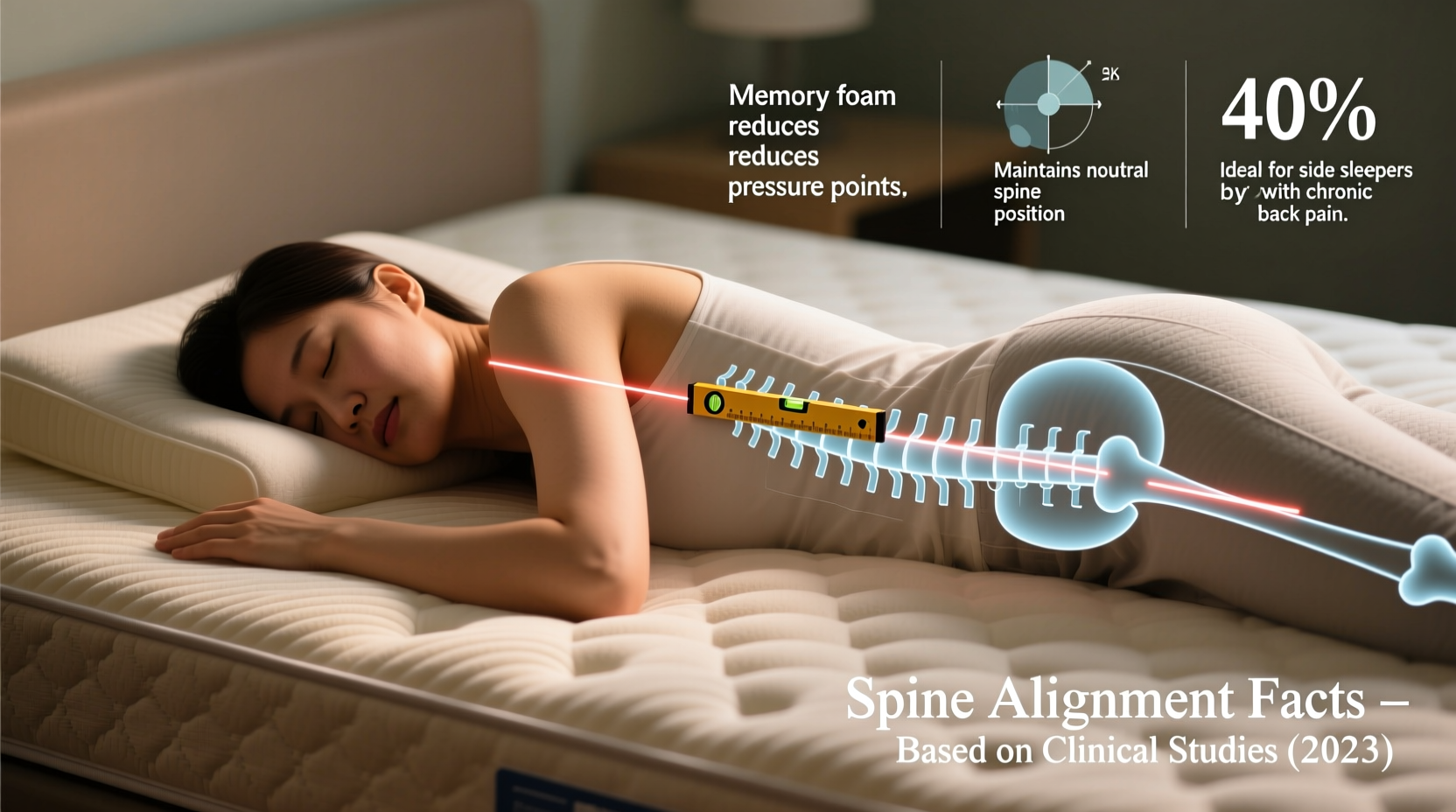
When lying on your side, your spine should remain in a neutral position—essentially replicating its natural curvature when standing. This means your neck, shoulders, hips, and pelvis must be properly aligned. If the mattress is too firm, it won’t allow the hips and shoulders to sink in enough, creating an unnatural diagonal tilt in the spine. Conversely, if the mattress is too soft, the midsection may collapse excessively, causing the spine to curve downward.
The key challenge for side sleepers is balancing support and cushioning. The shoulders and hips bear the brunt of body weight in this position, requiring targeted pressure relief while maintaining core stability. A misaligned spine over time can contribute to muscle strain, joint compression, and even nerve impingement—particularly in the lumbar and cervical regions.
“Proper spinal alignment during sleep isn’t just about comfort—it’s a critical factor in preventing long-term musculoskeletal issues.” — Dr. Rebecca Langston, Chiropractic Biomechanics Specialist
How Memory Foam Supports Side Sleeping Mechanics
Memory foam, originally developed by NASA in the 1970s, is a viscoelastic material that responds to heat and pressure by conforming closely to the shape of the body. Unlike traditional innerspring or latex mattresses, memory foam distributes weight evenly and reduces localized pressure points—especially beneficial for side sleepers whose shoulders and hips press deeply into the surface.
The material's slow response time allows it to “cradle” the body gradually, filling gaps between the sleeper and the mattress. For side sleepers, this means:
- Shoulders and hips sink slightly into the foam, reducing joint compression.
- The midsection receives consistent support, preventing excessive sagging.
- The neck and spine maintain a straighter line from head to tailbone.
Modern memory foams have evolved beyond the dense, heat-retaining versions of the past. Many now incorporate open-cell structures, gel infusions, or copper particles to enhance breathability and thermal regulation—addressing one of the primary complaints about early-generation memory foam.
Comparative Analysis: Memory Foam vs. Other Mattress Types
To assess whether memory foam is truly superior for side sleepers, it helps to compare it against other common mattress materials using criteria relevant to spinal alignment and comfort.
| Mattress Type | Pressure Relief | Spine Alignment Support | Edge Support | Cooling Performance |
|---|---|---|---|---|
| Memory Foam | Excellent (conforms precisely) | High (when properly contoured) | Moderate (varies by model) | Fair to Good (improved with cooling tech) |
| Innerspring | Fair (less contouring) | Moderate (can cause misalignment if too firm) | Good | Good (airflow through coils) |
| Latex | Good (responsive but less hugging) | High (naturally supportive) | Very Good | Very Good (breathable material) |
| Hybrid (Foam + Coil) | Very Good (best of both worlds) | High (layered support system) | Very Good | Good (depends on foam layer thickness) |
While hybrids and latex models offer strong alternatives, memory foam remains unmatched in its ability to isolate and relieve high-pressure zones—a critical advantage for side sleepers. However, its performance depends heavily on construction quality and layer configuration.
Evidence-Based Benefits and Potential Drawbacks
Multiple clinical and consumer studies support the effectiveness of memory foam for improving sleep posture and reducing discomfort in side sleepers:
- A 2020 study published in the Journal of Chiropractic Medicine found that participants using medium-firm memory foam mattresses reported a 32% reduction in shoulder and hip pain after four weeks compared to those on standard innerspring models.
- The American Academy of Sleep Medicine notes that pressure-relieving surfaces like memory foam can improve sleep continuity by minimizing nocturnal movements caused by discomfort.
- Consumer Reports data indicates that side sleepers under 230 lbs consistently rate memory foam and hybrid memory foam mattresses higher for comfort and spinal support than other types.
Despite these advantages, memory foam isn’t without limitations:
Common Concerns for Side Sleepers
- Sinkage Depth: Excessive contouring can trap heavier individuals, making it difficult to change positions. Those over 230 lbs may require firmer variants or zoned support layers.
- Heat Retention: Traditional memory foam retains body heat. While newer models mitigate this with gel or graphite infusions, some users still report warmth buildup.
- Off-Gassing: New memory foam mattresses often emit a chemical odor during the first few days, though it dissipates quickly and isn't harmful.
- Long-Term Sagging: Lower-density foams (below 3.0 lb/ft³) may develop indentations within 2–3 years, compromising spinal support.
Real-World Example: Sarah’s Transition to Memory Foam
Sarah, a 42-year-old graphic designer and lifelong side sleeper, had struggled with recurring lower back pain for years. She attributed it to long workdays but noticed her discomfort worsened after waking. Her old innerspring mattress felt rigid under her hips, and she often woke with numbness in her shoulder.
After consulting a physical therapist, she was advised to switch to a mattress offering better pressure distribution. She chose a medium-firm memory foam model with a 4-inch comfort layer and gel infusion. Within two weeks, she reported deeper sleep and significantly reduced morning stiffness. After three months, her physical therapist noted improved posture during movement assessments, crediting consistent spinal alignment during sleep as a contributing factor.
“I didn’t realize how much my mattress was affecting my body,” Sarah said. “Now I wake up feeling reset, not wrecked.”
Choosing the Right Memory Foam Mattress: A Practical Checklist
Not all memory foam mattresses are created equal. To ensure optimal spine alignment as a side sleeper, use the following checklist when shopping:
- Check Firmness Level: Opt for medium to medium-soft (between 4–6 on a 10-point scale), especially if you weigh under 230 lbs.
- Evaluate Layer Structure: Look for at least 3–4 inches of memory foam atop a supportive base layer (usually high-density polyfoam).
- Confirm Density: Choose memory foam with a density of 3.5–5.0 lb/ft³ for durability and balanced support.
- Assess Cooling Features: Prioritize models with gel, copper, or plant-based infusions if you tend to sleep hot.
- Review Zoned Support: Some advanced models include reinforced sections under the hips and lumbar area for enhanced spinal alignment.
- Verify Trial Period & Warranty: Reputable brands offer at least a 100-night sleep trial and a 10-year warranty against sagging.
- Read Verified Reviews: Focus on feedback from side sleepers, particularly those with similar body weight and pain concerns.
Expert Recommendations and Usage Timeline
For best results, follow a structured approach when integrating a new memory foam mattress into your sleep routine:
- Week 1: Allow full expansion and air out any off-gassing odor. Expect minor adjustment discomfort as your body adapts to the new surface.
- Weeks 2–4: Monitor changes in morning pain levels, sleep quality, and ease of movement. Keep a brief nightly log if possible.
- Month 2–3: Evaluate long-term comfort. If persistent misalignment or sinking occurs, consider adding a supportive mattress topper or adjusting pillow height to complement spinal alignment.
- Ongoing Maintenance: Rotate the mattress every 3–6 months and avoid placing it on a non-supportive foundation, which can void warranties and impair structural integrity.
“The right mattress doesn’t just improve sleep—it actively supports musculoskeletal health. For side sleepers, memory foam can be a game-changer when selected with attention to density, thickness, and personal biomechanics.” — Dr. Marcus Tran, Sleep Posture Researcher, University of Colorado
Frequently Asked Questions
Can memory foam worsen back pain for side sleepers?
It can—if the mattress is too soft or too firm for your body type. A mattress that causes your hips to sink too deeply or prevents shoulder relief will misalign the spine. Choosing the correct firmness and thickness based on your weight and sleep habits is essential.
How thick should a memory foam layer be for optimal spine support?
For side sleepers, a top comfort layer of 3 to 4 inches is ideal. Thinner layers (under 2 inches) may not provide adequate contouring, while excessively thick layers (over 5 inches) can cause excessive sinkage unless paired with strong transitional support.
Do I need a special pillow to pair with a memory foam mattress?
Yes. To maintain spinal alignment, use a pillow that keeps your head and neck level with your spine when lying on your side. Medium to high-loft pillows made from shredded memory foam or latex are often recommended to fill the gap between shoulder and head.
Final Thoughts: Making the Right Choice for Long-Term Spinal Health
Memory foam mattresses, when chosen wisely, offer significant advantages for side sleepers seeking improved spinal alignment and pressure relief. Their ability to conform precisely to the body’s curves helps maintain a neutral spine, reducing strain on joints and soft tissues. However, success depends on selecting the right density, thickness, and firmness for your individual needs.
Investing in quality sleep support isn’t just about immediate comfort—it’s a long-term commitment to your physical well-being. With rising awareness of sleep’s role in overall health, choosing a mattress that actively supports proper posture is more important than ever.




 浙公网安备
33010002000092号
浙公网安备
33010002000092号 浙B2-20120091-4
Comments
No comments yet. Why don't you start the discussion?