
For individuals managing a heavy menstrual flow, finding the right period product can mean the difference between enduring discomfort and experiencing confidence and freedom. As reusable options like menstrual cups and discs gain popularity, many are asking: which is truly better for heavy periods? While both offer eco-friendly, cost-effective alternatives to tampons and pads, their design, function, and performance differ significantly—especially under high-flow conditions. This article explores the strengths and limitations of menstrual cups versus discs, focusing on capacity, fit, leakage protection, ease of use, and long-term comfort.
Understanding Menstrual Cups and Discs
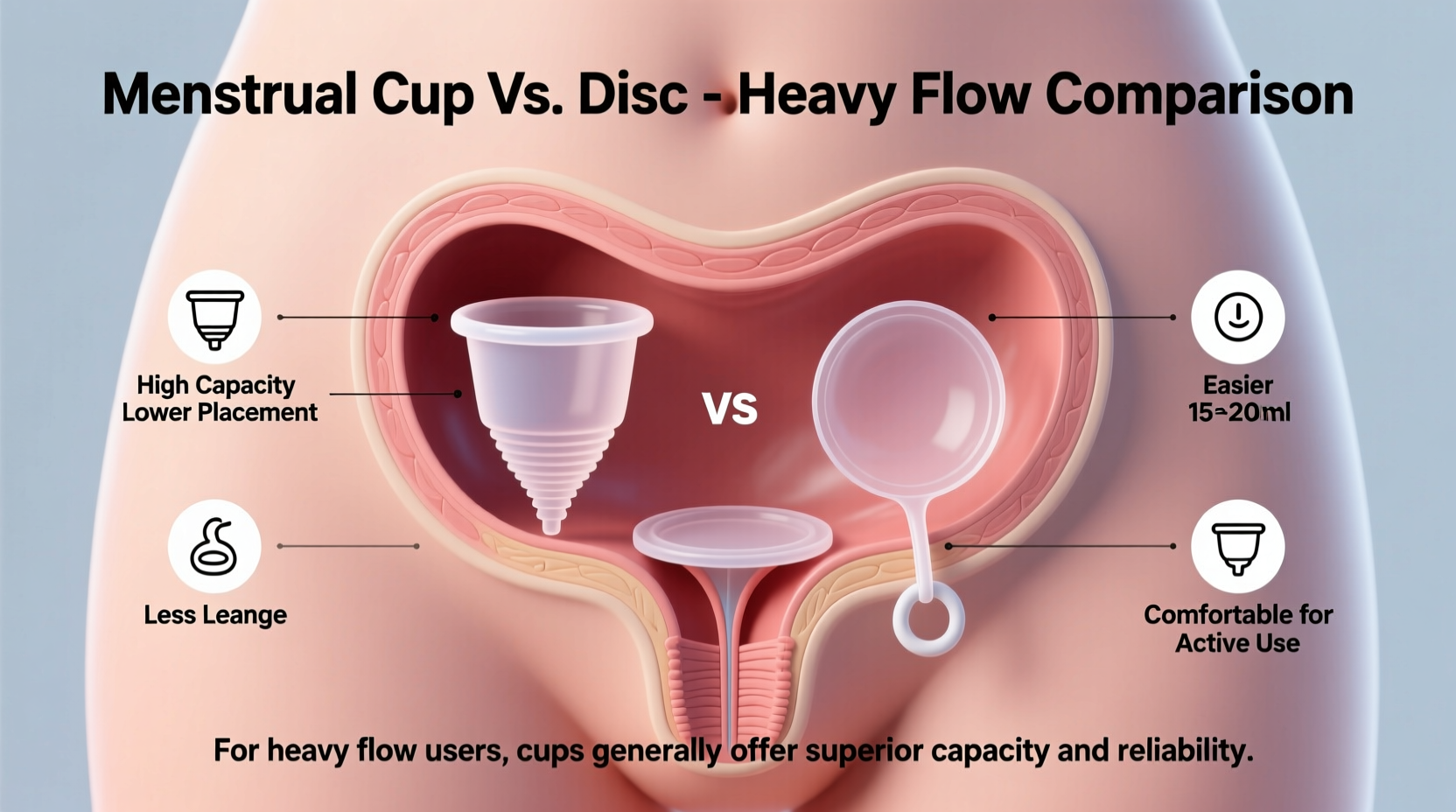
Before comparing performance, it's essential to understand how each product works anatomically. Both are inserted into the vaginal canal but occupy different spaces and operate on distinct principles.
Menstrual cups are bell-shaped, typically made from medical-grade silicone, latex, or thermoplastic elastomer. They sit low in the vaginal canal, forming a seal around the cervix to collect menstrual fluid. The cup creates suction to stay in place and must be emptied, rinsed (if possible), and reinserted every 8–12 hours, depending on flow.
Menstrual discs, on the other hand, are flatter and more saucer-like. They rest higher in the vaginal fornix, just behind the pubic bone, holding fluid beneath the cervix without sealing around it. Because they sit at the top of the vaginal canal, they don’t rely on suction and can often be worn for up to 12 hours—sometimes longer during sleep.
The structural differences influence everything from capacity to comfort during movement, making one potentially more suitable than the other for heavy flow days.
Capacity and Flow Management: Who Holds More?
When flow is heavy, volume capacity becomes a critical factor. Most standard menstrual cups hold between 20–30 ml of fluid. Some larger models, like the Saalt Large or Lena Cup Plus, reach up to 35 ml. In contrast, menstrual discs generally have a higher average capacity. The Flex Disc and Lumma Menstrual Disc, for example, can hold up to 40–60 ml—nearly double that of most cups.
This increased capacity makes discs particularly appealing on peak flow days. Users report being able to wear them overnight during heaviest nights without fear of overflow, even with clots. Cups, while effective, may require more frequent emptying when flow is very heavy—sometimes as often as every 4–6 hours.
However, capacity isn't the only factor. How the device contains fluid matters just as much. Cups rely on a seal around the cervix; if insertion isn't perfect or the cervix shifts during the day, leaks can occur despite available space. Discs, by sitting above the vaginal folds and catching flow before it descends, offer a different kind of protection—one less dependent on a perfect seal.
Comfort and Fit: Anatomical Considerations
Comfort during extended wear is crucial, especially when dealing with cramps or fatigue common during heavy periods. Here, individual anatomy plays a major role.
Cups work best for those with a medium to low cervix and average-to-tight vaginal tone. They can feel intrusive or cause stem irritation in users with a high cervix or sensitive vaginal walls. Additionally, removal requires breaking the suction seal, which some find uncomfortable or messy.
Discs, due to their higher placement, are often unnoticeable once inserted correctly. They don’t press against the urethra or bladder, reducing urinary urgency sometimes reported with cups. Their rim hooks behind the pubic bone, making them stable during physical activity—including sex (with certain models designed for mess-free period sex).
“Discs are anatomically designed to work with the natural contours of the upper vagina, making them ideal for active individuals or those with a high cervix.” — Dr. Leah Millheiser, OB-GYN and Women’s Health Specialist
That said, proper insertion technique is steeper for discs. Finding the correct angle and ensuring the back rim tucks behind the pubic bone takes practice. For beginners, this learning curve may outweigh initial benefits.
Leakage Protection and Real-World Performance
No product is leak-proof, but effectiveness varies based on flow intensity and body movement. On paper, discs appear superior for heavy flow due to higher capacity and placement. But real-world use reveals nuances.
In a survey of 247 heavy-flow users conducted by the Period Product Review Project (2023), 68% of disc users reported fewer leaks on heavy days compared to cup users. Many cited the disc’s ability to handle sudden gushes—common during ovulation shedding or uterine contractions—as a key advantage.
One participant, Maya R., shared her experience:
Still, leakage isn’t solely about capacity. Cervix position matters. If your cervix dips below the disc’s front rim, fluid can bypass the device. Similarly, improper cup folding or failure to open fully leads to side leaks. Body shape, pelvic floor strength, and even bowel movements affect both products differently.
Comparison Table: Cups vs. Discs for Heavy Flow
| Feature | Menstrual Cup | Menstrual Disc |
|---|---|---|
| Average Capacity | 20–35 ml | 40–60 ml |
| Wear Time | Up to 12 hours | Up to 12 hours (some up to 14) |
| Placement | Low in vaginal canal, around cervix | High in vaginal fornix, behind pubic bone |
| Seal Mechanism | Suction seal around cervix | Mechanical hold via pubic bone |
| Suitable for Period Sex? | No | Yes (specifically designed disposable & reusable discs) |
| Learning Curve | Moderate | Steeper (requires precise placement) |
| Ease of Removal | Requires breaking suction | Pulling forward and downward |
| BPA-Free & Reusable Options | Yes (most are reusable) | Yes (Flex Reusable, Lumma) + disposables available |
Step-by-Step Guide: Choosing Based on Your Needs
Selecting between a cup and a disc shouldn’t be guesswork. Follow this practical decision-making process:
- Assess your flow pattern: Track your heaviest days using an app or journal. Note frequency of changes needed with current products.
- Check your cervix height: During menstruation, insert a clean finger to feel where your cervix sits. Low = fingertip reaches easily; high = knuckle-depth or more. High cervix favors discs.
- Consider activity level: Do you exercise, travel, or work long shifts? Discs offer more flexibility for uninterrupted wear.
- Test compatibility: Try one reusable cup and one reusable disc over two cycles. Use identical flow days for fair comparison.
- Evaluate leakage, comfort, and ease: Rate each on a scale of 1–10. Let data—not marketing—guide your choice.
Common Misconceptions Debunked
Several myths cloud judgment when choosing between cups and discs:
- Myth: “Discs are less hygienic because they’re harder to clean.”
Truth: Both require thorough washing. Discs are easier to rinse mid-cycle since they don’t have narrow stems or holes. - Myth: “Cups are always cheaper long-term.”
Truth: While most cups are reusable, some prefer disposable discs for convenience. Cost depends on usage patterns. - Myth: “If a cup didn’t work, nothing will.”
Truth: Anatomy varies. Someone with a high cervix may fail with cups but thrive with discs.
FAQ Section
Can I use a menstrual disc if I’ve never given birth?
Yes. Virginity or childbirth history doesn’t determine suitability. What matters is vaginal elasticity and comfort with insertion. Many teens and young adults successfully use discs.
Do discs fall out when I pee or poop?
Properly inserted discs should stay in place. The front rim hooks behind the pubic bone, which doesn’t shift during urination. Bowel pressure may cause slight movement, but expulsion is rare unless incorrectly placed.
Which is better for overnight use with heavy flow?
Many users prefer discs for overnight wear due to higher capacity and secure positioning. However, if you wake up with a low cervix or tend to dislodge devices while sleeping, a well-fitted cup might be more reliable.
Action Checklist Before You Decide
- ✅ Track your cycle and identify heaviest flow days
- ✅ Measure your cervix height mid-period
- ✅ Research brands offering trial packs or money-back guarantees
- ✅ Practice insertion techniques with instructional videos
- ✅ Start testing during lighter days before relying on either for peak flow
Conclusion: It Depends—But Data Favors Discs for Heavy Flow
While both menstrual cups and discs are viable options, evidence suggests that for heavy flow users, discs often provide superior performance. Their higher capacity, anatomical placement, and compatibility with movement—including intercourse—make them uniquely suited for intense menstrual days. That said, personal preference, body literacy, and willingness to learn new insertion methods play decisive roles.
There is no universal “better” option—only what works best for your body. If you've struggled with cups leaking on heavy days, don’t dismiss internal period products altogether. Give discs a fair trial. Conversely, if you value simplicity and reuse, a well-chosen cup remains a powerful tool.




 浙公网安备
33010002000092号
浙公网安备
33010002000092号 浙B2-20120091-4
Comments
No comments yet. Why don't you start the discussion?