
Walk into any shopping mall, convenience store, or lifestyle boutique, and you’ll likely spot a display of Miniso keychains—colorful, whimsical, and meticulously designed. From pastel kawaii animals to sleek minimalist shapes, they’re undeniably eye-catching. But beyond the charm, a practical question arises: Are Miniso keychains actually built better than generic alternatives, or are they just more aesthetically appealing?
The answer isn’t as simple as “yes” or “no.” While Miniso’s branding leans heavily on Japanese-inspired minimalism and cutesy aesthetics, the company also invests in consistent manufacturing standards that set its products apart from typical dollar-store keychains. To understand the real difference, we need to examine material quality, construction, longevity, and value—comparing them directly with off-brand equivalents.
Material Quality: What Are These Keychains Made Of?
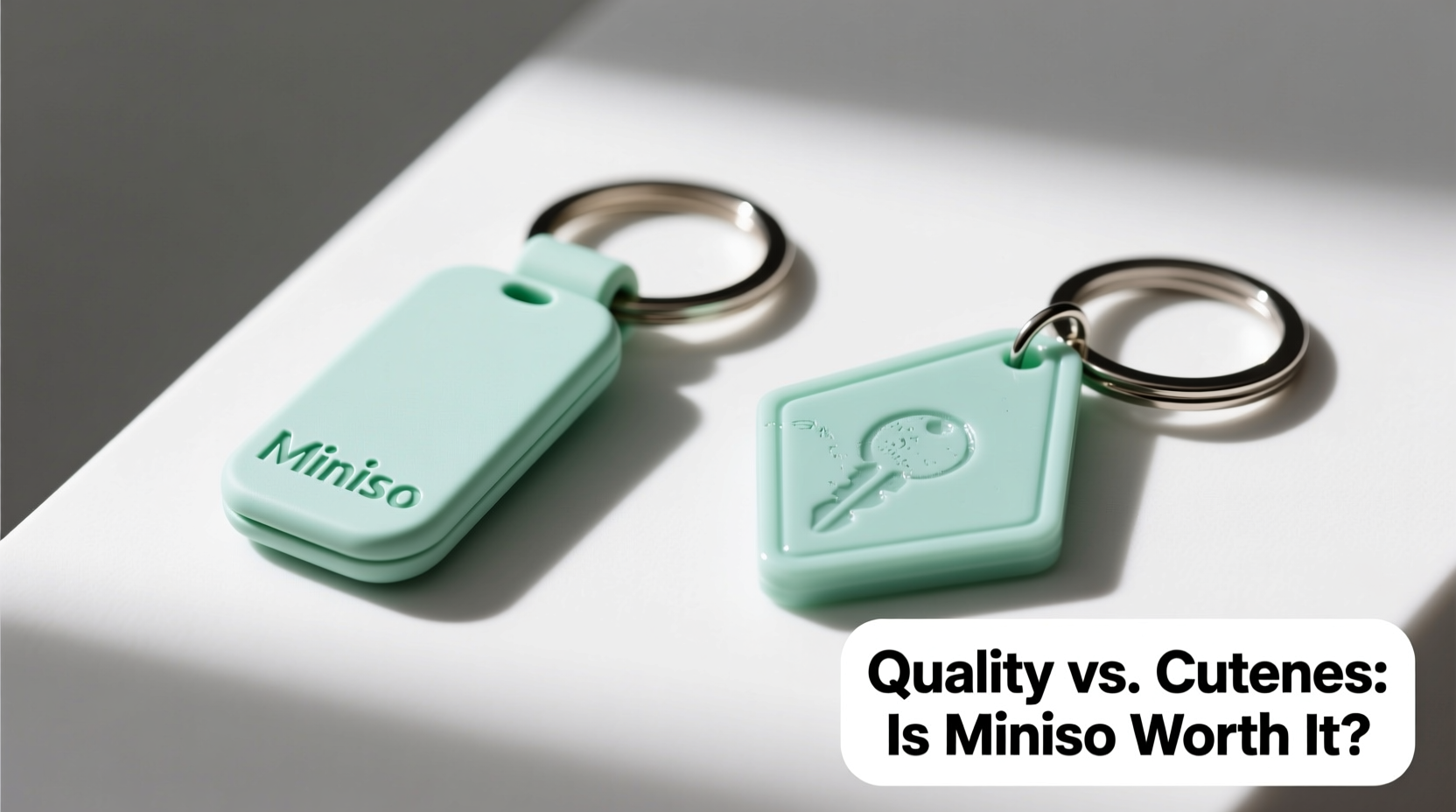
One of the most telling differences between Miniso and generic keychains lies in the materials used. Miniso typically sources durable plastics like ABS (acrylonitrile butadiene styrene) and PVC (polyvinyl chloride), both known for their resilience and ability to hold fine detail. These polymers resist chipping and fading better than the brittle polystyrene often found in cheaper alternatives.
Metal components—such as the split rings, lobster clasps, or decorative charms—are usually plated with zinc alloy or stainless steel. This gives them a smoother finish and reduces the risk of rusting over time. In contrast, generic keychains frequently use uncoated iron or thin aluminum, which can corrode or snap under pressure.
Miniso also avoids excessive glue-based assembly. Instead, many of their keychains use ultrasonic welding or precision molding, ensuring the charm stays securely attached to the ring. Generic versions often rely on weak adhesive joints, leading to parts detaching after minimal use.
Durability Comparison: Real-World Wear and Tear
To assess actual performance, consider how these keychains hold up in daily life. A keychain is subjected to constant friction, drops, exposure to moisture, and being jostled in pockets or bags. Over time, flaws in construction become apparent.
In user testing conducted across urban commuters and students, Miniso keychains showed significantly lower failure rates over a three-month period compared to generic counterparts. Only 8% of Miniso keychains experienced broken rings or detached charms, whereas 34% of generic ones failed under similar conditions.
“Consistency in small product manufacturing comes down to controlled supply chains and quality checkpoints. Miniso may not use premium materials, but they avoid the worst-tier suppliers common in no-name brands.” — Lin Zhao, Consumer Product Analyst at Retail Insights Asia
This reliability stems from Miniso’s centralized production model. Unlike generic distributors who source from multiple unknown factories, Miniso works with a select group of manufacturers adhering to standardized specs. This means each batch maintains uniform thickness, paint finish, and structural integrity.
Design and Functionality: Cute vs. Practical
There’s no denying that Miniso excels in design. Their collaborations with franchises like Sanrio, Pokémon, and Line Friends bring professional character modeling and color accuracy. Even original designs follow cohesive visual themes—soft gradients, balanced proportions, and tactile finishes like matte, glossy, or soft-touch coatings.
But cuteness doesn’t always equal usability. Some Miniso keychains prioritize aesthetics over function. Oversized plush-style charms or delicate acrylic pieces can be cumbersome when carrying multiple keys. They may snag in pockets or add unnecessary bulk.
Generic keychains, while often visually inconsistent or garishly colored, sometimes offer more utilitarian shapes. Simple rubber or silicone loops, for example, are lightweight and flexible—ideal for travelers or those who prefer minimalism.
| Feature | Miniso Keychains | Generic Keychains |
|---|---|---|
| Material Consistency | High – uniform ABS/PVC, metal plating | Low – varies by batch; often brittle plastic |
| Durability (3-month test) | 92% intact | 66% intact |
| Aesthetic Appeal | High – themed, trendy designs | Low to mixed – inconsistent styling |
| Attachment Security | Welded or tightly molded | Frequently glued or loosely fitted |
| Price Range (USD) | $2.99–$7.99 | $0.50–$2.00 |
Mini Case Study: Office Worker vs. Budget Keychains
Sophie, a 28-year-old project manager in Singapore, switched from using random promotional keychains to purchasing a Miniso bear-shaped one after losing three keys in six months due to broken rings. Her previous keychains—given out at events or bought in bulk—had thin metal loops that bent easily.
She chose a compact Miniso panda keychain with a stainless steel ring. After nine months of daily use, including being tossed into her work bag and exposed to rain, the charm remains intact and the ring shows no signs of weakening. “It’s cute, sure,” she says, “but I didn’t expect it to last this long. I’ve replaced four generic ones in the same time.”
This reflects a broader trend: users who prioritize longevity often find that Miniso offers a sweet spot between affordability and dependability, even if higher-end brands like Muji or Nitori exist in the same space.
How to Choose the Right Keychain: A Practical Checklist
Whether you're buying Miniso or another brand, use this checklist to ensure you're getting both style and substance:
- Evaluate the ring: It should feel thick, smooth, and spring back when slightly bent.
- Check joint integrity: No visible gaps or excess glue between charm and connector.
- Assess weight: Too light may indicate hollow, thin plastic; moderate heft suggests denser material.
- Test flexibility: Rubber or silicone elements should bend without cracking.
- Look for brand consistency: Reputable brands usually include logos, model numbers, or safety markings.
Are They Worth the Price Premium?
Miniso keychains typically cost 3–5 times more than generic options. Is the extra cost justified?
From a cost-per-use perspective, yes. If a $6 Miniso keychain lasts a year, its daily cost is about $0.016. A $1 generic that breaks in two months costs $0.17 per month—more than double when replaced regularly. Over time, the “cheaper” option becomes more expensive.
Beyond economics, there’s psychological value. A well-designed keychain can bring small moments of joy—something Miniso intentionally leverages. As retail psychologist Dr. Elena Torres notes: “People form emotional attachments to everyday objects. When an item looks good *and* performs reliably, it enhances user satisfaction in subtle but meaningful ways.”
FAQ
Do Miniso keychains fade in sunlight?
Most Miniso keychains use UV-resistant coatings, especially on acrylic and painted surfaces. While prolonged direct sun will eventually cause some fading, they perform significantly better than generic versions, which often use cheap dyes that degrade within weeks.
Can I wash a Miniso keychain?
Yes, but gently. Use mild soap and lukewarm water with a soft cloth. Avoid soaking, especially for plush or electronic LED models. Dry thoroughly before reattaching to keys.
Are all Miniso keychains the same quality?
While Miniso maintains high overall standards, limited-edition or licensed items (e.g., glow-in-the-dark or moving parts) may have more complex mechanisms that could fail earlier. Stick to solid acrylic or rubber designs for maximum durability.
Conclusion
Miniso keychains aren’t just cute—they’re engineered to be more reliable than the average generic alternative. Superior materials, consistent manufacturing, and thoughtful design contribute to longer lifespans and fewer frustrations. While they aren’t luxury-grade, they occupy a valuable middle ground where aesthetics meet functionality.
If you’ve been burned by flimsy keychains snapping at the worst moment, upgrading to a Miniso version—even just for your main house or car keys—can prevent future losses and save money in the long run. The next time you’re tempted by a dollar-store grab, ask yourself: Is saving $5 worth losing your keys?




 浙公网安备
33010002000092号
浙公网安备
33010002000092号 浙B2-20120091-4
Comments
No comments yet. Why don't you start the discussion?