
Living in an urban apartment often means enduring constant background noise—sirens, traffic, construction, and late-night revelry. For city dwellers seeking peace, the promise of “noise canceling curtains” is understandably appealing. But do they live up to the hype? While these heavy, insulated drapes can reduce certain types of sound, their effectiveness depends on multiple factors: material density, window gaps, frequency of noise, and installation quality. This article dives into how noise-reducing curtains work, what they can realistically achieve, and when you might need more robust solutions.
How Noise Reduction Works: The Science Behind Soundproofing
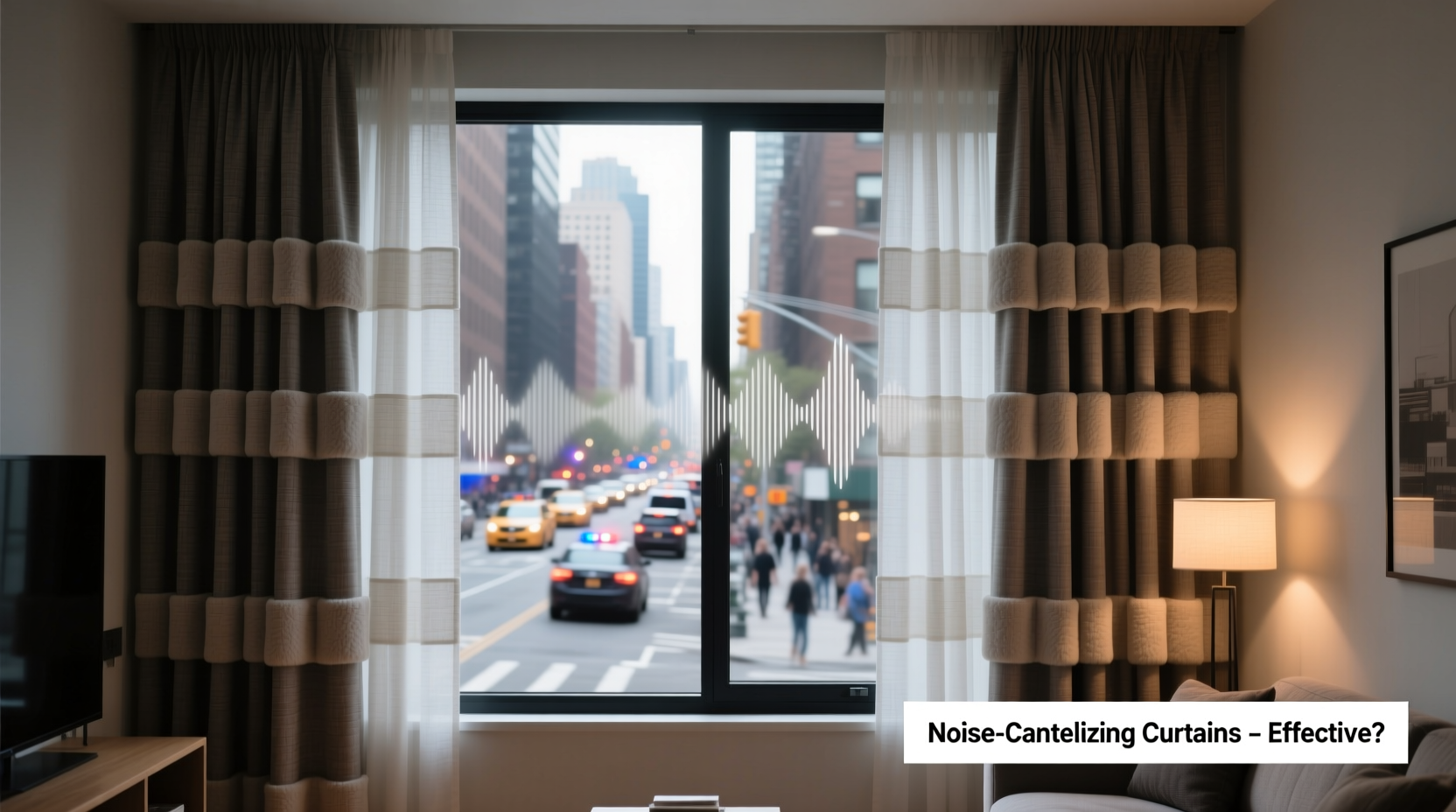
True soundproofing involves blocking, absorbing, or dissipating sound energy. Unlike active noise cancellation used in headphones—which generates opposing sound waves—curtains rely solely on passive methods. They function through three primary mechanisms:
- Mass: Heavier materials block more sound by resisting vibration transmission.
- Damping: Multi-layered fabrics convert sound energy into small amounts of heat.
- Sealing: Curtains with full coverage reduce air gaps around windows where sound leaks through.
Noise-canceling curtains typically use dense composites like vinyl, foam backing, and quilted fabric layers. These materials increase surface mass and absorb mid-to-high frequency sounds such as voices, barking dogs, or honking horns. However, low-frequency noises—like subway rumble or bass from passing cars—are much harder to stop without structural modifications.
“Sound absorption and sound blocking are not the same. Curtains can dampen echo and reduce airborne noise, but they won’t eliminate structural vibrations.” — Dr. Alan Park, Acoustics Researcher, MIT Building Technology Lab
What Noise Canceling Curtains Can (and Can’t) Do
Manufacturers often claim reductions of 50% or more in ambient noise. In practice, independent tests and user reports suggest a more modest impact: typically **5 to 10 decibels (dB)** of reduction under optimal conditions. To put that in perspective:
- A 3 dB decrease is just noticeable to the human ear.
- A 10 dB drop feels like halving the perceived loudness.
This means noisy street chatter might go from distracting to tolerable, but it won’t vanish. Effectiveness varies significantly based on:
- The original noise level outside
- Window age and seal integrity
- Curtain thickness and fullness (how many times wider than the window it is)
- Whether the curtain reaches floor and ceiling with minimal side gaps
Comparing Materials and Performance
Not all noise-reducing curtains are created equal. Below is a comparison of common materials and their typical performance metrics based on third-party acoustic testing and consumer reviews.
| Material Type | Noise Reduction (dB) | Best For | Drawbacks |
|---|---|---|---|
| Quilted Fabric + Foam Core | 6–8 dB | Mid-range frequencies (speech, traffic hum) | Less effective on low frequencies; may require frequent cleaning |
| Vinyl-Laminated Polyester | 8–10 dB | High-mass barrier; good for sealing windows | Stiff texture; less breathable; potential off-gassing |
| Triple-Weave Thermal + Acoustic Fabric | 7–9 dB | Balanced insulation for sound and temperature | Higher cost; heavier hardware needed |
| Standard Decorative Curtain | 1–3 dB | Minimal aesthetic enhancement | Negligible sound impact |
While vinyl-based curtains offer the highest measured attenuation, many users report discomfort due to stiffness and lack of breathability. Triple-weave fabrics strike a better balance between comfort and performance, especially when paired with proper installation.
Real-World Example: A Brooklyn Apartment Test
Maria, a freelance writer living in a fourth-floor walk-up in Williamsburg, installed premium noise-reducing curtains after months of disrupted sleep from late-night traffic on Bedford Avenue. Her bedroom faces directly onto the street, with single-pane aluminum windows dating back to the 1970s.
She chose a triple-layer curtain with a noise reduction rating of STC 28 (Sound Transmission Class), mounted on a ceiling-to-floor track extending several inches beyond the window frame on each side. Using a calibrated decibel meter, she recorded average nighttime noise levels before and after installation.
Prior to curtains: 68 dB (equivalent to a loud conversation). After installation: 59 dB (similar to moderate rainfall). While still audible, the change was enough to allow her to sleep without earplugs most nights. She noted the greatest improvement occurred during quieter hours—early morning and midday—when higher-pitched sounds were more effectively muffled.
However, during rush hour or when garbage trucks passed at 6 AM, low-frequency rumbles remained largely unaffected. “It’s not silence,” she said, “but it’s the difference between waking up startled and just stirring slightly.”
Maximizing Effectiveness: A Step-by-Step Installation Guide
To get the most out of noise canceling curtains, proper setup is critical. Follow this sequence for optimal results:
- Measure your window precisely: Note height from ceiling to floor and width including space beyond the frame.
- Select curtains 2–3 times the window width: This ensures sufficient bunching, which increases sound-trapping layers.
- Install a ceiling-mounted track or rod: Extend it 6–12 inches past the window on both sides and bring it as close to the ceiling as possible.
- Ensure floor contact: Curtains should either touch or pool slightly on the floor to prevent sound leakage underneath.
- Seal side gaps with magnetic tape or side channels (optional): For maximum isolation, add side tracks or adhesive seals to minimize airflow.
- Layer with existing blinds or shades: Combine with cellular shades or acrylic panels for added mass and thermal insulation.
When Curtains Aren't Enough: Alternative Solutions
Noise canceling curtains are a non-invasive, renter-friendly upgrade—but they’re not a complete solution for high-noise environments. If street noise persists despite quality curtains, consider complementary approaches:
- Acoustic window inserts: Clear acrylic or laminated glass panels installed inside the existing window frame. These can reduce noise by 25–35 dB and are removable.
- Weatherstripping: Seal gaps around window sashes and frames with foam tape or V-strip. Even small cracks let in significant sound.
- Heavy bookshelves against shared walls: Placing furniture filled with books or soft goods along interior walls helps block transmitted noise.
- White noise machines or fans: While they don’t reduce actual decibels, they mask intermittent sounds that disrupt concentration and sleep.
- Double or triple-glazed secondary windows: Permanent upgrades that dramatically improve insulation, though often require landlord approval.
In extreme cases, professional soundproofing with resilient channels, mass-loaded vinyl, or decoupled drywall may be necessary—but these are typically overkill for rental units.
Checklist: Choosing the Right Noise Reducing Curtain
Before purchasing, verify these key features:
- ✅ Meets or exceeds STC 26 rating (if specified)
- ✅ Made with multi-layered, high-density fabric
- ✅ Includes mounting hardware designed for heavy loads
- ✅ Covers window with 6+ inches of overlap on all sides
- ✅ Machine washable or easy to clean (dust accumulation affects performance)
- ✅ Compatible with ceiling or wall mounting
- ✅ Fire-retardant and low-VOC certified (especially important in small spaces)
Frequently Asked Questions
Do noise canceling curtains block all types of street noise?
No. They are most effective against mid- and high-frequency sounds like voices, horns, and footsteps. Low-frequency noises—such as truck engines, subwoofers, or train vibrations—are harder to stop without structural changes.
Can I use noise reducing curtains in a rental apartment?
Yes. Most noise canceling curtains install using standard rods or tracks that don’t damage walls. Some renters use tension rods or removable adhesive hooks to avoid drilling altogether. Always check your lease for restrictions on modifications.
How do noise canceling curtains compare to soundproof windows?
They are far less effective. While high-end curtains may reduce noise by up to 10 dB, professionally installed double-pane soundproof windows can achieve 30–40 dB reduction. However, curtains are significantly cheaper and easier to install.
Conclusion: A Practical First Step Toward Quieter Living
Noise canceling curtains are not magic shields against urban chaos, but they are a legitimate, accessible tool for reducing street noise in apartments. When properly selected and installed, they can take the edge off disruptive sounds, improve sleep quality, and enhance overall comfort—especially for renters who can’t modify windows or walls.
They work best as part of a layered strategy: combine them with weatherstripping, rugs, and white noise for cumulative benefits. Manage expectations—they won’t make a busy intersection silent, but they can transform an unbearable environment into a livable one.




 浙公网安备
33010002000092号
浙公网安备
33010002000092号 浙B2-20120091-4
Comments
No comments yet. Why don't you start the discussion?