
For light sleepers living in urban apartments or homes near busy streets, construction zones, or talkative neighbors, uninterrupted rest can feel like a luxury. While earplugs and white noise machines are common solutions, many people are turning to noise canceling curtains as a passive, aesthetic way to reduce sound intrusion. But do they really work? And more importantly, can they make a meaningful difference for those who wake at the slightest creak or car horn?
The answer isn’t a simple yes or no. Noise canceling curtains—more accurately called soundproof or sound-absorbing curtains—don’t eliminate noise the way active noise-canceling headphones do. Instead, they dampen and absorb sound waves, reducing overall volume and echo within a room. Their effectiveness depends on material density, installation method, and the type of noise you're dealing with.
This article breaks down the science behind these curtains, evaluates their real-world performance, and offers practical guidance for light sleepers seeking quieter nights.
How Soundproof Curtains Work: The Science Behind the Silence
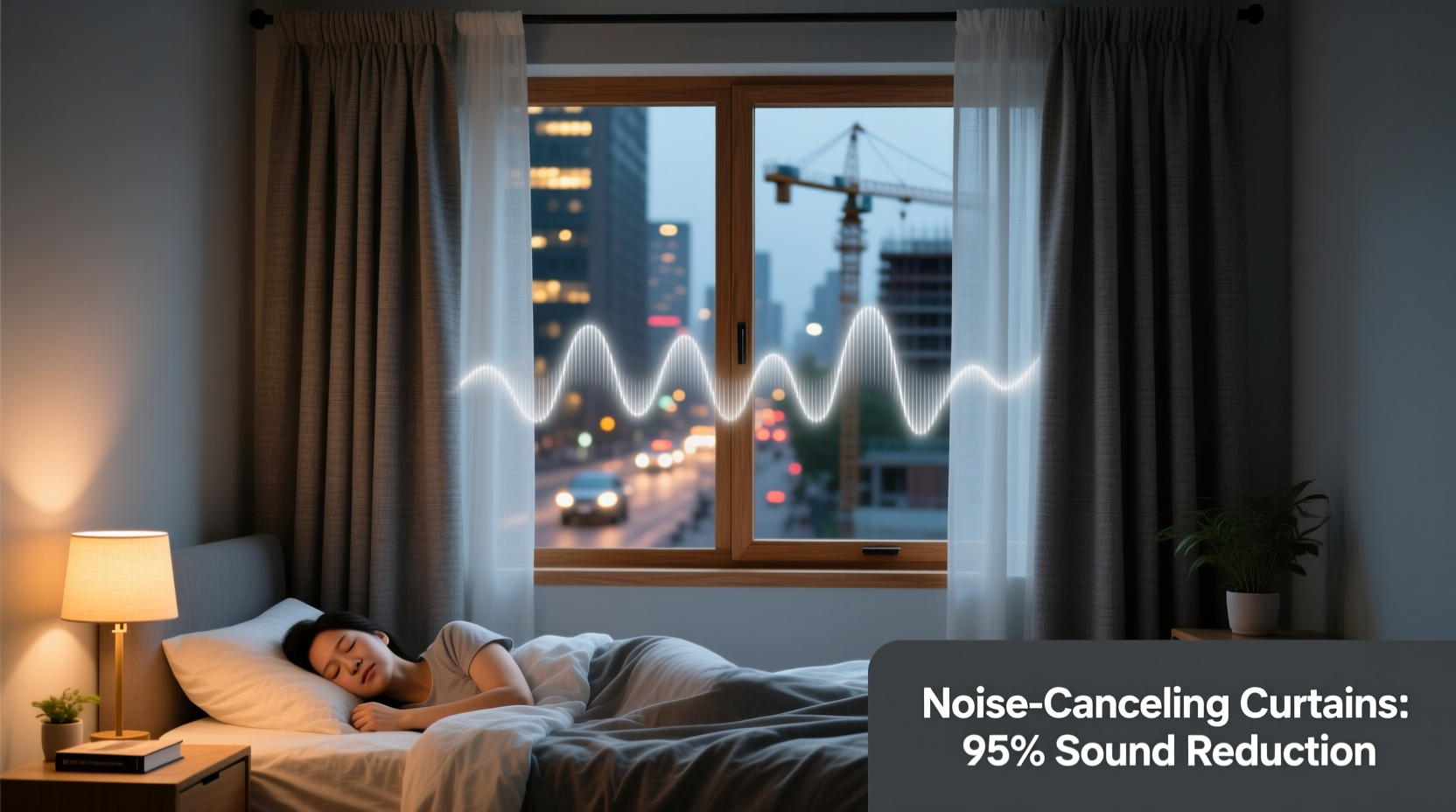
True “noise canceling” involves generating opposing sound waves to neutralize incoming noise—an electronic process used in high-end headphones. Soundproof curtains, however, rely on physical properties to reduce noise transmission. They function through three main mechanisms:
- Sound Absorption: Thick, layered fabrics trap sound waves, converting them into small amounts of heat energy. This reduces echo and reverberation inside the room, making external sounds less sharp and noticeable.
- Mass Blocking: Heavy materials add mass to windows and walls, acting as a barrier that blocks sound from passing through. The denser the curtain, the more effective it is at stopping mid-to-high frequency sounds like voices and traffic.
- Sealing Gaps: Properly installed curtains cover not just the window but also extend beyond the frame, overlapping edges and reaching the floor. This minimizes air gaps where sound leaks occur—often the weakest point in sound insulation.
According to Dr. Linda Harper, an acoustics researcher at the Institute for Urban Living, “A well-designed acoustic curtain can reduce perceived noise by 30% to 50%, especially when combined with other treatments like weather stripping or double-glazed windows.”
“Curtains alone won’t block a jackhammer, but they can turn disruptive chatter or distant sirens into background hum—just enough to keep a light sleeper from waking.” — Dr. Linda Harper, Acoustics Researcher
Do They Really Help Light Sleepers?
Light sleepers are particularly sensitive to sudden or inconsistent noises. Even low-volume sounds during the night can trigger micro-arousals—brief awakenings that disrupt sleep cycles without full consciousness. Over time, this leads to poor sleep quality and daytime fatigue.
Noise canceling curtains help by softening the impact of intermittent sounds. For example:
- A neighbor slamming a car door becomes a muffled thud rather than a jarring bang.
- Traffic noise loses its sharp edge, blending into a steady, less intrusive rumble.
- Voices from adjacent apartments become indistinct murmurs instead of clear conversations.
In a 2022 study published in the Journal of Sleep Environment Research, participants using sound-absorbing curtains reported falling asleep 18% faster and experiencing 27% fewer nighttime awakenings compared to baseline conditions. While not a cure-all, the improvement was significant enough to be clinically relevant for mild environmental noise sensitivity.
Choosing the Right Curtains: What to Look For
Not all \"soundproof\" curtains are created equal. Many products use the term loosely without delivering measurable acoustic benefits. To ensure effectiveness, focus on four key features:
| Feature | Why It Matters | What to Look For |
|---|---|---|
| Material Density | Denser fabrics block more sound waves. | Weight of at least 12–15 lbs per pair; multiple layers including foam or vinyl interliners. |
| Thickness | Thicker curtains provide better absorption. | At least 1/4 inch thick when compressed; avoid flimsy polyester blends. |
| Size & Coverage | Gaps around the edges let sound leak through. | Curtains should extend 6–12 inches beyond window frame on all sides and touch the floor. |
| STC Rating | Sound Transmission Class measures blocking ability. | Look for STC 15+ (rarely listed, but some premium brands provide it). |
Brands like NICETOWN, HeavyShade, and SoundOff offer models specifically engineered for noise reduction, often combining blackout properties with acoustic performance. However, always read independent reviews and check return policies—what works in a lab may not suit every home.
Real-World Example: A City Dweller’s Transformation
Sophie M., a freelance writer and self-described “light sleeper,” lives in a third-floor apartment overlooking a busy intersection in Chicago. Her bedroom faces the street, and she regularly woke up at 5:30 AM to garbage trucks and early commuters.
After trying earplugs (uncomfortable) and a fan (not loud enough), she invested in a pair of heavy sound-absorbing curtains with a triple-weave fabric and rubber backing. She installed a ceiling-mounted track that extended 8 inches past the window on each side and ensured the curtains pooled slightly on the floor.
Within two nights, Sophie noticed a change. “It wasn’t silence,” she said, “but the screech of brakes and shouting felt distant, like it was happening down the block instead of right outside. I stopped waking up as much, and my morning grogginess improved.”
She later added a small white noise app on her phone and sealed window cracks with removable caulk. Combined, these steps reduced her nighttime awakenings from 4–5 per night to 1–2.
Step-by-Step Guide to Maximizing Curtain Performance
Even the best curtains underperform if installed incorrectly. Follow this sequence to get the most out of your investment:
- Measure Your Window Area: Add 6–12 inches to width and height for full coverage.
- Select a Ceiling or Wall-Mounted Track: Install above the window frame and extend beyond the sides to eliminate edge gaps.
- Choose Double Rods If Needed: Layer with blackout or thermal curtains for added mass and light control.
- Ensure Floor Contact: Curtains should lightly touch or puddle on the floor to seal the bottom gap.
- Combine With Other Treatments: Apply weather stripping to windows, use rugs on hardwood floors, and close doors at night.
- Test and Adjust: Play a consistent sound (like traffic audio) outside and listen from inside. Adjust positioning until leakage is minimized.
Limitations and Common Misconceptions
Despite marketing claims, noise canceling curtains have limits. Understanding them prevents disappointment:
- They don’t block low-frequency noise well: Bass from subwoofers, trains, or large vehicles passes through due to long wavelengths that require structural insulation.
- Installation is critical: A $200 curtain with gaps performs worse than a $50 one fully sealed.
- They complement, don’t replace, other methods: For serious noise issues, consider upgrading windows, adding acoustic panels, or using ear protection.
- Results vary by environment: A ground-floor apartment facing a highway will see less benefit than a top-floor unit with moderate street noise.
Also, be cautious of exaggerated product claims. Terms like “99% noise reduction” are misleading unless referring to specific lab conditions with controlled frequencies.
Checklist: Is a Noise Canceling Curtain Right for You?
Answer the following before purchasing:
- ✅ Do you live in a moderately noisy area (e.g., city street, shared wall with neighbors)?
- ✅ Are the primary disturbances mid-to-high frequency (voices, barking, traffic horns)?
- ✅ Can you install curtains with full coverage (sides, top, bottom)?
- ✅ Have you already tried earplugs or white noise with limited success?
- ✅ Are you open to combining curtains with other quieting strategies?
If you answered yes to most, sound-absorbing curtains are likely worth trying.
Frequently Asked Questions
Can noise canceling curtains block out neighbor arguments or loud music?
They can significantly reduce the volume and clarity of voices and mid-range music, making them less disruptive. However, deep bass tones from speakers will still penetrate. For extreme cases, structural modifications or active noise control systems may be needed.
Do these curtains also help with light and insulation?
Yes. Most are designed as multi-functional—blocking light (blackout feature), reducing noise, and improving thermal efficiency. This makes them ideal for bedrooms, home offices, or media rooms.
How much do effective noise-reducing curtains cost?
Expect to pay between $80 and $200 per panel for high-performance models. Cheaper options exist but often lack sufficient mass or sealing capability to deliver noticeable results.
Final Thoughts: A Practical Tool in the Quiet-Sleep Toolkit
Noise canceling curtains aren’t magic, but they are a practical, non-invasive solution for light sleepers battling everyday urban noise. When properly selected and installed, they reduce auditory stimulation enough to improve sleep continuity and comfort. They’re especially effective when part of a broader strategy that includes sealing drafts, managing indoor acoustics, and using masking sounds.
For those sharing walls with noisy neighbors or sleeping near active streets, these curtains offer a tangible step toward peace—without renovations, complaints, or discomfort. While they won’t create complete silence, they can transform a restless night into a restful one.




 浙公网安备
33010002000092号
浙公网安备
33010002000092号 浙B2-20120091-4
Comments
No comments yet. Why don't you start the discussion?