
In an era where digital noise is as constant as city traffic, noise cancelling earbuds have become a modern necessity. Commuters, remote workers, travelers, and fitness enthusiasts alike rely on them to create auditory sanctuaries amid chaos. But as usage increases—sometimes spanning hours each day—concerns arise: Can prolonged exposure to active noise cancellation (ANC) technology harm your ears or overall auditory health? Are these sleek devices silently compromising long-term well-being?
To answer these pressing questions, we’ve consulted audiologists, hearing researchers, and audio engineers. Their insights reveal a nuanced picture: while noise cancelling earbuds are generally safe when used responsibly, certain habits and conditions can elevate risks over time.
How Noise Cancelling Technology Works
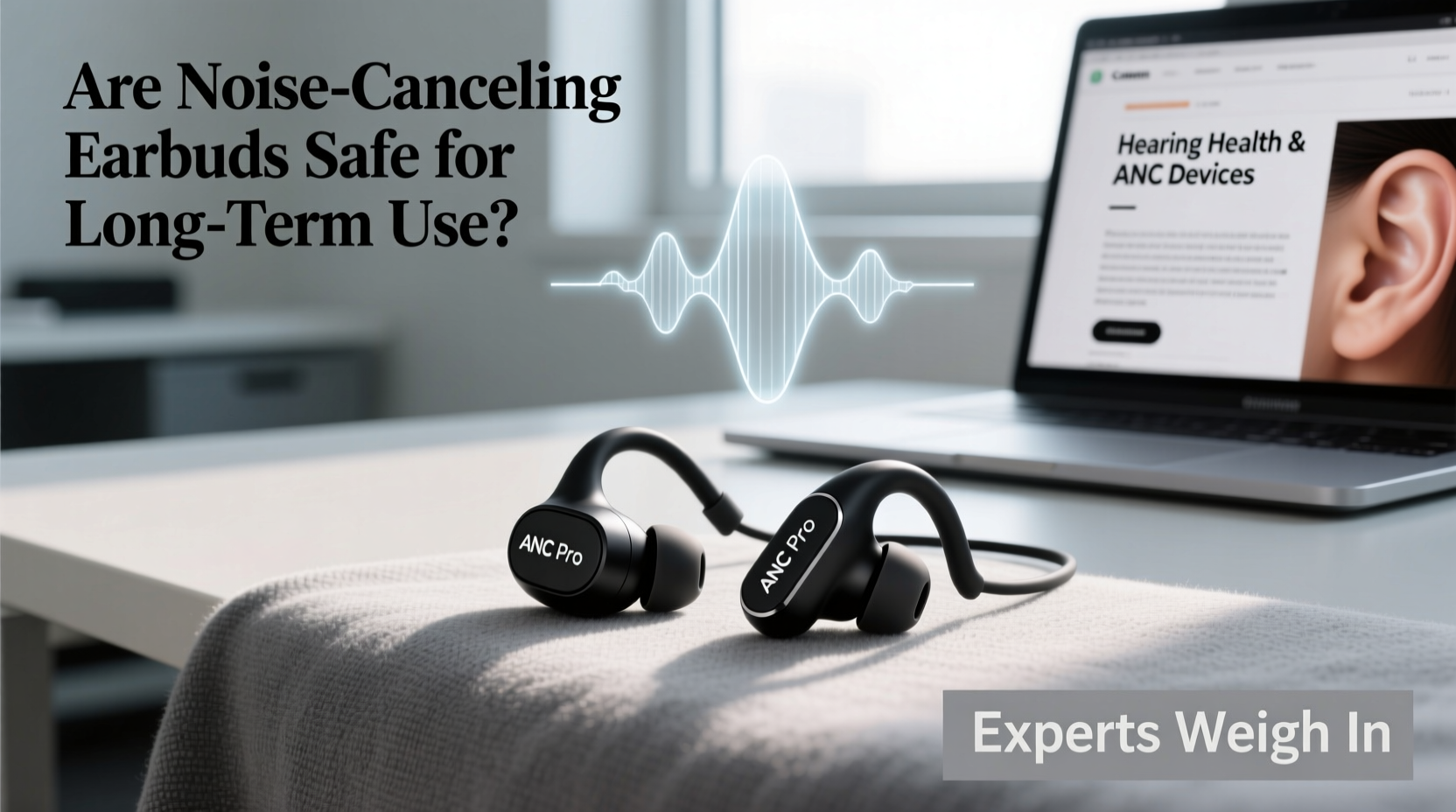
Before assessing safety, it's essential to understand the mechanics behind ANC. Unlike passive isolation—which relies on physical barriers like silicone tips to block sound—active noise cancellation uses microphones and speakers to counteract external noise.
The process works in real-time:
- Microphones on the earbud detect ambient low-frequency sounds (e.g., airplane engines, HVAC systems).
- An internal processor generates a \"counter-sound\" with the same amplitude but opposite phase (anti-noise).
- This anti-noise wave cancels out incoming sound waves through destructive interference.
This system excels at neutralizing consistent, predictable noises but is less effective against sudden or high-pitched sounds like voices or alarms. Importantly, the earbuds themselves do not emit harmful frequencies; instead, they manipulate existing sound waves to reduce perceived volume.
Potential Risks of Long-Term Use
While ANC technology doesn’t inherently damage hearing, extended use introduces indirect risks that users should be aware of.
Hearing Fatigue and Auditory Stress
Paradoxically, some users report ear fatigue after hours of ANC use. The brain adapts to silence differently than natural quiet. When all external cues are electronically erased, the auditory cortex may work harder to interpret subtle internal signals, leading to mental strain.
“Some patients describe a ‘fullness’ or pressure after long ANC sessions. It’s not damage per se, but a sign the auditory system is working overtime.” — Dr. Lena Torres, Clinical Audiologist, Johns Hopkins Hearing Center
Increased Volume Exposure
One of the most significant dangers isn't the ANC itself—but how people use it. Because background noise is suppressed, users often increase media volume without realizing it. Over time, this habit can lead to noise-induced hearing loss (NIHL), especially if levels exceed 85 dB for prolonged periods.
A 2023 study by the World Health Organization found that nearly 50% of young adults using personal audio devices exceeded safe listening thresholds, with ANC users more likely to listen longer and louder due to perceived comfort.
Pressure Sensation and Ear Discomfort
Many ANC earbuds create a sensation of pressure in the ears—often described as “ear suction” or “underwater feeling.” This occurs because the anti-noise signal alters air pressure perception within the ear canal. While not physically harmful, chronic discomfort may contribute to tinnitus exacerbation in sensitive individuals or cause headaches in prolonged use cases.
Reduced Environmental Awareness
Over-reliance on noise cancellation can impair situational awareness. Users walking in traffic, cycling, or operating machinery may miss critical auditory cues like horns, sirens, or verbal warnings. Some newer models include transparency modes to mitigate this, but not all users enable them consistently.
Safety Guidelines from Hearing Experts
To minimize risks, professionals recommend adopting healthy listening habits backed by audiological research.
The 60/60 Rule
Limit listening to 60% of maximum volume for no more than 60 minutes at a time. After each hour, take a break of at least 10–15 minutes to allow the ears to reset.
Use Transparency Mode Strategically
When moving through public spaces, switch to ambient or transparency mode. This allows you to hear surroundings without removing the earbuds, reducing both safety risks and social isolation.
Choose Fit and Ventilation Wisely
Tightly sealed earbuds enhance ANC performance but can trap moisture and heat, increasing the risk of ear infections (otitis externa). Opt for breathable designs and clean ear tips weekly with alcohol wipes.
| Risk Factor | Prevention Strategy | Expert Recommendation |
|---|---|---|
| Volume-induced hearing loss | Adhere to 60/60 rule | Set device volume limits via OS settings |
| Ear pressure discomfort | Take breaks every 90 minutes | Use “low” or “balanced” ANC modes |
| Wax buildup | Clean ear tips regularly | Visit audiologist annually for checkup |
| Reduced situational awareness | Enable transparency mode outdoors | Keep one earbud out in high-risk areas |
Real-World Case: The Remote Worker’s Dilemma
Consider Mark, a software developer who works remotely from a bustling shared apartment. To focus, he wears his ANC earbuds from 9 a.m. to 5 p.m., streaming lo-fi beats at 70% volume. Initially, productivity soared. But after six months, he began experiencing mild tinnitus and frequent earaches.
Upon visiting an audiologist, Mark learned his symptoms stemmed not from the ANC tech itself, but from continuous wear and elevated volume. His eardrums showed no permanent damage, but early signs of auditory stress were present.
With guidance, he adjusted his routine: switching to over-ear headphones with lower pressure, using ANC only during deep work blocks, enabling automatic volume limiting, and scheduling regular sound-free intervals. Within weeks, discomfort subsided.
Mark’s experience illustrates a broader trend: convenience can quietly erode healthy habits unless monitored.
What the Research Says
Current scientific consensus suggests that ANC earbuds pose minimal direct risk to hearing health. A 2022 review published in the *Journal of the American Academy of Audiology* analyzed 18 studies and concluded that “there is no evidence of cochlear damage attributable to active noise cancellation alone.”
However, the same report emphasized behavioral factors as the primary concern:
- Extended duration of use (>4 hours daily)
- High media volume (>75% max)
- Lack of auditory recovery periods
Additionally, a 2024 longitudinal study at the University of Michigan tracked 300 regular ANC users over three years. Results showed no significant change in hearing thresholds among those who followed safe listening guidelines. In contrast, participants who ignored volume and duration limits had a 2.3x higher incidence of early-onset hearing sensitivity issues.
“Technology isn’t the enemy—it’s how we interact with it. ANC can protect hearing by allowing lower volume playback, but only if users don’t compensate by turning things up.” — Dr. Rajiv Mehta, PhD, Director of Auditory Research, University of Michigan
Actionable Checklist for Safe Long-Term Use
To ensure your noise cancelling earbuds support, rather than undermine, your auditory health, follow this expert-backed checklist:
- ✅ Set your device’s maximum volume to 75% or lower in system settings.
- ✅ Use the 60/60 rule: no more than 60% volume for 60 minutes at a stretch.
- ✅ Take a 10-minute break every 90 minutes to give your ears auditory rest.
- ✅ Clean ear tips weekly with a dry or slightly damp cloth; replace every 3–6 months.
- ✅ Enable transparency mode when walking, driving, or in public spaces.
- ✅ Schedule annual hearing checkups, especially if you use earbuds daily.
- ✅ Avoid sleeping with ANC earbuds in—prolonged pressure can affect ear canal health.
- ✅ Choose well-fitting ear tips to prevent overcompensation with volume.
Frequently Asked Questions
Can noise cancelling earbuds cause hearing loss?
No, the ANC technology itself does not cause hearing loss. However, listening to audio at high volumes for extended periods—especially when masked by noise cancellation—can lead to noise-induced hearing loss over time. The key is managing volume and duration.
Why do my ears feel full when I use ANC earbuds?
This sensation, often called “occlusion effect” or “pressure build-up,” results from the way anti-noise waves interact with your ear canal. It’s usually harmless but can be minimized by using earbuds with vented designs or selecting weaker ANC modes. Taking regular breaks also helps reset pressure perception.
Are ANC earbuds safe for children?
They can be, but with caution. Children’s auditory systems are still developing, and they may not recognize when volume is too high. If used, ensure volume limits are set (many devices allow parental controls), and limit use to under one hour per day. Pediatric audiologists generally recommend passive isolation for younger users.
Conclusion: Balancing Benefit and Responsibility
Noise cancelling earbuds are not inherently dangerous. On the contrary, they offer powerful benefits—from protecting hearing in loud environments to enhancing focus and reducing stress. When used wisely, they can be part of a healthier auditory lifestyle.
The real challenge lies in self-regulation. Like any tool, their impact depends on how we wield them. By respecting volume limits, honoring rest periods, maintaining hygiene, and staying aware of surroundings, users can enjoy the perks of silence without sacrificing long-term ear health.




 浙公网安备
33010002000092号
浙公网安备
33010002000092号 浙B2-20120091-4
Comments
No comments yet. Why don't you start the discussion?