
Open floor plan offices were designed to encourage collaboration, transparency, and innovation. In practice, however, they often deliver the opposite: constant distractions, rising stress levels, and declining concentration. For many office workers, the relentless background hum of phone calls, keyboard clatter, and impromptu conversations makes deep work nearly impossible. Enter noise cancelling headphones—a tool increasingly seen not as a luxury, but as a necessity. But are they truly worth the investment? For professionals navigating the chaos of shared workspaces, the answer is more nuanced than a simple yes or no. The real value lies in understanding how active noise cancellation (ANC) works, who benefits most, and how to choose the right model for your specific environment.
The Hidden Cost of Open Office Noise
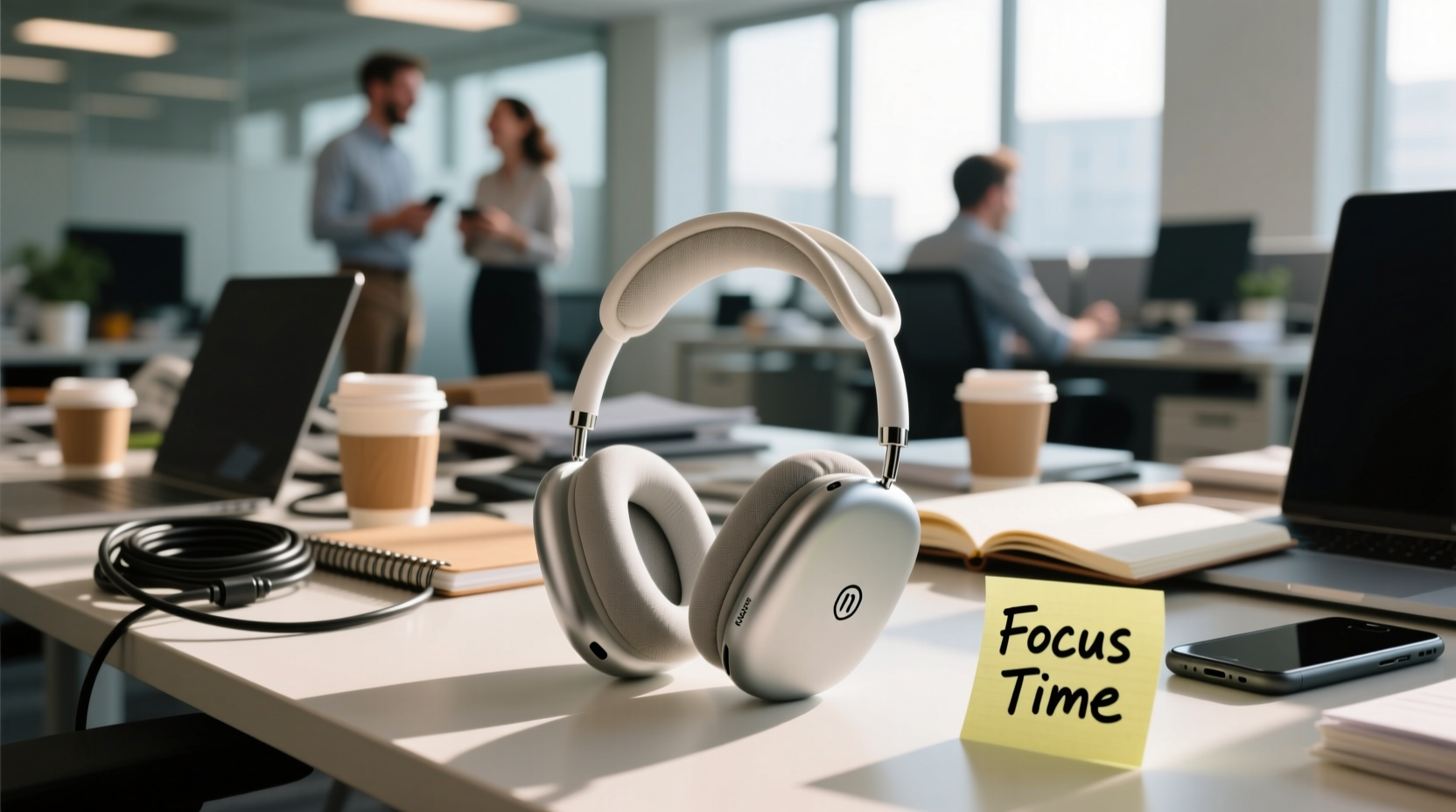
Decades of research have shown that open office layouts come with significant cognitive trade-offs. A 2011 study published in the Journal of Environmental Psychology found that employees in open-plan offices experienced higher levels of stress, lower job satisfaction, and reduced concentration compared to those in private offices. One of the primary culprits? Uncontrollable auditory distractions.
Background noise—especially speech—is particularly disruptive because the human brain is wired to process language. Even if you're not actively listening, your subconscious registers nearby conversations, making it harder to maintain focus during tasks requiring sustained attention. This phenomenon, known as the \"irrelevant sound effect,\" can impair memory and reduce problem-solving efficiency by up to 30%, according to findings from the University of Salford.
For knowledge workers—developers, writers, analysts, designers—the cost of these interruptions adds up. Every time attention shifts due to ambient noise, it takes an average of 23 minutes to fully regain deep focus, per research from the University of California, Irvine. Over weeks and months, this fragmented workflow leads to burnout, missed deadlines, and diminished output quality.
How Active Noise Cancellation Works
Unlike passive isolation—which relies on physical barriers like earcup padding—active noise cancellation uses technology to neutralize external sound. Here’s how it works:
- A built-in microphone picks up incoming ambient noise.
- The headphone’s processor analyzes the sound wave patterns in real time.
- The system generates an inverse sound wave (anti-noise) that cancels out the original frequencies.
- This combined signal reaches your ears as silence—or near-silence—for low-frequency sounds like HVAC systems, traffic rumble, or distant chatter.
ANC excels at reducing consistent, predictable noises below 1,000 Hz. It’s less effective against sudden, high-pitched sounds such as laughter, ringing phones, or sharp keyboard clicks. However, modern hybrid ANC models combine feedforward and feedback microphones to improve responsiveness across a broader frequency range.
Transparency mode is another key feature in premium models. It allows users to temporarily amplify environmental sounds—like a colleague calling your name—without removing the headphones. This balance between isolation and awareness makes ANC headphones practical for office use, where complete sensory disconnection isn’t ideal.
Who Benefits Most from Noise Cancelling Headphones?
Not every office worker will experience the same level of benefit. The effectiveness of ANC depends on individual sensitivity to noise, job function, and workplace culture.
- Highly sensitive individuals: People with ADHD, anxiety, or sensory processing differences often find open offices overwhelming. For them, ANC headphones aren't just helpful—they’re essential for maintaining emotional regulation and cognitive performance.
- Deep work professionals: Software engineers, data scientists, writers, and financial analysts require long stretches of uninterrupted focus. ANC creates a buffer that supports flow states critical to complex problem solving.
- Hybrid or remote workers in co-working spaces: When working outside traditional offices, environments like cafes or shared desks can be unpredictable. Portable ANC provides consistency across locations.
- Customer-facing roles with frequent calls: Call center agents or support staff benefit from both noise reduction and improved audio clarity during virtual meetings.
Conversely, employees in highly collaborative roles—such as project managers or team leads—may find constant ANC use counterproductive if it delays their responsiveness to colleagues. In such cases, situational use—during focused tasks rather than all day—is more appropriate.
“Cognitive load increases dramatically when people must filter out irrelevant auditory input. Noise cancelling tech acts as a form of mental relief.” — Dr. Lena Torres, Cognitive Ergonomics Researcher, MIT Human Systems Lab
Comparing Top Models for Office Use
With dozens of options on the market, choosing the right pair requires balancing performance, comfort, and functionality. Below is a comparison of leading models suited for full-day office wear.
| Model | Noise Cancellation Quality | Comfort (8-hr wear) | Battery Life | Mic Clarity for Calls | Price Range |
|---|---|---|---|---|---|
| Sony WH-1000XM5 | Excellent (best-in-class low-frequency suppression) | Very Good (plush earcups, lightweight) | 30 hours | Excellent (AI beamforming mics) | $350–$400 |
| Bose QuietComfort Ultra | Excellent (superior mid-range attenuation) | Exceptional (soft headband, balanced clamp force) | 24 hours | Very Good | $425 |
| Apple AirPods Max | Outstanding (spatial audio + adaptive ANC) | Good (heavy at 385g; may fatigue neck over time) | 20 hours | Excellent (seamless iOS integration) | $549 |
| Microsoft Surface Headphones 2 | Good (customizable ANC levels) | Very Good | 20 hours | Excellent (optimized for Teams calls) | $249 |
| Jabra Elite 85h | Very Good (adaptive ANC learns environment) | Good | 36 hours | Excellent (industry-leading call noise filtering) | $200 |
For most office workers, the Sony WH-1000XM5 offers the best balance of price and performance. Jabra stands out for those prioritizing call quality, while Bose remains the gold standard for all-day comfort.
Real-World Impact: A Case Study
At a mid-sized marketing agency in Seattle, team productivity was consistently derailed by noise complaints. Employees reported difficulty concentrating during campaign planning sessions, and error rates in copywriting increased during peak office hours. Management introduced a pilot program offering subsidized noise cancelling headphones to 15 staff members across departments.
After six weeks, participants completed anonymous surveys measuring perceived focus, stress levels, and task completion speed. Results showed:
- 73% reported improved ability to enter “flow” states.
- 68% felt significantly less mentally fatigued by end-of-day.
- On average, employees regained 1.5 hours of productive time daily.
- One senior copywriter noted a 40% drop in required editing rounds due to fewer errors made during initial drafting.
Based on these outcomes, the company expanded the initiative firm-wide and redesigned two quiet zones equipped with charging stations for ANC devices. The HR director observed a measurable improvement in retention among high-performing introverts who previously considered leaving due to sensory overload.
Practical Tips for Maximizing Value
Simply owning noise cancelling headphones doesn’t guarantee better focus. How you use them matters just as much as the hardware itself.
- Use them strategically: Reserve ANC for deep work blocks. Disable it during collaborative periods to remain accessible.
- Pair with focus-enhancing audio: Combine ANC with low-volume instrumental music, white noise, or binaural beats to further sharpen concentration.
- Maintain hygiene: Clean ear cushions weekly with alcohol-free wipes to prevent skin irritation during prolonged use.
- Adjust settings based on environment: Many apps allow fine-tuning of ANC intensity. Lower it slightly if you still want peripheral awareness.
- Charge proactively: Keep a backup cable at your desk. Nothing breaks momentum like dead batteries mid-task.
Frequently Asked Questions
Can noise cancelling headphones cause ear pressure or discomfort?
Some users report a mild \"eardrum suck\" sensation due to the vacuum-like effect of active cancellation. This usually subsides within minutes. Choosing models with pressure-relief vents (like newer Bose and Sony versions) can minimize this. If discomfort persists, limit continuous use to 2–3 hour intervals.
Do I need expensive headphones for office use?
Not necessarily. While premium models offer superior ANC and comfort, budget options like the Anker Soundcore Life Q30 ($80) provide solid noise reduction for under $100. Consider your daily usage—if you wear them 6+ hours, investing in durability and ergonomics pays off. For occasional use, mid-tier models suffice.
Are there health risks associated with long-term use?
No direct evidence links ANC headphones to hearing damage. However, relying on them to block extreme noise (e.g., construction-level decibels) could lead to unsafe volume levels. Stick to moderate volumes (<60% max), take listening breaks, and avoid sleeping in them regularly to preserve ear health.
Final Verdict: Are They Worth It?
For office workers trapped in noisy open floor plans, noise cancelling headphones are not merely a convenience—they are a productivity tool with measurable returns. By reducing cognitive strain, minimizing distractions, and enabling deeper focus, they help restore control over one’s auditory environment. The financial investment—typically $200–$400—often pays for itself within weeks through improved output quality and reduced mental fatigue.
Employers should consider subsidizing ANC devices as part of wellness and performance programs, especially in high-noise environments. For individuals, treating these headphones like any other professional tool—a keyboard, monitor, or ergonomic chair—is a smart move toward sustainable career longevity.




 浙公网安备
33010002000092号
浙公网安备
33010002000092号 浙B2-20120091-4
Comments
No comments yet. Why don't you start the discussion?