
In an age where mental performance is currency, nootropics—often marketed as \"smart drugs\"—have surged in popularity. From Silicon Valley engineers to college students pulling all-nighters, people are turning to these substances in search of sharper focus, faster recall, and sustained concentration. But beneath the hype lies a critical question: Are nootropics truly effective for long-term cognitive enhancement, or are most of them simply repackaged stimulants like caffeine with a scientific-sounding label?
The answer isn't binary. Some nootropics show promise backed by clinical research; others rely more on anecdote than evidence. More importantly, their long-term safety profile remains underexplored for many compounds. This article dissects the science, separates fact from marketing fiction, and evaluates whether these brain boosters are worth integrating into your daily routine—or if you're better off sticking to coffee and sleep.
What Are Nootropics, Really?
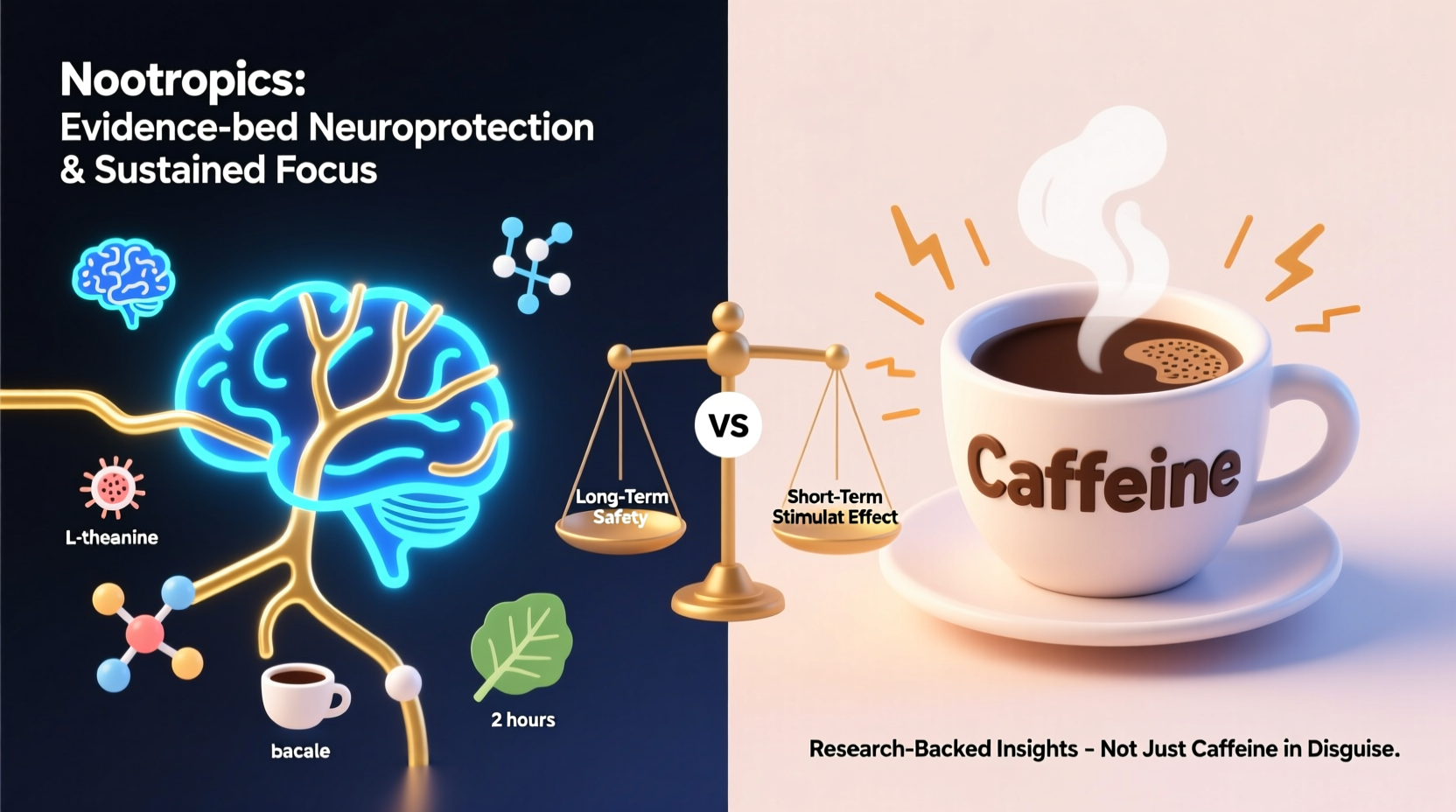
The term \"nootropic\" was coined in 1972 by Romanian chemist Dr. Corneliu Giurgea, who defined it as a substance that enhances learning and memory, supports brain function under disruptive conditions, and has minimal side effects and low toxicity. True nootropics, by this definition, should not only improve cognition but also protect the brain.
Today, the term covers a broad spectrum:
- Synthetic compounds: Like modafinil, piracetam, and phenylpiracetam.
- Natural supplements: Such as bacopa monnieri, lion’s mane mushroom, and rhodiola rosea.
- Stimulants: Including caffeine, L-theanine combinations, and prescription ADHD medications like Adderall (often misclassified as nootropics).
- \"Designer\" blends: Commercial stacks sold as pills or powders, often combining multiple ingredients with vague dosing.
Not all of these meet Giurgea’s original criteria. Many so-called nootropics primarily act as stimulants—increasing alertness without necessarily improving memory, processing speed, or neuroplasticity.
“Many products labeled as nootropics are essentially stimulant cocktails with limited evidence for true cognitive enhancement.” — Dr. Sarah Thompson, Cognitive Neuroscientist at Johns Hopkins University
How Do They Compare to Caffeine?
Caffeine is the world’s most widely used psychoactive substance. It works by blocking adenosine receptors in the brain, reducing fatigue and increasing alertness. When paired with L-theanine (an amino acid found in green tea), it can promote calm focus without jitters—a combination frequently included in commercial nootropic blends.
But here's the catch: while caffeine improves subjective alertness and short-term attention, it doesn’t enhance long-term memory or executive function. Its effects plateau quickly, and tolerance develops within days. So when a supplement claims “2x focus” but contains 200mg of caffeine and 200mg of L-theanine, ask yourself—is this innovation, or just rebranded coffee?
The Reality of Common Ingredients
Let’s examine some frequently advertised components in popular nootropic formulas:
| Ingredient | Primary Effect | Long-Term Evidence | Common Dose |
|---|---|---|---|
| Caffeine | Alertness, reduced fatigue | Well-established, but tolerance builds | 100–200 mg |
| L-Theanine | Calms nervous system, reduces jitteriness | Good for acute use; long-term unclear | 100–200 mg |
| Bacopa Monnieri | Memory consolidation, reduced anxiety | Strong evidence over 12+ weeks | 300 mg (50% bacosides) |
| Lion’s Mane Mushroom | Potential nerve growth factor stimulation | Promising animal studies; limited human trials | 500–1000 mg extract |
| Alpha-GPC | Choline donor for acetylcholine synthesis | Moderate evidence for focus and reaction time | 300 mg |
| Piracetam | Neuroprotective, may aid learning | Mixed results; not approved in U.S. | 1200–4800 mg |
As the table shows, only a few ingredients have robust long-term data. Most blends rely heavily on caffeine and L-theanine to deliver immediate perceptible effects, then include trace amounts of other compounds to appear comprehensive.
Are Nootropics Safe for Long-Term Use?
Safety depends entirely on the compound. Let’s break it down by category:
Synthetic Racetams
Racetams like piracetam and aniracetam are among the oldest nootropics. While generally considered low-toxicity in healthy adults, long-term human studies are scarce. Some users report improved verbal fluency and memory, but clinical trials show inconsistent results. Additionally, racetams increase demand for choline in the brain—if not supplemented, this can lead to headaches or brain fog.
Prescription Stimulants
Modafinil and Adderall are sometimes used off-label as nootropics. Modafinil has shown modest cognitive benefits in sleep-deprived individuals and is relatively safe in controlled doses. However, long-term use may disrupt natural dopamine regulation and sleep architecture. Adderall, a potent amphetamine, carries higher risks of dependence, cardiovascular strain, and emotional blunting with chronic use.
Natural Adaptogens & Herbal Extracts
Substances like rhodiola, ashwagandha, and bacopa fall into this category. These have centuries of traditional use and growing clinical support. Bacopa, for example, has demonstrated measurable improvements in delayed recall after 12 weeks of daily use. Side effects are typically mild (e.g., gastrointestinal discomfort), making them safer candidates for extended regimens.
Commercial Stacks
Pre-formulated blends (like Mind Lab Pro or Performance Lab Nootropics) often combine 10+ ingredients at subclinical doses. The appeal is convenience, but efficacy is questionable. Without standardized testing or transparency about sourcing, consumers risk ingesting fillers, contaminants, or ineffective dosages. The FDA does not regulate these as drugs, so manufacturers aren’t required to prove safety or potency.
“The biggest issue with long-term nootropic use isn’t toxicity—it’s uncertainty. We don’t know how chronic modulation of neurotransmitters affects brain aging.” — Dr. Alan Reyes, Neuropharmacologist, UCLA
Mini Case Study: Alex, the Startup Founder
Alex, 34, runs a tech startup and began using a popular nootropic stack six months ago. The product contained caffeine, L-theanine, tyrosine, and several herbal extracts. Initially, he felt sharper during morning meetings and could work longer hours without crashing.
After three months, however, his sleep became fragmented. He noticed increased anxiety before presentations, despite feeling mentally fatigued. Blood work showed elevated cortisol levels. Upon eliminating the supplement, his sleep normalized within two weeks, and his baseline focus improved.
Analysis: The stack likely masked underlying issues—poor sleep hygiene and chronic stress—while creating dependency on external stimulation. Once removed, his brain recalibrated to natural rhythms.
Step-by-Step Guide to Evaluating Nootropics Safely
If you're considering adding a nootropic to your routine, follow this evidence-based approach:
- Define your goal: Is it memory retention? Focus under pressure? Reduced mental fatigue? Match the compound to the outcome.
- Research ingredients individually: Don’t trust blend names like “FocusMax.” Look up each component and its effective dose.
- Start with one compound at a time: Begin with well-studied options like bacopa or lion’s mane. Avoid stacks initially.
- Track your response: Use a journal to record changes in mood, sleep, clarity, and side effects over 4 weeks.
- Consult a healthcare provider: Especially if you have anxiety, heart conditions, or take medications.
- Reassess every 8 weeks: Ask: Am I still benefiting? Has tolerance developed? Can I perform without it?
Checklist: Choosing a Responsible Nootropic Strategy
- ✅ Prioritize sleep, nutrition, and exercise—they’re the foundation of cognitive health.
- ✅ Choose single-ingredient supplements first to isolate effects.
- ✅ Verify third-party testing (look for NSF, USP, or Informed Choice certifications).
- ✅ Avoid proprietary blends with hidden dosages.
- ✅ Limit stimulant-based products to occasional use, not daily reliance.
- ✅ Monitor for side effects: insomnia, irritability, digestive issues.
- ✅ Discontinue use if cognitive performance declines when not taking the supplement.
Frequently Asked Questions
Can nootropics cause dependency?
True dependency is rare with non-stimulant nootropics like bacopa or citicoline. However, products containing high-dose caffeine or prescription analogs can lead to psychological reliance. Users may feel unable to focus without them, especially if baseline habits (sleep, diet) are poor.
Do nootropics work for everyone?
No. Genetic differences, baseline cognitive health, lifestyle factors, and even gut microbiome composition influence response. What boosts focus in one person may cause anxiety or no effect in another. Personal experimentation—guided by data—is essential.
Is long-term brain damage possible?
There is currently no strong evidence that well-researched nootropics (e.g., bacopa, citicoline) cause structural brain damage. However, chronic overstimulation from stimulant-heavy formulas may accelerate neuronal fatigue or disrupt neurotransmitter balance over time. Prudence is key.
Conclusion: Beyond the Hype, Toward Sustainable Focus
Nootropics occupy a gray zone between wellness and pharmacology. While some offer genuine cognitive benefits, many are little more than caffeine in disguise—engineered to feel cutting-edge while delivering temporary alertness at best. Long-term safety remains uncertain for most compounds, particularly when used daily for years without medical supervision.
The most effective strategy isn’t found in a pill bottle. It lies in optimizing sleep quality, managing stress, exercising regularly, and eating a brain-supportive diet rich in omega-3s, antioxidants, and B vitamins. When used selectively and intelligently, certain nootropics can complement this foundation—but they should never replace it.
If you choose to explore nootropics, do so with intention. Read labels critically, track outcomes honestly, and prioritize compounds with transparent dosing and clinical backing. Your brain is not a machine to be overclocked—it’s a complex ecosystem that thrives on balance, not shortcuts.




 浙公网安备
33010002000092号
浙公网安备
33010002000092号 浙B2-20120091-4
Comments
No comments yet. Why don't you start the discussion?