
Tailgating is more than a pre-game ritual—it’s a culture. Grills fire up, music blasts, fans gather in matching jerseys, and the smell of smoked brisket fills the air. But as tailgate setups grow more elaborate, so do their power needs. Once limited to battery-powered coolers and car jump starters, today’s tailgaters are plugging in blenders, TVs, heated blankets, and even espresso machines. That’s where portable power stations come in. Marketed as silent, emissions-free generators, these devices promise to keep your party powered without breaking local noise ordinances or drawing fines from event organizers. But with price tags ranging from $300 to over $2,000, the question arises: Are portable power stations actually worth it for tailgating—or are they just high-priced overkill?
The Evolution of Tailgating Power Needs
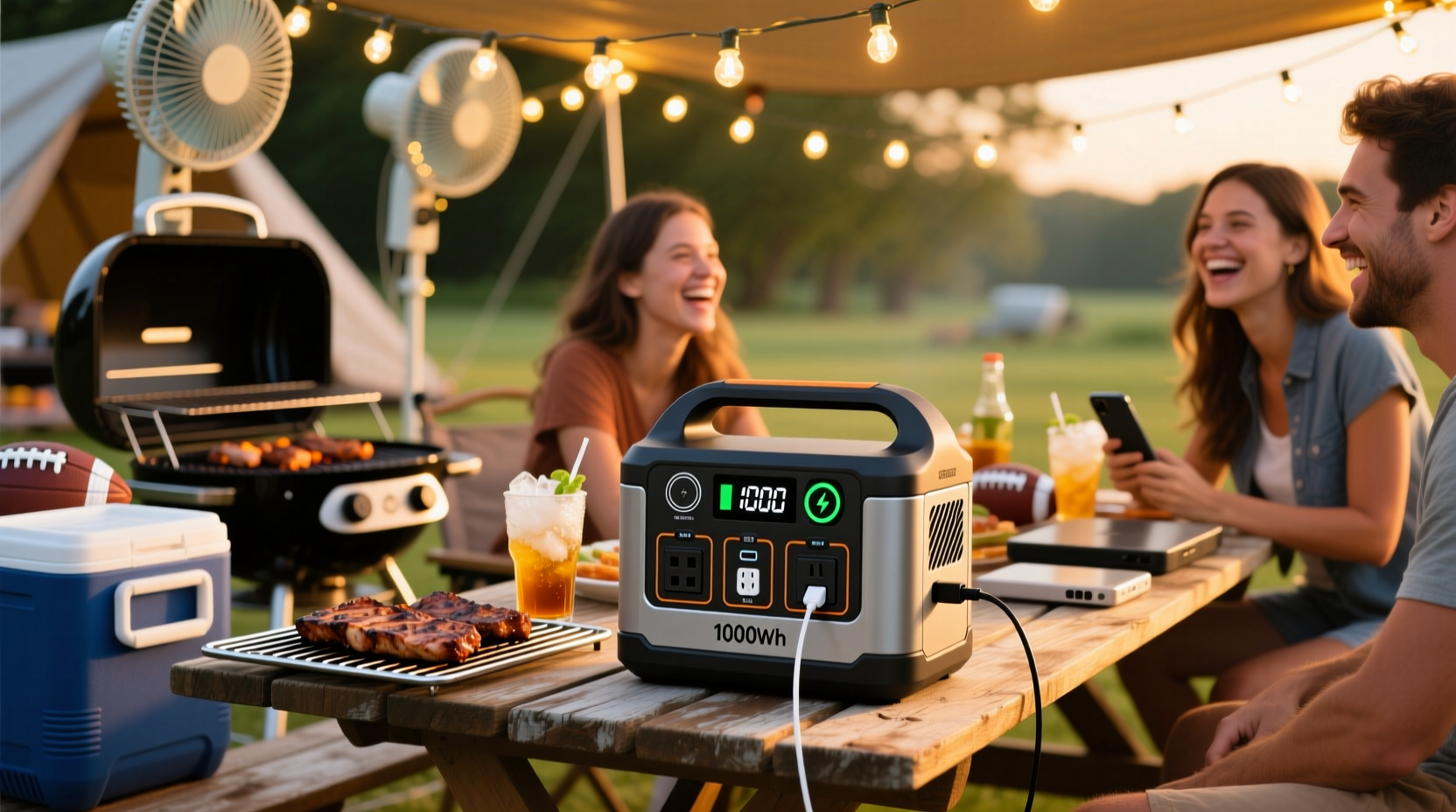
In the past, tailgating relied almost entirely on vehicle batteries and rudimentary electrical hacks. Fans would run extension cords from their SUVs to small coolers or radios, often draining their car’s battery before kickoff. Portable propane generators filled the gap—offering robust power at low cost—but brought noise, fumes, and safety concerns. Many stadiums now ban traditional generators outright, citing fire codes and air quality regulations.
Enter the portable power station: a lithium-ion battery pack that stores electricity and outputs it via AC outlets, USB ports, 12V sockets, and sometimes even wireless charging. Unlike gas generators, they operate silently, produce zero emissions, and can be recharged at home, in a garage, or even via solar panels on-site. For modern tailgaters looking to elevate their experience while staying compliant, these units seem like a dream solution.
But convenience comes at a cost—both financial and logistical. A basic 500Wh model might handle a blender and a fan for an hour, but running a mini-fridge, projector, and electric grill simultaneously demands a 1500Wh+ unit. And once depleted, recharging can take hours unless you have access to fast AC charging or solar arrays.
When a Portable Power Station Makes Sense
Not every tailgate requires a portable power station. For casual fans who bring a cooler, Bluetooth speaker, and maybe a crockpot, a simple power bank or jump starter with USB output may suffice. But for those who treat tailgating as a full-day festival, investing in a dedicated power source becomes more justifiable.
Consider the following scenarios where a portable power station adds real value:
- Running multiple appliances: If you’re powering a fridge, coffee maker, induction cooktop, and LED lights, cumulative wattage can exceed 1,000W. A mid-to-high-capacity power station (1000Wh+) ensures uninterrupted operation.
- No access to grid power: In remote parking lots or overflow fields, there’s no wall outlet to plug into. Solar-rechargeable stations offer true off-grid capability.
- Need for quiet operation: Gas generators can reach 70–80 decibels—louder than most conversations. Silent operation preserves the social atmosphere and avoids complaints.
- Safety compliance: Many venues prohibit open flames and combustion engines. Lithium-based stations eliminate fuel storage risks and meet safety standards.
- Multi-day events: For tournaments or camping-style tailgates, the ability to recharge via solar between uses extends usability across days.
Cost vs. Value: Breaking Down the Investment
A good entry-level portable power station starts around $300–$400. Mid-range models (like the Jackery 1000 or EcoFlow Delta 2) range from $800–$1,200. High-end units (EcoFlow Delta Pro, Bluetti EP500) exceed $1,800. To determine if this is worth it, consider not just performance, but frequency of use and alternative costs.
Let’s compare two common approaches:
| Power Solution | Upfront Cost | Lifespan | Key Limitations |
|---|---|---|---|
| Propane Generator (2000W) | $250–$400 | 5–7 years | Noisy, emits fumes, banned at many venues |
| Portable Power Station (1000Wh) | $800–$1,200 | 8–10 years (2,000+ cycles) | Long recharge time, higher initial cost |
| Car Inverter + Battery | $50–$150 | Varies (risk of dead car battery) | Limited runtime, potential damage to vehicle |
While the power station has a steep upfront cost, its longevity and versatility increase its value over time. Most quality units support 2,000 to 3,500 charge cycles before dropping below 80% capacity. Used weekly during football season (about 10 games), a unit could last a decade. That brings the effective cost to under $12 per game—even less if shared among a group.
Moreover, these stations aren’t just for tailgating. They double as emergency backup during blackouts, power sources for camping trips, and mobile energy hubs for outdoor filming or remote work. This multi-use flexibility improves return on investment significantly.
“Portable power stations are shifting from niche gadgets to essential lifestyle tools. Their adoption in recreational settings like tailgating reflects a broader demand for clean, quiet, and reliable off-grid energy.” — Dr. Lena Torres, Energy Innovation Analyst at GreenTech Insights
Real-World Example: The Super Fan Setup
Daniel R., a season ticket holder for the Denver Broncos, used to rely on a 2000W gas generator for his tailgate. He ran a smoker, a fridge, a soundbar, and string lights. But after being cited twice for noise violations, he invested $1,100 in an EcoFlow Delta 2 (1024Wh).
At first, he worried about runtime. His electric griddle pulls 1,200W—more than the station can sustain continuously. So he adjusted his routine: he preheats the griddle using the station, cooks in batches, and lets it rest between uses. He also added a 200W solar panel to recharge during daylight.
After one season, Daniel estimates he’s saved $180 in propane and avoided three potential fines. More importantly, his setup draws compliments instead of complaints. “People come by just to see how quiet everything runs,” he says. “It’s become part of the experience.”
This case illustrates a key truth: success with a power station isn’t just about raw specs—it’s about smart load management and planning.
Step-by-Step Guide: Choosing & Using a Power Station for Tailgating
Follow this timeline to ensure your investment pays off:
- Weeks Before Season: Audit your current setup. List all electrical devices, their wattage, and average runtime. Total daily watt-hour (Wh) demand = (Watts × Hours used).
- Research Models: Look for stations with at least 20% more capacity than your total need. Prioritize fast recharge (AC + solar), pure sine wave output (safe for electronics), and portability (under 50 lbs if carrying).
- Purchase & Test: Buy early. Charge fully and simulate a full tailgate day at home. Run devices together to confirm compatibility and estimate actual runtime.
- Pre-Event Routine: Fully charge the night before. If using solar, position panels early in the day to capture sun during peak hours.
- Game Day Strategy: Stagger appliance use. Run the coffee maker first, then the grill, then entertainment systems. Avoid daisy-chaining high-wattage devices.
- Post-Event: Recharge immediately. Store in a climate-controlled space. Check firmware updates quarterly if supported.
Checklist: Is a Portable Power Station Right for Your Tailgate?
Answer yes to three or more of these to justify the purchase:
- Do you run more than three AC-powered devices at once?
- Have you ever drained your car battery during a tailgate?
- Is noise from generators a concern or violation risk?
- Do you tailgate 6+ times per year?
- Would you use the station for emergencies or camping?
- Are you planning to incorporate solar or go fully off-grid?
If most answers are yes, a power station is likely a worthwhile upgrade—not overkill.
Common Pitfalls to Avoid
Even experienced users make mistakes. Here are the most frequent issues and how to prevent them:
- Overloading the inverter: Exceeding continuous wattage trips the safety cutoff. Always check both surge and running watts of your devices.
- Ignoring recharge logistics: Charging a 1000Wh unit from empty takes 3–7 hours on AC, longer on solar. Plan ahead.
- Using cheap extension cords: Thin wires reduce efficiency and create fire hazards. Use heavy-duty, short cords rated for outdoor use.
- Leaving it in extreme heat: Lithium batteries degrade above 95°F (35°C). Keep shaded or insulated during summer games.
- Forgetting about weight: Some units weigh 40+ pounds. Consider a folding cart for transport.
Frequently Asked Questions
Can I run an electric grill or induction cooktop with a portable power station?
Yes, but only if the station’s continuous output meets or exceeds the appliance’s wattage. Most induction burners require 1,200–1,800W. A 1000Wh station might power it for 30–45 minutes depending on usage. Pair high-draw devices with lower-consumption ones and stagger use.
How long does a portable power station last during a tailgate?
Runtime depends on total load. A 1024Wh station could run a 50W fan (20 hrs), 80W mini-fridge (12 hrs), and 10W LED strip (100 hrs) simultaneously for about 8–10 hours. But add a 1000W blender for 10 minutes, and available time drops significantly.
Are solar panels necessary for tailgating?
Not essential, but highly beneficial. While most users charge at home, solar allows daytime top-offs, extending usability for afternoon games. A 200W foldable panel can add 600–800Wh on a sunny day, effectively doubling capacity over time.
Conclusion: Power Smarter, Not Harder
Portable power stations aren’t inherently overkill—they’re tools whose value depends on how you use them. For minimalists who tailgate occasionally with basic gear, they’re likely unnecessary. But for serious enthusiasts building immersive, comfortable, and compliant setups, they offer unmatched advantages in silence, safety, and sustainability.
The real question isn’t whether they’re worth it in general, but whether they align with your specific habits, goals, and values. If you prioritize convenience, quiet enjoyment, and future-proofing your gear, a well-chosen power station pays dividends far beyond gameday.




 浙公网安备
33010002000092号
浙公网安备
33010002000092号 浙B2-20120091-4
Comments
No comments yet. Why don't you start the discussion?