
In an age where desk jobs dominate and screen time has skyrocketed, slouching has become a modern epidemic. As awareness grows about the health implications of poor posture—chronic back pain, reduced lung capacity, and even mood disorders—the market for posture correctors has exploded. These devices, ranging from wearable braces to smart shirts, promise to pull your shoulders back, align your spine, and retrain your body into standing tall. But behind the sleek marketing lies a critical question: are posture correctors actually helpful, or are they just temporary fixes offering no real long-term benefit?
The answer isn’t black and white. While some users report immediate relief and improved awareness, others find themselves dependent on the device without lasting change. To understand the true value of posture correctors, we need to examine how they work, what the research says, and whether they can be part of a sustainable solution.
How Posture Correctors Work
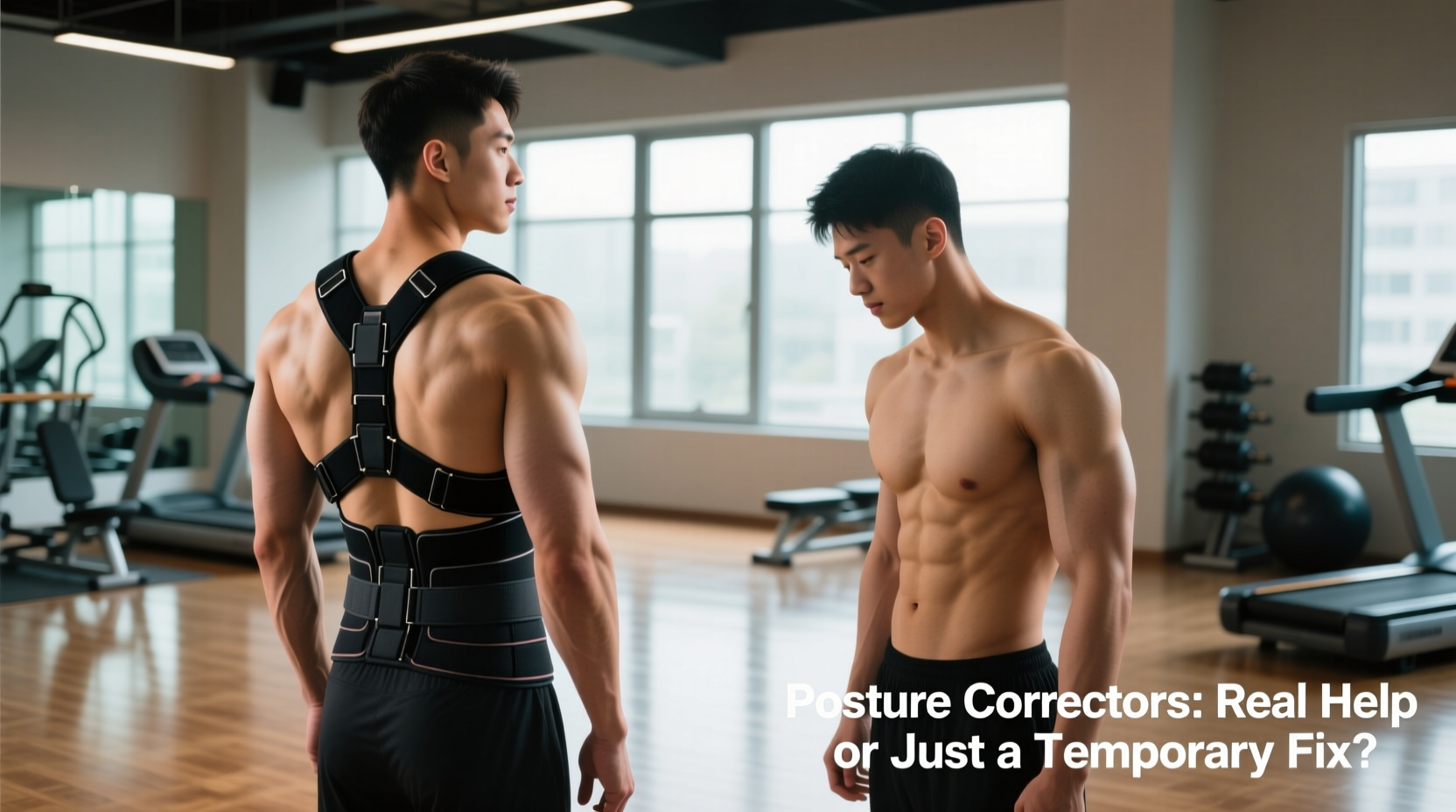
Posture correctors typically function by physically restricting movement in the upper back and shoulders. Most common designs include:
- Brace-style correctors: Worn like a backpack strap, these pull the shoulders backward, forcing an upright position.
- Vest or shirt-based models: Integrated into clothing, often using elastic bands or rigid supports to maintain alignment.
- Smart wearables: Devices that vibrate when slouching is detected, relying on biofeedback rather than physical restriction.
The underlying theory is simple: if you’re constantly reminded—or forced—into proper alignment, your muscles will eventually “learn” the correct posture. This concept draws from neuromuscular re-education, where repeated positioning helps recalibrate muscle memory.
However, this assumes that poor posture stems primarily from habit, not structural or muscular imbalances. In reality, many people slump due to weak core muscles, tight chest muscles, or prolonged sitting that alters spinal curvature over time. A brace may mask these issues but doesn’t resolve them.
The Science Behind Posture Training
Research on posture correctors is limited but growing. A 2018 study published in the Journal of Physical Therapy Science found that participants who wore a posture brace for four weeks showed significant improvement in forward head posture and shoulder alignment. However, the study did not assess whether these changes persisted after discontinuing use.
Another review in Clinical Biomechanics (2020) concluded that while external supports can improve spinal alignment temporarily, they may lead to muscle atrophy if used excessively. The concern is similar to immobilizing a limb: if supporting muscles aren’t actively engaged, they weaken over time.
“Wearing a posture corrector is like using training wheels. They can help you get started, but if you never take them off, you’ll never learn to balance on your own.” — Dr. Lena Patel, Physical Therapist and Spine Specialist
This analogy captures the core dilemma. Short-term use may raise awareness and interrupt harmful habits, but long-term reliance could undermine the very muscles needed for natural postural support.
Benefits vs. Risks: A Balanced View
To evaluate whether posture correctors are worth it, consider both their potential advantages and drawbacks.
| Benefits | Risks & Limitations |
|---|---|
| Immediate postural feedback and correction | Can cause muscle dependency if overused |
| Helps break unconscious slouching habits | Potential skin irritation or restricted breathing |
| Useful as a reminder during long workdays | Does not address root causes like muscle weakness |
| May reduce short-term neck and back discomfort | Improper fit can worsen alignment issues |
| Smart models promote mindfulness through alerts | Limited evidence of long-term effectiveness |
The data suggests that posture correctors are most effective when used as a transitional tool—not a permanent solution. They can serve as a wake-up call, helping users recognize how far they’ve deviated from neutral alignment. But without complementary strategies, the gains are unlikely to last.
Real-World Example: Sarah’s Experience
Sarah, a 34-year-old graphic designer, spent eight hours daily hunched over her laptop. After months of nagging shoulder pain, she bought a popular posture brace online. At first, the results were promising. Her shoulders felt pulled back, and her posture looked dramatically better in photos.
But after two weeks of wearing it for 4–5 hours a day, she noticed new discomfort between her shoulder blades. When she stopped using the brace, her old slouch returned within days. Frustrated, she consulted a physical therapist, who explained that her chest muscles were tight and her upper back muscles were underactive. The brace had masked the imbalance but hadn’t corrected it.
Under professional guidance, Sarah began a targeted exercise program focusing on scapular stabilization, thoracic mobility, and ergonomic adjustments. Six months later, she stands taller naturally—without any device.
Sarah’s story illustrates a common pattern: initial enthusiasm followed by diminishing returns when the root cause is ignored.
When Posture Correctors Can Be Helpful
Used strategically, posture correctors aren’t inherently bad. They can play a supportive role under specific conditions:
- Short-term retraining: Wearing a brace for 15–30 minutes a day to reinforce proper alignment during exercises or stretches.
- Workplace reminders: Using a smart wearable that vibrates when slouching occurs, promoting mindfulness without restriction.
- Rehabilitation support: Post-injury or post-surgery, under a therapist’s supervision, to prevent compensatory movements.
The key is intentionality. Treating a posture corrector like a fitness tracker for your spine—something that provides data and feedback—makes more sense than treating it like a crutch.
Step-by-Step Guide to Using a Posture Corrector Wisely
- Consult a professional: See a physical therapist or chiropractor to identify the cause of your poor posture.
- Choose the right type: Opt for a low-profile, adjustable model that allows movement and doesn’t restrict breathing.
- Start slow: Wear it for 15–20 minutes per day, gradually increasing only if comfortable.
- Pair with exercise: Use the time wearing the brace to perform posture-enhancing movements like chin tucks or scapular retractions.
- Track progress: Take weekly photos or use a mirror to observe changes in alignment.
- Phase it out: After 4–6 weeks, begin reducing usage while relying more on muscle control.
Better Long-Term Alternatives
If posture correctors are at best a temporary aid, what truly delivers lasting improvement? The answer lies in a holistic approach that addresses lifestyle, movement patterns, and strength.
1. Strengthen Postural Muscles
Muscles like the deep neck flexors, lower trapezius, and serratus anterior are crucial for maintaining upright posture. Exercises such as prone Y-T-W lifts, dead bugs, and rows with resistance bands build endurance in these areas.
2. Improve Thoracic Mobility
Stiffness in the mid-back (thoracic spine) forces the neck and lower back to compensate. Foam rolling, cat-cow stretches, and seated thoracic rotations can restore flexibility.
3. Optimize Your Workspace
Ergonomics matter. Ensure your monitor is at eye level, your chair supports your lumbar curve, and your feet rest flat on the floor. Consider a sit-stand desk to vary positions throughout the day.
4. Practice Mindful Movement
Yoga, Pilates, and tai chi emphasize body awareness and alignment. Even five minutes of daily stretching can reset postural habits.
5. Break Up Sedentary Time
Sitting for prolonged periods disables gluteal muscles and tightens hip flexors, contributing to anterior pelvic tilt. Set a timer to stand and move every 30–60 minutes.
“You don’t need a device to fix your posture. You need consistent movement, strength, and awareness. That’s what builds real, lasting change.” — James Wu, DPT and Movement Specialist
Frequently Asked Questions
Can posture correctors make my posture worse?
Yes, if used incorrectly. Over-reliance can lead to muscle weakening, especially in the mid-back and shoulders. If the device forces your spine into an unnatural position or causes pain, discontinue use immediately.
How long should I wear a posture corrector each day?
Begin with 15–20 minutes once or twice a day. Never exceed 2–3 hours total. Prolonged use increases the risk of dependency and discomfort. Think of it as a training tool, not everyday wear.
Are smart posture devices better than braces?
Often, yes. Devices that use vibration alerts (like smart shirts or clips) promote active correction without restricting movement. They encourage self-correction rather than passive positioning, making them more suitable for long-term behavioral change.
Checklist: Building Sustainable Posture Health
Instead of depending on a gadget, follow this actionable checklist to develop strong, natural posture:
- ✅ Assess your workstation ergonomics monthly
- ✅ Perform 10 minutes of posture-focused exercises daily (e.g., chin tucks, shoulder blade squeezes)
- ✅ Take a standing or walking break every hour
- ✅ Stretch tight muscles (chest, hip flexors, hamstrings) 3–4 times per week
- ✅ Strengthen core and upper back muscles twice weekly
- ✅ Use a posture corrector only as a short-term cue, not a crutch
- ✅ Get a postural screening from a physical therapist if pain persists
Conclusion: Beyond the Brace
Posture correctors aren’t magic solutions, nor are they universally useless. Their value depends entirely on how they’re used. As a brief sensory cue or a tool to jumpstart awareness, they can be helpful. But they cannot replace the foundational work of strengthening, stretching, and moving well.
True posture improvement comes not from strapping yourself into alignment, but from cultivating a body that knows how to hold itself there. That requires patience, consistency, and a willingness to address the deeper causes of slouching—sedentary lifestyles, muscular imbalances, and poor movement habits.
If you choose to try a posture corrector, do so with a clear goal and an exit strategy. Use it to educate your body, then transition to self-supported strength. Your spine didn’t collapse overnight, and it won’t recover overnight either. But with the right approach, lasting improvement is not only possible—it’s inevitable.




 浙公网安备
33010002000092号
浙公网安备
33010002000092号 浙B2-20120091-4
Comments
No comments yet. Why don't you start the discussion?