
For years, holiday lighting meant strings of static bulbs or simple chase patterns that blinked in predictable rhythms. But with the rise of smart home technology, programmable Christmas lights have emerged as a game-changer—offering dynamic color shifts, music synchronization, and fully customizable light sequences. Homeowners now have the tools to turn their front yards into synchronized spectacles rivaling professional displays. Yet, with higher upfront costs and steeper learning curves, many wonder: are programmable Christmas lights actually worth it for creating custom light shows?
The answer depends on your goals, technical comfort, and how much you value personalization during the holidays. For some, the magic of dancing lights synced to Mariah Carey’s “All I Want for Christmas Is You” justifies the investment. For others, traditional sets remain simpler and more cost-effective. This article breaks down the benefits, challenges, and real-world considerations to help you make an informed decision.
What Are Programmable Christmas Lights?
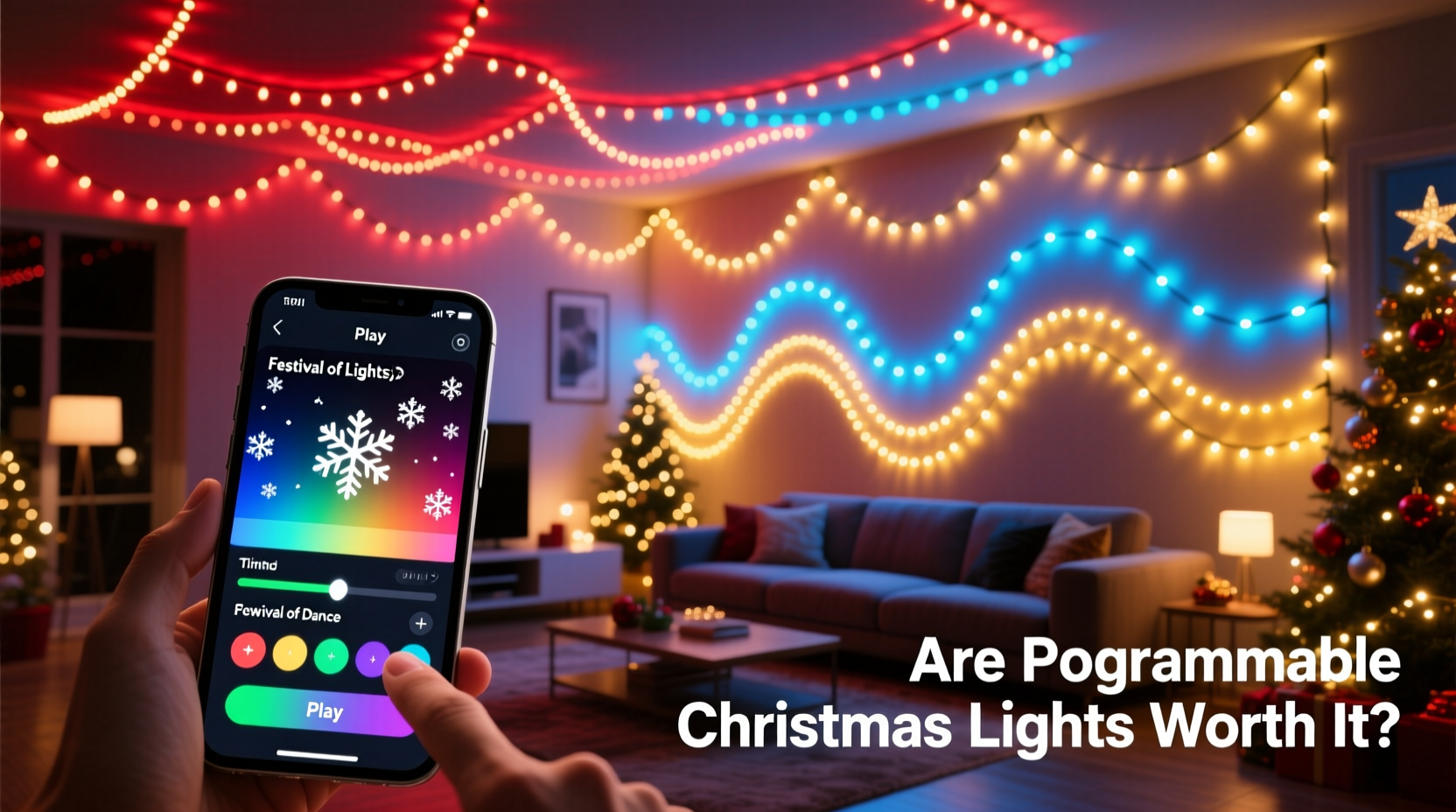
Programmable Christmas lights use addressable LED technology—most commonly WS2811 or WS2812B chips—that allows each bulb or segment to be controlled individually. Unlike conventional string lights where all bulbs change together, these systems let users assign specific colors, brightness levels, and timing effects to each light point. They connect to a controller (often Wi-Fi-enabled) and are managed through software platforms like xLights, Falcon Player, or mobile apps such as Twinkly or Light-O-Rama.
These lights come in various forms: rope lights, icicle strands, mesh nets, and even pixel nodes mounted on frames. Some are designed for plug-and-play ease with app control, while others require advanced configuration for complex outdoor installations.
At their core, programmable lights transform static decoration into interactive art. With them, you can create waves, chases, fades, and even text scrolling across your roofline—all timed precisely to music played through external speakers.
Advantages of Programmable Lights for Custom Shows
The appeal of programmable lights lies in their flexibility and creative potential. Here’s what sets them apart from standard holiday lighting:
- Full Color Control: Choose any color from millions without swapping bulbs. Transition from red to gold in seconds or set unique hues for each window.
- Music Synchronization: Sync lighting effects to holiday playlists using audio-reactive modes or pre-programmed sequences.
- Scheduling & Automation: Set timers to turn displays on at dusk and off at midnight, integrating with smart home ecosystems like Google Home or Alexa.
- Custom Animations: Design intricate patterns—like snowfall simulations or twinkling stars—that evolve throughout the night.
- Remote Management: Adjust brightness, switch themes, or shut down the entire display via smartphone, even when away from home.
For neighborhoods competing in friendly decorating contests or families wanting to surprise trick-or-treaters with animated ghosts, this level of control is transformative. One homeowner in Denver reported receiving over 3,000 visitors during peak weekends after launching a 10-minute synchronized show featuring classic carols and movie soundtracks.
“With programmable lights, we’re not just decorating—we’re storytelling. Each sequence tells a part of our family’s holiday tradition.” — Marcus Reed, DIY Holiday Display Enthusiast
Cost vs. Value: Are They Worth the Investment?
Programmable lights typically cost 3–5 times more than basic LED strings. A single 50-light strand can range from $25 to $60 depending on brand and features. Add controllers, power supplies, extension cables, and mounting hardware, and a full front-yard setup may exceed $500—even before software time is factored in.
But value isn’t solely about price tags. Consider long-term durability, energy efficiency, and reusability. Most high-quality programmable LEDs last 30,000–50,000 hours and consume less power than incandescent alternatives. If reused annually, the per-season cost drops significantly.
To assess worthiness, compare two scenarios:
| Factor | Traditional Lights | Programmable Lights |
|---|---|---|
| Upfront Cost (per 100 lights) | $15–$25 | $50–$120 |
| Lifespan | 1,000–3,000 hours | 30,000–50,000 hours |
| Customization | Low (on/off, blink modes) | High (per-bulb control) |
| Energy Use (Watts/100 lights) | 40W | 12W |
| Setup Complexity | Low | Moderate to High |
| Reusability Across Themes | Limited by fixed color | Full reprogramming possible |
While traditional lights win on simplicity and initial affordability, programmable options offer far greater versatility and longevity. For those planning multi-year use or aiming to build increasingly elaborate displays, the return on investment becomes clearer.
Step-by-Step Guide to Building Your First Custom Light Show
If you're ready to experiment, follow this proven process to avoid common pitfalls and ensure smooth execution:
- Assess Your Space: Walk around your property and sketch which areas you want to illuminate—roofline, trees, walkways, etc. Measure lengths to estimate how many light strands you’ll need.
- Choose Your System: Decide between app-based kits (e.g., Twinkly, Gemstone LED) for simplicity or open-source setups (xLights + E1.31 controllers) for full creative freedom.
- Purchase Components: Buy lights, waterproof connectors, a reliable power supply, and a microcontroller if needed. Don’t skimp on surge protectors.
- Install Safely: Mount lights securely using clips—not nails or staples. Keep connections elevated off the ground and test all sections before finalizing placement.
- Map and Test: Use your software to identify each light's position in the sequence. Run basic tests to confirm communication between controller and pixels.
- Create Sequences: Start with simple animations (color wipes, pulses). Gradually add music-synced segments using waveform analysis tools in xLights or built-in beat detection.
- Rehearse and Refine: Play your show at different times of day. Adjust brightness for nighttime visibility and neighbor sensitivity.
- Go Live: Share your schedule locally or promote online. Include QR codes linking to your playlist so visitors can listen along.
Real Example: From Simple Strings to Neighborhood Attraction
When Sarah Kim moved into her suburban home in Portland, she wanted to celebrate Christmas in a memorable way. Her first year, she hung three strands of multicolor lights around the windows—nothing unusual. The second year, she invested $300 in a starter kit of programmable RGB lights and a Wi-Fi controller.
Using a free version of xLights, she spent weekends learning how to map her roofline and program a 90-second sequence synced to “Sleigh Ride.” She added motion effects that mimicked reindeer running across the eaves and snowflakes drifting down the gutters.
By December 15th, word had spread. Families parked nearby just to watch the show. Local news featured her display in a “Best Lights in the City” segment. Inspired, Sarah expanded the next year—adding speaker pods, animated figures, and a full 8-minute show rotating every half hour.
Now in her fourth season, she estimates she’s spent about $900 total but receives donations through a tip jar that helps cover electricity and future upgrades. More importantly, neighbors say her display has become a community tradition.
Sarah’s journey illustrates how programmable lights can evolve from novelty to meaningful impact—with relatively modest investment and growing confidence.
Common Challenges and How to Overcome Them
Despite their advantages, programmable lights aren’t without hurdles. Awareness and preparation can prevent frustration.
- Technical Learning Curve: Software like xLights lacks intuitive interfaces. Solution: Watch YouTube tutorials, join Facebook groups like “Holiday Lighting Community,” and practice on small indoor layouts first.
- Wi-Fi Interference: Outdoor signals weaken. Use Ethernet-over-Coax adapters or place access points strategically.
- Power Issues: Voltage drop causes dimming at the end of long runs. Use thicker gauge wires or inject power mid-string.
- Weather Vulnerability: Moisture damages connections. Seal splices with silicone gel caps and use drip loops during installation.
- Neighbor Concerns: Bright or loud displays may disturb others. Offer viewing hours, reduce volume, and maintain respectful brightness levels.
Many experienced users emphasize patience. “It took me three tries to get my tree animation right,” said James Lin, a hobbyist in Ohio. “But once it worked, it felt like magic.”
Checklist: Is a Programmable Light Show Right for You?
Answer these questions honestly before investing:
- ☐ Do I enjoy tinkering with tech and solving problems?
- ☐ Am I willing to spend 10+ hours setting up and programming?
- ☐ Do I plan to reuse the display for multiple seasons?
- ☐ Is there space for safe electrical connections and equipment storage?
- ☐ Will my display respect neighbors’ peace and privacy?
- ☐ Am I excited about designing animations, not just installing lights?
If most answers are “yes,” programmable lights are likely a worthwhile pursuit. If not, consider renting a pre-built smart light kit for one season to test interest.
Frequently Asked Questions
Can I mix programmable lights with regular Christmas lights?
Yes, but they won’t sync unless connected to the same control system. Mixing types works best for background illumination while programmable strips handle focal effects.
Do I need internet for programmable lights to work?
Not always. Some systems operate via local network or direct Bluetooth. However, remote access and cloud features require stable Wi-Fi.
How long does it take to create a custom light show?
A basic 2-minute sequence takes 3–6 hours for beginners. Complex, music-synchronized shows with multiple zones can take 15–30 hours, especially with trial runs and adjustments.
Final Verdict: Are They Worth It?
Programmable Christmas lights are worth it—if you value creativity, personal expression, and long-term enjoyment over convenience and low cost. They’re not ideal for someone who wants to hang lights once and forget them. But for those drawn to craftsmanship, technology, and sharing joy through spectacle, they offer unmatched possibilities.
The initial effort pays dividends in repeated delight. Once programmed, shows can be saved and replayed annually with minimal upkeep. New software updates continue to simplify design, making entry easier each year.
More than just lights, they represent a shift in how we celebrate: not just illuminating homes, but connecting communities, sparking wonder, and turning seasonal traditions into shared experiences.




 浙公网安备
33010002000092号
浙公网安备
33010002000092号 浙B2-20120091-4
Comments
No comments yet. Why don't you start the discussion?