
The holiday season brings with it the timeless tradition of decorating homes with twinkling lights. For decades, families have spent hours draping strands of bulbs across eaves, wrapping trees, and outlining windows. But in recent years, a new contender has entered the scene: projection Christmas lights. These compact devices cast vibrant light patterns onto walls and surfaces, eliminating the need for ladders, extension cords, and tangled wires. As convenient as they sound, many homeowners wonder—do projection lights truly measure up to traditional string lights? The answer depends on your priorities, property, and expectations.
How Projection Lights Work vs. Traditional Strings
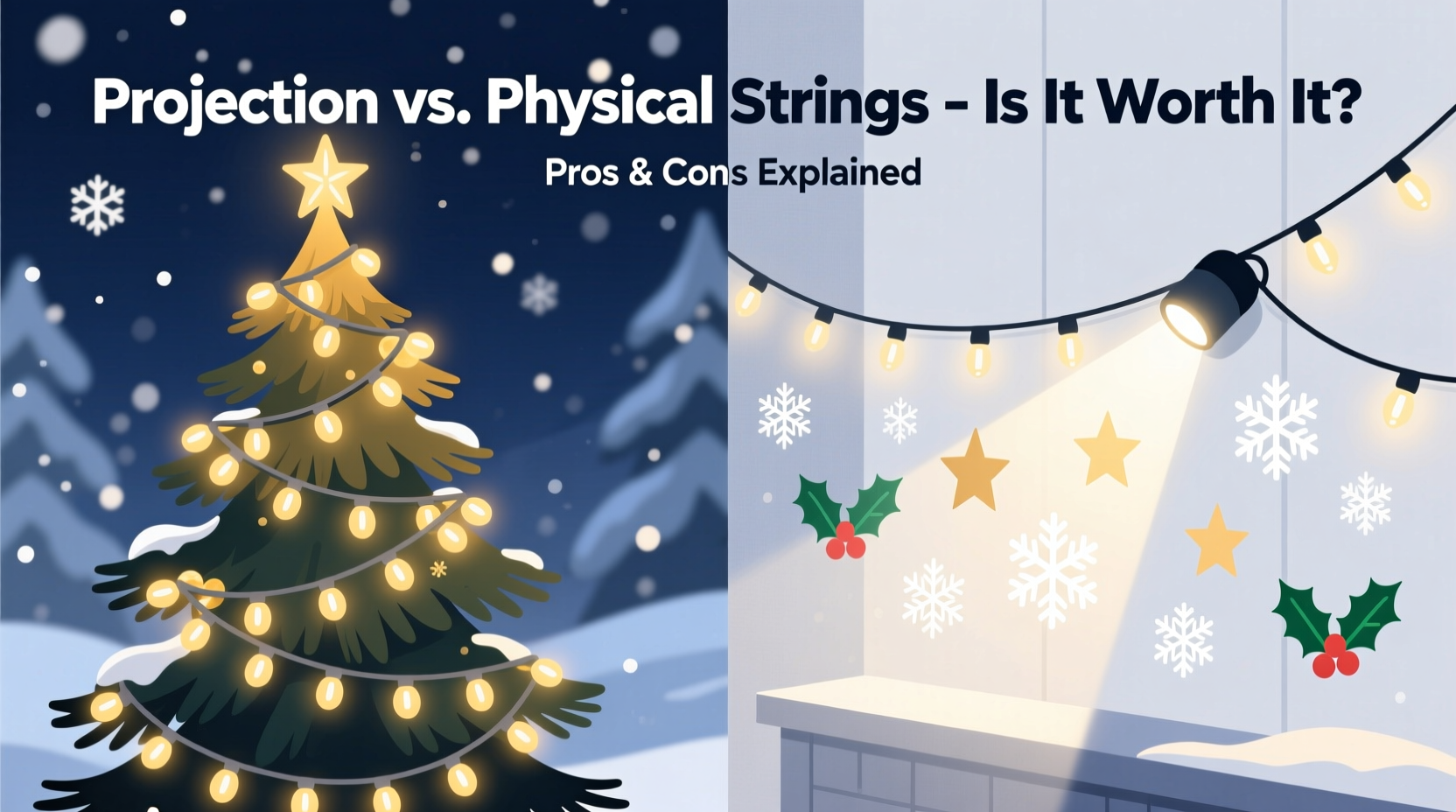
Traditional Christmas lights are exactly what most people picture: strings of LED or incandescent bulbs connected by insulated wire. They’re manually installed on gutters, fences, trees, and railings. Installation requires planning, tools (like clips and staples), and often a helper. Once up, they emit localized illumination from each bulb, creating a three-dimensional sparkle effect that changes with movement and viewing angle.
Projection lights, on the other hand, use high-lumen LEDs and lens-based optics to project pre-designed patterns—such as snowflakes, stars, or classic multicolored dots—onto flat surfaces like house exteriors, sidewalks, or garage doors. A single unit can cover hundreds of square feet with minimal setup. Most plug into standard outlets and feature automatic timers, remote controls, and multiple pattern options.
The core difference lies in dimensionality. String lights exist physically in space; you can touch them, walk under them, and see depth in their arrangement. Projection lights are two-dimensional illusions—impressive from afar but lacking texture up close. This distinction shapes everything from installation to ambiance.
Installation and Maintenance Comparison
One of the biggest selling points of projection lights is ease of setup. While traditional lights can take several hours—or even days—for larger homes, a projector typically takes under 15 minutes to position and power on. There’s no climbing, no untangling, and no risk of damaging siding with clips or nails.
However, placement matters. Projectors must be positioned at the correct distance and angle to avoid skewed or stretched images. Uneven ground or obstructed sightlines (like bushes or parked cars) can ruin the effect. Some models include adjustable stands or tripod mounts, but not all do.
Maintenance is also simpler with projections. No burned-out bulbs to replace, no broken wires from weather or animals. Just wipe the lens occasionally and store the unit properly after the season. In contrast, traditional lights require post-season inspection, rewinding, and storage in organized containers to prevent next-year tangles.
“Projection lighting reduces labor costs and safety risks significantly, especially for commercial displays.” — Marcus Lin, Holiday Lighting Designer & Contractor
Cost Analysis Over Time
At first glance, projection lights seem more affordable. A quality outdoor projector ranges from $30 to $80 and covers a large area. Compare that to string lights, where 100-bulb strands average $10–$25 each, and most homes need 10–30 strands for full coverage—that’s $100 to $750 just for lights, not including timers, controllers, or replacement parts.
But longevity tells a different story. Well-maintained LED string lights can last 5–10 years or more. Many come with warranties and modular designs—replace one section, not the whole strand. Projections, while durable, rely on sensitive internal components: lenses, motors (for rotating effects), and circuit boards. If the projector fails after two seasons, you’ve lost both function and investment.
Consider this comparison for a typical two-story home:
| Lighting Type | Initial Cost | Lifespan | Replacement Frequency | Total 5-Year Cost |
|---|---|---|---|---|
| Projection Lights (2 units) | $120 | 2–3 years | Every 2–3 years | $240–$360 |
| LED String Lights (20 strands) | $300 | 8+ years | Minimal (bulbs/sections) | $320 (includes replacements) |
| Mixed Approach (10 strings + 1 projector) | $200 | Mixed | Occasional | $230 |
While projections may require more frequent replacement, combining both methods offers flexibility and cost efficiency. Use projections for large wall areas and string lights for architectural details like rooflines and porches.
Visual Impact and Real-World Performance
No amount of convenience matters if the result doesn’t impress. Here, personal taste plays a major role. Projection lights excel at creating bold, uniform displays. Their patterns are bright, consistent, and eye-catching from the street. Snowflake projections swirling across a white stucco wall can evoke a winter wonderland feel with minimal effort.
Yet, they lack the warmth and craftsmanship associated with real lights. Neighbors walking past might notice the flatness or repetitive motion. Up close, the “lights” disappear—they’re not actual glowing points but illuminated spots. This illusion breaks down when viewed from sharp angles or behind obstacles.
String lights, by contrast, offer depth and realism. They shimmer differently in wind, reflect off wet surfaces, and interact naturally with the environment. When combined with icicle lights or net lights on bushes, they create layered, immersive effects that projections can’t replicate.
A real-world example illustrates this well: In suburban Denver, homeowner Lisa Tran switched to projection lights after injuring her shoulder hanging strings. She used two green laser-style projectors to cast tree-shaped patterns on her front facade. “The neighbors loved it at first,” she said. “Kids pointed, people slowed down. But by year two, some commented it felt ‘cheap’ or ‘like a rental.’ I didn’t realize how much people valued the real thing until they noticed it was missing.” She now uses a hybrid approach—projectors for the upper walls and mini-LED strings along the porch railing.
Environmental and Safety Considerations
Safety is a strong argument in favor of projection lights. According to the U.S. Consumer Product Safety Commission, thousands of people visit emergency rooms each year due to ladder falls during holiday decorating. Eliminating the need to climb reduces this risk dramatically.
Energy efficiency is another factor. Most modern projectors use between 10–25 watts, comparable to a single strand of LED lights. However, because one projector can replace dozens of strands, the net energy savings can be significant. For example, five strands of 50-watt incandescent lights consume 250 watts; one 20-watt projector achieves a similar visual footprint using 92% less power.
On the downside, some projection lights emit blue-rich white light or intense beams that contribute to light pollution. Neighbors may complain about patterns shining into bedrooms or across property lines. Always aim the projector downward and away from windows. Look for models with manual direction control and motion sensors to limit unnecessary operation.
Step-by-Step: Choosing the Right Option for Your Home
Deciding between projection and string lights doesn’t have to be all-or-nothing. Follow this process to determine the best mix for your needs:
- Evaluate your home’s architecture. Do you have large, flat walls? Projections will work well. Lots of eaves, columns, or trees? Strings add dimension.
- Assess physical ability and tools. Can you safely use a ladder? If not, projections offer a viable alternative.
- Determine your budget. Factor in both initial cost and expected lifespan. Are you willing to replace projectors every few years?
- Check local regulations. Some neighborhoods or HOAs restrict light brightness, color, or projection use. Verify before purchasing.
- Test one projector first. Rent or buy a single unit to assess performance at night before committing to a full setup.
- Consider combining both. Use projections for background effects and strings for focal points like entryways or trees.
FAQ
Can projection lights work in snowy climates?
Yes, but with caveats. Most outdoor-rated projectors are weather-resistant, but heavy snow accumulation can block the lens or shift alignment. Clear snow carefully and reposition if needed. Avoid placing them under eaves where snow slides down.
Do projection lights use less electricity than string lights?
Per unit, yes. A single projector uses less power than multiple strands. However, if you run several projectors or pair them with strings, total usage may be similar. Overall, projections are more efficient for large-area coverage.
Can I leave projection lights outside all winter?
Most manufacturers recommend bringing them indoors during storms or extreme cold. While they’re built for outdoor use, prolonged exposure to moisture and freezing temperatures can damage internal electronics. Store them in a dry place when not in use for extended periods.
Checklist: Before You Buy Projection Lights
- ✅ Measure the distance from outlet to projection surface
- ✅ Confirm wall color and texture (light and smooth works best)
- ✅ Check beam angle and coverage area in product specs
- ✅ Look for timer, remote, and adjustable stand features
- ✅ Read reviews for durability and weather resistance
- ✅ Ensure the cord length reaches an outdoor outlet safely
- ✅ Test at night before final placement
Final Verdict: Are They Worth It?
Projection Christmas lights are absolutely worth considering—but not necessarily as a complete replacement for traditional strings. They shine brightest (literally) when used strategically: for renters, those with mobility limitations, or homeowners seeking quick, large-scale effects. They’re ideal for adding festive flair without permanent modifications or physical strain.
However, they don’t replicate the charm, depth, or tactile presence of real lights. For many, the holidays are about tradition, craftsmanship, and attention to detail—qualities that physical strings embody. The most satisfying displays often blend both technologies, leveraging the strengths of each.
Rather than choosing one over the other, think in terms of complementarity. Use projection lights to enhance hard-to-reach areas or create dynamic backdrops. Reserve string lights for personal touches—around the front door, along the deck, or in the backyard tree. This hybrid strategy maximizes visual impact while minimizing effort and cost.
“The future of holiday lighting isn’t strings versus projections—it’s smart integration of both.” — Dana Reeves, Smart Home & Outdoor Living Editor, *HomeTech Weekly*
Conclusion
Whether projection Christmas lights are worth using instead of physical strings depends on your goals. If convenience, safety, and speed are top priorities, projections offer a compelling solution. If authenticity, depth, and long-term value matter more, traditional lights remain unmatched. The wisest approach may be balance: adopt projections where they make sense, preserve strings where they matter, and enjoy a holiday display that’s both beautiful and manageable.




 浙公网安备
33010002000092号
浙公网安备
33010002000092号 浙B2-20120091-4
Comments
No comments yet. Why don't you start the discussion?