
For renters, holiday decorating comes with unique challenges. You want to create a festive atmosphere without risking damage to your rental unit or losing your security deposit. Traditional string lights have long been the go-to choice for seasonal cheer, but projector Christmas lights are gaining popularity as a convenient alternative. But which option truly serves renters best? The answer depends on several factors: installation effort, potential property damage, aesthetic quality, flexibility, and overall value.
This guide dives deep into the pros and cons of both projector and string lights from a renter’s perspective. Whether you're in an apartment, townhouse, or leased home, understanding these differences can help you celebrate responsibly — without compromising your living agreement or peace of mind.
Installation and Setup: Effort vs. Impact
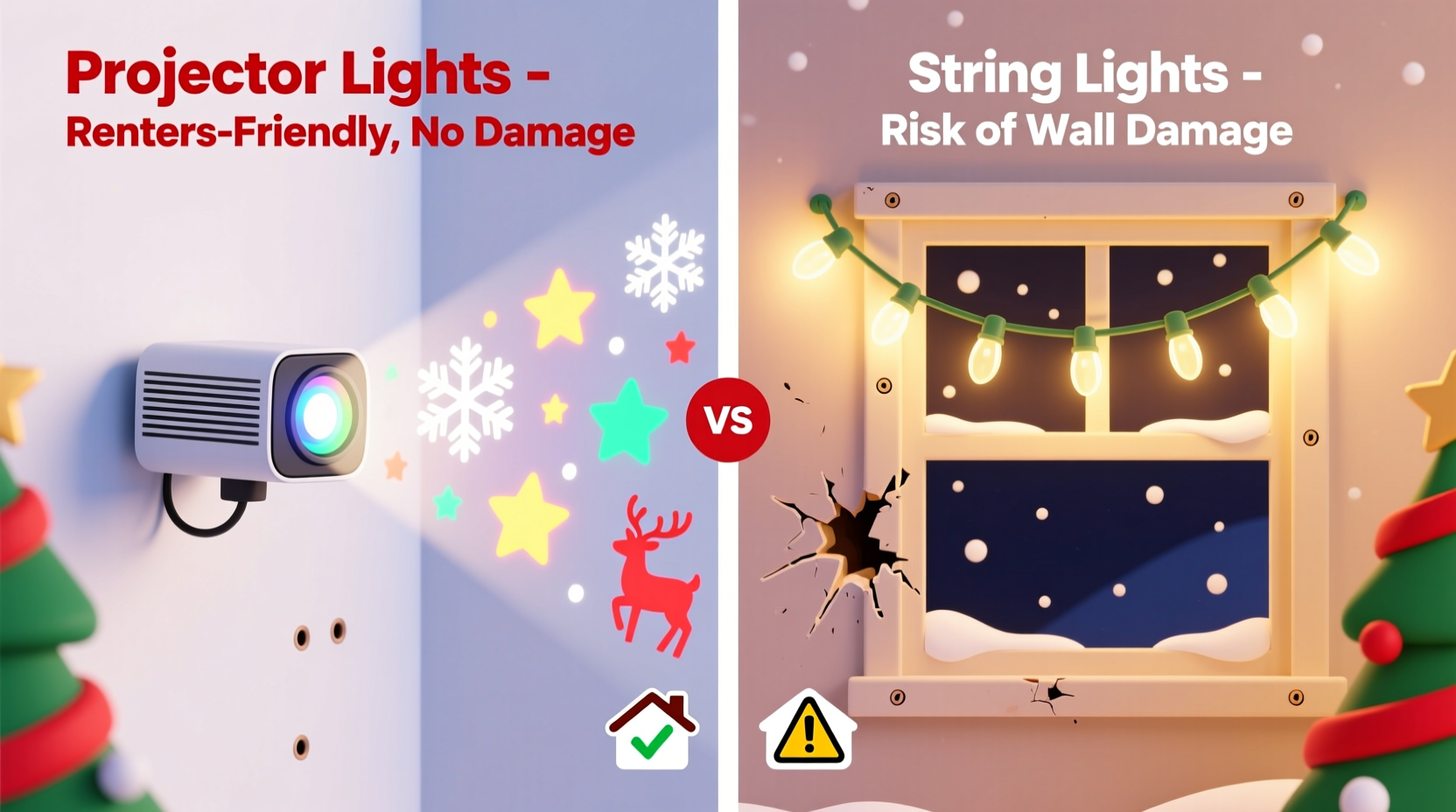
One of the most significant considerations for renters is how much work goes into setting up decorations — and how easy it is to remove them later. String lights typically require hooks, tape, nails, or clips to secure them along windows, railings, or walls. Even adhesive solutions can leave residue or pull paint, especially if removed months later.
In contrast, projector lights need only a flat surface and a power outlet. Place the device on a porch step, window ledge, or indoor shelf, point it toward the desired surface, and switch it on. There's no climbing on ladders, no drilling, and no risk of peeling wallpaper or chipped trim.
The simplicity of setup makes projectors ideal for last-minute decorators or those with limited storage space. No tangled wires, no missing extension cords — just plug and play. However, placement matters. Projector effectiveness drops significantly on uneven or highly textured surfaces like stucco or rough stone. For smooth walls, glass, or light-colored siding, they deliver impressive results.
Durability and Maintenance Over Time
String lights, while charming, demand ongoing maintenance. Bulbs burn out, wires fray, and connections loosen over time. Renters who move frequently may find themselves replacing strands every few years due to damage during packing or exposure to weather. Outdoor-rated strings help, but even then, moisture and temperature swings shorten lifespan.
Projector lights, being solid-state units with LED sources and no fragile bulbs, tend to be more durable. With fewer moving parts and no exposed wiring, they’re less prone to physical damage during transport or storage. Most models are also designed for outdoor use with weather-resistant casings.
That said, projector lenses can collect dust or become foggy over time, reducing clarity. A quick wipe with a microfiber cloth usually solves this, but neglect can lead to dim or blurry projections. Unlike string lights, where one dead bulb doesn’t ruin the whole display (unless wired in series), a failing projector means no lights at all until repaired or replaced.
“Rental-friendly decor should prioritize non-invasive installation and minimal wear on property. Projector lighting meets both criteria when used correctly.” — Jordan Lee, Interior Designer & Renter Advocate
Comparison Table: Projector Lights vs. String Lights for Renters
| Feature | Projector Lights | String Lights |
|---|---|---|
| Installation Difficulty | Low – place and aim | Medium to High – requires fasteners |
| Risk of Property Damage | Very Low | Moderate to High (nails, adhesives) |
| Portability | High – compact and lightweight | Medium – bulkier, tangles easily |
| Coverage Area | Up to 700 sq ft per unit | Limited by length; multiple strands needed |
| Aesthetic Flexibility | Fixed patterns (e.g., snowflakes, stars) | Customizable layout and spacing |
| Long-Term Cost | Higher upfront ($30–$60), lower replacement rate | Lower upfront ($10–$20), frequent replacements |
| Energy Efficiency | High – uses LED, low wattage | Moderate – varies by type |
Real-World Example: A Renter’s Holiday Dilemma
Sophia lives in a second-floor apartment in Denver with strict leasing rules against exterior modifications. Her lease prohibits nails, screws, and permanent fixtures. She loves holiday decor but has accidentally damaged window frames twice using adhesive hooks that pulled off paint.
Last year, she tried a pair of dual-beam Christmas light projectors. She placed one on her balcony railing pointing at the building’s beige stucco wall and another indoors projecting through the front window onto the sidewalk-facing facade. Within minutes, her building’s exterior sparkled with animated snowflakes and twinkling dots.
Her neighbors complimented the display, her landlord noticed nothing amiss during inspections, and when January arrived, Sophia packed the projectors into a small box. No cleanup, no patching, no stress. This year, she plans to add a color-changing model for variety — all without violating her lease.
Sophia’s experience highlights how projector lights solve core renter concerns: zero surface contact, instant setup, and full compliance with rental agreements.
Step-by-Step Guide: Choosing the Right Option for Your Rental
- Evaluate Your Space: Is your exterior smooth and light-colored? Projectors work best on such surfaces. Dark brick or heavy texture reduces visibility.
- Review Lease Terms: Check clauses about exterior modifications. If hooks or fasteners are prohibited, projectors are a safer legal choice.
- Assess Power Access: Do you have an outdoor outlet or a nearby indoor one with a safe cord path? Both options need reliable power, but projectors often require less extension cabling.
- Determine Desired Effect: Want precise control over light placement? Choose string lights. Prefer broad, magical coverage with minimal effort? Go with projectors.
- Budget for Longevity: While projectors cost more upfront, consider total ownership cost. Replacing two sets of string lights every three years may exceed the price of a durable projector.
- Test Before Committing: Try renting or borrowing both types for one season. See which fits your lifestyle, storage capacity, and aesthetic goals.
Common Misconceptions About Projector Lights
Despite their advantages, projector lights face skepticism. Some believe they look “cheap” or “like a laser show,” but modern models have evolved. Many now include diffused optics, warm color temperatures, and realistic flicker effects that mimic traditional incandescent glows.
Another myth is that they don’t work in cold weather. Most are rated for temperatures as low as -4°F (-20°C), making them suitable for snowy climates. The real limitation is projection distance: too far, and the image becomes faint. Optimal range is 15–25 feet from the target surface.
Lastly, some assume projectors lack charm. Yet when combined with indoor string lights or wreaths, they enhance ambiance rather than replace warmth. Think of them as a dynamic backdrop, not a total substitute.
FAQ: Answering Key Renter Questions
Can I use projector lights indoors?
Absolutely. Projector lights work well indoors, especially in apartments with large blank walls or ceilings. Point one at the ceiling for a starry-night effect in a bedroom or living room. Just avoid aiming directly at mirrors or glossy surfaces to prevent glare.
Do string lights void my security deposit?
Not automatically — but improper removal might. Using nails or strong adhesives that damage paint or trim can result in deductions. Always use removable mounting solutions (like putty or command strips) and document wall condition before and after installation.
Are projector lights bright enough for dark neighborhoods?
Yes, especially newer models with 360° rotation and multi-lens arrays. Look for units with at least 1,500 lumens and adjustable focus. In very dark areas, combining a projector with a few subtle string lights (on non-damaging mounts) creates layered depth.
Final Checklist: Renters’ Holiday Lighting Decision Tool
- ☐ Confirmed no prohibition on outdoor lighting in lease
- ☐ Verified exterior wall color and texture suitability for projection
- ☐ Identified safe power source (indoor or GFCI outdoor outlet)
- ☐ Compared projector beam patterns vs. preferred string light styles
- ☐ Measured distance from projector location to target surface
- ☐ Planned storage solution post-holiday
- ☐ Set reminder to remove or turn off lights by January 15
Conclusion: Making a Smart, Stress-Free Choice
For most renters, projector Christmas lights offer a smarter, safer, and more flexible alternative to traditional string lights. They eliminate the risk of property damage, reduce setup time, and provide expansive visual impact with minimal effort. While they may lack the hands-on charm of draping lights across a banister, their convenience and lease-friendly nature make them a compelling upgrade.
That said, the best approach might be hybrid: use projectors for exterior displays and reserve string lights for indoor, non-permanent applications like mantles, shelves, or potted trees. This way, you enjoy the magic of both worlds — tradition and innovation — without jeopardizing your rental relationship.




 浙公网安备
33010002000092号
浙公网安备
33010002000092号 浙B2-20120091-4
Comments
No comments yet. Why don't you start the discussion?