
Walk into any home goods store, and you’ll find two dominant players in the room fragrance game: reed diffusers and plug-in air fresheners. One sits elegantly on a shelf, its slender sticks radiating subtle aroma from a glass bottle. The other clicks unobtrusively into an outlet, releasing bursts of synthetic scent at regular intervals. At first glance, they serve the same purpose—making a space smell pleasant. But are reed diffusers merely a more stylish alternative to plug-ins, or is there a meaningful distinction beneath the surface?
The answer isn’t as simple as appearance versus function. While both products aim to improve indoor air quality through fragrance, their mechanisms, ingredients, longevity, and environmental impact diverge significantly. Understanding these differences helps consumers make informed choices based not just on aesthetics, but on health, sustainability, and sensory experience.
How They Work: Mechanism Matters
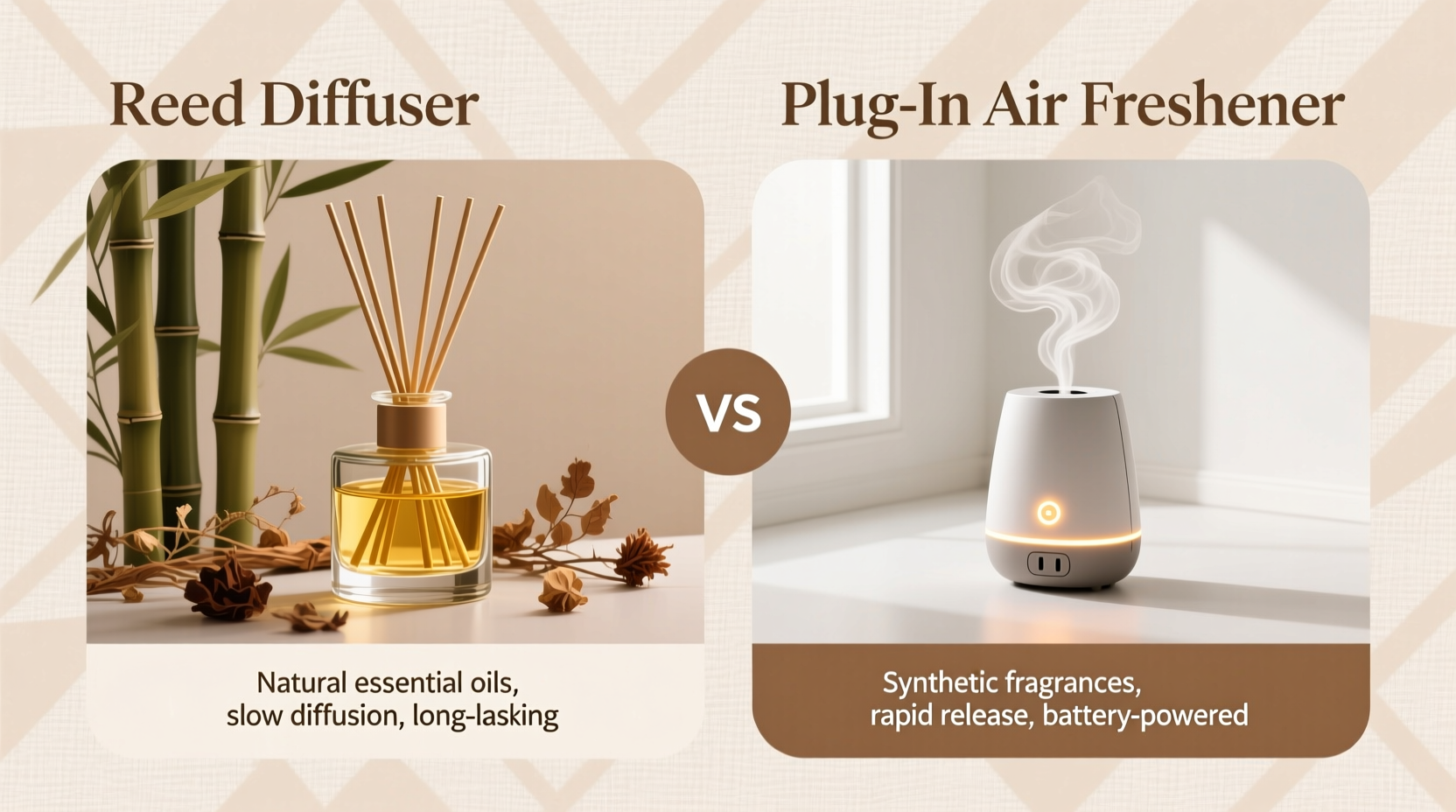
At the core of the distinction lies how each device disperses scent into the air.
Reed diffusers operate through passive diffusion. A blend of scented oil—typically composed of essential oils or fragrance oils diluted in a carrier—is poured into a vessel. Thin reeds, often made of rattan, are inserted into the liquid. Through capillary action, the oil travels up the reeds and evaporates into the surrounding air. This process is continuous but gentle, producing a consistent, low-level fragrance that doesn’t overwhelm.
In contrast, plug-in air fresheners rely on active dispersion. Most use heat or ultrasonic misting to vaporize fragrance oil stored in a replaceable cartridge. Some models release bursts at set intervals. This method delivers a stronger, more immediate scent but often results in olfactory fatigue—where the nose becomes desensitized after prolonged exposure.
Composition and Ingredients: Natural vs. Synthetic
The contents inside each product reveal another layer of difference. Reed diffusers, especially high-end ones, frequently use essential oils or premium fragrance oils suspended in a non-toxic base like dipropylene glycol (DPG) or mineral oil. Many artisan brands emphasize clean formulations, avoiding parabens, phthalates, and formaldehyde.
Plug-in air fresheners, particularly mass-market versions, tend to contain higher concentrations of synthetic compounds. These include volatile organic compounds (VOCs) such as limonene and pinene, which can react with indoor ozone to form secondary pollutants like formaldehyde—a known respiratory irritant. A 2022 study by the Environmental Working Group found that some plug-ins emit over 20 different VOCs per use, raising concerns about long-term indoor air quality.
“Fragrance delivery shouldn’t come at the cost of air purity. Passive systems like reed diffusers generally introduce fewer airborne contaminants than heated electric units.” — Dr. Lena Torres, Indoor Air Quality Researcher, Berkeley School of Public Health
Performance Comparison: Scent Strength and Longevity
When evaluating performance, several factors matter: scent throw, duration, and consistency.
| Feature | Reed Diffuser | Plug-In Air Freshener |
|---|---|---|
| Scent Intensity | Subtle to moderate | Strong, immediate |
| Lifespan | 4–12 weeks (depending on oil volume) | 30–60 days per refill |
| Maintenance | Flip reeds occasionally | Replace cartridges monthly |
| Room Coverage | Best for small to medium rooms | Covers larger areas effectively |
| Energy Use | None | Requires electricity |
Reed diffusers excel in creating a background ambiance rather than overpowering a space. Their scent evolves slowly, offering top, middle, and base notes similar to fine perfumery. Plug-ins, while effective at masking odors quickly, often lack nuance and can become cloying over time.
A Real-Life Scenario: Two Homes, Two Choices
Consider Sarah and James, both living in 800-square-foot apartments in the same urban building.
Sarah prefers reed diffusers. She places a sandalwood and bergamot blend in her living room and a eucalyptus-lavender mix in the bathroom. Guests often comment on the “calming atmosphere” without pinpointing a source. After eight weeks, she replaces the oil. No electrical consumption, no plastic waste beyond the glass bottle.
James uses plug-ins. He installs one in the kitchen to combat cooking smells and another in the hallway. Within days, neighbors notice a strong citrus blast when passing his door. By week three, he stops noticing the scent—classic olfactory fatigue. He swaps cartridges every month, discarding plastic casings and electronic components.
Both achieve fragrance, but Sarah’s approach supports well-being and sustainability; James’s prioritizes convenience and intensity.
Environmental and Safety Considerations
Beyond personal preference, environmental impact plays a growing role in consumer decisions.
- Waste Generation: Plug-in cartridges are typically non-recyclable due to mixed materials (plastic, metal, residual chemicals). Reed diffuser bottles, if made of glass, are reusable or recyclable.
- Energy Consumption: Plug-ins run continuously, drawing small but cumulative amounts of electricity. Reed diffusers require zero energy.
- Pet and Child Safety: Reed diffusers pose minimal risk if placed out of reach. However, ingestion of oil is dangerous. Plug-ins eliminate liquid exposure but may emit compounds linked to asthma exacerbation in sensitive individuals.
Choosing What’s Right: A Practical Checklist
Not all homes or lifestyles suit one solution. Use this checklist to guide your decision:
- ✅ Do you prioritize natural ingredients and cleaner air? → Lean toward reed diffusers.
- ✅ Are you sensitive to strong scents or suffer from allergies? → Choose reed diffusers for milder dispersion.
- ✅ Do you need fast odor elimination in kitchens or bathrooms? → Plug-ins may offer quicker results.
- ✅ Is energy efficiency important to you? → Reed diffusers win—no electricity used. <5>✅ Do you value aesthetic appeal and decor integration? → Reed diffusers double as decorative objects.
- ✅ Are you looking for low-maintenance solutions? → Plug-ins auto-dispense; reed diffusers require occasional flipping.
Frequently Asked Questions
Can I reuse reed diffuser sticks with a new oil?
No. Once reeds have absorbed a fragrance, they retain residual scent and can contaminate new blends. Always use fresh reeds when changing fragrances.
Are plug-in air fresheners bad for pets?
Some plug-ins release VOCs and essential oil vapors that can irritate birds, cats, and small mammals. Birds, in particular, have sensitive respiratory systems. Veterinarians often recommend avoiding plug-ins in homes with exotic pets.
Why do some reed diffusers stop smelling after a few weeks?
This usually happens when dust clogs the reeds or when the oil level drops too low. Flip the reeds regularly and ensure the bottle remains upright to maintain airflow.
Final Thoughts: More Than Just Packaging
Reed diffusers are not simply \"fancy\" plug-ins—they represent a fundamentally different philosophy of scenting a space. Where plug-ins focus on coverage and convenience, reed diffusers emphasize subtlety, craftsmanship, and environmental mindfulness. The choice between them isn’t about superiority, but alignment: what kind of atmosphere do you want to create, and at what cost?
If your goal is a luxurious, long-lasting ambiance with minimal ecological footprint, reed diffusers offer a compelling advantage. If you need powerful, automated odor control in high-traffic areas, plug-ins still hold practical value.
Ultimately, understanding how each works, what they’re made of, and how they affect your environment empowers smarter decisions. Fragrance should enhance life—not compromise it.




 浙公网安备
33010002000092号
浙公网安备
33010002000092号 浙B2-20120091-4
Comments
No comments yet. Why don't you start the discussion?