
In an era where high-definition remasters, cloud gaming, and near-perfect emulation dominate digital conversations, the question arises: do original retro game consoles still hold value? With emulators offering instant access to thousands of classic titles across multiple systems, many assume that owning aging hardware is unnecessary nostalgia. Yet, despite the convenience and fidelity of software-based solutions, physical retro consoles continue to thrive—both in collector circles and among everyday players. The truth is more nuanced than a simple “yes” or “no.” Relevance depends on context: preservation, authenticity, accessibility, and personal experience all play vital roles.
While emulators provide unmatched flexibility and modern enhancements like save states and upscaling, they cannot fully replicate the tactile and cultural dimensions of playing on original hardware. For some, pressing buttons on a CRT-tuned NES controller matters just as much as the game itself. For others, collecting and maintaining vintage electronics has become a passion bordering on artistry. This article examines why retro consoles remain culturally and technically significant—even when flawless digital alternatives exist.
The Rise and Capabilities of Modern Emulation
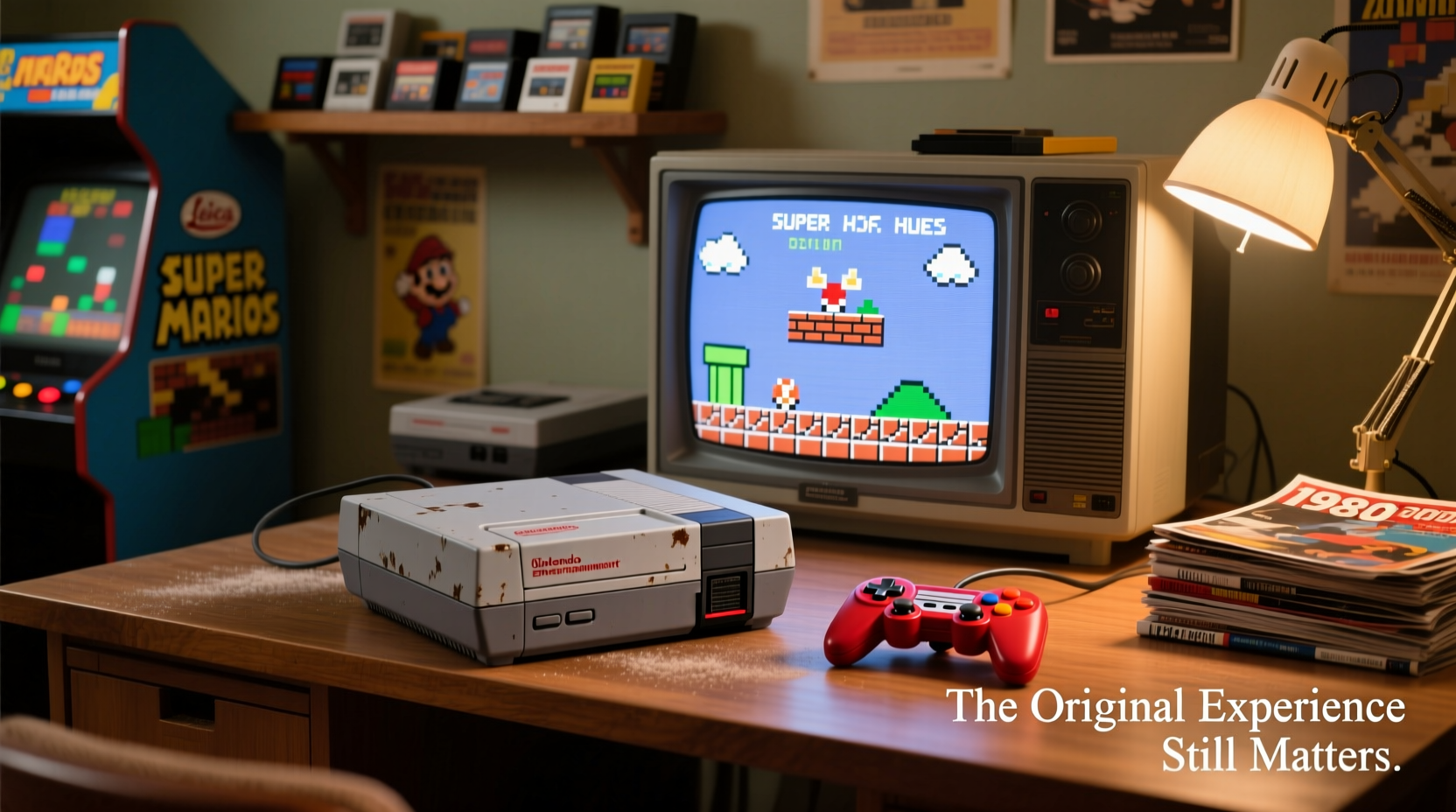
Emulators have evolved dramatically since their early days of glitchy sprites and audio skips. Today’s tools like RetroArch, DuckStation (for PlayStation), and Mesen (for NES) deliver near-exact reproductions of original console behavior. Many even surpass the originals with features such as 4K output, rewind functionality, and netplay for multiplayer over the internet.
Modern emulators run on smartphones, PCs, Raspberry Pis, and dedicated handhelds like the Anbernic RG series or Analogue Pocket. They allow users to build vast libraries from legally obtained ROMs or backed-up cartridges—though legality remains a gray area unless ownership of original media can be proven.
From a technical standpoint, well-coded emulators often outperform original hardware. Input lag is minimized, screen tearing eliminated, and compatibility rates exceed 95% for most major systems. Some emulators go further by incorporating AI-powered upscaling, restoring pixelated graphics into crisp visuals suitable for modern displays.
Cultural and Historical Preservation Through Hardware
Preservation is one of the strongest arguments for keeping retro consoles alive. While emulators preserve gameplay, they don’t always capture the full ecosystem: how games loaded, how controllers felt, how audio crackled through composite cables plugged into tube TVs. These sensory details are part of gaming history.
Museums like The Strong National Museum of Play and private archivists emphasize the importance of preserving original hardware. As noted below, experts argue that without physical devices, future generations may lose touch with how people actually experienced games in their time.
Moreover, not all games are easily emulated. Titles relying on special chips (like the Super FX chip in *Star Fox*) or anti-piracy protections require complex workarounds. Some rare prototypes or region-exclusive releases never make it into emulator databases due to lack of dumps or legal concerns.
“Emulation captures what a game does, but hardware preserves how it lived.” — Dr. Lila Tran, Digital Archivist at the Video Game History Foundation
Authenticity vs. Convenience: A Player’s Dilemma
For purists, nothing substitutes the authentic experience of booting up a Sega Genesis and hearing the startup jingle through RF interference. There's a certain magic in inserting a cartridge, feeling the click, watching the screen flicker to life, and enduring the brief wait before gameplay begins. That ritual shapes memory and emotional connection.
On the flip side, emulators prioritize usability. Want to pause during a boss fight? Emulators offer save states. Playing on a 65-inch OLED TV? Upscaling makes 8-bit sprites look sharp. Traveling? Load your entire SNES library onto a microSD card.
Yet this convenience comes at a cost. Original hardware enforces limitations—limited saves, no fast-forwarding through cutscenes, no aim-assist—that define the challenge and pacing of classic games. Removing those constraints alters the intended design philosophy.
| Aspect | Retro Console | Emulator |
|---|---|---|
| Input Lag | Varies (often higher on CRTs) | Typically lower with optimized setups |
| Visual Fidelity | Original resolution, scanlines, bloom | Upscaled, filtered, customizable |
| Portability | Limited (bulky systems, power needs) | High (handhelds, phones, laptops) |
| Authenticity | Full hardware/software context | Gameplay accurate, context reduced |
| Maintenance | Requires cleaning, repairs, mods | Nearly zero maintenance |
Community, Collecting, and the Joy of Ownership
Beyond performance, retro consoles foster communities built around restoration, modding, and collecting. Enthusiasts spend hours cleaning cartridge contacts, replacing capacitors, or installing RGB mods to improve picture quality. These activities aren’t just technical—they’re meditative, connecting players to the engineering behind the magic.
Collectors value rarity, condition, and completeness. Finding a sealed copy of *Super Mario Bros.* or a working Virtual Boy becomes a treasure hunt. Online forums like AtariAge and Reddit’s r/retrogaming buzz with discussions about price trends, repair tips, and unboxing videos. This culture thrives independently of emulation.
A mini case study illustrates this well: Sarah Kim, a 32-year-old teacher from Portland, started collecting NES games after inheriting her father’s old console. She initially used emulators to replay childhood favorites but found them emotionally hollow. “It wasn’t until I bought a CRT and played *Zelda* on actual hardware that I remembered how it felt,” she says. “The screen wobble, the sound distortion when explosions happened—it brought back memories I didn’t know I’d forgotten.”
Her journey reflects a broader trend: people using retro hardware not just to play games, but to reconnect with personal histories and generational bonds.
Practical Guide: When to Choose Hardware Over Emulation
Deciding between original consoles and emulators isn’t binary. Each serves different purposes. Below is a step-by-step framework to help determine the best path based on your goals.
- Define Your Purpose: Are you reliving childhood memories, studying game design, or simply enjoying classic titles casually?
- Evaluate Accessibility Needs: Do you travel often? Need quick load times? Emulators win here.
- Assess Technical Comfort Level: Can you troubleshoot sync issues or install HDMI mods? If not, emulation is simpler.
- Consider Display Setup: Modern TVs struggle with analog signals. Unless you own a CRT or use upscalers, image quality may disappoint.
- Factor in Budget: Complete-in-box systems with manuals and boxes can cost hundreds. Emulation requires minimal investment beyond initial setup.
- Respect Legal Boundaries: Only dump and use ROMs from games you physically own to stay within ethical and legal guidelines.
Checklist: Building a Balanced Retro Experience
- ✅ Identify which games matter most to you emotionally or historically
- ✅ Decide whether authenticity or convenience is your priority
- ✅ Research reliable emulators for target platforms (e.g., PCSX2 for PS2)
- ✅ Test both emulation and hardware if possible (borrow or rent first)
- ✅ Invest in quality accessories: CRTs, SCART cables, or OSSCs for upscaling
- ✅ Back up your owned games legally using verified dumping methods
- ✅ Join retro gaming communities for advice and troubleshooting support
Frequently Asked Questions
Can emulators perfectly replicate original consoles?
No emulator is 100% perfect, though many come extremely close. Differences arise in timing accuracy, audio processing, and peripheral support. High-end projects like MAME and higan strive for cycle-accurate emulation, but even these require immense computing power and aren't practical for daily use.
Is it legal to use emulators?
Yes, emulators themselves are legal software. However, downloading copyrighted ROMs without owning the original game violates copyright law in most countries. Creating backups from your own cartridges or discs falls into a legal gray zone but is widely accepted among collectors.
Why do some people prefer CRTs for retro gaming?
CRT (cathode ray tube) televisions display interlaced video and motion differently than modern LCDs. Games designed for CRTs often appear smoother and more responsive due to natural scanline blending and minimal input lag. Additionally, many retro games used screen flicker as an optimization technique, which looks incorrect on flat panels.
Conclusion: Coexistence, Not Competition
The debate over retro consoles versus emulators misses a fundamental truth: they don’t need to compete. Instead, they complement each other. Emulators democratize access, enabling new audiences to discover classics without hunting down fragile hardware. At the same time, original consoles safeguard the integrity of gaming heritage—the weight of a controller, the glow of a cathode screen, the patience required to beat a level without save states.
Retro consoles remain relevant because relevance isn’t solely about efficiency. It’s about meaning. For educators, historians, collectors, and nostalgic players alike, holding a piece of gaming history offers something code alone cannot simulate: presence. Meanwhile, emulators ensure that presence isn’t lost to obsolescence.
Whether you choose to plug in an old Nintendo or launch a ROM on your phone, what matters most is engagement—with the games, the community, and the evolving story of interactive entertainment. Both paths honor that legacy in their own way.




 浙公网安备
33010002000092号
浙公网安备
33010002000092号 浙B2-20120091-4
Comments
No comments yet. Why don't you start the discussion?