
Mopping floors is a chore few people enjoy. It’s time-consuming, physically taxing, and often done inconsistently due to its tedious nature. As smart home technology advances, robot mops have emerged as a potential solution—promising clean floors with minimal effort. But are they truly effective? And more importantly, do they outperform the traditional mop and bucket approach? The answer depends on your expectations, lifestyle, and flooring needs.
This article examines the practical differences between robot mops and traditional mopping, evaluates their cleaning effectiveness, analyzes long-term value, and offers real-world insights to help you determine whether investing in a robot mop makes sense for your home.
Cleaning Performance: How Well Do They Actually Clean?
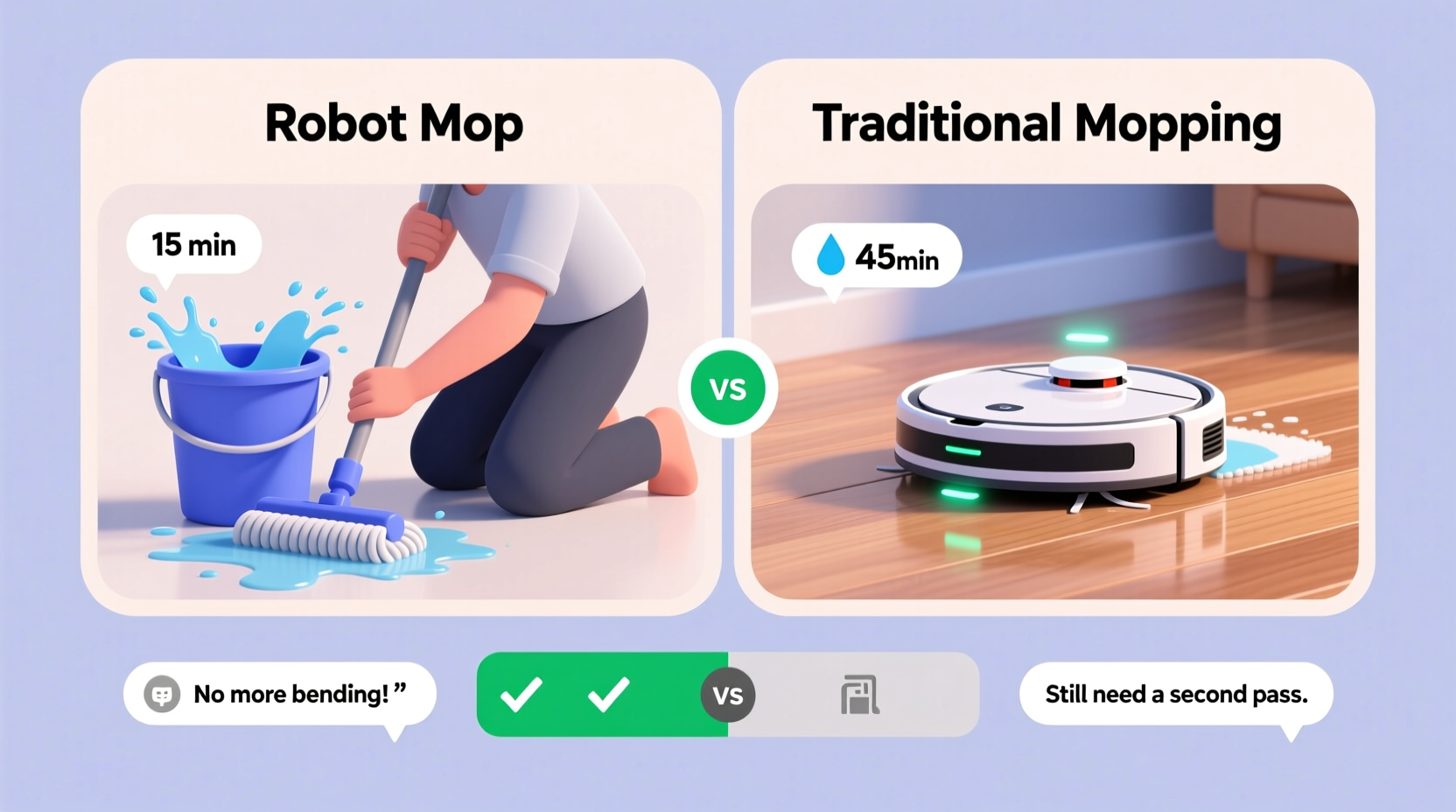
The most critical factor when evaluating any cleaning tool is how well it removes dirt, grime, and spills. Traditional mopping has long been the standard because, when done properly, it provides thorough scrubbing and wet-cleaning action that lifts debris from hard surfaces.
Traditional mops—especially microfiber or sponge types—allow full control over pressure, water saturation, and targeted scrubbing. A person can focus on high-traffic zones, kitchen spills, or pet messes with precision. With proper technique, including wringing out excess water and changing rinse water frequently, traditional mopping delivers deep, hygienic cleaning.
Robot mops, by contrast, operate autonomously with limited physical intervention. Most use vibrating or rotating pads that glide across the floor, dispensing small amounts of water. While newer models include features like app-controlled navigation, room mapping, and automatic recharging, their cleaning power remains constrained by design. They typically lack the scrubbing intensity of manual mopping and struggle with dried-on spills or sticky residues unless pre-treated.
High-end models such as the Roborock S8 Pro Ultra or Ecovacs Deebot T20 Omni attempt to close this gap with sonic mopping technology, increased downforce, and self-cleaning stations. These systems can deliver impressive results on daily light debris and dust, but still fall short when tackling heavy soil without human follow-up.
“While robot mops excel at maintenance cleaning, they’re not yet replacements for deep-cleaning sessions with a traditional mop.” — David Lin, Home Automation Analyst at Smart Living Labs
Time, Effort, and Convenience Comparison
Where robot mops truly shine is in convenience and time savings. Unlike traditional mopping, which requires setup, physical labor, and cleanup, robot mops automate much of the process. Once programmed, they can run daily or weekly with little input.
Consider a typical weekday evening: after work, cooking dinner, and managing family routines, finding 20–30 minutes to mop the kitchen and hallway is challenging. A robot mop can be scheduled to run while you're away or asleep, gliding quietly across tile and hardwood, maintaining cleanliness without interrupting your day.
However, convenience comes with trade-offs. Robot mops require initial setup—including mapping your home, installing virtual boundaries, and emptying/refilling water tanks. Some models connect to apps that notify you when maintenance is needed, but these alerts can become background noise if not monitored.
In contrast, traditional mopping demands immediate attention but offers instant feedback. You see the dirt being removed, adjust pressure as needed, and confirm coverage visually. There's no waiting for a robot to finish a cycle only to discover it missed a section behind the couch.
Cost Analysis: Upfront vs. Long-Term Value
Price is a major consideration. Traditional mopping tools are inexpensive: a quality microfiber mop and bucket system costs between $20 and $50. Replacement pads range from $5 to $15. This method requires no electricity and minimal ongoing investment.
Robot mops, on the other hand, represent a significant upfront cost. Entry-level models start around $200, mid-tier options range from $400 to $700, and premium units with self-emptying and self-washing docks exceed $1,000. Additionally, there are recurring expenses: replacement mop pads ($10–$30 per pack), cleaning solution (if used), and potential filter or sensor maintenance.
Despite the higher price tag, some users find long-term value in time saved and consistent cleanliness. For individuals with mobility challenges, busy professionals, or large homes with expansive hard flooring, the return on investment may justify the expense.
Still, it’s important to assess actual usage. Many robot mops end up underutilized due to poor navigation, inadequate cleaning, or frustration with maintenance tasks like cleaning the base station. To maximize value, choose a model compatible with your floor layout and cleaning habits.
| Factor | Traditional Mopping | Robot Mopping |
|---|---|---|
| Initial Cost | $20–$50 | $200–$1,200+ |
| Ongoing Costs | Minimal (replacement pads) | Mop pads, filters, solutions |
| Time Required Per Session | 20–40 minutes | Near-zero (after setup) |
| Lifespan | 3–5 years (with care) | 2–5 years (varies by model) |
| Best For | Deep cleaning, spot treatment | Daily maintenance, accessibility |
Real-World Scenarios: Who Benefits Most?
Not all households benefit equally from robot mops. Their usefulness depends heavily on lifestyle, floor type, and household dynamics.
Case Study: The Urban Professional
Sarah, a 34-year-old marketing manager living in a downtown condo, works 50-hour weeks and travels frequently. Her apartment has hardwood floors throughout, and she owns a cat that tracks litter into the living area. Before buying a robot mop, Sarah rarely mopped—sometimes going months between cleanings.
She invested in a mid-range robot mop with app scheduling and boundary setting. Now, it runs every evening at 8 PM, focusing on the main living area and hallway. She noticed cleaner floors within a week, fewer allergens, and less tracked litter. While she still does a thorough mop once a month, the robot handles daily upkeep effortlessly.
For Sarah, the robot mop was transformative—not because it cleaned perfectly, but because it cleaned consistently. The psychological relief of knowing her floors were being maintained reduced decision fatigue and improved her overall satisfaction with her living space.
In contrast, families with young children or pets dealing with frequent spills may find robot mops insufficient during active hours. A juice spill on the kitchen floor won’t wait for the next scheduled run. In such cases, traditional mopping remains essential for immediate response, though a robot mop can supplement with follow-up maintenance.
What Experts Recommend: A Balanced Approach
Home care specialists and smart device reviewers increasingly advocate for a hybrid model: using robot mops for routine maintenance and traditional mopping for deep cleaning.
According to interior hygiene expert Miriam Chen, “The ideal strategy is layering. Let the robot handle dust, light foot traffic, and daily debris. Then, once a week, go over high-risk zones—like kitchens and bathrooms—with a traditional mop and disinfectant. This reduces total cleaning time while ensuring hygiene standards are met.”
This approach leverages the strengths of both methods. The robot prevents buildup, making deep cleaning easier and less frequent. Meanwhile, manual mopping ensures problem areas receive adequate attention, especially where bacteria tend to accumulate.
“The future of home cleaning isn’t about replacing humans—it’s about reducing drudgery through smart collaboration.” — Miriam Chen, Interior Hygiene Consultant
Step-by-Step: Building an Efficient Floor Care Routine
To get the best results without over-relying on either method, follow this balanced routine:
- Assess Your Flooring Needs: Identify which rooms have hard surfaces (tile, hardwood, laminate) and how much daily traffic they receive.
- Choose the Right Robot Mop: Look for models with strong navigation (LIDAR or camera-based), adjustable water flow, and compatibility with your floor type. Avoid basic vibration-only units if you have sticky messes.
- Set a Maintenance Schedule: Program your robot to run every 1–2 days in high-traffic areas. Use no-go zones to protect rugs or delicate surfaces.
- Perform Weekly Deep Cleans: On a set day (e.g., Sunday morning), manually mop kitchens, entryways, and bathrooms using a microfiber mop and appropriate cleaner.
- Maintain Both Systems: Rinse robot mop pads after each use, descale water tanks monthly, and replace worn components. Similarly, wash and air-dry traditional mop heads regularly to prevent odor and mildew.
Frequently Asked Questions
Can robot mops replace traditional mopping entirely?
No, not for most households. While robot mops are excellent for daily maintenance, they lack the scrubbing power and precision of manual mopping for deep cleaning. They should be viewed as a supplement, not a full replacement.
Do robot mops work on all floor types?
Most work well on hard surfaces like tile, vinyl, and hardwood. However, excessive moisture can damage wood floors over time. Always use low-water settings on sensitive materials and avoid running the robot on unsealed wood or carpets unless specified by the manufacturer.
How often should I replace robot mop pads?
Reusable pads should be washed after every 2–3 uses and replaced every 2–3 months depending on frequency. Worn pads lose absorbency and can scratch floors. Disposable pads should be changed after each use to maintain hygiene.
Checklist: Is a Robot Mop Right for You?
- ✅ Do you have mostly hard flooring (tile, hardwood, laminate)?
- ✅ Are you willing to invest $300+ for long-term convenience?
- ✅ Do you struggle to find time for regular floor cleaning?
- ✅ Do you prefer automated routines over manual chores?
- ✅ Can you commit to maintaining the robot (cleaning tank, pads, sensors)?
- ✅ Are you okay with occasional missed spots or re-runs?
If you answered “yes” to most of these, a robot mop could significantly improve your cleaning routine. If not, a high-quality traditional mop may serve you better at a fraction of the cost.
Final Verdict: Worth It for the Right User
Robot mops are not magic devices that eliminate the need for floor cleaning. They don’t match the raw cleaning power of a person applying pressure with a damp mop. But they do something equally valuable: they make consistency possible.
For those who neglect mopping due to time, energy, or motivation, a robot mop introduces a habit of regular maintenance. It keeps floors visibly cleaner, reduces allergens, and lowers the barrier to starting a deep clean—because the surface isn’t overwhelmed with dust and debris.
Ultimately, the question isn’t whether robot mops are “better” than traditional methods—it’s whether they fit your life. If you value time over perfection, automation over manual effort, and incremental progress over occasional deep cleans, then yes, a robot mop is worth it.
But if you already mop weekly, have complex layouts, or deal with frequent spills, pairing a robot for upkeep with traditional mopping for intensive jobs delivers the best of both worlds.




 浙公网安备
33010002000092号
浙公网安备
33010002000092号 浙B2-20120091-4
Comments
No comments yet. Why don't you start the discussion?