
Himalayan salt lamps have become a staple in modern homes—prized for their warm, amber glow and the calming ambiance they create. Often marketed as natural air purifiers, mood enhancers, and even allergy relievers, these rose-tinted rock lamps are sold with promises that sound almost too good to be true. But what does the science say? Are salt lamps genuinely improving indoor air quality, or are they simply attractive pieces of decor with no measurable health impact?
To answer this, we need to separate marketing claims from scientific evidence. While many people report feeling better with a salt lamp glowing in their bedroom or living room, perception doesn’t always align with measurable outcomes. Let’s examine the popular claims, review existing research, and determine whether salt lamps offer real benefits or if their appeal is purely aesthetic.
The Science Behind Salt Lamps: How They’re Supposed to Work
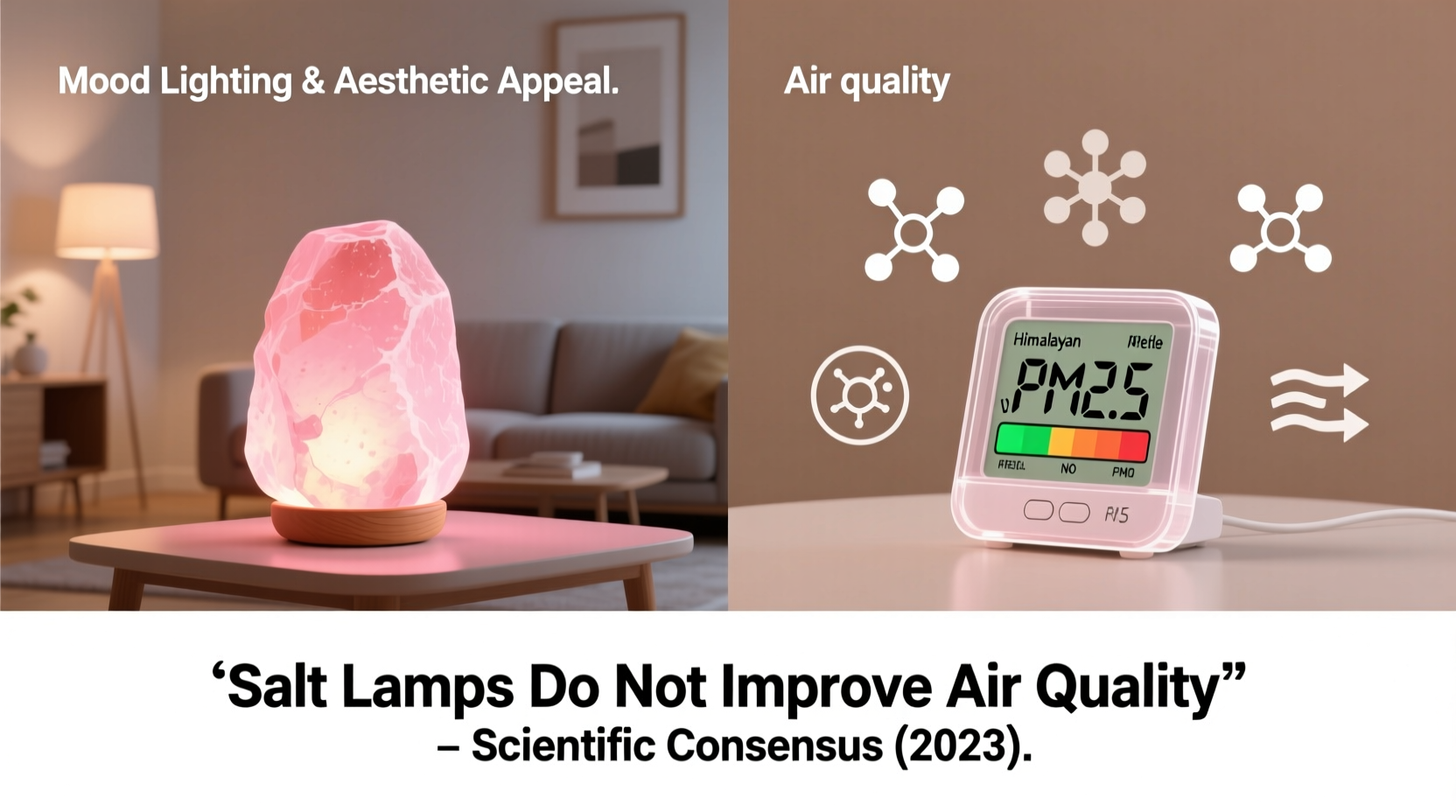
Proponents of salt lamps claim they improve air quality through a process called hygroscopy—the ability to attract water molecules from the surrounding air. Since table salt (sodium chloride) is hygroscopic, the theory goes that a large block of Himalayan salt will pull moisture—and with it, airborne pollutants like mold spores, dust, and allergens—onto its surface.
Once the salt lamp is heated by the internal light bulb, supporters suggest that the water evaporates back into the air, but without the contaminants. This process is said to release negative ions, which are believed to neutralize positive ions from electronic devices, potentially reducing electromagnetic stress and boosting mood.
This explanation sounds plausible on the surface, but it hinges on several assumptions that don’t hold up under scientific scrutiny.
Negative Ions: The Core Claim
The idea that salt lamps emit significant amounts of negative ions is central to their health claims. Negative ions are molecules that have gained an electron, often found in abundance near waterfalls, oceans, and forests. Some studies suggest that exposure to negative ions may improve mood, reduce stress, and enhance cognitive performance.
However, the critical issue is quantity. For negative ions to have any measurable physiological effect, they must be present in very high concentrations—typically tens of thousands per cubic centimeter. Research shows that salt lamps produce negligible levels, if any at all. A 2017 study published in the Journal of Negative Results in Biomedicine tested multiple salt lamps and found no detectable increase in negative ion concentration in a sealed room.
“While negative ions can have beneficial effects in controlled environments, there is no credible evidence that salt lamps generate them in meaningful amounts.” — Dr. Lisa Chen, Environmental Health Scientist, University of Colorado
Air Purification: Myth vs. Reality
One of the most common claims is that salt lamps “clean the air.” This assertion stems from their supposed hygroscopic properties. In theory, salt attracts water vapor, and since pollutants are carried in moisture, the salt could trap them.
In practice, however, the scale is entirely off. A small salt lamp has minimal surface area and heat output. Even if it absorbs some moisture, the amount is trivial compared to what a dehumidifier or HEPA air purifier handles. Moreover, when the water evaporates, there's no mechanism to ensure that pollutants remain trapped in the salt. They are likely released back into the air.
Unlike certified air purifiers, which use mechanical filtration (like HEPA filters) or activated carbon to capture particles and gases, salt lamps lack any filtration system. They do not remove PM2.5 particles, VOCs, or allergens in any quantifiable way.
What Experts Say About Air Quality Claims
Indoor air quality experts consistently dismiss the notion that salt lamps purify air. The U.S. Environmental Protection Agency (EPA) emphasizes that effective air cleaning requires proven technologies such as high-efficiency particulate air (HEPA) filters, proper ventilation, and source control.
Dr. Michael Reynolds, an indoor air quality specialist, states: “Salt lamps are no substitute for real air purification methods. If someone has allergies or asthma, relying on a salt lamp instead of a medical-grade filter could actually worsen their condition.”
Mood, Light, and Psychological Benefits
While salt lamps may not clean the air, they aren’t entirely without benefit. Their soft, warm glow mimics candlelight or sunset hues, falling within the 1800K–2200K color temperature range—ideal for relaxing environments. This type of low-blue-light illumination supports melatonin production, making salt lamps a thoughtful choice for bedrooms or evening relaxation spaces.
The psychological effect of ambient lighting should not be underestimated. Warm light reduces visual stimulation, signaling the brain that it’s time to wind down. Many users report improved sleep quality and reduced anxiety when using salt lamps in their nighttime routine—not because of ionization, but because of circadian rhythm support.
In this sense, salt lamps function more like wellness-oriented decor than medical devices. Their value lies in creating a calming atmosphere, not in altering air chemistry.
Real Example: Sarah’s Bedroom Transformation
Sarah, a graphic designer from Portland, struggled with insomnia for years. After reading about salt lamps online, she placed one on her nightstand. She noticed she felt calmer at bedtime and fell asleep faster. Excited, she told friends the lamp “cleans the air” and “balances energy.”
When questioned by a skeptical roommate, Sarah looked up the research. She discovered there was no proof of air purification—but realized the real change came from replacing her bright LED lamp with the dim, warm glow of the salt light. By reducing blue light exposure before bed, she had inadvertently supported her body’s natural sleep cycle.
Sarah still uses the salt lamp, but now understands it as part of a broader sleep hygiene strategy, not a miracle device.
Do’s and Don’ts of Using Salt Lamps
To get the most out of your salt lamp—without falling for pseudoscience—follow these practical guidelines.
| Do | Don’t |
|---|---|
| Use in low-light areas like bedrooms or meditation corners | Rely on it as an air purifier or medical treatment |
| Wipe occasionally with a dry cloth to remove moisture | Place in overly humid rooms like bathrooms |
| Pair with other relaxation practices (e.g., aromatherapy, quiet music) | Expect measurable changes in allergy symptoms or air quality |
| Unplug when not in use to save energy and prolong bulb life | Leave unattended for long periods, especially near flammable materials |
Step-by-Step Guide to Maximizing Your Salt Lamp Experience
If you own or are considering buying a salt lamp, follow this realistic, science-backed approach to make the most of it:
- Choose the right location: Place the lamp in a bedroom, reading nook, or relaxation space where soft lighting enhances comfort.
- Use a low-wattage bulb: A 15W incandescent or equivalent LED bulb generates enough warmth to minimize moisture without overheating.
- Keep it dry: In humid climates, turn the lamp on daily to keep it warm and prevent dampness. Wipe condensation immediately.
- Combine with proven wellness habits: Use the lamp as part of a screen-free wind-down routine, alongside journaling or deep breathing.
- Manage expectations: Enjoy the ambiance without assuming it’s altering air quality or ion balance.
Frequently Asked Questions
Can salt lamps help with allergies or asthma?
No, there is no scientific evidence that salt lamps reduce allergens or improve respiratory conditions. For allergy relief, use a HEPA air purifier, maintain clean HVAC filters, and reduce dust accumulation through regular cleaning.
Do salt lamps really emit negative ions?
Not in any measurable or biologically relevant amount. While heated salt *might* release trace ions, studies show the levels are far too low to affect mood or air quality. Natural settings like waterfalls produce vastly higher concentrations.
Are salt lamps safe to leave on overnight?
Most are safe if used with the correct bulb and placed on a non-flammable surface. However, due to the minimal benefits, leaving them on all night is unnecessary. Consider using a timer to turn them off after 1–2 hours.
Conclusion: Mood Lighting with a Side of Myth
After reviewing the claims and evidence, the conclusion is clear: salt lamps do not improve air quality in any scientifically valid way. They do not produce meaningful levels of negative ions, nor do they remove pollutants from the air. The idea that they purify indoor environments is unsupported by research and contradicted by environmental health experts.
However, dismissing salt lamps entirely would overlook their genuine value—as sources of soothing, warm-toned light that contribute to a peaceful atmosphere. When used intentionally, they can support relaxation, reduce reliance on harsh artificial lighting, and serve as mindful additions to wellness routines.
The danger lies not in owning a salt lamp, but in believing it replaces real solutions for air quality or health concerns. A salt lamp on your nightstand won’t clean the air, but turning off screens and basking in its gentle glow just might help you unwind.




 浙公网安备
33010002000092号
浙公网安备
33010002000092号 浙B2-20120091-4
Comments
No comments yet. Why don't you start the discussion?