
Scalp health is increasingly recognized as a critical component of hair vitality and overall well-being. From reducing tension to potentially stimulating hair growth, scalp massage has earned its place in both wellness routines and dermatological recommendations. With a surge in affordable handheld scalp massagers on the market, many people are asking: Are these tools truly effective, or can the same benefits be achieved through simple, do-it-yourself methods using household items or manual techniques?
The answer isn’t straightforward. While some benefits of scalp massage are accessible without spending a dime, specialized tools offer unique advantages that may justify their cost—depending on your goals, lifestyle, and sensitivity. This article breaks down the science, compares commercial devices with DIY alternatives, and helps you decide whether investing in a scalp massager makes sense for you.
The Science Behind Scalp Massage
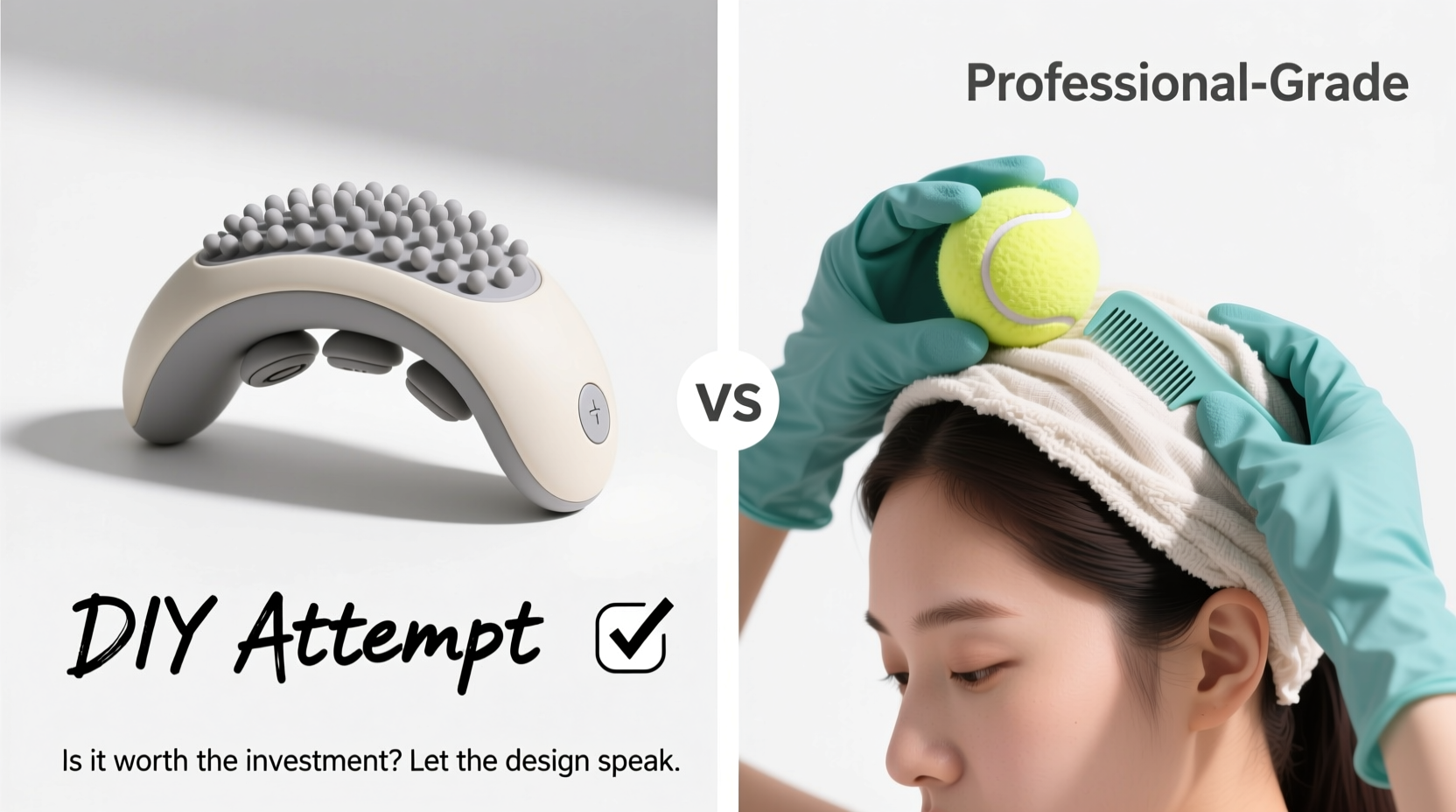
Scalp massage isn’t just about relaxation—it has measurable physiological effects. Research suggests that regular stimulation of the scalp increases blood circulation to hair follicles, which may support healthier hair growth over time. A 2016 study published in *Eplasty* found that men who performed daily 4-minute scalp massages showed increased hair thickness after 24 weeks compared to a control group.
Beyond circulation, massage helps reduce levels of cortisol, the stress hormone linked to hair shedding. It also aids in distributing natural sebum across the scalp, improving moisture balance and reducing dryness or flakiness. For those dealing with conditions like mild dandruff or tension headaches, consistent scalp stimulation can provide noticeable relief.
“Even two minutes of targeted scalp massage can improve microcirculation and promote a healthier scalp environment.” — Dr. Lena Patel, Trichologist and Hair Health Researcher
These benefits don’t require expensive equipment. The key factor is consistency and technique—not necessarily the tool used.
Store-Bought Scalp Massagers: Features and Benefits
Commercial scalp massagers come in various forms: handheld plastic brushes with soft silicone nodules, electric vibrating models, and even wearable massage caps. They’re marketed for multiple purposes—relaxation, dandruff control, improved shampooing efficiency, and hair growth support.
What sets them apart from DIY options?
- Ergonomic design: Many are shaped to fit the curvature of the skull, allowing even pressure distribution.
- Hypoallergenic materials: High-quality models use medical-grade silicone or BPA-free plastics, minimizing irritation risk.
- Vibration technology: Some electronic versions deliver pulsed vibrations shown to enhance blood flow more than manual methods alone.
- Consistency: Devices encourage routine use due to ease of access and tactile feedback.
For individuals with limited hand mobility, arthritis, or long/thick hair, a dedicated tool can make scalp care significantly easier. Electric models often include timers and intensity settings, helping users maintain optimal session length (typically 3–5 minutes).
DIY Alternatives: Can You Achieve the Same Results?
You don’t need a gadget to enjoy the benefits of scalp massage. In fact, many professionals recommend starting with manual techniques before investing in tools. Here’s how to replicate—and sometimes surpass—the effects of commercial massagers using what you already have at home.
Manual Finger Massage
Using fingertips (not nails), apply gentle circular motions across the entire scalp. Focus on areas prone to tightness, such as the temples, base of the skull, and crown. This method allows precise control over pressure and enables you to respond instantly to discomfort.
Benefits:
- No cost involved
- Highly customizable pressure
- Promotes mindfulness and stress reduction
Household Object Hacks
Creativity goes a long way. Common household items can simulate the rolling or tapping action of professional tools:
- Soft-bristled hairbrush: Use gentle strokes along the scalp during brushing to stimulate circulation.
- Kitchen massage ball or small rubber grip: Roll it slowly over the scalp while seated (best done pre-shower).
- Wide-tooth comb: Run it gently from front to back, applying slight pressure at the roots.
While these lack precision, they’re surprisingly effective when used consistently.
Enhanced DIY Methods
Boost your DIY approach by combining massage with other scalp-friendly practices:
- Apply a few drops of carrier oil (like jojoba or coconut) before massaging to reduce friction and nourish skin.
- Use warm towels post-massage to open pores and enhance absorption.
- Incorporate essential oils like rosemary or peppermint, which preliminary studies suggest may support hair health.
“I’ve seen patients achieve better compliance and results with simple finger massage than with expensive gadgets they eventually abandon.” — Dr. Alan Wu, Dermatologist specializing in scalp disorders
Comparison: Commercial Tools vs. DIY Techniques
| Factor | Commercial Scalp Massagers | DIY Methods |
|---|---|---|
| Cost | $10–$60+ | Free to minimal |
| Effectiveness | Moderate to high (especially electric models) | High with proper technique |
| Convenience | Very convenient; easy to integrate into shower routine | Requires intentionality and time |
| Hair Type Suitability | Best for thick, curly, or long hair | Adaptable to all types |
| Lifespan | 6 months to 2 years depending on quality | Indefinite (body-based) or reusable items |
| Hygiene | Depends on cleaning frequency; potential for bacterial buildup | Easily maintained with hand washing |
| Portability | Excellent; lightweight and travel-friendly | Always available |
This comparison shows that while commercial tools win in convenience and targeted design, DIY methods hold their own in effectiveness, cost-efficiency, and adaptability.
Real-World Example: Two Approaches, One Goal
Sophia, a 34-year-old graphic designer, struggled with an itchy, flaky scalp and mild thinning around her part line. After reading about scalp massage, she decided to test two approaches over six weeks each.
Phase 1 – Store-Bought Tool: She purchased a popular $25 silicone scalp massager with rotating nodes. Using it during showers, she noticed immediate improvements in shampoo lathering and exfoliation. However, she admitted she skipped days due to forgetting it outside the shower or finding it slightly awkward to maneuver behind her head.
Phase 2 – DIY Routine: She switched to a nightly 3-minute finger massage using rosemary-infused oil. Though it took effort to build the habit, she began enjoying the ritual. By week five, she reported less itching, reduced shedding, and a surprising improvement in sleep quality due to the calming effect.
Ultimately, Sophia stuck with the DIY method—not because it was more effective, but because it integrated better into her life. Her experience underscores a crucial point: sustainability matters more than the tool itself.
Step-by-Step Guide to an Effective Scalp Massage (Any Method)
Whether you're using a device or your fingers, follow this proven sequence for maximum benefit:
- Choose Your Time: Ideal times are pre-shower (to loosen debris and boost oil distribution) or before bed (for relaxation).
- Prepare the Scalp: If dry, apply 3–5 drops of lightweight oil. If wet, ensure hair is damp but not soaking.
- Start at the Front: Place fingertips or tool at the hairline. Use small circles, moving gradually backward toward the crown.
- Move to Temples and Sides: Apply gentle pressure along the temples and above the ears—common tension zones.
- Cover the Crown and Back: Work in overlapping motions until the entire scalp is covered.
- Add Variation: Alternate between circular motions, light tapping, and slow dragging movements to engage different tissues.
- Duration: Aim for 3–5 minutes. Set a quiet timer to avoid rushing.
- Finish Gently: End with broad, soothing strokes from front to back.
Repeat at least 3–5 times per week for best results. Track changes in scalp comfort, oiliness, and hair fall over 4–8 weeks.
Frequently Asked Questions
Can scalp massage really help with hair growth?
While it won’t reverse genetic baldness, regular massage may support thicker, healthier hair by improving blood flow to follicles and reducing stress-related shedding. It works best as part of a broader hair care strategy including nutrition, gentle cleansing, and avoiding heat damage.
Are electric scalp massagers safe for daily use?
Yes, most are designed for daily use. However, limit sessions to 3–5 minutes and avoid aggressive settings if you have sensitive skin, psoriasis, or open sores. Discontinue use if irritation occurs.
Is there a risk of damaging hair with frequent massage?
When done correctly—with smooth motions and no pulling—scalp massage poses little risk. Avoid using sharp objects or excessive force, especially on wet hair, which is more fragile.
Checklist: Choosing the Right Approach for You
Use this checklist to determine whether to buy a scalp massager or stick with DIY:
- ☐ I have difficulty reaching the back of my head comfortably
- ☐ I tend to skip self-care routines unless they’re quick and easy
- ☐ I have thick, coily, or long hair that tangles easily
- ☐ My scalp is sensitive or prone to irritation
- ☐ I value consistent, measurable routines
- ☐ I already have a nightly wind-down ritual I could incorporate massage into
- ☐ I prefer low-cost, sustainable solutions
If you checked mostly the first five, a commercial massager might be worth the investment. If the last three resonate more, a DIY method will likely serve you just as well—if not better—over time.
Final Verdict: Worth It or Not?
Scalp massagers aren't essential, but they can be valuable tools—particularly for those seeking convenience, deeper stimulation, or assistance with specific hair types. Their main advantage lies in usability, not superiority. For most people, especially beginners, mastering a simple manual technique delivers comparable benefits at no cost.
The real determinant of success isn’t the tool—it’s consistency. Whether you spend $30 on a high-tech massager or use your fingertips every night, the outcome depends on regular practice and mindful application.
If you're curious, try a DIY method for two weeks first. If you find it difficult to maintain or want enhanced sensation, then consider upgrading. But don’t assume that spending money guarantees better results. Often, the simplest solutions are the most sustainable.




 浙公网安备
33010002000092号
浙公网安备
33010002000092号 浙B2-20120091-4
Comments
No comments yet. Why don't you start the discussion?