
The holiday season brings with it a deep longing for comfort, tradition, and sensory warmth. Homes fill with music, lights, and the unmistakable scent of pine or cinnamon. But when it comes to setting the mood, two elements stand out: the evergreen Christmas tree and the flickering glow of scented candles. One is a centuries-old centerpiece; the other, a subtle but powerful atmospheric tool. So, which does more to create that authentic holiday feeling—scented candles or real trees?
This isn’t just about preference—it’s about how our senses shape memory, emotion, and experience. The answer lies in understanding not only what each contributes individually but also how they interact, where they fall short, and what trade-offs exist between authenticity, convenience, safety, and environmental impact.
The Emotional Power of Scent in Holiday Traditions
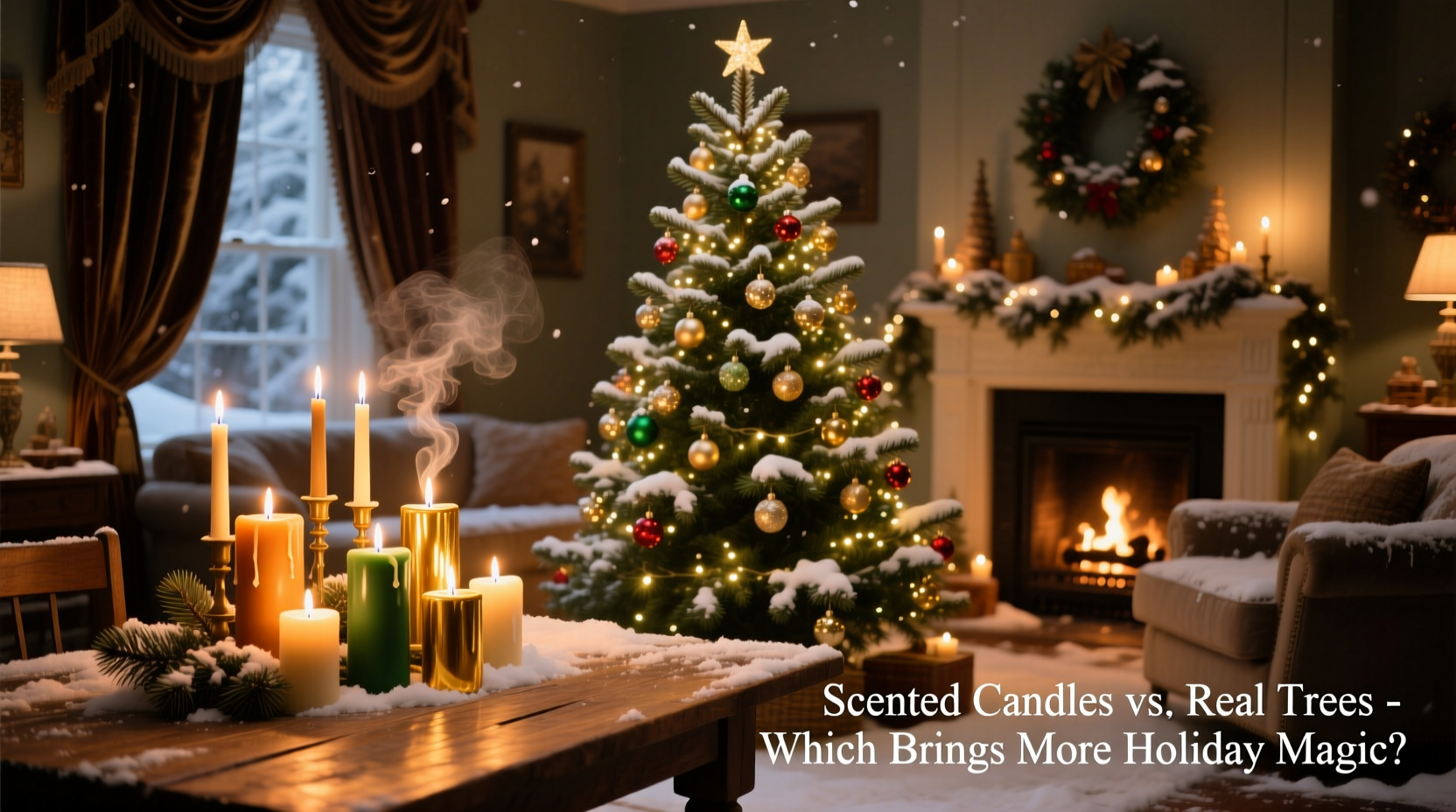
Scent is uniquely tied to memory and emotion. Unlike sight or sound, olfactory signals travel directly to the limbic system—the brain’s emotional center. A single whiff of pine, cinnamon, or vanilla can instantly evoke childhood Christmases, family gatherings, or quiet winter evenings. This neurological shortcut makes fragrance one of the most potent tools in crafting a holiday atmosphere.
Real evergreen trees emit a natural, complex aroma from their needles and sap. The scent of a fresh-cut fir or spruce is rich, slightly resinous, and changes subtly as the tree dries over weeks. In contrast, scented candles use carefully formulated fragrance oils—often blends like “balsam & fir,” “gingerbread,” or “crackling firewood”—to mimic or enhance seasonal smells.
While a real tree offers a singular, organic scent profile, candles provide versatility. You’re not limited to pine; you can rotate fragrances throughout the season—vanilla on Christmas Eve, spiced apple on Boxing Day, or clove-infused citrus for New Year’s. This flexibility allows for a curated sensory journey rather than a static backdrop.
“Scent is the silent architect of atmosphere. It doesn’t announce itself, but it shapes how we feel in a space more than any decoration.” — Dr. Lena Peterson, Environmental Psychologist
Ambiance Comparison: Presence vs. Subtlety
The real Christmas tree is undeniably a focal point. Its size, lights, and ornaments draw the eye and serve as a physical anchor for holiday celebrations. It occupies space, commands attention, and becomes part of family rituals—from tree-trimming parties to placing the star on top. Its visual and symbolic weight is unmatched.
Scented candles, by contrast, work in the background. They don’t dominate a room but influence it through gentle light and aroma. A cluster of pillar candles on a mantel or tea lights in glass holders adds warmth, soft shadows, and an intimate glow. Their flicker mimics firelight, triggering primal feelings of safety and coziness.
In terms of atmosphere, the tree provides structure and tradition; candles offer intimacy and sensory layering. Used together, they complement each other beautifully—one grounding the space, the other enriching it.
Safety and Practicality: What You Need to Know
No discussion of holiday decor is complete without addressing safety—especially when open flames and dry organic material are involved. Real trees, particularly after several weeks indoors, become increasingly flammable. According to the National Fire Protection Association (NFPA), between 2016 and 2020, U.S. fire departments responded to an average of 160 home fires per year that began with a Christmas tree.
Scented candles pose their own risks. The Consumer Product Safety Commission reports that candles are involved in an estimated 7,000 home fires annually. Left unattended, placed too close to curtains or garlands, or knocked over by pets or children, they can quickly become hazards.
However, both risks can be mitigated:
- For real trees: Water daily, keep away from heat sources, and remove the tree within four weeks.
- For candles: Never leave burning unattended, use stable holders, and place at least one foot apart.
For households with young children, mobility challenges, or busy lifestyles, flameless LED candles paired with artificial trees may offer a safer alternative—though they lack the authentic flicker and warmth of real flames.
Environmental Impact: Sustainability Considerations
Eco-conscious consumers often weigh the environmental cost of their holiday choices. Real Christmas trees are frequently marketed as sustainable—they’re grown on farms, harvested rotationally, and biodegradable. Many communities offer recycling programs that turn trees into mulch.
Yet, transportation emissions, pesticide use in farming, and landfill disposal (if not recycled) reduce their net benefit. An unused tree left to decompose in a dump releases methane, a potent greenhouse gas.
Scented candles vary widely in environmental footprint. Paraffin wax, derived from petroleum, is non-renewable and releases soot when burned. Soy and beeswax are renewable alternatives, though soy production can contribute to deforestation if not sourced responsibly.
Fragrance oils—whether synthetic or essential—are another concern. Some synthetic compounds can release volatile organic compounds (VOCs) when heated, affecting indoor air quality. Essential oils are natural but require large quantities of plant material, raising questions about scalability and ecological strain.
“An artificial tree used for 10 years has a lower carbon footprint than buying a new real tree annually—but only if it’s reused consistently.” — Sustainable Holidays Report, University of Exeter, 2022
Comparison Table: Real Trees vs. Scented Candles
| Factor | Real Tree | Scented Candles |
|---|---|---|
| Primary Sensory Impact | Visual dominance, natural pine scent | Aromatic variety, ambient lighting |
| Lifespan | 3–4 weeks (fresh); years (artificial) | 10–50 hours per candle |
| Safety Risk | Moderate (fire hazard when dry) | Moderate (open flame) |
| Environmental Impact | Biodegradable but transport-heavy | Varies by wax and fragrance type |
| Cost (Initial) | $50–$150 (real); $100–$300 (artificial) | $10–$30 per candle |
| Customization | Limited to species and size | High—scents, colors, burn times |
Mini Case Study: The Urban Apartment Holiday
Sophia lives in a small Brooklyn apartment with her partner and a rescue cat. Space is tight, and fire safety is a top concern. Last year, she opted for a 5-foot artificial tree—pre-lit and low-maintenance. While it looked festive, she missed the smell of a real tree.
Her solution? She introduced a rotation of seasonal candles: “Balsam Fir” in early December, “Cranberry Spice” for Christmas week, and “Snowfall” (a clean, icy musk) for New Year’s. She placed them on a high shelf away from curious paws and used timers for consistent evening lighting.
The result was a cozy, aromatic space that felt celebratory without clutter or risk. Her guests commented on how “warm” the apartment felt—even without a real tree. For Sophia, candles didn’t replace tradition; they redefined it in a way that suited her lifestyle.
Step-by-Step Guide: Creating a Layered Holiday Atmosphere
You don’t have to choose between candles and trees. With thoughtful planning, you can combine both—or adapt based on your needs. Follow this timeline to build a rich, immersive environment:
- Week 1: Assess Your Space and Needs
Measure available floor space, check smoke detector functionality, and identify pet or child safety concerns. - Week 2: Choose Your Centerpiece
Decide between real, artificial, or no tree. If opting for candles as the primary element, select 3–5 complementary scents. - Week 3: Set Up Safely
Place the tree away from heaters. Install candles in stable holders on non-flammable surfaces. Test all lights. - Week 4: Layer the Senses
Add music playlists, textured throws, and timed lighting. Light candles during evening hours for maximum effect. - Ongoing: Maintain and Rotate
Water the tree daily. Rotate candle scents weekly to keep the atmosphere dynamic.
Checklist: Optimizing Your Holiday Atmosphere
- ✅ Choose a safe location for tree and candles
- ✅ Use dripless or contained candles to prevent mess
- ✅ Opt for phthalate-free fragrance oils if sensitive
- ✅ Pair woodsy scents with citrus or spice for balance
- ✅ Schedule candle burning during peak gathering times
- ✅ Recycle tree or donate candles after use
- ✅ Try one new scent or setup idea this season
FAQ
Can I safely use scented candles near a real Christmas tree?
Yes, but with caution. Keep candles at least three feet away from the tree and never leave them unattended. Avoid placing candles on or under tree branches. Consider flameless LEDs for added safety.
Do real trees smell stronger than scented candles?
Initially, yes—especially if freshly cut. However, the scent fades over time. High-quality candles with concentrated fragrance oils can produce a stronger, longer-lasting aroma, particularly in smaller rooms.
Are there health concerns with scented candles during the holidays?
Poorly made candles (especially paraffin-based) can release soot and VOCs. To minimize risk, choose candles made from soy, beeswax, or coconut wax with cotton wicks and natural fragrances. Ensure good ventilation and limit burn time to 3–4 hours at a stretch.
Conclusion
So, are scented candles better than real trees for creating a holiday atmosphere? Not inherently—but they offer something distinct. A real tree delivers tradition, presence, and a natural scent that many cherish. Scented candles provide flexibility, intimacy, and the ability to tailor the mood with precision.
The most effective holiday atmospheres aren’t built on a single element but on layers: the sparkle of lights, the texture of decor, the sound of carols, and above all, the power of scent and light to evoke emotion. Whether you stand by the ritual of the Christmas tree or embrace the subtle artistry of candlelight, the goal remains the same—to create a space that feels warm, welcoming, and meaningfully yours.




 浙公网安备
33010002000092号
浙公网安备
33010002000092号 浙B2-20120091-4
Comments
No comments yet. Why don't you start the discussion?