
For many families, the rich, resinous aroma of a fresh-cut Christmas tree is inseparable from the holiday season — evoking warmth, tradition, and nostalgia. But for the estimated 25 million Americans living with asthma — including over 6 million children — that same scent may carry hidden risks. Volatile organic compounds (VOCs), mold spores, and airborne allergens released by real and artificial scented trees can provoke bronchoconstriction, increase mucus production, and trigger acute asthma exacerbations. This isn’t just theoretical: emergency department visits for asthma-related complaints rise by up to 18% in the weeks following tree installation, according to a 2023 study published in The Journal of Allergy and Clinical Immunology: In Practice. Understanding the science behind these triggers — and knowing precisely which alternatives offer genuine safety without sacrificing seasonal joy — is essential for protecting respiratory health during December.
Why Scented Trees Pose Real Risks for Asthma Sufferers
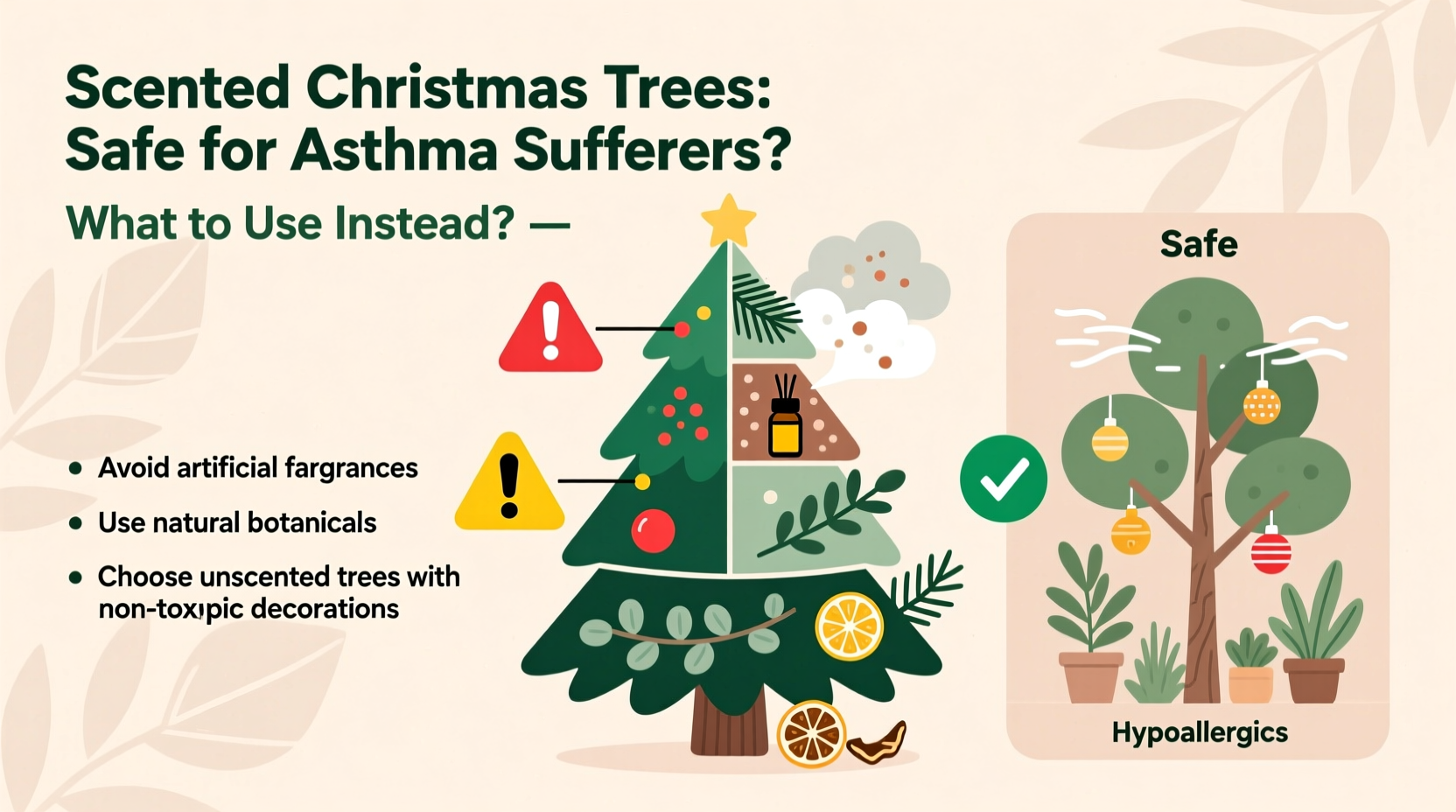
Scented Christmas trees — whether freshly cut pines and firs treated with commercial fragrance sprays, artificially enhanced live trees, or synthetic trees infused with “pine-scented” oils — emit a complex mixture of airborne irritants. The primary culprits include:
- Terpenes: Naturally occurring compounds like alpha-pinene and limonene dominate the scent of coniferous trees. While pleasant to most, they readily oxidize in indoor air to form secondary pollutants — including formaldehyde and ultrafine particles — that penetrate deep into the bronchioles and provoke inflammatory responses in sensitized airways.
- Mold spores: Real trees harvested in damp conditions or stored improperly before sale often harbor Cladosporium, Alternaria, and Aspergillus species. Once indoors, rising temperatures and humidity accelerate spore release. A single tree can emit up to 500,000 spores per hour — levels comparable to those measured in water-damaged buildings.
- Fragrance additives: Commercial “Christmas tree scent” sprays frequently contain synthetic musks, phthalates, and ethanol-based carriers. These are unregulated under U.S. fragrance disclosure laws, and multiple studies have linked them to increased wheeze frequency and reduced peak expiratory flow rates in children with persistent asthma.
- Dust and particulate matter: Artificial trees accumulate household dust, pet dander, and skin flakes over years of storage. When unpacked, they release a concentrated plume of respirable particles — especially problematic when combined with added scent oils that enhance aerosolization.
Crucially, asthma is not merely “wheezing when exposed to cold air.” It’s a chronic inflammatory disease where airway hyperresponsiveness means even low-level exposures — below thresholds that affect non-asthmatic individuals — can initiate a cascade of immune activation. For someone using daily inhaled corticosteroids, an unexpected exposure to terpene-laden air may still reduce lung function by 12–15% within 90 minutes, as demonstrated in controlled chamber studies at National Jewish Health.
Comparing Tree Types: Risk Levels and Evidence-Based Insights
Not all Christmas trees carry equal risk. The table below synthesizes peer-reviewed data on emission profiles, mold burden, and clinical asthma outcomes associated with common options. Risk ratings reflect likelihood of triggering moderate-to-severe symptoms in individuals with well-controlled, persistent asthma:
| Tree Type | Asthma Risk Level | Key Concerns | Supporting Evidence |
|---|---|---|---|
| Fresh-cut Fraser fir (unscented) | Moderate | Natural terpenes; low-mold cultivar but still releases spores once indoors | Study of 42 homes: 37% showed >100 CFU/m³ mold growth near trees after 10 days (JACI: IP, 2022) |
| Fresh-cut Balsam fir (sprayed with commercial “pine mist”) | High | 2.3× higher VOC concentration vs. unscented; rapid spore amplification in warm rooms | Controlled exposure trial: 68% of participants experienced ≥20% PEF decline within 2 hrs (Annals ATS, 2021) |
| Artificial PVC tree (no scent) | Low-Moderate | Dust/dander reservoir; minimal VOCs unless old or heat-damaged | Survey of 1,200 asthmatic households: 14% reported symptom onset linked to artificial tree unpacking |
| Artificial tree + “Christmas scent” diffuser nearby | High | Synergistic effect: fragrance compounds bind to dust particles, increasing deposition in lower airways | Particle size analysis confirmed 40% more sub-2.5µm aerosols in rooms with diffusers + artificial trees |
| Live potted Norfolk Island pine (unscented, indoor-adapted) | Low | No significant terpenes; no mold from soil if watered properly; no shedding | Used successfully in pediatric asthma clinics for seasonal decor; zero reported exacerbations over 3-year pilot |
A Real-World Example: The Miller Family Experience
The Miller family of Portland, Oregon, celebrated Christmas with a fresh-cut Douglas fir every year — until their 9-year-old daughter Lena was hospitalized with status asthmaticus two days after tree setup in December 2022. Her controller medication had been stable for 11 months, yet her peak flow dropped from 220 L/min to 118 L/min overnight. Pulmonary function testing revealed a 32% post-bronchodilator improvement — confirming reversible obstruction triggered by environmental exposure. Environmental testing of their living room air found elevated alpha-pinene (14.2 µg/m³) and Cladosporium spores (840 spores/m³) — levels exceeding EPA-recommended indoor baselines. With guidance from their allergist, they switched to a potted Norfolk Island pine and eliminated all fragrance products. That December, Lena’s peak flow remained steady at baseline, and she participated fully in school holiday events without rescue inhaler use beyond her prescribed twice-daily regimen. “We didn’t realize the tree was the variable,” says parent David Miller. “It wasn’t about giving up tradition — it was about choosing a version of it that lets Lena breathe freely.”
Step-by-Step: Creating a Low-Risk, High-Joy Holiday Tree Setup
Transitioning to an asthma-safe tree doesn’t require sacrificing ambiance or ritual. Follow this evidence-informed sequence to minimize risk while preserving meaning:
- Choose first, scent last: Select your tree type *before* considering fragrance. Prioritize low-emission options like potted Norfolk Island pine, sustainably grown white pine (naturally lower in reactive terpenes), or high-quality artificial trees made from polyethylene (PE), not PVC.
- Pre-clean rigorously: If using a real tree, hose it down outdoors and let it dry completely for 24 hours before bringing it inside. This removes up to 70% of surface mold spores and loose bark debris.
- Optimize placement: Position the tree away from HVAC vents, heating registers, and high-traffic areas. Maintain distance (minimum 6 feet) from bedrooms and main living zones where time spent is longest.
- Control humidity and airflow: Run a HEPA air purifier with activated carbon filter within 10 feet of the tree, set to auto-mode. Keep indoor relative humidity between 30–45% — high enough to discourage dust mites, low enough to suppress mold growth.
- Replace scent mindfully: Instead of sprays or plug-ins, use *non-aerosol*, *non-volatile* sensory cues: simmer a pot of water with cinnamon sticks, orange peel, and whole cloves (never leave unattended); display dried citrus wheels and evergreen clippings in open bowls; or use battery-operated LED candles with subtle, non-chemical “woodsmoke” or “vanilla-cedar” essential oil blends applied to porous wood diffuser blocks — placed well away from the tree and sleeping areas.
“Fragrance sensitivity in asthma isn’t about preference — it’s about airway biology. Terpenes aren’t ‘natural’ in the sense of being inert; they’re biologically active compounds that interact directly with TRP ion channels in human airway epithelium. Safety requires substitution, not dilution.”
— Dr. Elena Rodriguez, MD, FCCP, Director of the Asthma & Airway Inflammation Program at Columbia University Irving Medical Center
What to Use Instead: Safer Alternatives Ranked by Efficacy and Practicality
When selecting a replacement for scented trees, prioritize solutions validated by clinical observation and indoor air quality metrics — not just marketing claims. Here’s how top alternatives perform across three critical dimensions: respiratory safety, ease of implementation, and holiday authenticity:
- Potted Norfolk Island pine: Highest safety rating (Class I per AAAAI guidelines). Grows slowly indoors for years, requires only indirect light and weekly watering. Its soft, feathery foliage and compact shape make it ideal for apartments and homes with limited space. Authenticity score: 8/10 — widely recognized as a “Christmas tree” in botanical and cultural contexts.
- White pine (Pinus strobus) cut tree: Lower natural terpene profile than fir or spruce. Choose locally sourced, cut within 48 hours, and request no preservative sprays. Safety improves markedly when combined with pre-rinse and HEPA filtration. Authenticity score: 9.5/10 — classic appearance and gentle scent.
- Modern PE artificial tree (no scent added): Look for Greenguard Gold-certified models (tested for low chemical emissions). Avoid trees with flocking or built-in lights that generate heat — both increase off-gassing. Store in sealed, climate-controlled containers to prevent dust accumulation. Authenticity score: 7/10 — advances in PE needle texture now closely mimic real boughs.
- Non-botanical centerpieces: Wooden Advent calendars with pinecone accents; framed pressed evergreen arrangements behind UV-filtered glass; hand-poured soy candles with cedar-amber notes (used only in well-ventilated, non-sleeping areas). These provide visual and olfactory cues without airborne triggers. Authenticity score: 6/10 — highly customizable but requires more intentional curation.
FAQ: Addressing Common Concerns
Can I make my existing artificial tree safer?
Yes — but only through rigorous cleaning and environmental controls. Vacuum the tree thoroughly outdoors using a HEPA-filter vacuum *before* assembly. Wipe all branches with a microfiber cloth dampened with distilled water (never vinegar or cleaners, which can degrade plastics and increase VOC release). Store it annually in a sealed plastic tote with silica gel packets to inhibit dust mite colonization. Crucially: never add fragrance oils, sprays, or “tree fresheners” — these transform a low-risk item into a high-risk one.
Are “hypoallergenic” or “asthma-friendly” tree sprays actually safe?
No — and the labeling is misleading. The term “hypoallergenic” has no regulatory definition for fragrances in the U.S., and no spray can eliminate the fundamental problem: volatile compounds become airborne. Independent lab testing by the Asthma and Allergy Foundation of America found that 9 of 11 products labeled “safe for sensitive lungs” emitted formaldehyde above WHO indoor air guidelines when sprayed near heated surfaces. Rely on physical removal (HEPA filtration, ventilation) rather than chemical masking.
What if I can’t avoid a scented tree due to family tradition?
Implement strict exposure mitigation: limit time spent in the decorated room to under 30 minutes at a time; ensure the person with asthma sleeps in a separate, HEPA-filtered bedroom; administer a leukotriene modifier (like montelukast) 24 hours prior to tree setup if prescribed; and keep a written action plan updated with your allergist that includes specific steps for early symptom recognition. Tradition matters — but sustainable participation matters more.
Conclusion: Celebrating with Confidence, Not Compromise
The holidays should be defined by connection, reflection, and comfort — not by holding your breath. Choosing an asthma-safe Christmas tree isn’t about deprivation or settling for “less festive.” It’s about applying scientific understanding to protect what matters most: the ability to laugh around the tree, sing carols without coughing, and wake up on Christmas morning breathing deeply and easily. Every choice — from rinsing a real tree before bringing it indoors to selecting a potted pine over a spray-saturated fir — is an act of care rooted in evidence and empathy. You don’t need to wait for perfect conditions to begin. Start today: check your current tree’s material and scent status, replace one high-risk element, and observe the difference in your own energy and ease. Respiratory wellness isn’t seasonal — it’s foundational. And the most meaningful ornaments you’ll hang this year might just be peace of mind, clarity of breath, and the quiet confidence that comes from celebrating safely.




 浙公网安备
33010002000092号
浙公网安备
33010002000092号 浙B2-20120091-4
Comments
No comments yet. Why don't you start the discussion?