
Hydration is the cornerstone of healthy, glowing skin. Without sufficient moisture, even the most resilient complexions can appear dull, tight, or flaky. As skincare routines evolve, so do the tools we use to maintain that dewy finish. Among the most popular are sheet masks and cream masks—both promising intense hydration, but delivering it in vastly different ways. But which one truly wins when it comes to quenching thirsty skin?
The answer isn’t straightforward. While sheet masks offer a quick, targeted infusion of active ingredients, cream masks provide sustained occlusion and long-term barrier support. To determine which method is more effective for hydration, we need to examine their formulations, mechanisms of action, skin compatibility, and real-world performance.
How Hydration Works in Skincare
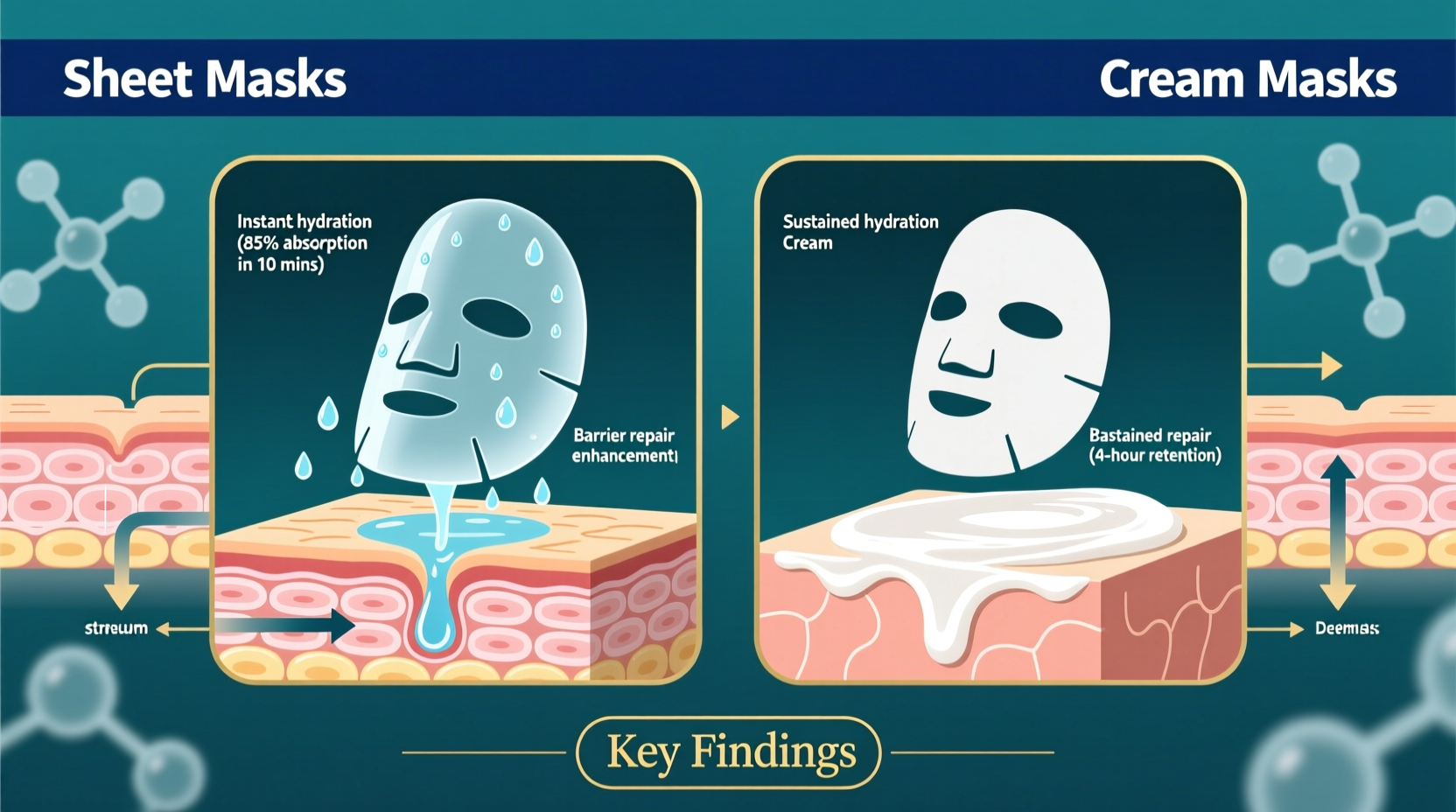
Before comparing delivery systems, it's essential to understand what hydration means in dermatological terms. Hydration refers to the water content within the stratum corneum—the outermost layer of the skin. Unlike moisturization, which focuses on preventing water loss through oils and emollients, hydration specifically increases water levels in the skin cells.
Effective hydrators rely on humectants—ingredients like hyaluronic acid, glycerin, and panthenol—that attract water from the environment or deeper layers of the skin. However, without an occlusive layer to seal in that moisture, much of it evaporates. This is where formulation and application method become critical.
Sheet masks create a temporary occlusive barrier using a physical sheet, while cream masks often contain occlusives like shea butter or ceramides built directly into the formula. Both aim to trap moisture, but they start from opposite ends: one uses external occlusion with concentrated actives; the other relies on internal formulation with slower release.
Breaking Down Sheet Masks: Pros and Limitations
Sheet masks have surged in popularity due to their convenience, aesthetic appeal, and immediate sensory feedback. Typically made of cellulose, cotton, or bio-cellulose fabric soaked in serum, they deliver a high concentration of hydrating agents directly onto the skin surface.
The mask sheet acts as a physical seal, reducing transepidermal water loss (TEWL) during application. This creates a microenvironment that enhances penetration of water-soluble ingredients. In clinical settings, this technique is known as “occlusion therapy,” and studies show it can increase ingredient absorption by up to 50% compared to open application.
One major advantage of sheet masks is speed. Most are designed for 15–20 minute use, making them ideal for pre-event prep or midweek skin resets. They’re also less messy than cream alternatives and require no rinsing, appealing to those with minimal morning or evening routines.
However, not all sheet masks are created equal. The quality of the base material matters—bio-cellulose sheets conform better and retain more serum than non-woven fabrics. Additionally, many commercial options include alcohol, fragrance, or preservatives that may irritate sensitive skin despite their hydrating claims.
Another limitation lies in duration. Because they're used briefly and infrequently (typically 1–3 times per week), their impact is often short-lived unless paired with a consistent regimen. Think of them as hydration boosters rather than foundational treatments.
Cream Masks: The Slow-Release Hydration Strategy
Cream masks take a different approach. Instead of flooding the skin with liquid actives, they focus on reinforcing the skin’s natural lipid barrier. Richer in texture, they often blend humectants with emollients and occlusives to both draw in moisture and lock it in over time.
Many cream masks are formulated for overnight use, allowing ingredients to work during peak skin regeneration hours (between 10 PM and 2 AM). This extended dwell time enables deeper penetration and longer-lasting effects. Ingredients like squalane, ceramides, and cholesterol mimic the skin’s natural lipids, helping repair compromised barriers—a key factor in chronic dehydration.
Unlike sheet masks, cream masks don’t rely on external occlusion. Their thick consistency forms a protective film that minimizes evaporation throughout the night. Dermatologists often recommend them for individuals with dry, eczema-prone, or mature skin types who need sustained moisture retention.
“Cream masks are particularly beneficial for patients with impaired barrier function. The combination of humectants and lipids helps restore homeostasis.” — Dr. Lena Torres, Board-Certified Dermatologist
That said, cream masks aren’t universally suitable. Those with oily or acne-prone skin may find heavier formulas too rich, potentially leading to clogged pores if not properly removed. Some users also report discomfort from the sticky residue left behind, especially if used during the day.
Direct Comparison: Key Differences at a Glance
| Feature | Sheet Mask | Cream Mask |
|---|---|---|
| Primary Function | Immediate hydration via serum infusion | Barrier repair and sustained moisture retention |
| Active Concentration | High (serum-based) | Moderate to high (emulsion-based) |
| Dwell Time | 15–20 minutes | 6–8 hours (overnight) |
| Occlusion Method | External (fabric sheet) | Internal (formula texture) |
| Best For | Dullness, pre-event glow, quick fixes | Chronic dryness, sensitivity, aging skin |
| Skin Types | All (fragrance-free versions recommended for sensitive) | Dry, combination, mature (caution for acne-prone) |
| Frequency | 1–3 times/week | 2–4 times/week or nightly |
This comparison reveals a fundamental truth: neither option is inherently superior. Rather, each excels in specific contexts. Sheet masks shine when you need rapid results—before a photo shoot, after sun exposure, or following air travel. Cream masks prevail when dealing with persistent dehydration linked to environmental stressors or aging.
Real-World Example: A Week of Switched Routines
Consider Sarah, a 34-year-old marketing executive living in Denver, Colorado—a city known for its arid climate. She had relied exclusively on sheet masks for years, believing they offered faster hydration. Every Sunday and Wednesday night, she applied a hyaluronic acid-infused sheet mask, enjoying the cool sensation and instant plumpness.
But by midday, her cheeks felt tight again. Her foundation would cling to dry patches, and fine lines around her eyes appeared more pronounced. After consulting a dermatologist, she switched to a bi-weekly cream mask containing ceramides and colloidal oatmeal.
Within two weeks, her skin felt softer and stayed supple longer. She noticed fewer instances of flaking and reduced reactivity to wind and temperature changes. The transformation wasn’t dramatic overnight, but cumulative. By maintaining her lipid barrier, her skin retained moisture more efficiently—even without daily masking.
Sarah now uses sheet masks only before important meetings or events, treating them as supplemental boosts rather than core hydration tools. Her experience illustrates how understanding your skin’s needs leads to smarter product choices.
When to Use Each Type: A Practical Guide
Choosing between sheet and cream masks shouldn't be arbitrary. It should align with your skin type, lifestyle, and goals. Here’s a step-by-step decision framework:
- Assess your skin condition: Is your skin dehydrated (lacking water) or dry (lacking oil)? Dehydration calls for humectant-rich sheet masks; dryness benefits more from lipid-replenishing cream masks.
- Evaluate your environment: Dry climates, heated rooms, and frequent flying increase TEWL. In these cases, prioritize occlusive protection—cream masks win here.
- Consider timing: Need visible results fast? Opt for a sheet mask. Looking for long-term improvement? Choose a cream mask.
- Check compatibility: Oily or acne-prone skin may tolerate lightweight gel-based sheet masks better than heavy creams. Sensitive skin should avoid fragranced sheet masks and test new cream formulas cautiously.
- Layer strategically: You don’t have to pick one. Apply a hydrating serum, then a sheet mask, followed by a thin layer of cream mask to seal everything in—an advanced technique called \"sandwich masking.\"
Expert Tips for Maximizing Hydration Results
- Always apply masks to clean, slightly damp skin. Pre-wetting the face increases humectant efficacy.
- Don’t discard leftover serum from sheet masks—use it on your neck, hands, or cuticles.
- Store sheet masks in the refrigerator during summer for added soothing effect.
- If using a cream mask, apply with fingertips using upward motions to stimulate circulation.
- Follow up with sunscreen the next morning—well-hydrated skin reflects UV damage more effectively.
Frequently Asked Questions
Can I use both a sheet mask and a cream mask together?
Yes, and many skincare enthusiasts do. Try applying a sheet mask first to deliver a surge of hydration, then follow with a light layer of cream mask to lock in the ingredients. Just ensure your skin isn’t prone to congestion, and avoid overly rich combinations.
Do sheet masks really make a difference, or is it just placebo?
They do make a measurable difference—studies using corneometry show increased skin hydration immediately after use. However, the effect diminishes within hours unless followed by proper moisturizing. The ritual itself can enhance product perception, but the physiological response is real.
Are cream masks safe for oily skin?
Not all are, but some are formulated specifically for combination or oily types. Look for labels like “non-comedogenic,” “gel-cream,” or “oil-free.” Ingredients like niacinamide and clay can offer hydration without heaviness. Start with a pea-sized amount and monitor your skin’s reaction.
Final Verdict: It’s Not Either/Or—It’s Both/And
The question “are sheet masks better than cream masks for hydration?” assumes a hierarchy that doesn’t reflect real-world skincare dynamics. Each serves a distinct purpose. Sheet masks are excellent for acute hydration bursts—they’re the sprinters of the mask world. Cream masks are marathon runners, building resilience over time.
For optimal results, integrate both into your routine based on need. Use sheet masks when you want visible radiance quickly—before a special occasion, after a late night, or post-exercise. Reserve cream masks for recovery nights, seasonal transitions, or periods of heightened sensitivity.
The future of skincare lies not in choosing sides, but in strategic layering. Modern regimens benefit from hybrid approaches that leverage the strengths of multiple formats. Whether you prefer the crisp precision of a chilled sheet mask or the indulgent comfort of a nourishing cream, what matters most is consistency, intentionality, and alignment with your skin’s biology.
“The best mask is the one you’ll use consistently and correctly. Technique and timing matter more than format.” — Dr. Rajiv Mehta, Cosmetic Dermatologist
Take Action Today
Start by auditing your current routine. Are you relying solely on quick fixes? Or missing out on deep restoration because you avoid richer textures? Experiment with one cream mask twice a week for a month. Track changes in texture, resilience, and makeup application. Then introduce a high-quality sheet mask before a big day and note the difference.




 浙公网安备
33010002000092号
浙公网安备
33010002000092号 浙B2-20120091-4
Comments
No comments yet. Why don't you start the discussion?