
Skin care rituals have evolved dramatically in recent years, with sheet masks becoming a staple in routines across Asia and beyond. Their popularity stems from convenience, sensory appeal, and immediate visible results—plump, dewy skin after just 15 to 20 minutes. But as more people incorporate them into their regimens on a weekly basis, a critical question arises: Are sheet masks truly beneficial when used regularly, or are they merely delivering fleeting hydration with no long-term payoff?
To answer this, we need to look beyond marketing claims and examine the ingredients, mechanisms, and dermatological research behind sheet masks. While they undeniably provide an instant glow, their value depends on consistency, formulation, and how they fit within a broader skin care strategy.
The Science Behind Sheet Masks: How They Work
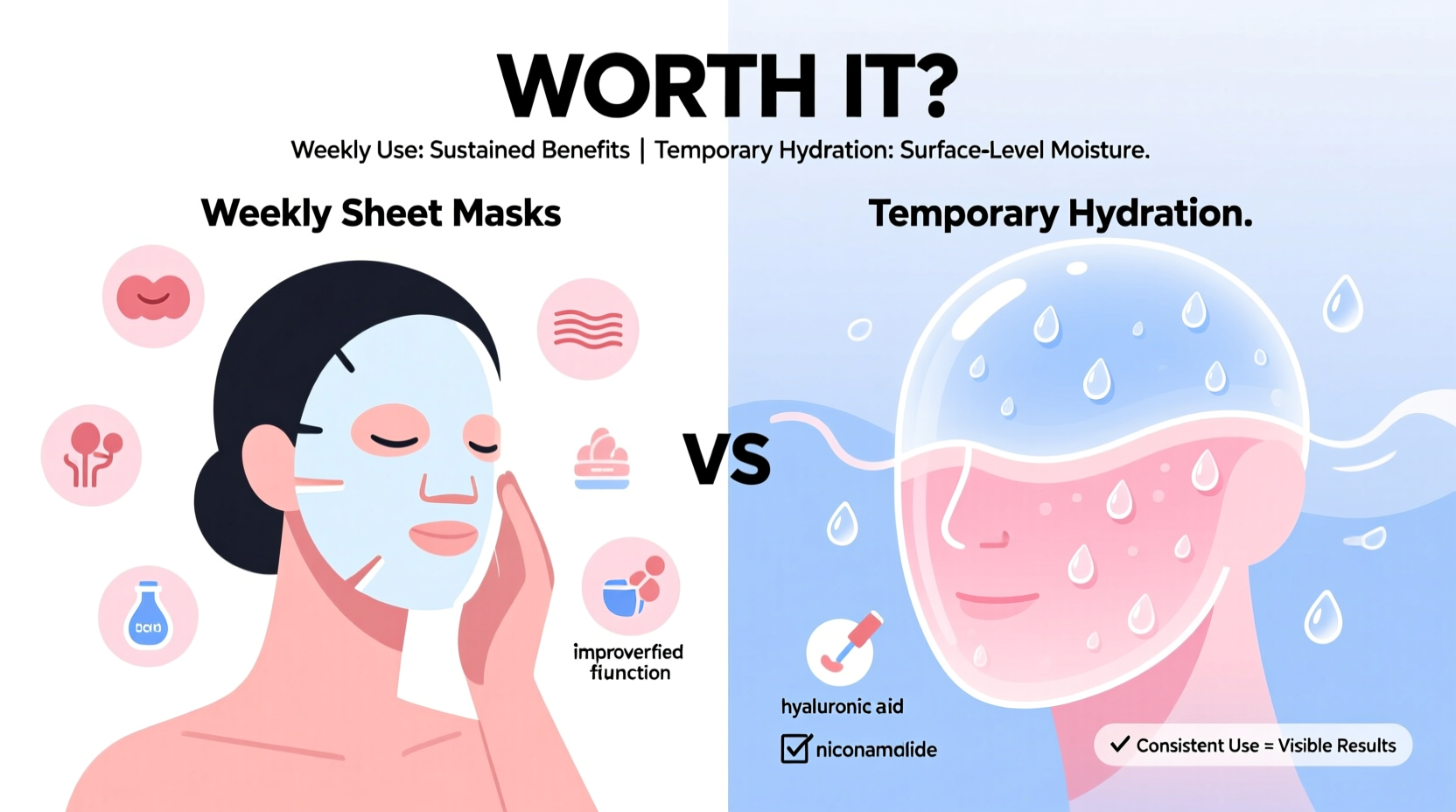
Sheet masks function through occlusion—a process where a physical barrier (the mask itself) is placed over the skin to prevent moisture loss and enhance ingredient penetration. The fabric or hydrogel material holds a serum-rich solution against the face, creating a microenvironment that boosts hydration via increased absorption.
Unlike traditional leave-on serums or moisturizers, sheet masks deliver a high concentration of active ingredients in a short burst. Key components often include hyaluronic acid, glycerin, ceramides, niacinamide, and botanical extracts—all known for hydrating, soothing, or brightening properties.
Dermatologist Dr. Lena Park explains:
“The occlusive effect of a sheet mask can increase transepidermal water loss reduction by up to 90% during application. This means your skin retains moisture far more effectively than with open-air application.”
However, occlusion alone doesn’t guarantee long-term benefits. The duration of hydration depends on the integrity of the skin barrier and whether follow-up moisturization occurs post-mask.
Weekly Use: Benefits vs. Diminishing Returns
Using a sheet mask once a week can be a strategic addition to a balanced skin care routine—especially for those dealing with dehydration, environmental stress, or pre-event prep. Weekly application allows time for the skin to respond without risking over-exfoliation or irritation.
Benefits of weekly sheet masking include:
- Consistent hydration boost: Especially helpful in dry climates or during seasonal transitions.
- Improved product penetration: Occlusion enhances delivery of actives like peptides and antioxidants.
- Calming effect on irritated skin: Soothing ingredients like centella asiatica or allantoin reduce redness and sensitivity.
- Ritualistic self-care: The dedicated time promotes mindfulness and reduces stress, which indirectly benefits skin health.
Yet, using sheet masks more than twice a week may lead to diminishing returns—and in some cases, adverse effects. Overhydration can disrupt the skin’s natural moisture regulation, especially if formulas contain high levels of humectants without occlusives.
A mini case study illustrates this: Sarah, a 32-year-old office worker in Seoul, began using sheet masks four times a week to combat winter dryness. Initially, her skin appeared radiant. But after six weeks, she noticed increased tightness, flaking, and occasional breakouts. Upon consulting a dermatologist, she learned that excessive masking had compromised her barrier function. Reducing frequency to once a week and switching to ceramide-enriched formulas restored balance.
Temporary Hydration vs. Long-Term Skin Health
One of the most common criticisms of sheet masks is that their effects are superficial and short-lived. Studies support this: research published in the *Journal of Cosmetic Dermatology* found that while skin hydration peaks immediately post-application, levels typically return to baseline within 24 hours unless followed by proper moisturizing.
This raises a key distinction: hydration ≠ moisture retention. Hydration refers to water content within the skin; moisture retention depends on the lipid barrier’s ability to seal that water in. Sheet masks supply hydration but don’t inherently strengthen the barrier—unless formulated with supporting ingredients.
For example, a mask containing both hyaluronic acid (humectant) and squalane (emollient) offers better staying power than one with hyaluronic acid alone. Similarly, formulations with panthenol or phytosphingosine actively support barrier repair over time.
Therefore, not all sheet masks are created equal. A weekly mask rich in barrier-supporting ingredients can contribute to long-term resilience, while a poorly formulated one may offer only momentary plumping.
“We see patients who believe sheet masks replace moisturizers. They don’t. They’re supplements—not substitutes.” — Dr. Rajiv Mehta, Board-Certified Dermatologist
Choosing the Right Mask: A Practical Checklist
To ensure your weekly sheet mask delivers real value, consider these criteria before purchasing or applying:
- Look for dual-action formulas: humectants (e.g., hyaluronic acid) + emollients/occlusives (e.g., ceramides, squalane).
- Avoid alcohol, synthetic fragrances, and essential oils if you have sensitive or acne-prone skin.
- Check the material: cellulose fiber or hydrogel tends to hold more serum and conform better than non-woven fabrics.
- Limit wear time to 15–20 minutes. Leaving it on longer increases risk of reverse osmosis (skin losing moisture).
- Use at night or before special events when you can follow up with moisturizer or sleep without washing face.
- Patch test new brands—especially if you're prone to contact dermatitis.
Comparing Mask Types: What Works Best for Weekly Use?
| Type | Best For | Pros | Cons | Weekly Worth? |
|---|---|---|---|---|
| Cotton-Based | Beginners, budget users | Inexpensive, widely available | Lowers serum absorption, dries quickly | Moderate – only if formula is strong |
| Hydrogel | Dehydrated, sensitive skin | Superior occlusion, cooling effect, minimal drip | Higher cost, fewer variants | High – excellent for sustained hydration |
| Bio-Cellulose | All skin types, anti-aging focus | Snug fit, high serum retention, biodegradable | Premium pricing | High – ideal for weekly targeted treatment |
| Wash-Off Gel or Cream Masks | Oily or acne-prone skin | No waste, customizable thickness | Less occlusive, requires more effort | Moderate – good alternative if avoiding disposables |
The table highlights that not all formats are equally effective. For weekly use focused on hydration and skin conditioning, hydrogel and bio-cellulose masks outperform traditional cotton options due to superior adherence and ingredient delivery.
When More Isn’t Better: Risks of Overuse
While sheet masks are generally safe, frequent use—especially multiple times per week—can lead to unintended consequences:
- Barrier disruption: Constant wetting and drying cycles may weaken the stratum corneum.
- Irritation from preservatives: Many sheet masks use parabens or phenoxyethanol to prevent microbial growth in moist environments. Repeated exposure can trigger sensitization.
- Breakouts: Oily or comedogenic ingredients (like coconut oil derivatives) trapped under occlusion can clog pores.
- Dependency mindset: Users may feel their skin looks “dull” without a mask, leading to compulsive use despite lack of medical need.
A timeline of responsible use helps mitigate these risks:
Step-by-Step Guide: Incorporating Sheet Masks Safely Into Your Routine
- Week 1–2: Introduce one mask per week. Choose a fragrance-free, hypoallergenic option. Apply after cleansing and toning.
- Post-Mask Step: Gently press remaining serum into skin, then apply a rich moisturizer or facial oil.
- Monitor Response: Watch for signs of irritation, congestion, or rebound dryness.
- Week 3–4: Assess results. If skin feels balanced and hydrated, continue. If issues arise, switch formulas or reduce frequency.
- Ongoing: Limit to 1–2 times weekly max. Rotate between different active types (hydrating, brightening, calming) based on skin needs.
This gradual integration ensures compatibility and prevents overloading the skin.
Frequently Asked Questions
Can I use a sheet mask every day?
Daily use is not recommended for most people. While occasional back-to-back use (e.g., before a big event) is acceptable, daily masking increases the risk of irritation, barrier compromise, and product overload. Once or twice a week is optimal for maintaining benefits without side effects.
Do sheet masks help with wrinkles or anti-aging?
Some do—but only if they contain proven anti-aging ingredients like peptides, bakuchiol, or low-concentration retinol derivatives. Most standard hydrating masks won’t impact fine lines long-term. For meaningful anti-aging results, pair sheet masks with consistent use of evidence-based topicals like retinoids and vitamin C serums.
Are there eco-friendly alternatives to disposable sheet masks?
Yes. Reusable silicone or cloth mask templates allow you to apply your own serums, reducing waste. Alternatively, opt for brands using biodegradable materials like bamboo fiber or certified compostable packaging. Look for “TUV OK Compost” or “FSC-certified” labels.
Conclusion: Strategic Use Beats Daily Ritual
Sheet masks are not inherently wasteful or ineffective—they are tools. Like any tool, their value depends on how and why you use them. Weekly application, particularly with well-formulated, barrier-supportive products, can enhance hydration, improve ingredient delivery, and support overall skin comfort.
But they are not a replacement for foundational skin care: gentle cleansing, daily sunscreen, and consistent moisturization remain irreplaceable. When used mindfully—as part of a tailored regimen rather than a standalone fix—sheet masks earn their place in modern routines.
The key is intentionality. Choose quality over quantity, prioritize ingredients over packaging, and always seal in that hydration with a proper moisturizer. Done right, a weekly sheet mask isn’t just a temporary treat—it becomes a small but meaningful step toward resilient, healthy-looking skin.




 浙公网安备
33010002000092号
浙公网安备
33010002000092号 浙B2-20120091-4
Comments
No comments yet. Why don't you start the discussion?