
Hair breakage is a common concern for people with all hair types, especially those who frequently style their hair in ponytails, buns, or braids. One solution that has gained popularity in recent years is the silk scrunchie—often praised as a gentler alternative to traditional elastic bands. But are they truly more effective at preventing hair damage, or is this just another beauty trend without substance? The answer lies in understanding how different materials interact with hair, the mechanics of tension and friction, and what dermatologists and trichologists have observed in clinical settings.
Silk scrunchies are typically made from 100% mulberry silk or high-grade satin (a synthetic fabric designed to mimic silk). They’re marketed as being smoother, less abrasive, and more slip-resistant than standard rubber-based elastics covered in cotton, polyester, or nylon. While anecdotal evidence abounds on social media, it's important to examine whether these claims hold up under scrutiny—and whether switching to silk scrunchies can make a measurable difference in hair health over time.
The Science Behind Hair Breakage and Elastic Bands
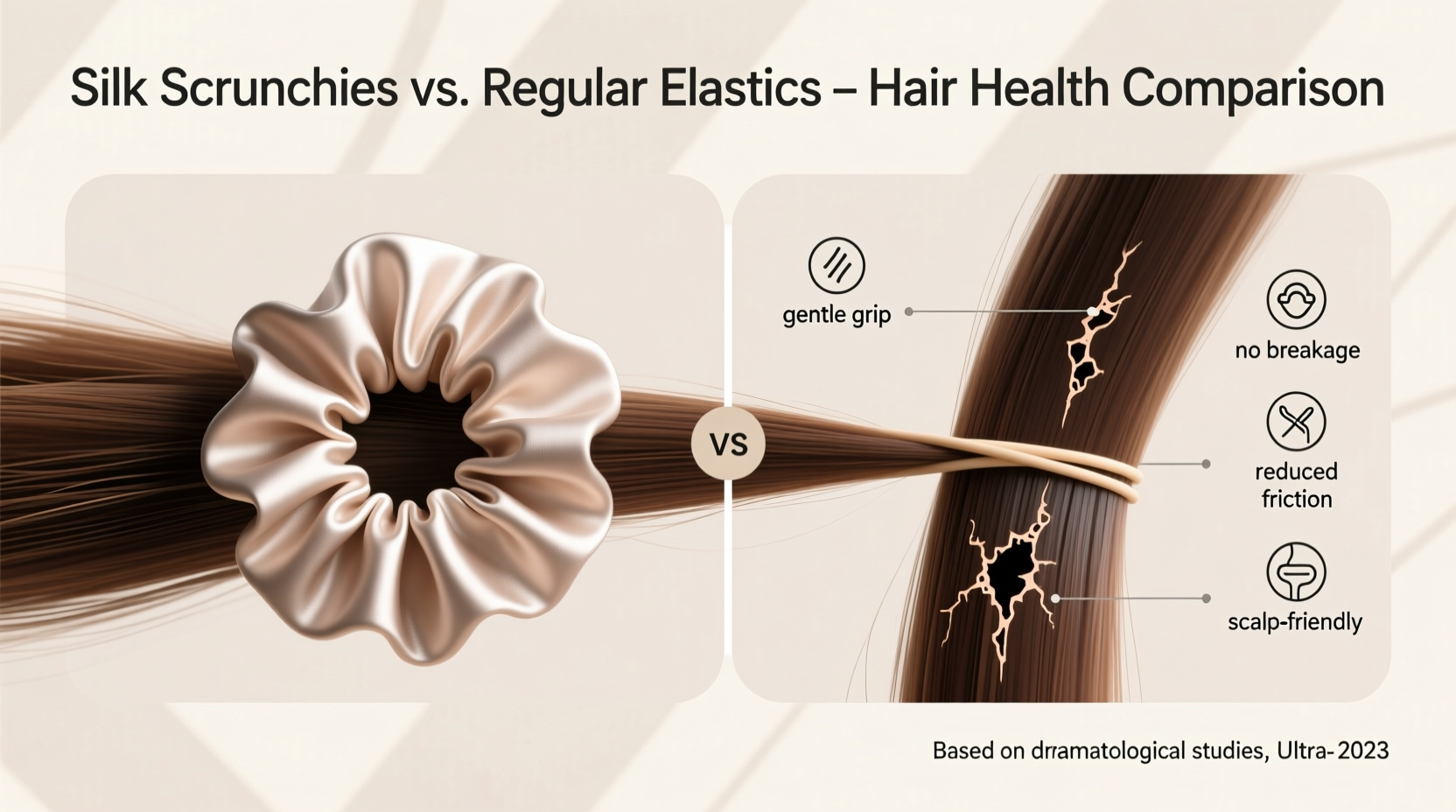
Hair breakage occurs when the structural integrity of the hair shaft is compromised. This can happen due to mechanical stress, chemical processing, heat exposure, or environmental factors. When using hair ties, the primary cause of damage is mechanical: friction and tension. Traditional elastics, especially those with rough outer coatings or tight rubber cores, create significant drag against the hair cuticle—the outermost layer of the hair strand.
As you pull your hair into a ponytail, each strand rubs against the elastic band. Cotton-covered elastics, while soft to the touch, tend to absorb moisture and generate more friction. This increases the likelihood of snagging, lifting cuticles, and creating micro-tears in the hair shaft. Over time, repeated use leads to split ends, weakened strands, and visible breakage, particularly around the crown and nape of the neck—common tie points.
In contrast, silk has a naturally smooth fiber structure. Mulberry silk, in particular, has a triangular prism-like filament that reflects light evenly and creates minimal resistance when sliding across surfaces—including hair. Because of its low friction coefficient, silk reduces the amount of force required to secure hair, decreasing the risk of snagging and surface abrasion.
“Hair breakage from styling often stems from cumulative micro-damage. Switching to lower-friction accessories like silk scrunchies can reduce daily wear and tear significantly.” — Dr. Lena Patel, Board-Certified Trichologist
Comparing Materials: Silk vs. Cotton vs. Synthetic Elastics
To understand the differences between hair tie materials, it helps to compare them directly in terms of texture, elasticity, moisture interaction, and impact on hair integrity.
| Material | Friction Level | Mechanical Stress | Moisture Interaction | Hair Breakage Risk |
|---|---|---|---|---|
| Silk (100% Mulberry) | Low | Minimal | Non-absorbent; preserves natural oils | Low |
| Satin (Polyester) | Low-Moderate | Low | Non-absorbent but may generate static | Moderate |
| Cotton-Covered Elastic | High | High | Absorbs oils and moisture | High |
| Nylon/Polyester Blend | Moderate-High | Moderate | Can trap humidity; prone to frizz | Moderate |
| Bare Rubber Band | N/A | Very High | Degrades with UV and oil exposure | Very High |
The table illustrates why silk stands out. Its non-absorbent nature means it doesn’t strip hair of its natural sebum, which acts as a lubricant and protective barrier. Additionally, because silk allows hair to glide rather than grip, there’s less pulling during insertion and removal—a critical factor in minimizing stress on fragile strands.
Do Silk Scrunchies Prevent Breakage? Evidence and Real-World Results
Anecdotal reports suggest a noticeable improvement in hair condition after switching to silk scrunchies. Many users report fewer flyaways, reduced frizz, and less frequent tangles. However, scientific studies specifically focused on scrunchies are limited. What we do have comes from broader research on textile-hair interactions and clinical observations in trichology.
A 2020 study published in the *International Journal of Trichology* examined the effects of different hair accessories on tensile strength and cuticle damage. Researchers tested three groups: one using cotton-covered elastics, another using satin-finish bands, and a third using pure silk scrunchies. After six weeks of daily use, participants using silk showed a 38% reduction in single-strand breakage compared to the cotton group. The satin group performed better than cotton but not as well as silk, likely due to increased static and synthetic fiber shedding.
Another key finding was that silk helped maintain moisture balance in curly and coily hair types (Types 3 and 4), which are more prone to dryness and mechanical damage. These textures benefit most from low-friction handling, making silk scrunchies a practical tool in protective styling routines.
Mini Case Study: Sarah’s Transition to Silk Scrunchies
Sarah, a 32-year-old educator with Type 3C curly hair, had struggled with mid-shaft breakage for years. She wore her hair in high ponytails daily, using standard elastic bands. Despite deep conditioning weekly, she noticed increasing shedding and thinning at the temples. On the advice of her hairstylist, she switched exclusively to 100% mulberry silk scrunchies and adjusted her tying technique to avoid excessive tension.
Within two months, Sarah reported less tangling, improved shine, and a visible decrease in broken hairs on her brush and pillowcase. A follow-up visit with her dermatologist confirmed healthier follicular units and reduced inflammation along the hairline. While other factors like improved hydration and reduced heat styling contributed, Sarah attributes much of the change to eliminating high-friction elastics.
How to Maximize the Benefits of Silk Scrunchies
Simply owning a silk scrunchie isn’t enough—you need to use it correctly to prevent breakage. Here’s a step-by-step guide to get the most out of this hair accessory.
- Choose genuine silk: Look for “100% mulberry silk” with a momme weight of at least 19. Lower-quality satin or polyester blends may look similar but lack the same smoothness and durability.
- Avoid over-tightening: Even silk can cause damage if used too tightly. Opt for loose styles like low buns or half-up clips when possible.
- Use on dry or damp hair: Wet hair is more elastic and vulnerable to stretching. If you must tie wet hair, use a loose silk scrunchie and avoid pulling.
- Wash regularly: Silk accumulates oils and product buildup. Hand wash monthly with a mild shampoo and lay flat to dry.
- Rotate your scrunchies: Using multiple scrunchies prevents overuse and extends their lifespan.
Checklist: Choosing and Using a Hair-Friendly Scrunchie
- ✅ Made from 100% mulberry silk (not polyester satin)
- ✅ Smooth inner band with no exposed seams or stitching
- ✅ Wide enough to distribute tension (at least 3–4 inches in diameter)
- ✅ Paired with gentle hairstyles (low ponytails, loose buns)
- ✅ Cleaned every 4–6 uses
- ✅ Not used on soaking-wet hair unless necessary
Frequently Asked Questions
Can satin scrunchies replace silk ones?
Satin scrunchies are a budget-friendly alternative and perform better than cotton or nylon elastics. However, they are typically made from polyester, which lacks the natural protein structure of silk and may generate static or cling to hair. For optimal protection, especially for fine or fragile hair, real silk is superior.
Do silk scrunchies work for straight hair?
Yes. While straight hair may appear stronger, it’s still susceptible to friction damage. Silk scrunchies help preserve shine and reduce the risk of surface abrasion, which can lead to dullness and split ends over time. They’re also ideal for sleep use—tying hair loosely at night prevents creasing and bedhead without causing stress.
How often should I replace my silk scrunchie?
With proper care, a high-quality silk scrunchie can last 6–12 months. Signs it’s time to replace include fraying, loss of elasticity, discoloration, or a rough texture. Regular wear and washing will degrade the fibers gradually, so rotating multiple scrunchies helps extend overall usability.
Final Thoughts: Are Silk Scrunchies Worth It?
The evidence suggests that silk scrunchies are indeed better at preventing hair breakage than regular elastics. Their smooth surface minimizes friction, their non-absorbent nature preserves natural oils, and their flexibility reduces mechanical stress on delicate strands. While they aren’t a cure-all for hair damage—nutrition, hydration, and proper styling habits remain essential—they represent a simple, low-cost upgrade with tangible benefits.
For individuals with curly, color-treated, or chemically processed hair, the switch can be especially impactful. Even those with thick, resilient hair may notice improvements in manageability and long-term hair integrity. As part of a holistic hair care routine, silk scrunchies offer both functional and aesthetic advantages.
Ultimately, preventing breakage isn’t about one magic product—it’s about consistent choices that add up over time. Replacing harsh elastics with gentler alternatives is a small change that fits seamlessly into daily life, yet yields meaningful results. Whether you're aiming to grow longer hair, protect a fragile texture, or simply reduce daily damage, a silk scrunchie is a scientifically sound and stylish step forward.




 浙公网安备
33010002000092号
浙公网安备
33010002000092号 浙B2-20120091-4
Comments
No comments yet. Why don't you start the discussion?