
At first glance, a $20 silk scrunchie might seem like an indulgence when a pack of ten cotton or polyester versions costs less than $5. But behind the higher price tag lies a growing body of evidence suggesting that silk scrunchies aren’t just a luxury—they may actually be a smarter investment for your hair health, comfort, and long-term styling needs. The question isn’t just about cost; it’s about value. When you factor in durability, gentleness on hair, and performance, the answer becomes more nuanced than a simple yes or no.
Silk scrunchies have gained popularity among beauty enthusiasts, dermatologists, and hairstylists alike—not because they’re trendy, but because they address real concerns: frizz, breakage, and scalp tension. Meanwhile, basic fabric scrunchies, typically made from cotton, nylon, or polyester blends, remain widely used due to their affordability and accessibility. But are they doing more harm than good over time?
The Science Behind Hair Damage and Elastic Ties
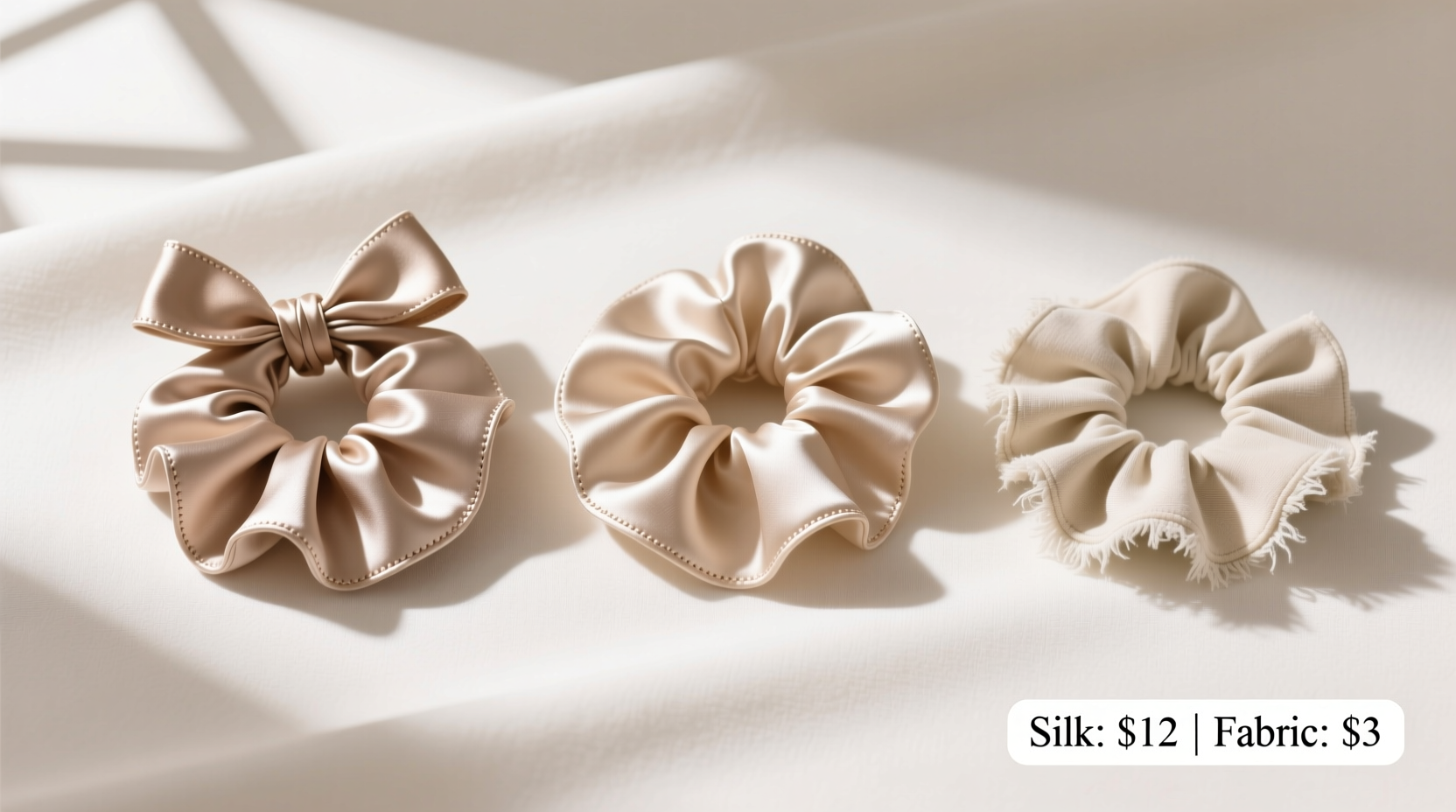
Hair breakage often starts not with harsh chemicals or heat tools, but with mechanical stress—especially from everyday accessories like hair ties. Traditional fabric scrunchies, while soft to the touch, can still create friction against delicate strands. Cotton, though breathable, has a textured weave that tangles easily in fine or curly hair. Polyester and nylon versions, common in multipacks, tend to be slick but static-prone, leading to flyaways and snagging.
More importantly, many basic scrunchies rely on tight elastic cores to maintain grip. This elasticity pulls at the hair shaft, especially when worn tightly or for extended periods. Over time, this repeated stress contributes to weakened cuticles, split ends, and even traction alopecia—a condition caused by prolonged pulling on follicles.
“Hair accessories should protect, not compromise, your hair integrity. Silk reduces friction significantly, which is critical for maintaining moisture and preventing micro-tears.” — Dr. Lena Patel, Trichologist & Hair Health Specialist
How Silk Scrunchies Work Differently
Silk, particularly high-grade mulberry silk (22 momme or higher), has a naturally smooth fiber structure. Unlike woven cotton or synthetic fabrics, silk fibers slide against each other with minimal resistance. When used in scrunchies, this translates to less drag on the hair surface during tying and removal.
The benefits extend beyond texture. Silk is also less absorbent than cotton, meaning it doesn’t wick away natural oils from your hair. This helps preserve moisture, especially important for curly, coily, or chemically treated hair types prone to dryness. Additionally, silk’s low friction reduces static buildup, minimizing frizz and flyaways.
Comparing Materials: A Detailed Breakdown
| Feature | Silk Scrunchies | Basic Fabric Scrunchies (Cotton/Polyester) |
|---|---|---|
| Fiber Texture | Ultra-smooth, non-abrasive | Textured or slightly rough, increases friction |
| Maintenance of Hair Moisture | Preserves natural oils | Can absorb moisture from hair |
| Durability | High (if properly cared for) | Low to moderate (elastic degrades quickly) |
| Elastic Core Longevity | Often reinforced, lasts 6–12 months | Frequent snapping after 1–3 months |
| Impact on Hair Breakage | Minimal | Moderate to high, especially with tight styles |
| Price Range (per unit) | $12–$25 | $0.50–$2 |
| Care Requirements | Hand wash, air dry | Machine washable, but wears faster |
While the upfront cost of silk is higher, its lifespan and protective qualities often justify the investment—particularly for those with fragile, textured, or length-retaining hair goals.
Real-Life Impact: A Mini Case Study
Sophia M., a 34-year-old graphic designer with shoulder-length wavy hair, had struggled with persistent mid-shaft breakage and morning frizz. She regularly wore her hair in a bun during work hours and used standard polyester scrunchies bought in bulk. After six months of consistent use, she noticed increased shedding and difficulty maintaining length despite using hydrating products.
On her stylist’s recommendation, Sophia switched to a single mulberry silk scrunchie priced at $18. She used it exclusively for daytime buns and overnight sleeping twists. Within eight weeks, she reported fewer tangles upon waking, reduced morning frizz, and noticeably less hair caught in her brush. After four months, her trim revealed healthier ends with less splitting. Though she initially hesitated at the price, she now considers it one of her most effective hair investments.
Caring for Silk Scrunchies: A Step-by-Step Guide
To get the most out of your silk scrunchies, proper maintenance is essential. Unlike basic fabric ties, silk requires gentle handling to preserve both the fabric and elastic core.
- Spot clean when possible: Use a damp cloth with mild soap to wipe stains or oil buildup. Avoid soaking unless necessary.
- Hand wash monthly: Fill a basin with lukewarm water and a silk-safe detergent. Gently agitate for 1–2 minutes. Never wring or twist.
- Rinse thoroughly: Use cool water until suds are gone. Residual soap can weaken fibers over time.
- Air dry flat: Lay the scrunchie on a clean towel away from direct sunlight or heat sources. Do not hang, as this can stretch the elastic.
- Store properly: Keep in a drawer or small pouch to prevent snags from jewelry or rough surfaces.
- Replace when elastic loosens: Even high-quality silk will degrade eventually. If the hold becomes too loose, retire it to avoid ineffective use.
Following these steps can extend the usable life of a silk scrunchie to 9–12 months or longer, making the per-use cost far lower than repeatedly replacing cheaper alternatives.
What Experts Say About Hair Accessories
Trichologists and professional stylists increasingly emphasize the role of accessories in overall hair health. It's not just about how you style your hair—but what you style it with.
“The shift toward silk scrunchies reflects a broader understanding of hair wellness. We’re moving beyond products and into behavioral changes that reduce daily damage.” — Jamal Rivers, Celebrity Hairstylist & Educator
According to Dr. Amina Khalid, a board-certified dermatologist specializing in hair disorders, “Patients with chronic breakage often overlook external stressors. Switching to silk ties is a simple, low-cost intervention that can yield visible improvements in just a few weeks.”
When Basic Scrunchies Still Make Sense
That said, silk scrunchies aren’t always the ideal choice for every situation. There are practical scenarios where basic fabric versions remain useful:
- Workouts: Sweat and frequent washing make silk impractical. Opt for moisture-wicking, snag-free athletic hair ties instead.
- Kids’ hair: Children may lose or damage delicate accessories. Affordable cotton scrunchies are more expendable.
- Temporary styles: For quick, loose updos lasting under an hour, basic ties pose minimal risk.
- Budget constraints: Not everyone can afford premium options. In such cases, choosing wider, looser-fitting fabric ties can reduce damage compared to thin, tight elastics.
The key is intentionality: reserving silk scrunchies for high-value situations—like bedtime, humid days, or special events—maximizes their benefit without requiring a full wardrobe swap.
Checklist: Choosing the Right Scrunchie for Your Needs
Use this checklist to decide whether a silk scrunchie is right for you—or when to stick with a basic version:
- ✅ Do you frequently wear your hair up for several hours?
- ✅ Is your hair fine, curly, color-treated, or prone to breakage?
- ✅ Do you wake up with tangled or creased hair?
- ✅ Are you trying to grow your hair longer?
- ✅ Can you commit to gentle hand washing?
- ✅ Are you willing to invest in one durable accessory over disposable ones?
If you answered “yes” to three or more, a silk scrunchie is likely worth the price. If not, consider starting with one as a trial before expanding your collection.
FAQ: Common Questions About Silk Scrunchies
Do silk scrunchies really prevent hair breakage?
Yes. Their smooth texture creates less friction than cotton or synthetic fabrics, reducing the likelihood of snagging and cuticle damage. While no hair tie eliminates all risk, silk significantly lowers mechanical stress on strands.
Can I machine wash my silk scrunchie?
It’s not recommended. Machine agitation and spin cycles can damage silk fibers and weaken the elastic. Hand washing with a silk-specific detergent is safest for longevity.
Are all “silk” scrunchies actually made of real silk?
No. Many brands sell “silk-like” or “satin” scrunchies made from polyester. True silk scrunchies will list “100% mulberry silk” and often specify momme weight (ideally 19–22). Check labels carefully.
Conclusion: Value Over Price
The true measure of worth isn’t found in the price tag, but in long-term impact. Silk scrunchies cost more upfront, but their ability to protect hair, last longer, and enhance daily routines makes them a compelling upgrade for many. They’re not a magic solution, but a thoughtful tool in a broader strategy of hair wellness.
For those committed to reducing breakage, preserving moisture, and treating hair with care, a silk scrunchie is more than a fashion statement—it’s a functional investment. And unlike fast-fashion accessories that fray, snap, or fade within weeks, a well-maintained silk scrunchie delivers consistent performance month after month.




 浙公网安备
33010002000092号
浙公网安备
33010002000092号 浙B2-20120091-4
Comments
No comments yet. Why don't you start the discussion?