
Smart glasses have been circling the tech horizon for over a decade, but recent advancements from companies like Ray-Ban (Meta), Amazon (Radar), and XREAL suggest they’re finally stepping into the mainstream. With built-in audio, cameras, voice assistants, and even augmented reality overlays, it’s tempting to think these sleek frames could replace both your earbuds and sunglasses in one fell swoop. But is that promise realistic—or just another round of Silicon Valley hype?
The short answer: not yet. While smart glasses are evolving fast, several critical limitations prevent them from fully displacing dedicated audio devices or high-performance sunwear. Understanding what they can and can’t do today reveals both their potential and their pitfalls.
The All-in-One Promise: Convenience vs. Compromise
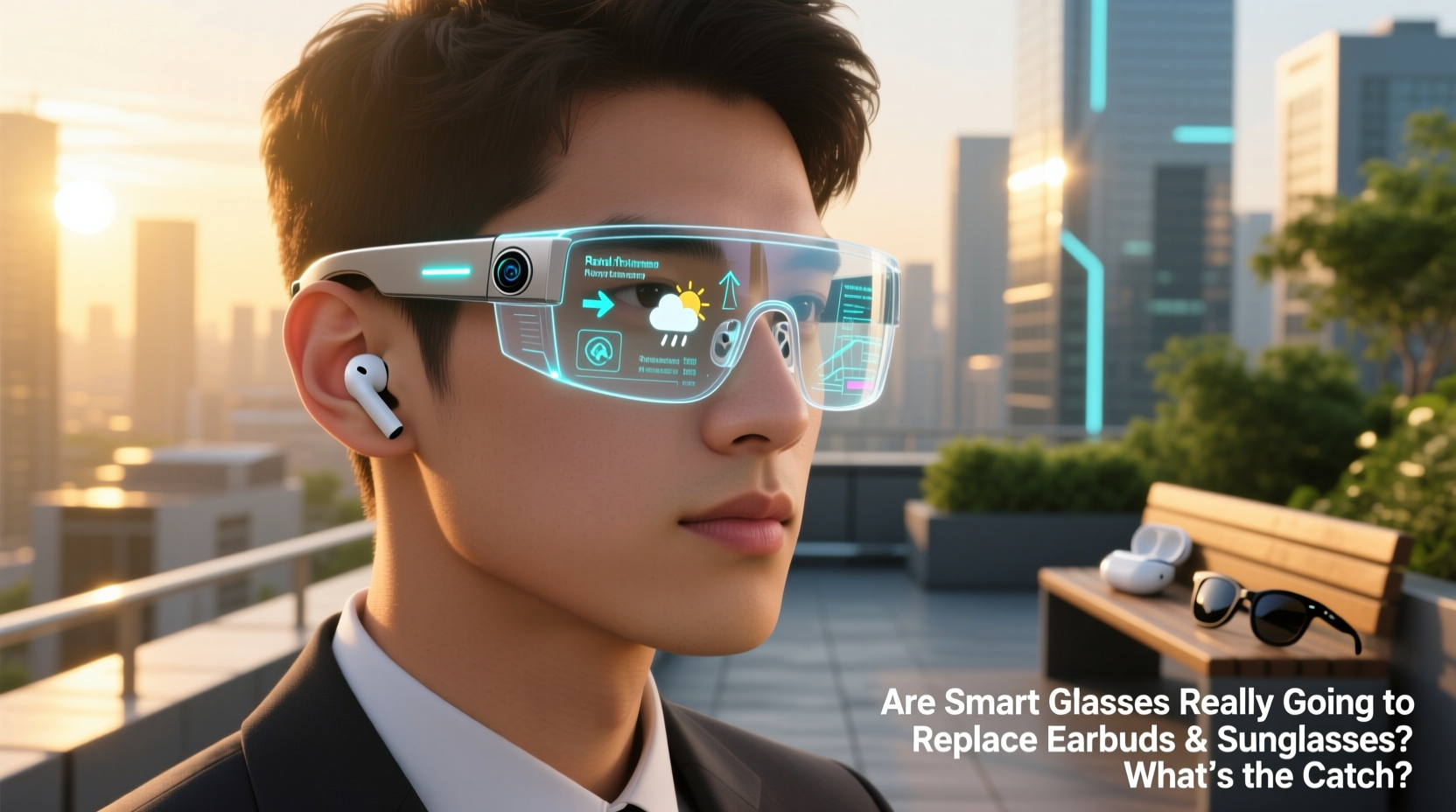
Manufacturers pitch smart glasses as lifestyle multi-tools—sunglasses that play music, take calls, capture moments, and keep you connected without pulling out your phone. The appeal is clear: fewer gadgets cluttering your pockets, a more seamless experience, and a futuristic edge to your daily routine.
But convergence often comes at a cost. When you combine functions into a single device, each individual component usually has to make compromises in performance, comfort, or battery life. Smart glasses are no exception.
Audio Quality: Can Open-Ear Sound Replace Earbuds?
Most smart glasses use open-ear audio delivery—tiny speakers near your temples that project sound toward your ears without blocking them. This design prioritizes situational awareness, making it safer for walking or cycling, but it sacrifices audio fidelity.
Bass response is minimal, volume control is limited by ambient noise, and sound leakage is common. In a quiet room, the experience is passable. On a busy street or windy park trail? You’ll struggle to hear your podcast over the environment.
Compare this to true wireless earbuds, which now offer active noise cancellation, deep bass, spatial audio, and superior call clarity. Even mid-tier models outperform smart glasses in audio quality.
“Open-ear audio is great for alerts and quick interactions, but it’s not designed for immersive listening.” — Dr. Lena Tran, Audio Engineer at Sonova Labs
Sun Protection: Are Smart Lenses Up to the Task?
If you’re replacing sunglasses, UV protection and lens quality matter. Most smart glasses come with tinted lenses, but not all meet the same standards as premium sunglass brands.
Ray-Ban Meta models, for example, offer 100% UVA/UVB protection and polarized options—solid marks. However, other brands may skimp on polarization, scratch resistance, or optical clarity. And because the electronics are embedded in the arms, lens replacement is either impossible or costly.
Worse, many models lack interchangeable lenses. If you want clear lenses for evening wear or transition lenses for variable light, you’re out of luck. Traditional sunglasses win hands-down in versatility and longevity.
Battery Life and Practical Usage
This is where the “catch” becomes glaring. Smart glasses typically last 3–6 hours with mixed audio and camera use. That’s barely enough for a long commute, let alone a full day outdoors. Compare that to earbuds, which often deliver 5–8 hours per charge (with cases extending that to 24+), and sunglasses—which need no power at all.
Recharging adds friction. Most smart glasses charge via USB-C, but carrying a cable and finding an outlet during the day isn’t as convenient as popping earbuds into a case. And unlike sunglasses, you can’t just toss them in your bag when done—you have to worry about battery health and storage conditions.
Privacy, Social Perception, and Real-World Etiquette
One overlooked issue is social trust. Glasses with visible cameras—even if they beep when recording—make people uneasy. In restaurants, meetings, or public transit, wearing a device that could be capturing video changes how others interact with you.
A mini case study illustrates this: Sarah, a marketing consultant in Austin, wore her Ray-Ban Meta glasses to a networking event. She used them to snap a few outdoor photos and take a call. But when she mentioned the camera feature, two attendees visibly stepped back, and one asked if they’d been recorded. Despite having used the device responsibly, the perception problem was real.
Unlike earbuds or regular sunglasses, smart glasses carry a stigma of surveillance. Until cultural norms adapt, that social tax remains a significant barrier to widespread adoption.
Comparison: Smart Glasses vs. Dedicated Devices
| Feature | Smart Glasses | Earbuds | Sunglasses |
|---|---|---|---|
| Audio Quality | Moderate (open-ear) | High (noise-cancelling options) | N/A |
| UV Protection | Varies (some good, some poor) | N/A | Excellent (standard) |
| Battery Life | 3–6 hours | 5–8 hours (+ case) | Unlimited |
| Camera Capability | Yes (12MP typical) | No | No |
| Situational Awareness | High (open ear) | Low (noise-cancelling blocks sound) | High |
| Social Acceptance | Moderate to Low | High | High |
When Smart Glasses Shine: A Practical Checklist
Smart glasses aren’t useless—they excel in specific scenarios. Use this checklist to determine if they fit your lifestyle:
- ✅ You prioritize hands-free calling while walking, biking, or driving
- ✅ You want to capture spontaneous outdoor moments without pulling out your phone
- ✅ You value staying aware of your surroundings over immersive audio
- ✅ You’re comfortable explaining (or defending) your device in social settings
- ✅ You already own high-quality earbuds and sunglasses and see smart glasses as a supplement, not a replacement
What the Future Holds
The trajectory is promising. Companies are investing heavily in waveguide displays, bone conduction audio, longer-lasting micro-batteries, and AI-powered contextual assistance. Within five years, we may see smart glasses with AR navigation overlays, real-time language translation, and adaptive tinting—all without sacrificing comfort or battery.
But until then, they remain niche tools for early adopters, tech enthusiasts, and professionals who need lightweight connectivity on the move. They complement existing gear; they don’t replace it.
Frequently Asked Questions
Can I wear smart glasses prescription?
Some models allow for prescription inserts or custom lens swaps through third-party services, but native support is limited. Always check compatibility before purchasing.
Do smart glasses work with all phones?
Most pair via Bluetooth and work with iOS and Android, but advanced features (like photo syncing or voice assistant integration) may require specific apps or OS versions.
Are smart glasses safe for long-term use?
Physically, yes—they’re no heavier than regular sunglasses. However, extended audio use should follow standard hearing safety guidelines (e.g., 60/60 rule: 60% volume for no more than 60 minutes at a time).
Final Verdict: Useful Tool, Not a Full Replacement
Smart glasses won’t replace your earbuds or sunglasses anytime soon. Their audio lacks depth, their battery life is short, and their social footprint is still awkward. But as a supplementary device for on-the-go communication and light media capture, they offer genuine utility.
The catch? They ask you to compromise on performance for the sake of novelty and convenience. For most people, that trade-off isn’t worth it—yet. But for those who value constant connectivity and don’t mind being the first to try something new, smart glasses are a glimpse of what’s coming.




 浙公网安备
33010002000092号
浙公网安备
33010002000092号 浙B2-20120091-4
Comments
No comments yet. Why don't you start the discussion?