
As holiday seasons approach, many homeowners face the same recurring challenge: how to efficiently manage multiple strands of Christmas lights across indoor and outdoor displays. With growing numbers of LED strings, animated figures, and synchronized light shows, manually plugging in and unplugging each circuit becomes impractical. This raises an important question—do you actually need smart outlets to handle these setups? The answer depends on your goals, technical comfort, and the scale of your display.
Smart outlets offer remote control, scheduling, automation, and energy monitoring—all accessible from a smartphone or voice assistant. But for seasonal lighting, especially during the holidays, their value must be weighed against cost, complexity, and necessity. Let’s examine when smart outlets make sense, when they’re overkill, and what alternatives exist for managing multiple Christmas light circuits effectively.
Understanding the Challenges of Multiple Light Circuits
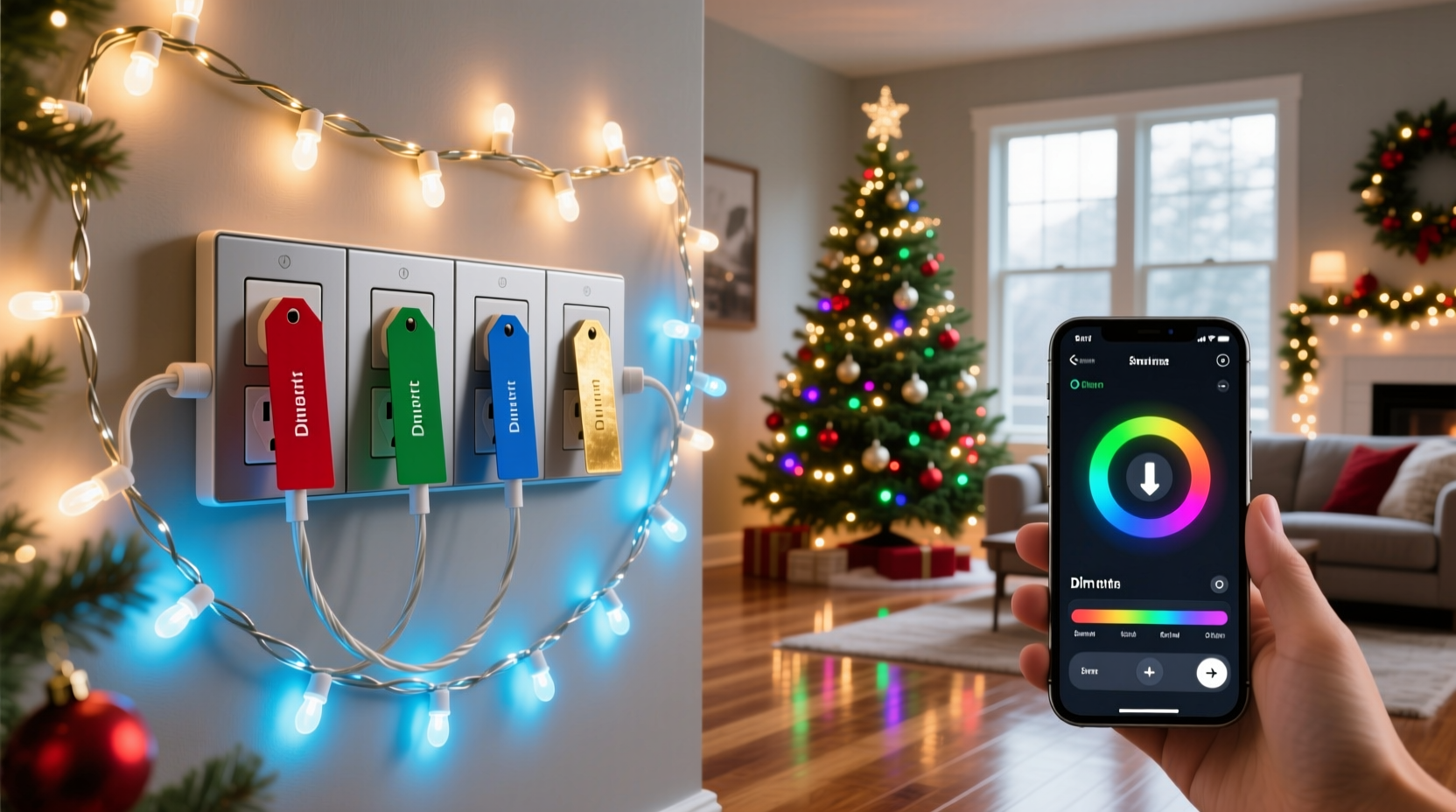
Running several Christmas light circuits introduces logistical hurdles that go beyond simple decoration. Each additional string increases power draw, timing coordination, and physical access requirements. Consider a typical scenario: front yard icicle lights, porch wreaths, roofline borders, tree illumination, and driveway markers—all on separate circuits due to outlet availability or circuit breaker limits.
Manually turning all these on at dusk and off at bedtime isn’t just inconvenient—it’s inconsistent. Forgetfulness leads to lights staying on too long, increasing electricity usage and reducing bulb lifespan. Additionally, adverse weather can catch unattended displays off guard; sudden storms may necessitate immediate shutdowns for safety.
From a practical standpoint, managing multiple circuits means:
- Physical access to multiple outlets, often in hard-to-reach places
- Different on/off times based on sunset/sunrise changes
- Coordination with timers or mechanical switches that lack flexibility
- Risk of overloading circuits if not properly distributed
- Limited ability to monitor energy consumption or detect faults
These issues compound as displays grow larger. For modest setups—say, one indoor tree and a single outdoor strand—a basic timer plug might suffice. But once you exceed three independent circuits, particularly with mixed durations or effects, centralized management becomes valuable.
When Smart Outlets Add Real Value
Smart outlets shine in situations where convenience, precision, and remote oversight matter. They become more than luxury gadgets when used strategically within a coordinated lighting plan. Here are key scenarios where investing in smart technology pays off:
Large or Multi-Zone Displays
If your home features distinct lighting zones—such as upper roof, lower eaves, landscaping, and interior trees—controlling them individually allows for dynamic sequencing. Using apps like Kasa or TP-Link, you can stagger activation times to create cascading light effects without leaving your couch.
Scheduling Based on Sunset and Sunrise
Unlike mechanical timers requiring weekly adjustments, smart outlets sync with geolocation data to automatically adapt to changing daylight hours. A setup programmed to turn on 15 minutes after sunset will remain accurate throughout December, eliminating manual tweaks.
Remote Access and Monitoring
Imagine being away for the holidays but wanting to activate your display for visiting family. Or receiving an alert that a circuit tripped overnight. With smart outlets, users gain visibility and control regardless of location. Some models even provide real-time energy usage reports, helping identify inefficient or failing strands.
Voice and Automation Integration
For households already using Alexa, Google Assistant, or Apple HomeKit, integrating smart outlets enables voice commands like “Turn on the Christmas lights” or automations tied to routines (“When I say ‘Holiday Mode,’ turn on all exterior lights and play festive music”).
“Homeowners with complex holiday displays see the biggest return on investment from smart plugs—not because they're flashy, but because they reduce daily friction.” — David Lin, Residential Lighting Consultant
Alternatives to Smart Outlets
While smart outlets offer advanced functionality, they aren’t the only solution. Several effective—and often cheaper—alternatives exist depending on your needs.
Mechanical and Digital Timers
Basic plug-in timers have served holiday decorators for decades. Mechanical versions use rotating dials to set on/off periods, while digital ones allow precise programming. Though less flexible than Wi-Fi models, they work reliably without internet dependency. However, they require manual adjustment as daylight shifts and offer no remote override.
Manual Power Strips with Switches
Using heavy-duty outdoor-rated power strips with individual switches lets you group lights logically and toggle them collectively. While still requiring physical interaction, this method improves organization and reduces trips to different outlets.
Dedicated Holiday Circuit Panels
In high-end installations, electricians sometimes install temporary subpanels dedicated to holiday lighting. These centralize control and protect against overloads. Though costly, they support professional-grade setups with hundreds of strands.
Dumb Plugs + Discipline
Yes, some people still rely purely on habit. If your display is small and accessed easily, remembering to switch everything on and off daily is feasible. But human error remains high, especially during busy holiday weeks.
Cost-Benefit Analysis: Are Smart Outlets Worth It?
To determine necessity, consider both tangible and intangible factors. The table below compares common control options across key decision-making criteria.
| Feature | Smart Outlet | Digital Timer | Mechanical Timer | Manual Only |
|---|---|---|---|---|
| Remote Control | Yes | No | No | No |
| Sunset/Sunrise Sync | Yes (via app) | Limited | No | No |
| Energy Monitoring | Select models | No | No | No |
| Voice Control | Yes | No | No | No |
| Setup Cost (per outlet) | $15–$25 | $8–$15 | $5–$10 | $0 |
| Reliability | High (with stable Wi-Fi) | High | Moderate (dial drift) | Low (human-dependent) |
| Best For | Multi-circuit, remote, or automated displays | Budget-conscious users needing basic scheduling | Simple setups with fixed schedules | Minimalist decorators |
The data suggests that smart outlets justify their higher upfront cost primarily through time savings, automation capabilities, and enhanced user experience. For someone managing five circuits across a two-story house, the cumulative effort of manual toggling outweighs the expense of four $20 smart plugs.
Mini Case Study: The Johnson Family Display
The Johnsons live in a suburban neighborhood known for competitive holiday decorations. Their annual display includes 12 separate circuits: roof lines, driveway posts, window outlines, front tree, nativity scene, and animated reindeer. Previously, they used a mix of mechanical timers and extension cords, requiring nightly checks and frequent resets after power blips.
Last year, they invested in eight smart outlets and two multi-plug controllers. They grouped lights by zone and programmed staggered onsets—one minute apart—to simulate a wave effect. Schedules were set to follow local sunset times, and voice commands allowed instant overrides (“Alexa, turn off all lights” when neighbors complained about brightness).
The result? A 70% reduction in hands-on management time, improved neighbor relations due to consistent off-times, and zero missed activations despite a week-long vacation. According to Mr. Johnson, “It paid for itself in peace of mind alone.”
Step-by-Step Guide to Setting Up Smart Outlets for Christmas Lights
Implementing smart outlets doesn’t require technical expertise. Follow this sequence to ensure a smooth, safe installation:
- Assess Your Circuit Layout: Map out all light strings and identify which outlets they connect to. Note distances from router for Wi-Fi reliability.
- Choose Compatible Smart Outlets: Select weatherproof, UL-listed models rated for outdoor use (e.g., Kasa KP105, Wemo Mini). Ensure they support your voice platform if desired.
- Test One Unit First: Plug in a single strand and verify app connectivity, responsiveness, and scheduling accuracy.
- Group by Zone: Assign names like “Front Roof,” “Lawn Trees,” or “Porch Lights” in the app for easy identification.
- Set Automated Schedules: Program lights to turn on 15 minutes after sunset and off at 11 PM (adjustable for weekends).
- Create Scenes or Routines: In Alexa or Google Home, build a “Holiday Lights On” routine that activates all relevant outlets simultaneously.
- Monitor Performance: Check energy logs weekly and replace any outlet showing abnormal draw or disconnections.
- Store Properly After Season: Label each smart plug with its corresponding zone, wrap cords neatly, and store in a dry container for next year.
Frequently Asked Questions
Can I use smart outlets outdoors?
Yes, but only if they are explicitly rated for outdoor use and protected from direct exposure to rain or snow. Use covered outlet boxes and avoid submerging any part. Always check the IP (Ingress Protection) rating—look for at least IP44 for damp environments.
Do smart outlets increase my electricity bill?
Not significantly. Most consume less than 1 watt in standby mode. Any increase is negligible compared to the lights themselves. However, poorly managed schedules (e.g., leaving lights on 24/7) can raise costs—automation helps prevent this.
What if my Wi-Fi goes down?
Most smart outlets lose remote functionality during outages but retain their last known state until connectivity returns. Some models offer local control via Bluetooth as a fallback. For critical reliability, pair them with a UPS or use hybrid setups with backup timers.
Final Thoughts: Necessity vs. Enhancement
Are smart outlets strictly necessary for managing multiple Christmas light circuits? Technically, no. You can absolutely run a beautiful, functional display using traditional methods. But necessity isn't solely about feasibility—it's about sustainability, enjoyment, and efficiency.
For casual decorators with one or two strands, a simple timer suffices. But for anyone managing three or more circuits, especially across large properties or with automation ambitions, smart outlets transition from luxury to logical tool. They eliminate repetitive tasks, enhance precision, and integrate seamlessly into modern smart homes.
Their true value emerges not in installation, but in daily use: never forgetting to turn lights on, adjusting effortlessly for guests or travel, and enjoying a display that feels responsive rather than burdensome.
“The best holiday tech doesn’t draw attention to itself—it disappears into the experience, letting the magic take center stage.” — Lena Patel, Smart Home Lifestyle Coach




 浙公网安备
33010002000092号
浙公网安备
33010002000092号 浙B2-20120091-4
Comments
No comments yet. Why don't you start the discussion?