
In a world where wearables have evolved from clunky fitness trackers to sleek smartwatches, the next frontier appears to be shrinking further—into our fingers. Smart rings, once the stuff of science fiction, are now commercially available from brands like Oura, Ultrahuman, and Samsung. They promise health monitoring, sleep tracking, gesture control, and even contactless payments—all packed into a tiny band that fits discreetly on your hand. But beyond the novelty, a critical question remains: Are smart rings genuinely practical tools for everyday life, or are they overpriced tech gimmicks disguised as innovation?
The answer isn’t binary. Like any emerging technology, smart rings sit at the intersection of promise and limitation. Their utility depends heavily on individual needs, lifestyle habits, and expectations. To separate substance from hype, we need to examine their capabilities, user experiences, long-term value, and how they compare to other wearables already established in the market.
The Rise of the Smart Ring: More Than Just Miniaturization?
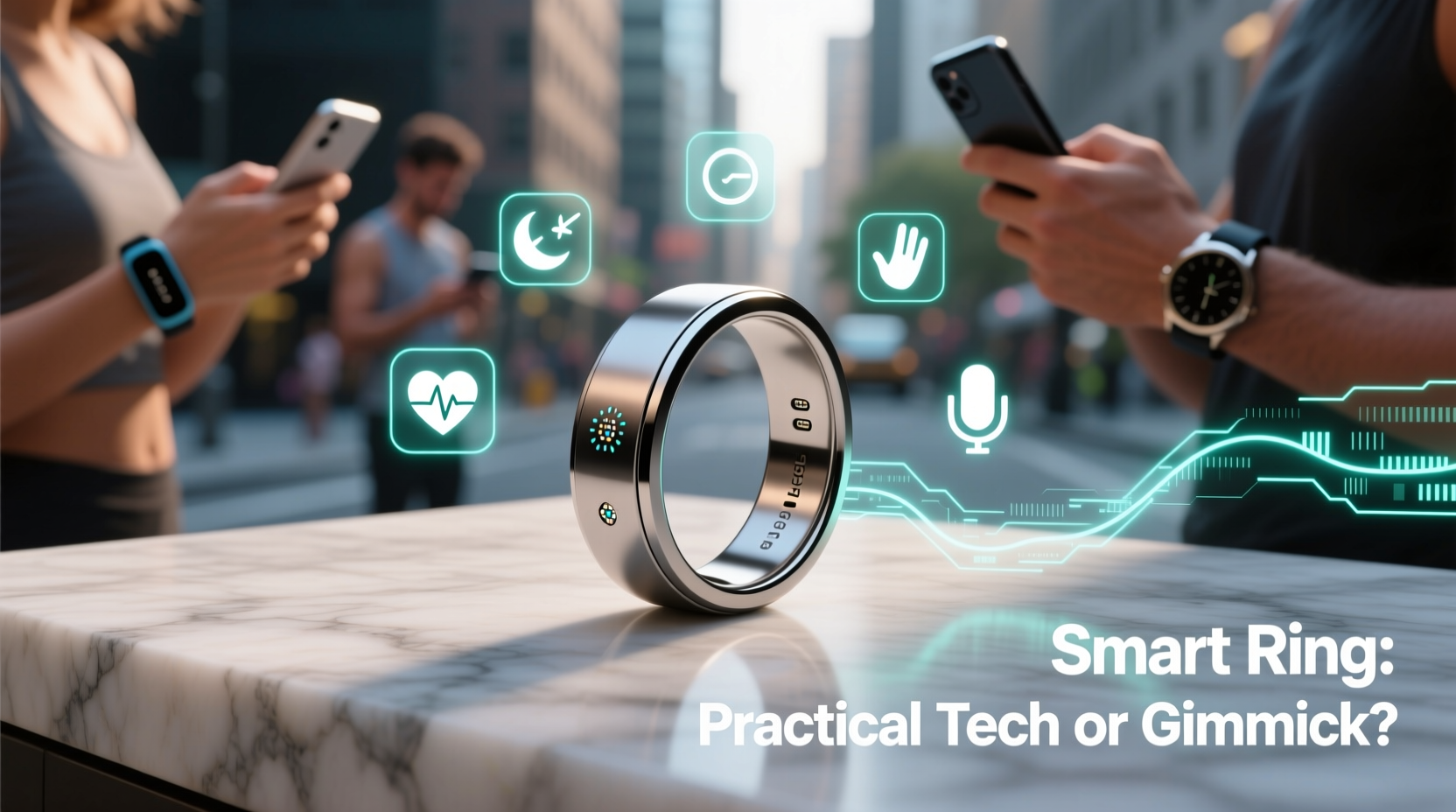
Smart rings represent a shift toward subtler, less intrusive wearable technology. Unlike smartwatches, which demand attention with notifications and require frequent charging, smart rings aim to operate quietly in the background. Most models focus on passive data collection—measuring heart rate variability (HRV), body temperature, blood oxygen levels, activity intensity, and sleep stages—using sensors embedded within millimeters of space.
The appeal lies in discretion and comfort. Many users report sleeping better with a ring than with a watch, and professionals who dislike bulky wristwear find rings more socially acceptable during meetings or formal events. The form factor also enables continuous wear, which is crucial for collecting longitudinal health data.
However, miniaturization comes at a cost—literally and functionally. Limited battery capacity means most smart rings last only 4–7 days per charge. Sensor accuracy can vary due to placement on the finger, which has less consistent blood flow than the wrist. And while some models offer gesture controls or NFC payments, these features remain underdeveloped compared to their larger counterparts.
“Wearable tech is moving toward ambient intelligence—devices that monitor without demanding interaction. Rings are part of that evolution, but they’re still catching up in reliability.” — Dr. Lena Patel, Biomedical Engineer & Wearable Tech Researcher, MIT Media Lab
Practical Benefits: Where Smart Rings Deliver Real Value
Despite their constraints, smart rings excel in specific areas, particularly when it comes to health and wellness tracking. For individuals focused on preventive care, biohacking, or optimizing performance, the data provided by high-end rings can be surprisingly actionable.
- Sleep Quality Insights: Devices like the Oura Ring Gen3 provide detailed breakdowns of light, deep, and REM sleep, along with readiness scores based on HRV and resting heart rate. Users report adjusting bedtime routines, reducing caffeine intake, or seeking medical advice after noticing persistent disruptions.
- Early Health Warning Signs: Continuous temperature monitoring has helped some users detect fevers before symptoms appeared—particularly useful during illness outbreaks or post-surgery recovery.
- Stress and Recovery Tracking: By analyzing autonomic nervous system markers, smart rings can indicate periods of high stress or inadequate recovery, prompting behavioral changes such as meditation, reduced training load, or improved hydration.
- Discreet All-Day Wear: Because they resemble jewelry, many people forget they're wearing them—leading to higher compliance rates than watches or chest straps.
Gimmicks and Limitations: When Hype Outpaces Functionality
Not all features live up to the marketing claims. Several aspects of current smart rings fall short of being truly practical for mainstream adoption.
Gesture control—often touted as a futuristic way to navigate music or answer calls—is unreliable in real-world conditions. Finger movements are subtle, easily misinterpreted, and often require precise calibration. Most users abandon this feature within weeks.
NFC payments, while technically possible, are rarely implemented well. Few merchants support ring-based transactions, and setting them up requires navigating fragmented platforms. In contrast, Apple Pay or Google Wallet on a phone or watch offers broader compatibility and smoother integration.
Battery life remains a pain point. Recharging every few days disrupts continuity in data collection. Missing even one night of sleep tracking can skew weekly trends, undermining the very purpose of long-term monitoring.
Additionally, price is a major barrier. Premium smart rings range from $300 to $600—comparable to mid-tier smartwatches—yet offer fewer interactive features and limited third-party app support.
Do’s and Don’ts of Using a Smart Ring
| Do | Don't |
|---|---|
| Use it primarily for sleep and recovery tracking | Expect medical-grade diagnostic accuracy |
| Keep firmware updated for sensor improvements | Rely solely on gesture controls for daily tasks |
| Pair with a health journal to correlate data with habits | Wear it too loosely—it affects heart rate readings |
| Remove during intense water exposure (e.g., saunas, hot tubs) | Assume it replaces professional medical devices |
Real-World Example: A Biohacker’s Experience
James R., a 38-year-old software engineer and amateur triathlete, began using an Ultrahuman Ring Air six months ago to optimize his training and sleep. Initially skeptical, he was drawn in by reports of improved recovery insights.
Within two weeks, the ring flagged consistently low HRV scores despite adequate sleep. After logging diet, caffeine, and workout intensity, James noticed a pattern: late-night coding sessions correlated with poor recovery metrics. He adjusted his schedule, enforcing a digital curfew at 9 PM. Over the next month, his readiness score improved by 22%, and he reported feeling more alert during morning workouts.
However, James eventually disabled gesture controls after accidentally pausing music during meetings. He also found the battery life frustrating, forgetting to charge it twice and losing three nights of data. Still, he considers the ring “worth it” for sleep and stress tracking alone.
His takeaway? “It’s not a magic solution, but it gives me signals I wouldn’t notice otherwise. If you’re serious about self-optimization, it helps. If you want a flashy gadget, look elsewhere.”
How Do Smart Rings Compare to Other Wearables?
To assess practicality, it’s essential to compare smart rings against alternatives.
| Feature | Smart Ring | Smartwatch | Fitness Tracker |
|---|---|---|---|
| Sleep Tracking Accuracy | High (especially body temp & HRV) | Moderate to High | Moderate |
| Battery Life | 4–7 days | 1–3 days | 5–10 days |
| Notifications | Limited (vibrations only) | Full (calls, texts, apps) | Basic alerts |
| Comfort for Sleep | Excellent | Poor to Moderate | Moderate |
| Gesture Control | Unreliable | Absent or minimal | None |
| Price Range | $300–$600 | $200–$800 | $80–$200 |
The data suggests smart rings occupy a niche: ideal for passive health monitoring but lacking in interactivity. They outperform watches in sleep comfort and certain biomarker tracking but fall behind in functionality and ecosystem support.
Who Should Consider a Smart Ring?
Smart rings aren’t for everyone. They make the most sense for specific user profiles:
- Health-Focused Individuals: Those tracking chronic conditions, fertility cycles, or mental well-being may benefit from continuous physiological data.
- Athletes and Coaches: Monitoring recovery metrics helps avoid overtraining and optimize performance timing.
- Professionals Seeking Discretion: Executives, healthcare workers, or creatives who prefer minimalist tech.
- Long-Term Data Collectors: People interested in spotting health trends over months or years.
Conversely, casual users looking for step counts, text replies, or voice assistants will likely find smart rings underwhelming.
Step-by-Step Guide: Getting the Most Out of Your Smart Ring
Maximizing value requires intentional use. Follow this timeline to integrate a smart ring effectively:
- Week 1: Baseline Collection
Wear the ring consistently day and night. Avoid changing routines. Let the app gather initial data on sleep, resting heart rate, and activity. - Week 2: Identify Patterns
Review nightly sleep scores and daily readiness metrics. Note correlations with caffeine, alcohol, exercise, or stress. - Week 3: Make One Change
Adjust a single habit—like going to bed 30 minutes earlier—and observe its impact on recovery scores. - Month 2: Correlate with External Factors
Sync with calendar events (work deadlines, travel) to see how life stressors affect physiology. - Ongoing: Use as an Early Warning System
Monitor for deviations—such as elevated temperature or low HRV—that may signal illness or burnout before symptoms arise.
Frequently Asked Questions
Can a smart ring replace a smartwatch?
Not currently. While smart rings offer superior sleep tracking and comfort, they lack screens, robust notifications, GPS, and app ecosystems. They complement rather than replace smartwatches for most users.
Are smart rings accurate enough for health decisions?
They provide valuable trend data but should not be used for medical diagnosis. Clinical decisions should always involve healthcare professionals and FDA-cleared devices.
Which finger should I wear my smart ring on?
The index or middle finger typically yields the best results due to stronger blood flow. Avoid the pinky, which may give inconsistent readings. Ensure a snug fit without restricting circulation.
Conclusion: Practical Tool or Passing Gimmick?
Smart rings are neither pure gimmicks nor revolutionary must-haves. They are specialized instruments with clear strengths and notable limitations. For those deeply invested in personal health optimization, sleep quality, and long-term biometrics, they offer meaningful insights that other wearables struggle to match—especially during sleep.
Yet, for the average consumer, the high cost, limited functionality, and inconsistent secondary features make them hard to justify. Gesture controls feel like beta-stage novelties, and payment systems remain niche. Until battery life improves and clinical validation strengthens, smart rings will remain a tool for enthusiasts, not the masses.
The future is promising. As sensor technology advances and AI interprets data more intelligently, rings could evolve into true health sentinels—alerting users to infections, hormonal shifts, or cardiovascular anomalies before they become serious. But today, they serve best as supplements, not substitutes.




 浙公网安备
33010002000092号
浙公网安备
33010002000092号 浙B2-20120091-4
Comments
No comments yet. Why don't you start the discussion?