
Smart rings have quietly entered the wearable tech scene with sleek designs and promises of health tracking, sleep monitoring, and seamless connectivity—all wrapped around your finger. Unlike clunky smartwatches, these minimalist devices blend into daily life without drawing attention. But beneath the hype lies a pressing question: Are smart rings truly useful, or are they merely another overpriced tech fad disguised as innovation?
To answer this, we need to look beyond marketing claims and examine how smart rings perform in real-world use, what they can actually do today, and whether their benefits justify the cost for average consumers.
The Rise of the Smart Ring
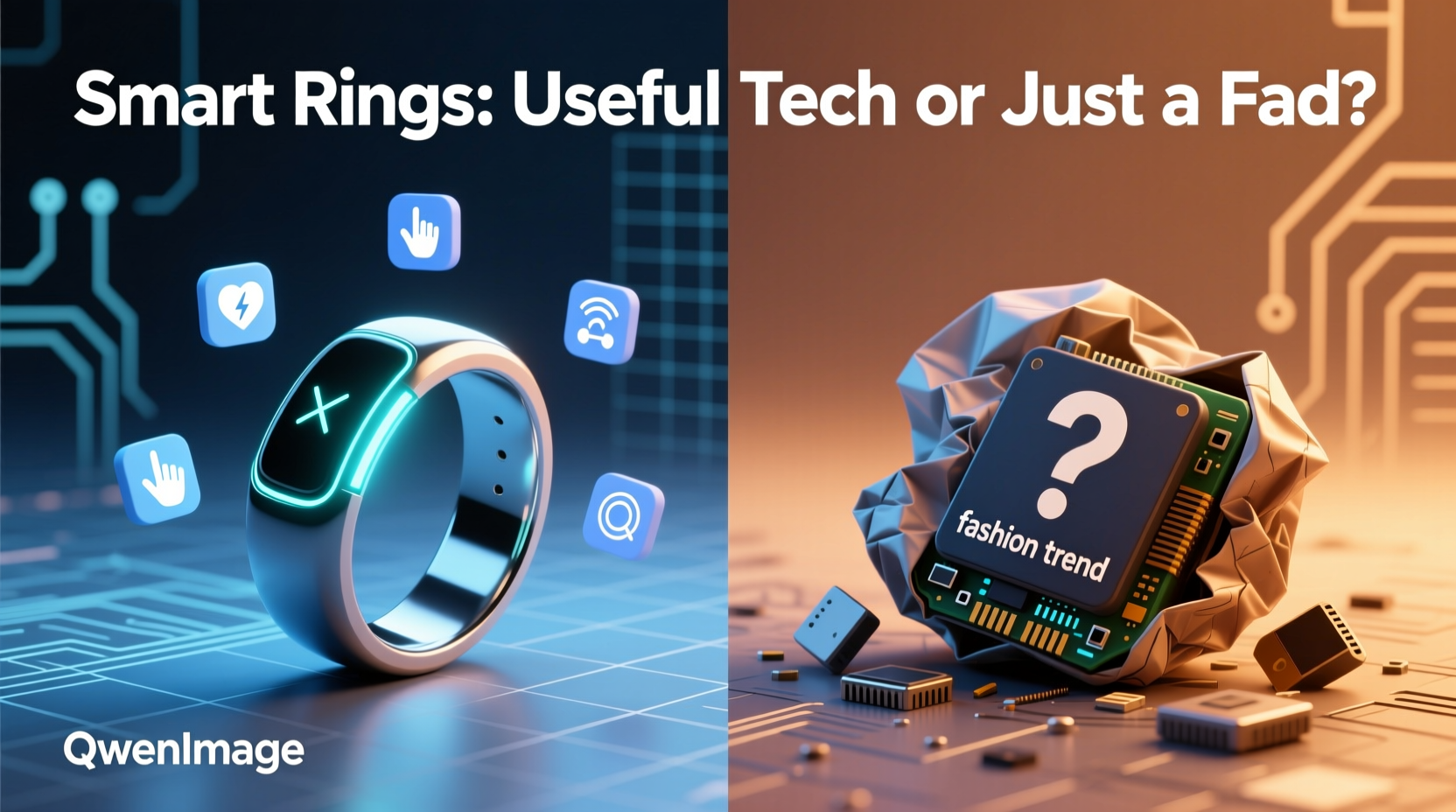
Wearable technology has evolved rapidly—from fitness bands to full-featured smartwatches. Now, the industry is betting on miniaturization. Smart rings like the Oura Ring, Ultrahuman Ring Air, and Samsung’s Galaxy Ring aim to deliver similar functionality in a smaller, less intrusive form factor.
These devices typically track biometrics such as heart rate, body temperature, blood oxygen levels, and sleep patterns. Some models even offer gesture controls, contactless payments, and smartphone notifications. Their discreet design appeals to users who find watches uncomfortable or too obvious.
But compact size comes with trade-offs. Limited battery life, fewer sensors, and reduced processing power mean smart rings often rely heavily on companion apps and smartphones to deliver insights. This raises questions about independence, accuracy, and long-term value.
What Can Smart Rings Actually Do?
Let’s break down the core features offered by most leading smart rings and assess their practicality:
- Sleep Tracking: One of the strongest use cases. Devices like the Oura Ring use movement, heart rate variability (HRV), and skin temperature to analyze sleep stages (light, deep, REM) and provide sleep scores. Many users report improved sleep awareness and habits after using detailed feedback.
- Recovery & Readiness Monitoring: By combining HRV, resting heart rate, and temperature trends, smart rings estimate your body’s readiness for physical activity. Athletes and biohackers find this valuable for optimizing training schedules.
- Activity Tracking: Step counting, calorie burn estimates, and daily movement goals are standard. However, due to the ring’s position on the finger, motion detection is less accurate than wrist-based wearables when it comes to arm movements or gym workouts.
- Stress & Mindfulness Insights: Using HRV and breathing pattern analysis, some rings suggest guided breathing exercises or alert you to elevated stress markers. While helpful for self-awareness, these insights are often subjective and lack clinical validation.
- Gesture Control & NFC: A few high-end models allow swiping gestures to control music or presentations, and support for digital keys or payments. These features remain niche and underutilized by most users.
Where They Fall Short
Despite promising features, smart rings face several limitations:
- Battery life ranges from 4 to 7 days—shorter than many smartwatches.
- No built-in display means constant phone interaction is required.
- Limited third-party app integration compared to Apple Watch or Wear OS devices.
- High price point: Premium models cost $300–$500, often requiring ongoing subscription fees for advanced analytics.
- Finger-based sensors may be less reliable during activities involving hand movement or cold exposure.
Who Benefits Most from Smart Rings?
Not all users will gain equal value. The usefulness of a smart ring depends heavily on lifestyle, priorities, and how one engages with health data.
“Smart rings aren’t for everyone, but for individuals focused on preventive health and long-term wellness trends, they offer a non-intrusive way to gather meaningful biometric data.” — Dr. Lena Patel, Digital Health Researcher at Stanford Medicine
Consider these user profiles:
- Health-Conscious Individuals: Those tracking sleep quality, recovery, or early signs of illness (like fever onset via temperature deviation) benefit significantly. The continuous passive monitoring provides insights that sporadic check-ups cannot.
- Athletes & Fitness Enthusiasts: Recovery metrics help avoid overtraining. However, serious athletes may still prefer chest straps or wrist-based GPS trackers for performance accuracy.
- Professionals Seeking Discretion: Executives, healthcare workers, or creatives who dislike wearing watches find smart rings socially and professionally unobtrusive.
- Tech Minimalists: Users who want basic connectivity (notifications, payments) without carrying a phone or wearing bulky gear appreciate the subtle integration.
On the flip side, casual users looking for step counts or social media alerts may find smart rings underwhelming compared to more versatile smartwatches.
Smart Ring vs. Smartwatch: A Practical Comparison
| Feature | Smart Ring | Smartwatch |
|---|---|---|
| Design & Comfort | Discreet, lightweight, worn 24/7 | Bulkier, often removed at night |
| Sleep Tracking Accuracy | Generally superior due to consistent wear | Good, but affected by removal or loose fit |
| Biometric Sensors | Limited by size; focuses on core vitals | More sensors (ECG, SpO₂, GPS, etc.) |
| User Interface | No screen; relies on phone app | Touchscreen with direct interaction |
| Battery Life | 4–7 days | 1–3 days (varies widely) |
| Price Range | $300–$500 + possible subscriptions | $200–$800, some free analytics |
| Best For | Sleep, recovery, passive health tracking | Active workouts, notifications, apps |
This comparison shows smart rings excel in passive, continuous monitoring but fall short in interactivity and versatility. If your priority is understanding your body’s rhythms over time, a ring makes sense. If you want an on-wrist assistant, a watch remains superior.
Real-World Example: Sarah’s Experience with the Oura Ring
Sarah, a 38-year-old project manager, struggled with chronic fatigue and poor sleep. After trying sleep trackers and meditation apps with limited success, she invested in an Oura Ring. Within two weeks, her nightly readiness score revealed a consistent dip linked to late dinners and alcohol consumption.
Using the temperature trend data, she also noticed a slight elevation before catching a cold—two days before symptoms appeared. Armed with this insight, she adjusted her evening routine: no screens after 9 PM, earlier meals, and reduced wine intake.
After six weeks, her deep sleep increased by 22%, and her morning energy levels improved noticeably. While the ring didn’t “fix” anything, it gave her objective feedback that motivated lasting behavioral changes.
Sarah’s case illustrates how smart rings function best not as magic solutions, but as tools for self-awareness and habit reinforcement.
Is It Just a Fad? Evaluating Long-Term Viability
To determine whether smart rings are sustainable or fleeting, consider three factors: adoption rate, technological trajectory, and market differentiation.
Currently, smart rings occupy a niche segment. Sales are growing—especially in wellness and biohacking communities—but remain dwarfed by smartwatches. According to IDC, smart rings accounted for less than 1% of wearable shipments in 2023. However, major players like Samsung entering the space signals confidence in future potential.
Technologically, advances in micro-sensors, low-power Bluetooth, and AI-driven analytics are making finger-based tracking more accurate. Future iterations could include non-invasive glucose monitoring or blood pressure estimation—features that would dramatically increase medical relevance.
Differentiation is key. To avoid becoming a fad, smart rings must carve out a unique role: not competing directly with watches, but complementing them. Their strength lies in 24/7 wearability and unobtrusive health surveillance, especially during rest—a domain where wrist devices often fail due to removal.
Checklist: Should You Buy a Smart Ring?
Before investing, ask yourself the following:
- Do I prioritize sleep and recovery tracking over notifications and apps?
- Am I willing to pay a premium for a device that offers subtle, long-term insights rather than instant gratification?
- Do I already use a smartwatch, and would a ring add redundant functionality?
- Can I commit to wearing it consistently, including at night?
- Am I comfortable relying on a smartphone app for all data access?
If most answers are “yes,” a smart ring could be a worthwhile addition. If not, you might be better off with a more balanced wearable.
Frequently Asked Questions
Can smart rings replace medical devices?
No. While they provide useful health trends, smart rings are not medical-grade devices. They should not be used to diagnose conditions or replace professional healthcare. Always consult a doctor for medical concerns.
Are smart rings worth the subscription fees?
It depends. Basic tracking is usually included, but advanced analytics (like readiness scores or detailed sleep breakdowns) often require monthly subscriptions ($6–$15). Evaluate whether the added insights lead to tangible behavior changes before committing.
Do smart rings work for people with larger or smaller fingers?
Most brands offer multiple sizes, and some use adjustable bands. Fit is crucial for accurate sensor readings, so ensure proper sizing before purchase. Poor fit can lead to inconsistent data or discomfort during extended wear.
Conclusion: Utility Over Hype
Smart rings are neither revolutionary nor irrelevant. They represent a thoughtful evolution in wearable design—one that prioritizes subtlety, consistency, and physiological insight over flashy features. For the right user, they offer real utility in understanding the body’s silent signals.
However, they are not a one-size-fits-all solution. Their high cost, limited functionality, and dependence on software mean they serve a specific audience: those deeply invested in personal health optimization and willing to interpret data meaningfully.
Rather than dismissing them as a fad or elevating them as the next big thing, approach smart rings with clear expectations. Use them as tools for awareness, not magic fixes. When paired with intention and action, they can contribute to healthier, more informed living.




 浙公网安备
33010002000092号
浙公网安备
33010002000092号 浙B2-20120091-4
Comments
No comments yet. Why don't you start the discussion?